How to Cook Kabocha Squash: A Chef’s Roasting Method
Introduction
Kabocha squash may look like a small pumpkin, but once you roast it properly, you’ll understand why chefs love it. The flesh becomes soft and creamy, while the edges develop a naturally sweet, caramelized flavor.
One thing that surprises many home cooks is that you don’t have to peel kabocha squash. The skin becomes tender when cooked, which makes preparation much easier once you know how to cut it safely.
As a chef, I prefer roasting kabocha because it concentrates its natural flavor instead of adding a lot of ingredients to hide it. The real difference comes from how you cut the squash, how you season it, and how you control the heat.
In this guide, I’ll show you how to cook kabocha squash step by step, including how to choose one, cut it safely, whether to keep the skin, how to roast it, and how to know when it’s perfectly cooked.
Chef RBS Tip: Don’t try to make kabocha complicated. Good heat, proper spacing on the tray, and enough roasting time can bring out an incredible flavor from this simple squash.
What Is Kabocha Squash?
Kabocha is a Japanese winter squash with dark green skin and bright orange flesh. It looks a little like a pumpkin, but its texture is denser and naturally creamy, with a mild sweetness that becomes more pronounced when roasted.
You may also see it called Japanese pumpkin in grocery stores and recipes.
One of the best things about kabocha is its skin. You can eat the skin when it is properly cooked, so peeling isn’t necessary for roasting. That saves preparation time and also helps the pieces hold their shape while cooking.
Chef RBS Tip: Think of kabocha as a squash that doesn’t need much help. The oven can bring out its natural sweetness without covering it with heavy sauces or too many spices.
How to Choose a Good Kabocha Squash
When you’re buying kabocha, look for one that feels heavy for its size and firm all over. The skin should be hard and mostly dark green, without soft spots, deep cuts, or obvious damage.
Don’t worry if you see some lighter green or orange areas on the skin. Color can vary naturally depending on the squash.
If you’re buying a whole kabocha, a firm stem and a squash that feels dense and heavy are good practical signs to look for.
Chef RBS Tip: Pick up two or three and compare them. I usually choose the one that feels heavier and more solid for its size.
How to Cut Kabocha Squash Safely
Kabocha has a very hard skin, so this is the part where I slow down. Don’t try to force a large chef’s knife straight through the whole squash.
Place the kabocha on a stable cutting board. Trim a small piece from one side to create a flat base, then carefully cut the squash in half from top to bottom.
Once it is open, scoop out the seeds and stringy pulp with a spoon. You can then cut each half into wedges or smaller pieces, depending on how you plan to roast it.
If the squash is particularly difficult to cut, don’t fight the knife. A short amount of gentle heating can soften it slightly and make preparation easier.
Chef RBS Tip: A stable squash is a safe squash. Creating a flat base before making the main cut gives you much better control.
Do You Need to Peel Kabocha Squash?
No. You can leave the skin on when roasting kabocha squash. Once cooked, the skin becomes tender enough to eat, and leaving it on helps the pieces keep their shape.
Just wash and scrub the squash well before cutting it. If you prefer a completely smooth texture, you can peel it after cooking, when the flesh and skin are softer and easier to handle.
Chef RBS Tip: For roasted kabocha, I keep the skin on. It saves preparation time and gives the roasted pieces a better structure on the plate.
Season the Kabocha Squash
Place the kabocha wedges in a bowl and add:
- 1½ tablespoons olive oil
- ½ teaspoon salt
- ¼ teaspoon black pepper
- ½ teaspoon garlic powder
- ½ teaspoon dried thyme
Toss gently until the pieces are evenly coated.
For a sweeter finish, you can add 1 teaspoon maple syrup. I prefer keeping the basic seasoning simple because roasting brings out kabocha’s own sweetness.
Arrange the pieces on a baking sheet in one layer, leaving some space between them.
Chef RBS Tip: Don’t overcrowd the tray. If the pieces are packed together, they will release steam and you will lose the roasted, caramelized edges we’re looking for.
How to Roast Kabocha Squash
Preheat your oven to 425°F (220°C).
Arrange the seasoned kabocha pieces in a single layer, with the cut side touching the baking sheet. Roast for approximately 25 to 35 minutes, depending on the size and thickness of the pieces.
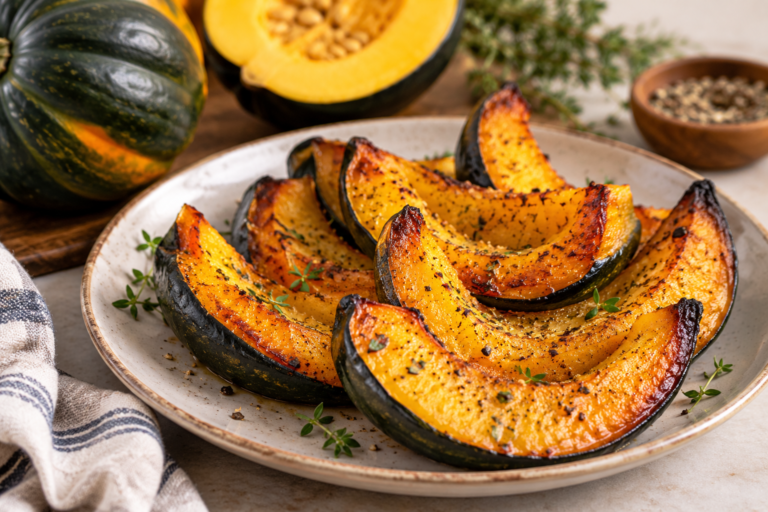
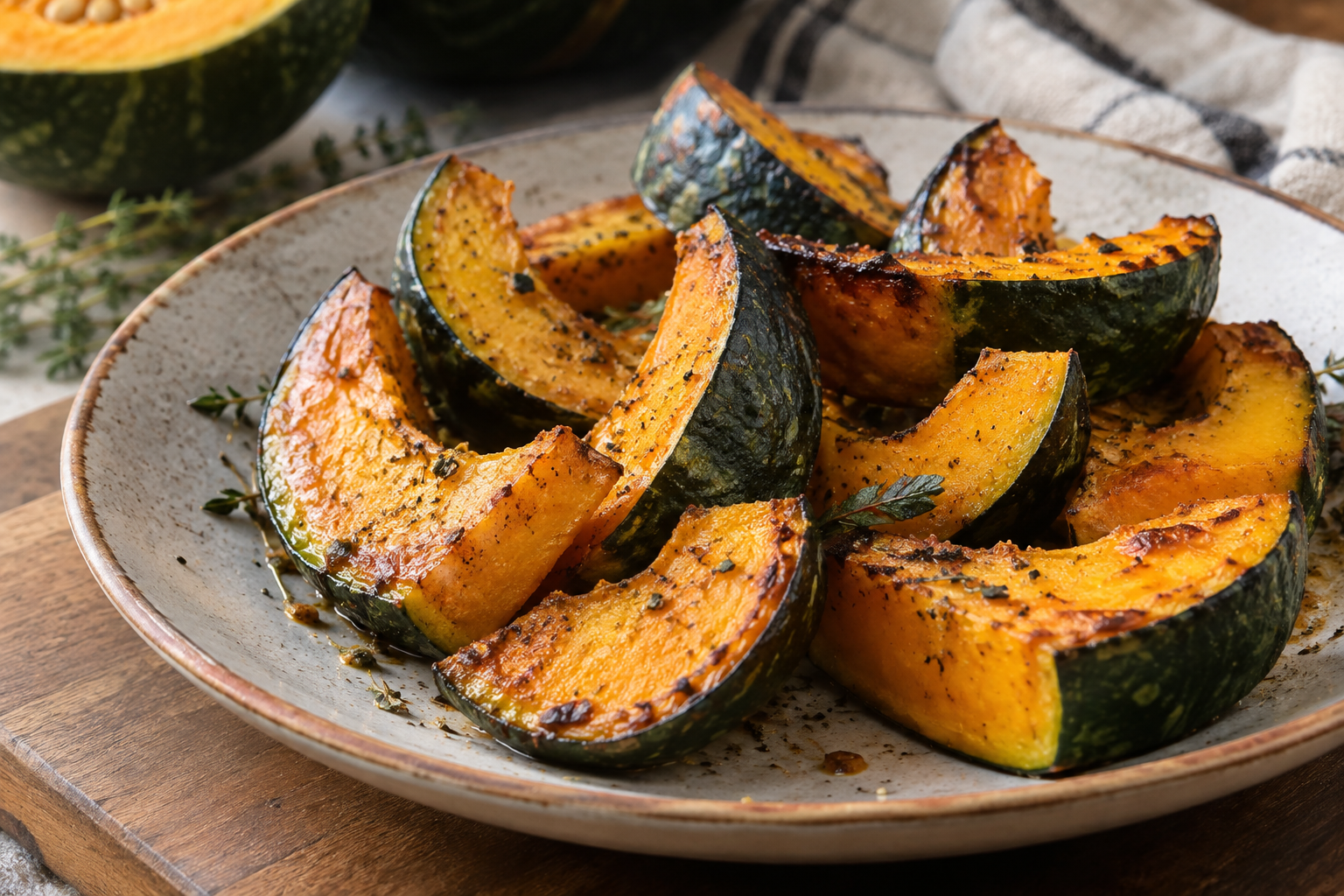
The squash is ready when the flesh is fork-tender and the edges have developed a deep golden-brown color.
If the squash is tender but needs more browning, give it another 3 to 5 minutes in the oven.
Chef RBS Tip: Don’t judge kabocha by time alone. The fork test tells you when the center is ready, while the browned edges tell you the roasting has developed flavor.
How to Know When Kabocha Squash Is Perfectly Cooked
The easiest test is simple: insert a fork into the thickest part of the flesh. It should slide in easily without the squash feeling firm or crunchy.
Look for two things at the same time:
- Tender flesh in the center
- Golden-brown, caramelized edges on the outside
If the center is tender but the surface needs more color, continue roasting for another few minutes.
Chef RBS Tip: Don’t chase a dark color at the expense of texture. The best roasted kabocha is creamy and tender inside with nicely browned edges.
Serving Kabocha Squash
Roasted kabocha is delicious straight from the oven, but it also works well beyond a simple side dish.
Serve it alongside roasted chicken, grilled fish, or steak, or compare it with roasted acorn squash for another simple winter-squash side dish. fish,
For a finishing touch, try a little fresh thyme, toasted sesame seeds, or a light drizzle of maple syrup.
Chef RBS Tip: Taste the squash before adding more seasoning. When kabocha is properly roasted, its natural sweetness and creamy texture should be the main attraction.
Common Mistakes When Cooking Kabocha Squash
Kabocha is fairly forgiving, but a few mistakes can affect the final texture.
- Trying to cut it forcefully: The hard skin can make the knife slip. Create a stable base first.
- Peeling it unnecessarily: The skin is edible when cooked and helps the pieces hold their shape.
- Overcrowding the tray: Too many pieces together create steam instead of roasting.
- Cutting uneven pieces: Thin pieces can overcook while thicker pieces are still firm.
- Removing it too early: Check the thickest piece with a fork before taking it from the oven.
- Adding too much seasoning: Kabocha has a naturally sweet, creamy flavor that doesn’t need to be covered up.
Chef RBS Tip: The biggest difference comes from heat, spacing, and patience. Give the squash room to brown and let the oven develop the flavor.
Storage and Reheating
Let the roasted kabocha cool, then store it in a covered container in the refrigerator.
For the best texture, use it within 3 to 4 days.
When reheating, use an oven or air fryer if possible. This helps bring back some of the roasted edges instead of making the squash soft and wet.
Chef RBS Tip: Reheat at around 375°F (190°C) until heated through. Don’t overheat it, or the tender flesh can become mushy.
FAQ
Can you eat kabocha squash skin?
Yes. The skin becomes tender when properly cooked, so you can leave it on when roasting.
How long does it take to roast kabocha squash?
At 425°F (220°C), cut kabocha usually takes about 25 to 35 minutes, depending on the size and thickness of the pieces.
Do you have to peel kabocha squash before cooking?
No. Peeling isn’t necessary for roasting. Wash the squash well, remove the seeds, and cook it with the skin on.
Why is my kabocha squash not getting brown?
The most common reason is overcrowding the baking sheet. Give the pieces enough space so moisture can escape and the edges can brown.
What does roasted kabocha squash taste like?
It has a naturally sweet, nutty flavor with a dense, creamy texture when properly cooked. Roasting makes that sweetness more pronounced.
Chef RBS Takeaway
Kabocha squash doesn’t need complicated cooking. Cut it safely, keep the skin on, season it lightly, and roast it at high heat until the center is creamy and the edges are beautifully browned.
The biggest lesson is simple: don’t rush the roast and don’t overcrowd the tray. That’s what helps you get the sweet, concentrated flavor that makes kabocha so good.
Once you learn the basic method, you can use roasted kabocha in side dishes, salads, bowls, or wraps or simply enjoy it straight from the oven.
Chef RBS Tip: Let the squash be the star. Good roasting can turn a simple vegetable into something memorable.