Why Is My Restaurant Busy but Still Losing Money?
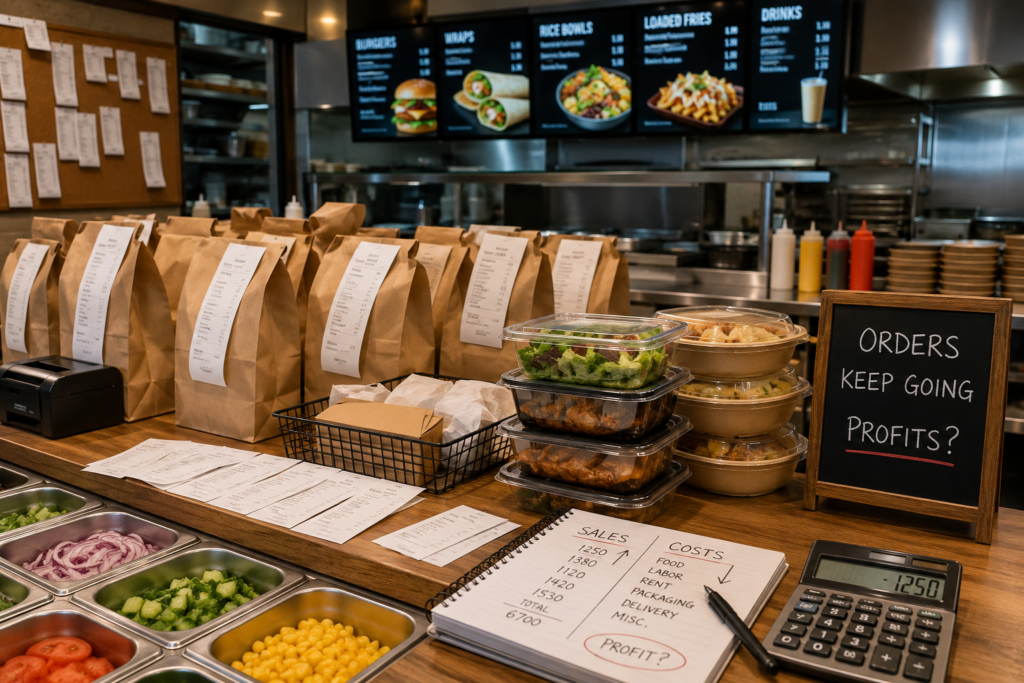
Restaurant busy but losing money? You may have strong sales but weak profit. A busy restaurant looks successful from the outside. Tables are full, orders are coming in and the kitchen is constantly working. But high sales don’t always mean high profits.
Many restaurant and QSR owners find they can serve hundreds of customers every day and still have very little money left at the end of the month. The problem is often not a lack of customers—it is what happens to the money after each sale.
Food cost, labour, portion sizes, wastage, rent, packaging, delivery commissions, discounts and other operating expenses can quietly consume revenue.
In this guide, Chef RBS explains the most common reasons a busy restaurant can still lose money and the practical numbers every restaurant owner should monitor.
Section 1 — Your Food Cost Is Too High
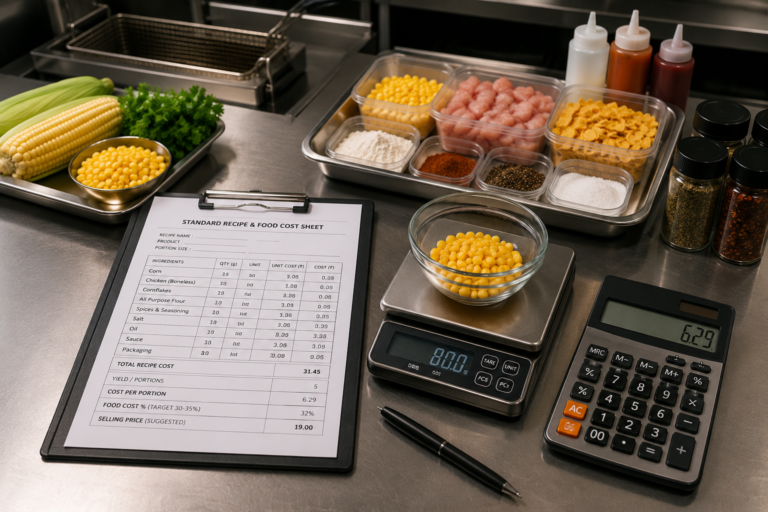
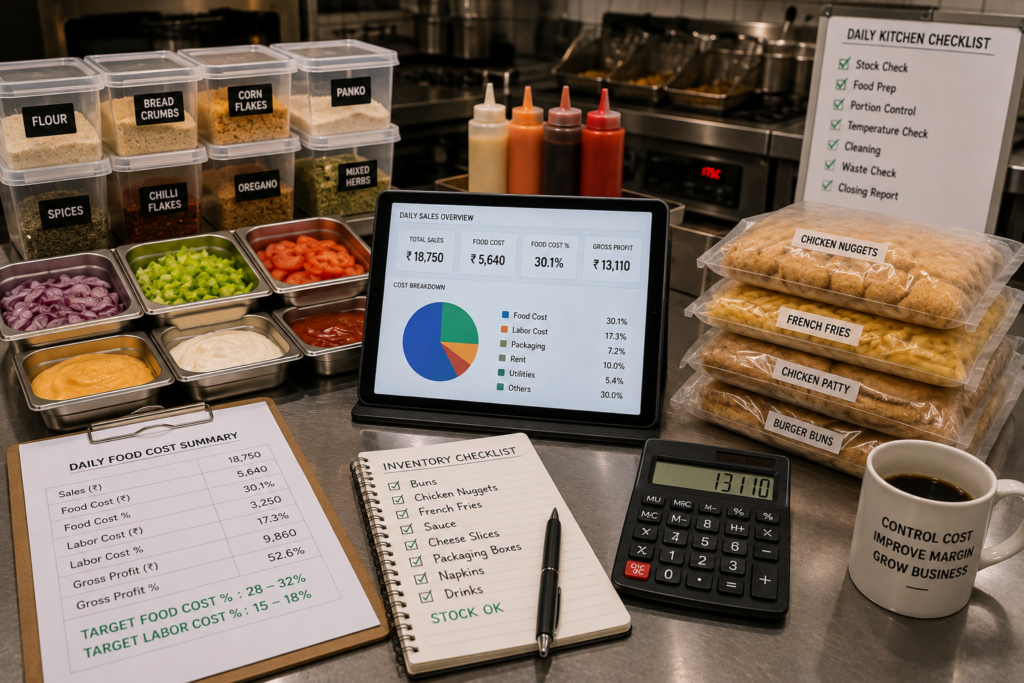
One of the biggest reasons a busy restaurant can struggle to make money is a food cost that is higher than the business can support.
A dish may sell for $12, but if the ingredients, sauces, cooking oil, garnishes and other food components cost $5 or $6, a large part of the selling price has already disappeared before paying for labor, rent, utilities and other expenses.
Food cost can also increase when portions are inconsistent, recipes are not standardised, ingredients are overused or purchasing prices are not regularly reviewed.
For QSR businesses, even a small increase in food cost can have a major impact because the same products may be sold hundreds or thousands of times each month.
The solution: calculate the actual cost of every menu item, standardize recipes and portions, monitor ingredient prices and regularly compare theoretical food cost with actual food cost.
Section 2 — Your Menu Has Too Many Low-Profit Items
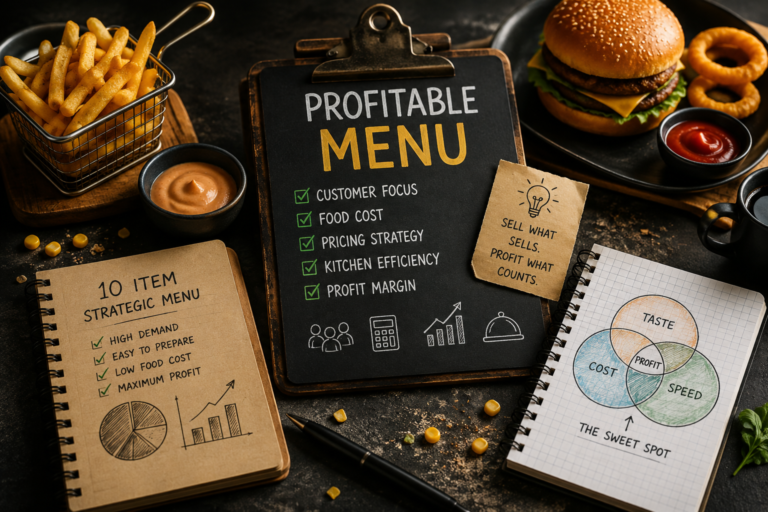
A restaurant can be busy and still lose money when the menu contains too many products that generate sales but contribute very little profit.
Not every popular item is necessarily a profitable item. Some dishes require expensive ingredients, complicated preparation, more kitchen labour, special packaging or produce significant wastage.
This is particularly important in QSR operations, where speed, consistency and inventory control directly affect profitability. A large menu can also increase the number of ingredients you need to stock, making purchasing and storage more complicated.
The solution: analyse every menu item based on its selling price, food cost, contribution margin, preparation time and sales volume. Keep strong performers, improve weak but popular products, and consider removing items that consistently consume resources without generating enough contribution.
If your restaurant is busy but losing money, look at which menu items are generating sales without generating enough contribution.
Section 3 — Your Labour Cost Is Eating Into Profit
A restaurant can generate strong sales but still struggle when labour costs are not aligned with the volume of business. Paying for more staff than the operation needs, inefficient shift scheduling, overtime and excessive preparation work can quickly reduce profitability.
In a QSR, labour efficiency is especially important. The goal is not simply to reduce the number of employees. It is to make sure the right number of people are performing the right tasks at the right time.
For example, preparation can be scheduled before peak hours, stations can have clearly defined responsibilities, and staff can be cross-trained to handle multiple tasks when required.
The solution: track labour cost as a percentage of sales, compare staffing with hourly sales volume and identify tasks that can be simplified, standardised or prepared in advance.
Section 4 — Your Portion Sizes Are Not Consistent
Portion control is one of the easiest areas to overlook in a busy restaurant, but small differences can add up to a significant cost over time.
If one employee serves 120 grams of chicken while another serves 150 grams, the customer may not notice the difference, but your food cost will. The same problem can happen with cheese, sauces, fries, rice, proteins and other high-cost ingredients.
In a QSR, consistency is especially important because products are produced repeatedly throughout the day. Without standardised recipes, portioning tools and clear serving specifications, the actual cost of a menu item can become much higher than the calculated cost.
The solution: create standardised recipes with exact ingredient weights, use appropriate portioning tools and train staff to follow the same specifications for every order.
Section 5 — Food Waste Is Quietly Destroying Your Profit
Food waste doesn’t always look like a major expense because it happens in small amounts throughout the day. But spoilt ingredients, overproduction, incorrect preparation, damaged products, expired stock and customer returns can add up to a significant monthly loss.
In a QSR, waste can also occur when food is prepared too early and doesn’t sell within its required holding period. Excess sauces, vegetables, cooked proteins and other prepared ingredients may eventually need to be discarded.
The solution: track what is being wasted and why. Monitor preparation quantities against actual sales, follow FIFO (first in, first out) stock rotation, control batch sizes and record waste regularly. Once you know where waste is occurring, you can take action to reduce it.
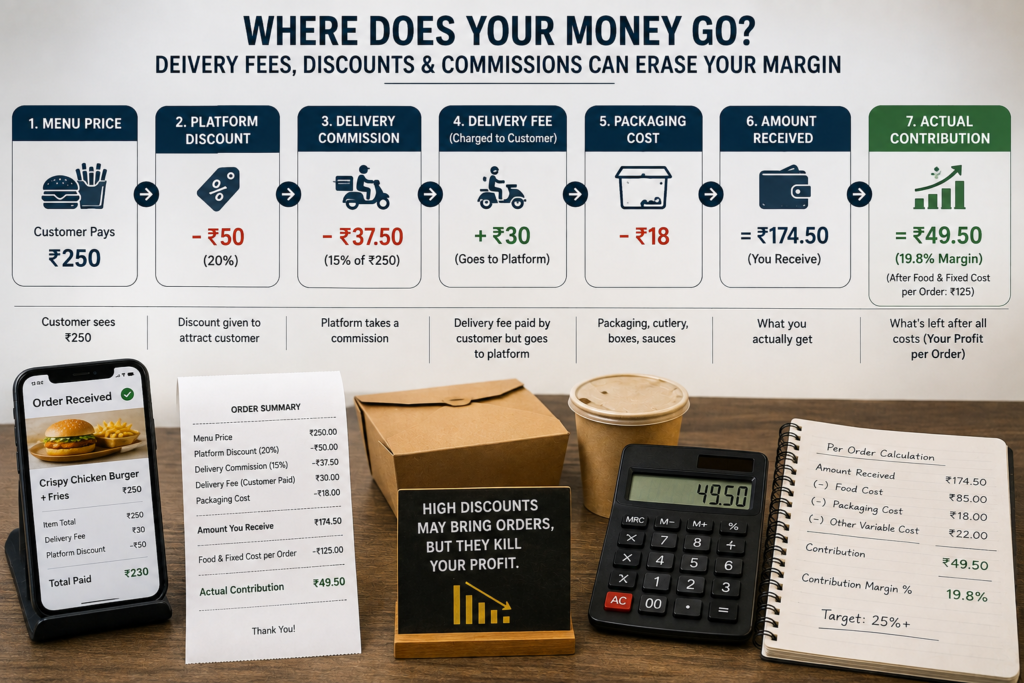
Section 6 — Delivery Fees, Discounts and Commissions Can Erase Your Margin
A restaurant may look profitable on its menu prices but lose a large portion of its contribution when discounts, promotions, packaging costs and third-party delivery fees are included.
This is particularly important for QSRs that depend heavily on online ordering. A product that is profitable when sold directly from the counter may generate a much smaller contribution when the same order includes platform commissions, promotional discounts, packaging and other selling costs.
The solution: calculate the contribution from each sales channel separately. Know what you actually receive after discounts, commissions and packaging, and make sure your menu pricing and promotions are designed around the final amount rather than the menu price alone.
Section 7 — You Don’t Know Your Break-Even Point
One of the most important numbers in a restaurant business is the break-even point—the level of sales you need to cover your operating costs before you start making a profit.
If you don’t know your break-even sales, it is difficult to know whether your current revenue is actually sufficient. A restaurant may generate strong daily sales while still falling short once fixed and variable costs are included.
Your break-even calculation should consider costs such as rent, salaries, utilities, food, packaging, delivery commissions and other regular operating expenses.
The solution: calculate your monthly break-even sales and then convert that target into a daily sales goal. This gives you a much clearer picture of how much your restaurant needs to sell each day to cover its costs and move toward profitability.
Section 8 — Restaurant Busy but Losing Money? Track Your Actual Numbers
Many restaurant owners look at daily sales and assume that a busy day means a profitable day. But sales alone don’t tell you how much money the business actually made.
You need to regularly compare your sales, food cost, labour cost, waste, discounts, packaging, delivery costs and other operating expenses against your targets.
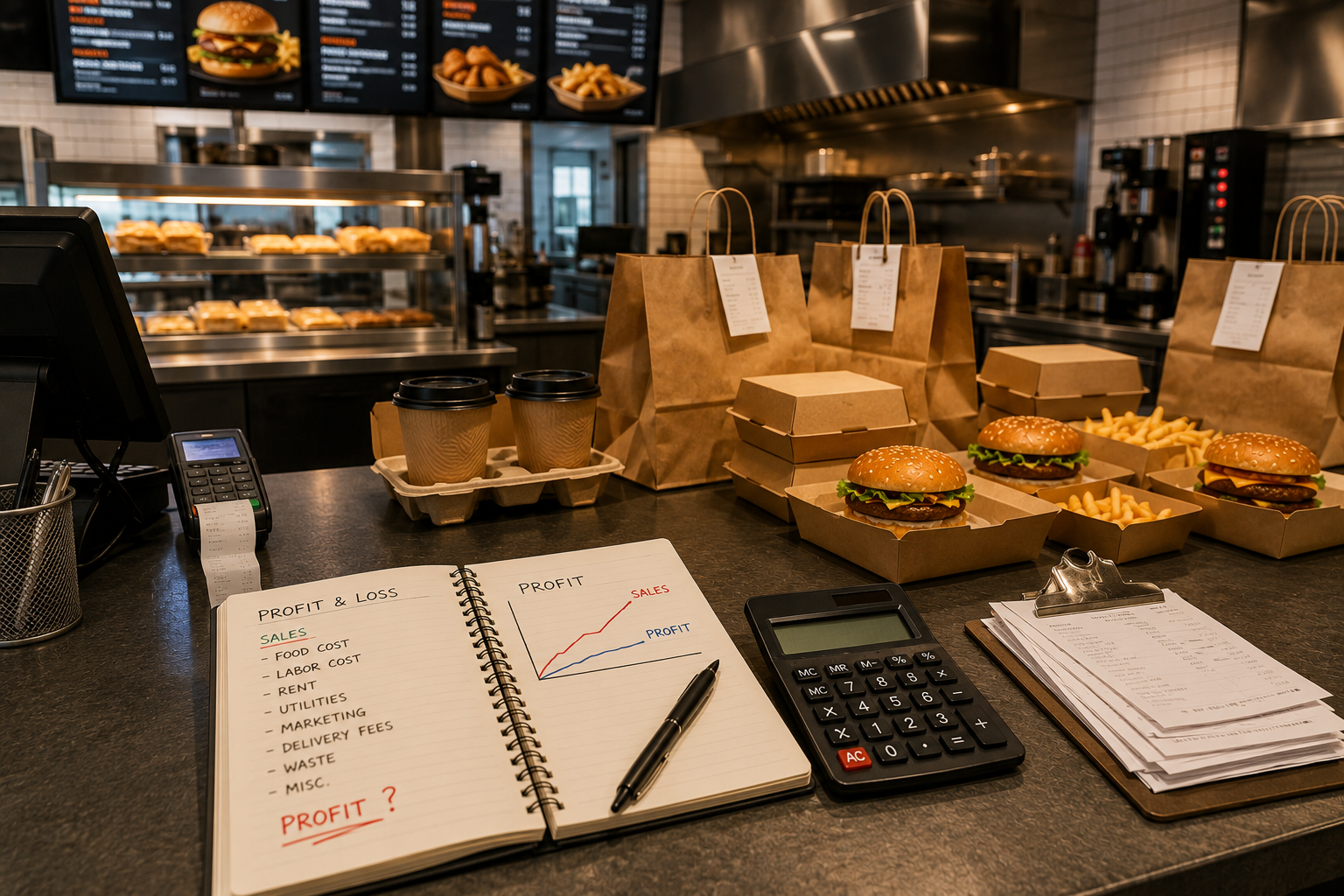
A simple monthly profit-and-loss review can reveal problems that are difficult to see during daily operations. It can show whether food costs are increasing, whether labour is too high, whether a particular sales channel is underperforming or whether certain menu items are not contributing enough.
The solution: create a simple restaurant dashboard and review your key numbers every week and month. What gets measured can be managed—and small corrections made early can prevent much larger losses later.
Conclusion — A Busy Restaurant Needs More Than Sales
A busy restaurant is a good sign, but sales alone do not guarantee profitability. If food costs, labour, portions, waste, delivery charges and operating expenses are not controlled, a restaurant can generate impressive revenue while making very little profit.
If you have a restaurant busy but losing money, your next step should be to identify where each dollar of revenue is going.
The most profitable restaurants don’t simply focus on getting more customers. They build systems that control costs, standardise production, manage inventory, price products correctly and measure performance regularly.
If your restaurant is busy but you’re not seeing enough money at the end of the month, don’t automatically assume you need more customers. Start by finding out where your existing revenue is going.
Track the numbers, control the costs and build a menu and operation designed for profit—not just sales.