Why Cottage Cheese Is Everywhere in America Again in 2026
There was a time when cottage cheese seemed almost forgotten.
It sat quietly in the refrigerated section while yogurt, Greek yogurt, and protein shakes took most of the attention.
Then something changed.
Cottage cheese started appearing in pancakes, pasta sauces, dips, smoothies, desserts, and high-protein snacks. Social media helped push it back into the spotlight, but the story didn’t stop there.
By 2026, cottage cheese had become much more than an old-fashioned side dish.
U.S. dairy data show that the category has continued growing, while food industry reports describe strong demand for cottage cheese and new products built around its high-protein positioning.
But here’s what makes the comeback fascinating from a chef’s perspective:
People aren’t just eating cottage cheese differently. They’re changing what they believe cottage cheese can do.
A product once associated with a bowl and a spoon is now being blended, baked, whipped, cooked, and turned into completely different foods.
So why did cottage cheese come back?
And what makes this humble dairy product so useful in modern cooking?
Let’s break it down from the kitchen, not just the trend report.
Why Did Cottage Cheese Suddenly Become Popular Again?
Cottage cheese didn’t suddenly become a different food.
America changed the way it looked at the food.
For years, cottage cheese was associated with old-fashioned diet plates and simple snacks. By 2022, U.S. per-person consumption had fallen to about 1.9 pounds, according to USDA data cited by Storyful. Then social media started showing people using cottage cheese in completely different ways.
Instead of simply eating it from a bowl, people started blending it into sauces, mixing it into pancake batter, turning it into dips, adding it to toast, and even making frozen desserts.
That changed the perception of the ingredient.
It was no longer:
“That lumpy cheese my grandmother used to eat.”
It became:
“What else can I make with this?”
And that question is powerful.
Cottage cheese already had several characteristics that fit the new food culture: it provides substantial protein, has a mild tangy flavor, and can be used in both sweet and savory recipes.
Then the protein-focused eating trend gave it another push.
In 2026, cottage cheese is benefiting from a broader shift toward protein-rich foods, while industry and university sources report that its growth has continued beyond the initial social-media boom.
So the comeback wasn’t caused by one viral video.
It was more like several things meeting at the same time:
Protein + convenience + social media + recipe creativity + a familiar ingredient.
And suddenly, cottage cheese had a completely new identity.
What Actually Happens When You Blend Cottage Cheese?
This is where cottage cheese gets really interesting from a food science point of view.
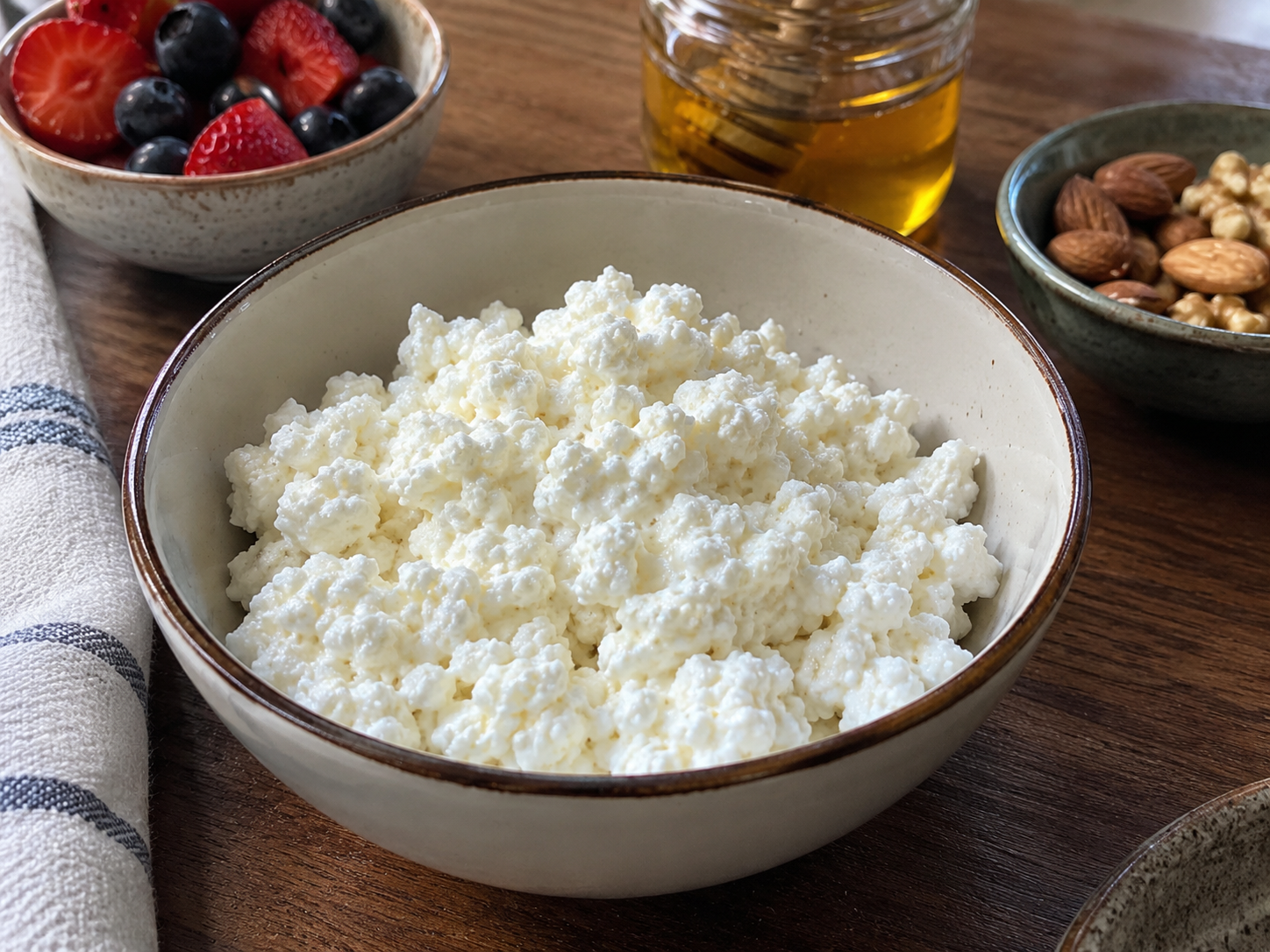
Straight from the container, cottage cheese has a very recognizable texture: soft curds surrounded by a creamy liquid.
Some people love that texture.
Others don’t.
Blending changes the experience completely.
When you put cottage cheese into a blender or food processor, the curds are broken down into much smaller particles. The mixture becomes smoother, thicker, and more uniform.
The flavor doesn’t disappear, but the texture changes dramatically.
And that opens up a completely different world of cooking.
Suddenly, cottage cheese can behave more like a creamy ingredient.
Blended cottage cheese can be used in:
- Pasta sauces
- Dips
- Pancake batter
- Cheesecake-style desserts
- Smoothies
- Spreads
- Savory sauces
Food developers are taking this idea even further. 2026 industry reporting describes cottage cheese moving beyond a traditional dairy product into a functional ingredient platform, including sauces, dips, and frozen products.
But there is an important chef’s lesson here.
Blending doesn’t magically turn cottage cheese into cream.
Its protein structure and water content are different, so it behaves differently when heated.
That means the technique matters.
If you simply throw cottage cheese into a very hot pan, you may not get the silky sauce you expected.
But if you blend it properly and control the heat, you can create a surprisingly creamy result.
And that’s exactly why chefs find ingredients like this interesting.
The ingredient hasn’t changed. The technique changes what the ingredient can do.
Why Does Cottage Cheese Work So Well in High-Protein Recipes?
One reason behind the cottage cheese trend in 2026 is simple: it gives food a protein boost without requiring a completely different recipe.
That matters to today’s food companies and home cooks.
Instead of adding a protein powder or changing the entire structure of a dish, cottage cheese can often be blended or mixed directly into foods people already enjoy.
A pasta sauce can become richer and more filling.
Pancake batter can get a protein boost.
A dip can become thicker and creamier.
A dessert can be built around cottage cheese instead of relying entirely on cream or cream cheese.
From a chef’s point of view, this is where the ingredient becomes interesting.
Protein is only part of the story.
Cottage cheese also brings moisture, mild dairy flavor, and a soft texture.
That combination gives chefs several ways to use it.
But there is a catch.
More protein doesn’t automatically mean a better dish.
If the balance of liquid, acidity, and heat is wrong, the texture can become grainy, or the sauce can lose its smoothness.
So the real skill is not simply adding cottage cheese.
It is understanding how to make the protein work with the rest of the recipe.
That is one reason cottage cheese has moved from being a simple breakfast food to becoming a useful ingredient across modern American cooking.
Is Cottage Cheese Really Better Than Other High-Protein Foods?
The cottage cheese trend in 2026 isn’t happening because cottage cheese suddenly became a new food.
It is happening because an old ingredient fits several things people are looking for today.
Protein. Convenience. Versatility.
Greek yogurt, eggs, protein shakes, and other dairy foods already have strong positions in the high-protein market. Cottage cheese brings something different: it can work as both a finished food and a cooking ingredient.
You can eat it straight from the container, but you can also blend it into a sauce, mix it into batter, fold it into a dip, or use it as part of a dessert.
That flexibility is important.
From a chef’s perspective, an ingredient becomes much more valuable when it can cross different parts of the menu.
And cottage cheese is doing exactly that.
How Food Brands Are Reinventing Cottage Cheese
The biggest change in the cottage cheese trend in 2026 may not be happening in the refrigerator aisle.
It is happening in what companies are making with it.
Cottage cheese is increasingly being used as a base or ingredient in products that look very different from traditional cottage cheese.
Food industry reporting in 2026 has highlighted products such as whipped dips, sauces and frozen desserts, showing how manufacturers are using cottage cheese’s protein and creamy texture in new formats.
This is an important shift.
Instead of asking:
“How can we sell more cottage cheese?”
Food companies can ask:
“What else can we make with cottage cheese?”
That opens the door to completely different categories.
A familiar dairy ingredient can become a dip, dessert, spread, or sauce while still carrying the nutritional characteristics that are driving consumer interest.
For chefs and food businesses, there is a useful lesson here:
Sometimes the next food trend isn’t a new ingredient. It’s a new way of using an old one.
Why Social Media Helped Bring Cottage Cheese Back
The cottage cheese comeback would probably look very different without social media.
For years, many people knew cottage cheese as a simple breakfast food or a side dish. Then short recipe videos started showing it in completely different ways.
Blended cottage cheese became a creamy pasta sauce.
It went into pancake batter.
It became a dip.
It appeared in desserts and high-protein snacks.
The interesting part is that these recipes didn’t require people to learn a completely new ingredient.
They simply showed people a different way to use something they already knew.
That made cottage cheese highly shareable.
One recipe could inspire another, and suddenly the same ingredient was appearing across breakfast, lunch, snacks, and dessert.
But social media alone doesn’t explain the entire comeback. Industry data in 2026 shows that cottage cheese sales and volume have continued to grow, suggesting the trend has moved beyond a short-lived viral moment.
For food businesses, that’s an important distinction.
A viral recipe creates attention. A useful ingredient creates repeat demand.
What Does Cottage Cheese Taste Like When You Cook With It?
Cottage cheese has a mild flavor, but heat can change its texture.
This is one of the most important things to understand when using it in cooking.
When blended and added to a warm dish, cottage cheese can contribute a creamy mouthfeel and gentle dairy flavor. But if it is exposed to very high heat for too long, its proteins can tighten, and the mixture may become grainy or separate.
That’s why technique matters.
The chef’s approach
If you’re using cottage cheese in a sauce, don’t treat it exactly like heavy cream.
Instead:
- Blend the cottage cheese until smooth.
- Add it to the recipe gradually.
- Keep the heat controlled.
- Avoid aggressive boiling.
- Adjust seasoning after the cottage cheese is incorporated.
The result can be surprisingly smooth when handled correctly.
And this is another reason the ingredient has become so interesting in modern cooking.
Cottage cheese isn’t simply replacing another ingredient. Chefs are learning how to cook with it differently.
Why Cottage Cheese Fits the Modern American Menu
The cottage cheese trend in 2026 is also changing the way chefs think about menu development.
A single ingredient can now appear in several completely different sections of a menu.
For example, cottage cheese can become:
- A protein-rich breakfast ingredient
- A creamy pasta sauce
- A savory dip
- A sandwich spread
- A smoothie ingredient
- A dessert base
- A filling for baked dishes
That versatility can be valuable for food businesses because one familiar ingredient can support multiple product ideas.
It also gives chefs room to experiment without making the food feel unfamiliar to customers.
The bigger lesson is simple:
Food trends become powerful when they connect nutrition, convenience, and creativity.
Cottage cheese happens to sit right in the middle of all three.
What Could Be Next for Cottage Cheese?
The cottage cheese trend in 2026 may be bigger than a temporary return of an old-fashioned food.
The category is already moving into new formats, new recipes, and new occasions. As consumers continue looking for convenient ways to add protein to everyday meals, cottage cheese gives food companies and chefs plenty of room to experiment.
We could see more:
- Ready-to-eat high-protein snacks
- Cottage cheese-based dips and spreads
- New frozen desserts
- Protein-focused breakfast products
- Restaurant sauces and fillings
- Cottage cheese products designed for specific eating occasions
But the most interesting part is what happens when consumers stop thinking of cottage cheese as a single food and start thinking of it as an ingredient.
That change in perception could be what keeps the category relevant.
And from a chef’s perspective, that’s where this trend becomes worth watching.
What Does the Cottage Cheese Comeback Mean for Chefs?
For chefs, the cottage cheese trend in 2026 is more interesting than simply watching another food become popular.
It shows how technique can change the role of an ingredient.
Cottage cheese was once commonly served as it came from the container. Today, chefs and home cooks are blending it, baking it, whipping it, and incorporating it into completely different dishes.
The ingredient stayed the same.
The way people use it changed.
That is an important lesson for anyone developing recipes or menus.
Before searching for the next trendy ingredient, look at the ingredients already sitting in your kitchen.
Sometimes the next opportunity is hiding in something people have simply stopped looking at differently.
And cottage cheese is a perfect example.
Conclusion
The cottage cheese comeback tells a bigger story about how American food is changing.
A familiar ingredient found a new audience because it matched several modern food priorities: protein, convenience, versatility, and creative cooking.
Social media helped people discover new uses for cottage cheese, while food companies continued developing new products around the ingredient.
But the most interesting lesson is not really about cottage cheese.
It is about reinvention.
An ingredient doesn’t always need to be new to become a trend.
Sometimes, all it needs is a new technique, a new recipe, and a new reason for people to put it back on the table.
And in 2026, cottage cheese is showing exactly how powerful that can be.
Add a Practical Chef’s Takeaway
As a chef, I look at the cottage cheese trend a little differently.
The real opportunity isn’t simply putting “high protein” on a menu.
It’s understanding how an ingredient behaves and then using the right technique to make it enjoyable.
If you’re working with cottage cheese, start with a simple test:
Blend it. Season it. Heat it gently. Taste it.
Then compare the texture before and after blending and cooking.
That small experiment can teach you more than simply following a viral recipe.
Because good food trends don’t just tell us what to eat.
They give chefs a reason to ask:
“What else can I do with this ingredient?”
Add FAQ Section
Frequently Asked Questions About the Cottage Cheese Trend 2026
Is cottage cheese actually becoming more popular in America?
Yes. Industry data reported in 2026 shows continued growth in U.S. cottage cheese sales and volume, following the category’s recent resurgence.
Why is cottage cheese trending again?
Protein, convenience, social media recipes, and its versatility in both sweet and savory foods are major factors behind its renewed popularity.
Can cottage cheese be used instead of cream?
Blended cottage cheese can create a creamy texture, but it does not behave exactly like heavy cream. Heat and recipe technique need to be controlled.
Why do people blend cottage cheese?
Blending breaks down the curds and creates a smoother, more uniform texture, making it easier to use in sauces, dips, batters, and desserts.
Is cottage cheese only useful for breakfast?
No. Its mild flavor and versatility allow it to be used across breakfast, snacks, main dishes, and desserts.
Will the cottage cheese trend continue?
The available 2026 industry data shows that growth has continued beyond the initial social media attention, but future consumer demand cannot be known with certainty.