AI in Food Product Development: Can Artificial Intelligence Create New Foods?
Imagine developing a new snack without spending weeks testing dozens of ingredient combinations. What if a computer could help you identify which ingredients might work together, predict how a product could taste or feel, and suggest ways to improve its nutrition or reduce its cost?
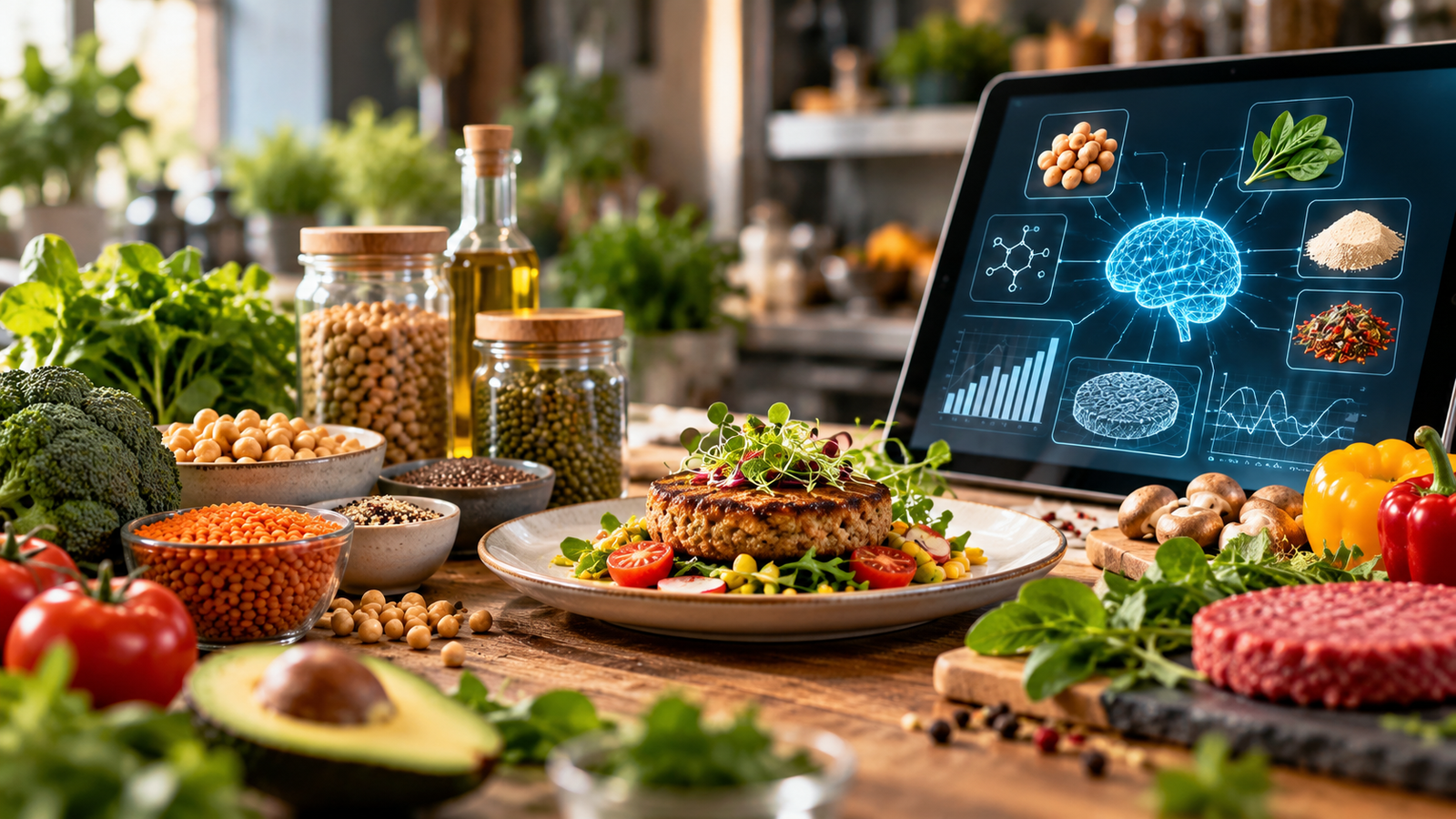
This is becoming a serious area of food science. Artificial intelligence (AI) is helping researchers and food manufacturers explore ingredient combinations, improve formulations, study flavor relationships, and make product development more systematic.
But there is an important difference between generating a recipe on a screen and creating a food product that people genuinely want to eat.
As a chef, I see food development as a balance of flavor, texture, aroma, appearance, food safety, cost, and consistency. AI can help explore possibilities, but the real test happens when the ingredients are mixed, the product is cooked or processed, and people taste the result.
So, can AI invent new foods? It can help discover promising combinations and design new formulations, but physical testing and human judgment remain essential.
In this article, we will explore how AI works in food product development, where it can help chefs and food businesses, what it still struggles with, and what this technology could mean for the future of food.
How Does AI Help Create New Food Products?
AI does not invent food in quite the same way a chef does. Instead, it analyses information, identifies patterns, and helps researchers explore combinations that might otherwise take considerable time to test.
Food developers can use AI alongside ingredient databases, chemical information, nutritional data, processing records, and consumer feedback. Depending on the system, this information can help guide decisions about a product’s formulation, flavor, texture, or nutritional profile.
Here are four important ways AI can support food product development.
1. Finding New Ingredient Combinations
A food developer might want to create a high-protein snack that is crunchy, affordable, and pleasant to eat. The challenge is that adding more protein can make a product dry, dense, chalky, or difficult to process.
AI tools can help compare possible ingredients and suggest combinations worth investigating. A developer could explore different protein sources, starches, fibers, fats, and flavor ingredients before preparing physical prototypes.
However, a suggested combination is only a starting point. Ingredients that look promising in a database may behave very differently when mixed, heated, cooled, or stored.
2. Exploring Flavor Combinations
Flavor is more complicated than simply matching ingredients that appear similar on paper. Aroma compounds, sweetness, acidity, bitterness, saltiness, and the way flavors develop during cooking all influence the final experience.
AI systems can analyze chemical and sensory datasets to identify potential flavor relationships. This could help a development team explore unusual pairings or find alternatives when an ingredient becomes expensive or difficult to source.
For a chef, the value lies in discovering ideas worth testing, not accepting every computer-generated suggestion.
3. Improving Texture and Product Structure
Texture can determine whether a new food succeeds. Consumers may reject a protein bar that feels too hard, a plant-based patty that falls apart, or a frozen snack that loses its crunch after cooking.
Depending on the available data, AI models can help estimate how changes in ingredients or processing conditions might affect product characteristics. They may help narrow down the options a food scientist needs to test.
But texture also depends on factors such as moisture, temperature, mixing, particle size, and processing equipment. A prediction cannot replace testing under real production conditions.
4. Balancing Nutrition, Taste, and Cost
A product can be nutritious and still fail if it tastes unpleasant or costs too much to manufacture.
AI-assisted formulation can help developers compare possible recipes against several targets, such as protein content, sugar levels, ingredient costs, and desired product characteristics.
For example, a team developing a lower-sugar snack might use modelling to shortlist alternative formulations. Each candidate would then need to be checked for taste, texture, processing performance, nutritional accuracy, and shelf life.
The key lesson: AI can help food developers narrow the search. It does not remove the need for culinary skill, food science, controlled testing, or commercial judgment.
What AI Still Cannot Do in a Test Kitchen
A food product can look perfect on a computer and still fail when it reaches the kitchen.
A sauce may have the right nutritional profile but taste flat. A plant-based burger might contain enough protein yet feel dry when you bite into it. A new snack could perform well in a recipe model but lose its crunch after a few weeks in storage.
This is where practical food development becomes essential.
Taste Is More Than a Formula
AI can analyze flavor data and suggest ingredient combinations, but eating is a sensory experience. Aroma, texture, temperature, appearance, and even the way a food feels in the mouth all influence whether people enjoy it.
A chef might recognize that a sauce needs acidity rather than more salt or that a filling needs fat for a smoother mouthfeel. These decisions depend on tasting, experience, and understanding how ingredients behave together.
Ingredients Behave Differently During Cooking
Food changes as it is mixed, heated, cooled, frozen, or baked. Proteins can unfold and set, starches absorb water and thicken, and fats can melt or solidify.
These changes affect the final product in ways that depend on the ingredients and processing conditions. AI predictions can help guide trials, but physical testing is needed to confirm the result.
Consumer Preferences Cannot Be Assumed
A product that works in one market may not appeal to another. Preferences can vary with culture, age, eating habits, price, and familiarity with ingredients.
For example, a high-protein snack designed for one group of consumers may be too salty, too expensive, or unfamiliar to another. Product developers still need consumer feedback and real-world testing.
The practical lesson: AI can help a development team make better-informed decisions, but it cannot replace tasting panels, kitchen trials, food safety checks, or an understanding of the people who will buy the product.
A Practical Example: Using AI to Develop a New High-Protein Snack
Imagine a food company wants to create a high-protein snack that tastes good, stays crunchy, and remains affordable.
Traditionally, the development team might test different ingredients, adjust the recipe, repeat the process, and evaluate each version. Some trials will work. Others may fail because of texture, flavor, processing difficulties, or cost.
AI can help organize this process.
Step 1: Set the Product Goals
The team defines what the snack should deliver:
- A useful amount of protein per serving
- An enjoyable flavor and crunchy texture
- A reasonable ingredient cost
- A practical manufacturing process
- Suitable shelf life and food safety
These targets give the development process a clear direction.
Step 2: Explore Possible Ingredients
Depending on the product, the team might evaluate ingredients such as chickpea flour, lentil protein, milk proteins, seeds, or whole grains.
An AI model may help compare ingredient data and identify promising combinations. However, the suitability of each ingredient depends on factors such as allergies, moisture, processing conditions, flavor, and the intended product.
Step 3: Test the Best Candidates
The team prepares small batches based on the most promising formulations.
Each batch is checked for flavor, crunch, appearance, protein content, and processing performance. If the snack is baked or extruded, the team also evaluates how it behaves under the relevant manufacturing conditions.
The results can then be used to refine the next round of formulations.
Step 4: Check the Product Beyond the First Bite
A snack that tastes good immediately after production is not necessarily ready for sale.
Developers must also evaluate packaging, moisture changes, texture retention, shelf life, food safety, and production costs. Appropriate laboratory testing and documented validation are essential before commercial release.
The key idea: AI can help a team decide which formulations are worth testing first. The kitchen and laboratory determine whether those formulations actually work.
Where Is AI Making a Difference in Food Product Development?
AI in food product development is not limited to inventing unusual flavor combinations. It can also help companies explore formulations, improve consistency, and make better use of product testing data.
Here are four areas where it can be useful.
1. Plant-Based Foods
Developing plant-based meat alternatives is a complex task. Protein sources can differ in flavor, water absorption, texture, and cooking performance.
AI-assisted formulation can help developers compare ingredient combinations and identify candidates for further testing. The final product still needs to deliver an acceptable taste, texture, nutritional profile, and cooking experience.
2. Functional Foods and High-Protein Products
Food companies are exploring products with added protein, fiber, vitamins, and other nutrients.
AI can help evaluate possible formulations against nutritional targets and ingredient constraints. However, adding a nutrient does not automatically make a product healthier. The complete nutritional profile, serving size, processing, and consumer needs all matter.
3. Reformulating Existing Products
Sometimes the goal is not to invent something new. It is to improve a product that already exists.
A development team may want to reduce added sugar, replace an ingredient, or improve texture without losing the qualities customers enjoy. AI can help identify possible formulations to test, although each change must be evaluated for taste, stability, safety, and manufacturing performance.
4. Reducing Development Waste
Every unsuccessful trial uses ingredients, time, and equipment.
When suitable data are available, AI models can help prioritise promising experiments instead of testing every possible combination. This may make development more efficient, although the actual savings depend on the quality of the data, the product, and the process.
The common thread is simple: AI can help narrow the options, but product quality still depends on sound food science and careful validation.
The Risks and Limitations of Using AI in Food Development
AI can speed up parts of product development, but relying on its predictions without proper testing can create expensive problems.
For food businesses, the biggest concern is not whether AI can generate a recipe. It is whether that recipe performs safely, consistently, and commercially in the real world.
Poor Data Can Lead to Poor Formulations
AI models depend on the information used to train or operate them. If the data do not represent the ingredients, equipment, or conditions a company uses, the recommendations may be unreliable.
A formulation that works with one brand of flour or protein ingredient may behave differently with another supplier’s material.
Food Safety Cannot Be Assumed
A recipe generated by AI is not proof that a product is safe.
Food developers must assess relevant hazards, processing conditions, allergen risks, storage requirements, and packaging. Products that require a validated cooking or preservation process need appropriate scientific evidence and verification.
This is particularly important for chilled meals, ready-to-eat foods, and products intended to remain shelf-stable.
Nutrition Claims Need Evidence
An AI tool may estimate nutritional values from ingredient data, but estimates are not always the same as verified results.
Before making claims about protein, fibre, sugar, or other nutrients, businesses should use appropriate calculations, reliable ingredient specifications, and laboratory analysis where necessary. They must also comply with the regulations in their target market.
A Good Recipe Must Work at Scale
A product that succeeds in a small test batch may behave differently in a commercial production line.
Mixing, heating, cooling, moisture control, equipment settings, packaging, and ingredient variation can all affect the final result. Shelf life and production consistency must be assessed under appropriate conditions.
My takeaway as a chef: AI-generated recipes should be treated as starting points, not finished products. Good food development still requires practical trials, food science, safety validation, and commercial judgment.
How Chefs and Food Scientists Can Work With AI
Food innovation works best when technology supports practical experience.
AI can help identify patterns in ingredient data, compare formulations, and suggest possible directions for a new product. Chefs understand how food behaves during preparation, how flavours develop, and what makes a dish enjoyable to eat. Food scientists contribute knowledge of chemistry, microbiology, nutrition, processing, and product stability.
When these skills come together, product development becomes a more informed process.
Start With a Food Problem, Not Just an AI Tool
The best place to begin is with a clear objective.
Does a sauce separate during storage? Does a plant-based filling become dry after cooking? Is a high-protein snack too hard or expensive to produce?
A well-defined problem helps the team decide what data to collect, which formulations to investigate, and how to judge the results.
Test Suggestions in the Real Kitchen
AI recommendations should lead to practical experiments, not automatic approval.
Prepare controlled batches, change one or more defined variables, and record the results carefully. Evaluate flavour, aroma, texture, appearance, and processing performance. Where appropriate, use laboratory measurements to support sensory observations.
Good records also help teams learn from unsuccessful trials instead of repeating the same mistakes.
Keep Human Judgment in the Final Decision
A technically successful product still needs to make sense for its intended customers.
Chefs and product developers must consider eating quality, portion size, cultural preferences, ingredient availability, production costs, and the overall food experience. Food safety and regulatory requirements must also be satisfied.
AI can support these decisions, but responsibility for the finished product remains with the people and business developing it.
The goal is not to replace a chef’s creativity. It is to give that creativity more useful information, better starting points, and a more organised way to experiment.
The Future of AI in Food Product Development
AI is opening new possibilities for the food industry. It can help teams explore ingredient combinations, compare formulations, improve development workflows, and investigate ways to balance taste, nutrition, and cost.
But creating a successful food product involves much more than generating a recipe.
The product must taste good, deliver the intended nutritional value, remain safe, perform consistently during production, and meet the expectations of the people who will eat it. These outcomes require real-world testing and informed decisions.
From a chef’s perspective, the most exciting possibility is how AI can support experimentation. Instead of spending every development cycle exploring possibilities from scratch, a team may be able to use data to identify promising directions and spend more time refining the food itself.
Can AI create new foods? Yes, it can help discover and develop new food concepts. But turning those concepts into successful products still requires culinary skill, food science, and careful testing.
Technology can help us explore what is possible. The real test is what happens when the food reaches the plate.