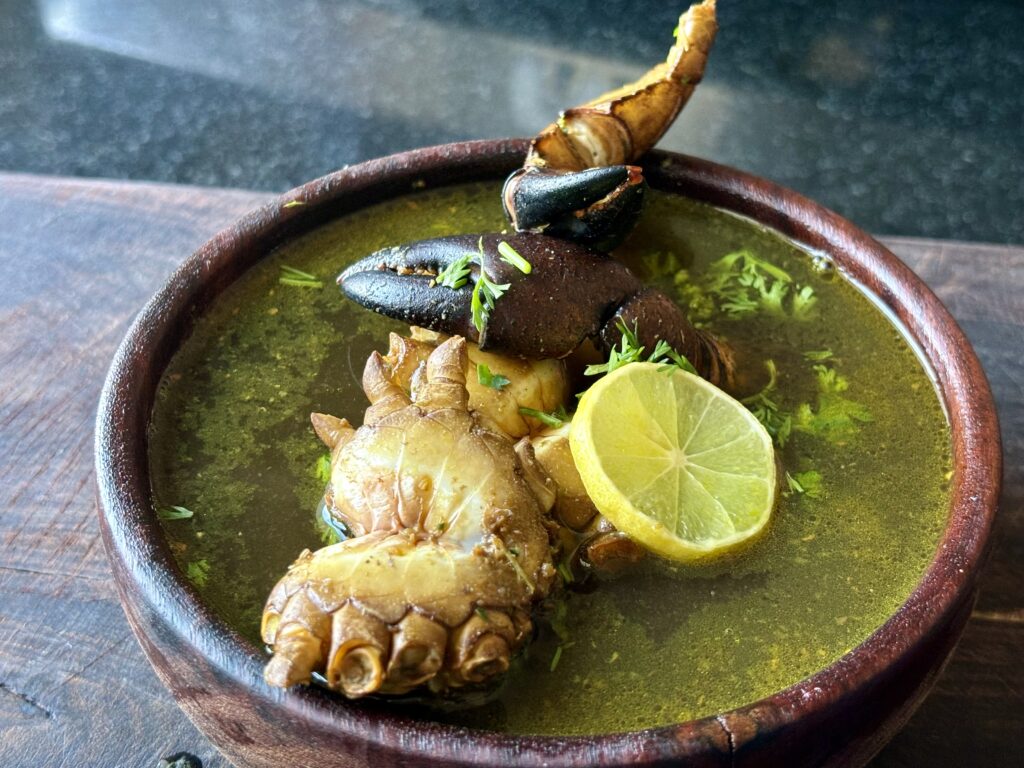

This seafood dish is usually made with fresh seafood, and therefore the flavor comes from the ingredient itself. This is why we use only the freshest crab, aromatic spices, ginger, garlic, and coriander to make a light but flavorful soup. Simple local ingredients
The recipe for the crab soup is inspired by the Mumbai seafood culture on the western coast of India.
The preparation uses about 500 g of whole Arabian Sea crab. Instead of using only the meat of the crab, the smaller pieces of crab are used to make a flavorful base. The remaining pieces of crab are then used to make a naturally rich stock.
A light, aromatic soup with the sweetness of the crab and the flavor of the Indian spices.
As with most seafood, the nutritional value of crab is high, containing good amounts of protein as well as several vitamins and minerals such as vitamin B12, selenium, and zinc.
This article outlines how to prepare the soup, explains the nutritional value of the crab used, gives some advice on seafood safety, and provides a recipe for the soup.
What Makes This Mumbai-Style Crab Soup Special?
Many crab soup recipes are made with either extracted crab meat, seafood stock, or a combination of both with vegetables.
My approach is slightly different.
First, the whole fresh crab is cut into sections of similar size. The smaller sections are then used first to develop the flavor base for the soup, while the remaining crab parts are then added to the stock to simmer.
This will release the natural seafood flavor from the whole crab into the broth.
The supporting ingredients are simple:
- Ginger and garlic for aroma.
- Onion for body and natural sweetness.
- Green chili for mild heat.
- Cumin seeds for earthy flavor.
- Turmeric for color and warmth.
- Coriander stems for a fresh herbal character.
- Black pepper for a gentle finish.
The supporting ingredients must not overshadow the crab, so the seafood flavor will still be dominant in the soup.
Crab Soup Benefits: What Does Crab Meat Provide?
Crab meat can be part of a healthy and balanced diet due to several of its nutritional qualities.
1. High-Quality Protein Source
As a source of high-quality protein, crab meat provides the essential amino acids that your body needs to maintain healthy muscles and tissues, as well as to produce enzymes and hormones.
Protein is essential for the maintenance of muscle tissue, for tissue repair, and for the production of enzymes and hormones.
Protein in the soup is dependent on the amount of edible crab meat obtained from the whole crab. Note that the weight of the ingredient is 500 g, and this includes the shell of the crab.
2. Contains vitamin B12
Crab is a natural source of vitamin B12.
Vitamin B12 is essential for normal nerve function, DNA production, and red blood cell production.
Seafood can be included as part of a varied diet to help increase your intake of vitamin B12.
3. Provides selenium
Selenium is an essential trace mineral involved in thyroid function and antioxidant defense.
The amount of selenium in crab meat can vary significantly from one species of crab to another and also depends on the portion size of the crab meat.
4. Contains zinc
Zinc is required for normal immune function, wound healing, and a variety of other metabolic processes.
Zinc can also be obtained from seafood such as crab.
5. Provides some omega-3 fatty acids
This seafood contains omega-3 fatty acids, EPA and DHA, which are essential for normal bodily functions.
The content of omega-3 fatty acids in crab is low compared to other oily fish such as salmon, sardines, and mackerel.
6. Can be prepared as a relatively light soup
This recipe uses only half a tablespoon of oil and does not contain cream, butter, or heavy thickeners.
The broth has a light flavor of crab, aromatics, and spices.
The recipe can be used as a light seafood soup. The calories and other nutritional information will depend on the amount of crab used and the amount of the soup consumed.
Ingredients for Mumbai-Style Crab Soup
Recipe yield: Approximately 2 servings, depending on crab size and edible meat yield.
| Ingredient | Quantity |
|---|---|
| Whole fresh crab | 500 g (approximately 3 to 4, depending on size) |
| Garlic | 7 cloves |
| Ginger | 5 g (approximately 1 inch) |
| Onion | 50 g |
| Cumin seeds | ½ tablespoon |
| Oil | ½ tablespoon |
| Crushed black pepper | 2 pinches |
| Salt | ¼ tablespoon |
| Coriander stems | 1 tablespoon |
| Turmeric | ¼ tablespoon (optional) |
| Green chili | 1 |
| Water | 4 cups |
The size and amount of meat in whole crabs can vary. Use fresh crabs that have been properly stored and purchased from a reliable seafood supplier.
How to Clean and Prepare Fresh Crab
Cleaning crab properly is an important part of this preparation.
The raw crab has mud, sand, and debris around the outside of the shell and at the joints, which must be washed off before cooking the crab.
- Handle live crab carefully. Keep fingers away from claws.
- Clean the shell under running potable water.
- Remove visible mud and debris using a clean food-safe brush.
- Separate the crab into manageable sections using suitable kitchen tools.
- Keep the smaller sections separate for the flavor base.
- Keep remaining parts of crab aside to cook in stock.
- Wash hands, utensils, and preparation surfaces after handling raw seafood.
Do not use crab that looks damaged or is dead and you don’t know how it was stored. Keep raw crab in the fridge until you are ready to use it.
Step-by-Step Crab Soup Preparation
Step 1: Prepare the aromatic paste.
Garlic, ginger, onion, green chili, and coriander stems are used for the aromatic paste.
Grind them together into a fine paste.
This mixture will form the aromatic base of the soup.
Step 2: Prepare the crab-flavored base.
Take the smaller cleaned crab sections and process them into a coarse paste using suitable food-safe equipment.
Carefully handle any shell fragments and strain the paste through a fine mesh strainer to catch any hard bits of shell.
This step is designed to add depth of flavor to the broth made from the crab paste.
Step 3: Sauté the aromatic paste.
Heat half a tablespoon of oil in a kadai over medium heat.
Add the prepared ginger, garlic, onion, chilli, and coriander paste.
Sauté for a few minutes until the raw aroma reduces and the mixture becomes fragrant.
Avoid browning it too much because it may overpower the seafood flavor in the stock.
Step 4: Add the crab paste.
Add the prepared crab paste to the sautéed aromatic mixture.
Mix well and let it cook for a minute or two to let the crab flavor meld with the masala.
Step 5: Add the remaining crab sections.
Add the larger crab sections that were kept aside.
Mix gently so that the aromatic base coats the crab pieces.
Step 6: Add seasoning and water.
Add cumin seeds, turmeric if required, salt, and 4 cups of water.
Mix well and bring the preparation to a gentle boil.
Step 7: Simmer until the crab is fully cooked.
Reduce the heat and simmer until the crab is thoroughly cooked.
The total cooking time for this step is approximately 7 to 8 minutes but may vary depending on the size of the crab pieces and the heat used to simmer the broth.
Wait until the crab meat is opaque and firm. Follow general guidelines for cooking seafood and check for doneness using appropriate methods. The FDA recommends a minimum internal temperature of 145°F (63°C) for seafood.
Step 8: Strain the crab stock.
Separate the cooked crab pieces and stock using a suitable fine-mesh strainer.
Strain carefully to remove shell fragments and any coarse material.
Do not press hard shell fragments through the strainer.
Step 9: Finish the soup.
Add crushed black pepper to the strained stock and adjust the seasoning if necessary.
The resulting soup should have a balanced taste of crab and mild spices and leave a clean aftertaste.
Step 10: Serve
Ladle the hot crab broth into serving bowls.
Add two or three suitable cooked crab pieces to each bowl, depending on their size.
Finish with freshly chopped coriander.
Serve immediately while hot.
Chef RBS Tips for Better Crab Soup
The key to the flavor of this dish is the quality of the crab. Buy from a good seafood supplier and keep it in the fridge.
Do not overpower the crab: Ginger, garlic, cumin, and pepper should support the natural sweetness of crab rather than dominate it.
Use coriander stems: These will provide more of an herbal flavor to the paste than the leaves. The fresh leaves can be used for the final garnish.
Be sure to strain the broth carefully, as there are whole crab sections in this preparation, and you don’t want any hard shell fragments in your broth.
The crab is fully cooked when the meat is white and flakes easily. Prolonged cooking makes the meat tough and spoils it.
Adjust chilli carefully: one green chilli provides a gentle background heat. Adjust according to your preference.
Is Crab Soup Healthy?
This recipe uses whole crabs, a small amount of oil, aromatics, and water to make the soup. It doesn’t use cream or heavy sauces to make up flavor.
However, seafood recipes are not automatically healthy for everyone.
Individuals with shellfish allergies should not eat crab. This recipe has a high sodium content, and therefore individuals monitoring their salt intake should be cautious.
Nutritional value of crab soup made from whole crabs, such as this recipe, can vary greatly based on the amount of edible crab meat, portion size, and other ingredients used in the soup.
Food Safety: Handling and Storing Crab Soup
The crab used in this recipe is highly perishable seafood that must be handled with care.
Keep these precautions in mind:
Keep fresh crab refrigerated until preparation.
Do not allow raw crab to come into contact with cooked food or ready-to-eat foods.
Clean the knives, cutting boards, and other surfaces after you have been preparing raw seafood.
Cook crab thoroughly.
Do not leave prepared soup at room temperature for long periods of time.
Refrigerate leftovers promptly in shallow containers.
Reheat leftovers thoroughly before serving.
Refrigerate perishable foods within 2 hours, or 1 hour when the temperature is above 90°F (32°C).
Leftovers can be kept in the refrigerator for 3-4 days. If you are unsure of how long soup has been left out, then it must be thrown away.
Frequently Asked Questions
Can I use frozen crab instead of fresh crab?
Yes. Frozen crab can be used provided it has been properly handled. Thaw frozen crab in the refrigerator and use according to the manufacturer’s instructions for handling and cooking. Note that flavor and texture may vary slightly from fresh crab.
Can I adjust the spiciness of the soup?
Yes, just decrease the amount of green chilli for a milder soup or increase the amount of chilli for a spicier soup. However, do not add too much chilli, as the sweetness of the crab will be lost.
How long can I store leftover crab soup?
Keep leftovers in the refrigerator in a shallow container, and consume within three to four days. Reheat the soup properly before consumption. If left out for too long, or if the soup’s storage history is unknown, it’s best to discard it.
Can I add other spices to crab soup?
Yes, but use with discretion. A pinch of cumin, black pepper, and turmeric may be added to this recipe. However, too much of any spice will overpower the natural taste of seafood.
How do I remove mud from fresh crab?
Wash the crabs thoroughly with potable water and use a clean brush to remove mud from the shell and joints. Handle claws with care.
Is crab soup a good source of protein?
The meat from crab is high in protein; however,r the protein value of a portion of soup depends upon the amount of edible crab meat and not the weight of the whole crab including the shell.
Can I make this soup without grinding crab pieces?
Yes. Prepare the soup using whole cleaned crab sections. The flavor and consistency will be different from the Chef RBS method of making the soup.
Final Thoughts
A good seafood soup does not always need complicated ingredients or heavy preparation.
This Mumbai-style crab soup uses whole crab, simple aromatics,cs and good stock to bring out the natural flavor of the seafood.
The smaller crab pieces are used to develop the stock; the rest of the crab is simmered in the stock to make the broth.
In cooking seafood, the main thing is to respect the ingredient. All the aspects, like freshness, cleaning, cooking time,e and seasoning, are very important.
A simple coastal preparation of crab that combines flavor, traditional techniques, and practical knowledge of food.
By Chef Rahul Sonawane (Chef RBS)
Chef RBS Kitchen | Food Science • Food Safety • Chef Secrets • Recipes • Food Business
Sources and Further Reading
- FDA: Advice About Eating Fish and Seafood Nutrition
- FDA: Selecting and Serving Fresh and Frozen Seafood Safely
- USDA FSIS: Food Safety and Leftovers
This article is intended for general food and nutrition education. It is not a substitute for individual medical or dietary advice.
Mumbai-Style Crab Soup

A Mumbai-style crab soup prepared with whole fresh crab, ginger, garlic, onion, cumin, green chilli, and coriander. The crab is simmered to create a flavorful seafood stock and served hot with crab pieces.
Cuisine: Soup
Keywords: Crab soup, Crab soup benefits, Mumbai-style crab soup, Indian seafood soup, Whole crab soup
Recipe Yield: 2 servings
Preparation Time: PT30M
Cooking Time: PT10M
Total Time: PT42M
Recipe Video Name: Mumbai-Style Crab Soup Recipe
Recipe Video Description: Step-by-step preparation of whole crab soup using fresh crab and Indian aromatics.
Recipe Ingredients:
- 500 g whole crab 7 cloves garlic 5 g ginger 50 g onion ½ tablespoon cumin seeds ½ tablespoon oil 2 pinches crushed black pepper ¼ tablespoon salt 1 tablespoon coriander stems ¼ tablespoon turmeric (optional) 1 green chilli 4 cups water
Recipe Instructions: 1. Clean the crab: Clean under running potable water using a food-safe brush. Remove visible mud and debris, then separate smaller sections from larger pieces. 2. Prepare the aromatic paste: Grind garlic, ginger, onion, green chilli and coriander stems into a fine paste. 3. Prepare the crab paste: Grind smaller cleaned crab sections into a coarse paste, handling shell fragments carefully. 4. Sauté the aromatic paste: Heat half a tablespoon of oil in a kadai. Add the aromatic paste and sauté until fragrant. 5. Add crab paste: Add the prepared crab paste and cook briefly while stirring. 6. Add remaining crab: Add the larger crab sections and mix gently. 7. Add seasoning and water: Add cumin seeds, salt, optional turmeric and four cups of water. Bring to a gentle boil. 8. Cook the crab: Simmer until fully cooked. Cooking time depends on crab size. Check for opaque, firm meat and safe doneness. 9. Strain the stock: Separate the cooked crab pieces and strain the stock carefully through a fine-mesh strainer. 10. Finish and serve: Season with crushed black pepper. Serve hot with crab pieces and chopped coriander.


Crab Soup Benefits: Mumbai-Style Healthy Crab Soup Recipe
Ingredients
Instructions
-
Step 1: Prepare the aromatic paste
Garlic, ginger, onion, green chilli and coriander stems are used for the aromatic paste.
Grind them together into a fine paste.
This mixture will form the aromatic base of the soup.
-
Step 2: Prepare the crab flavour base
Take the smaller cleaned crab sections and process them into a coarse paste using suitable food-safe equipment.
Carefully handle any shell fragments and strain stock through a fine mesh strainer to catch any hard bits of shell.
This step is designed to add depth of flavor to the broth made from the crab paste.
-
Step 3: Sauté the aromatic paste
Heat half a tablespoon of oil in a kadai over medium heat.
Add the prepared ginger, garlic, onion, chilli and coriander paste.
Sauté for a few minutes until the raw aroma reduces and the mixture becomes fragrant.
Avoid browning it too much because it may overpower the seafood flavor in the stock.
-
Add craStep 4: Add the crab pasteb paste:
Add the prepared crab paste to the sautéed aromatic mixture.
Mix well and let it cook for a minute or two to let the crab flavor meld with the masala.
-
Step 5: Add the remaining crab sections
Add the larger crab sections that were kept aside.
Mix gently so that the aromatic base coats the crab pieces.
-
Step 6: Add seasoning and water
Cumin seeds, turmeric if required, salt and 4 cups of water.
Mix well and bring the preparation to a gentle boil.
-
Step 7: Simmer until the crab is fully cooked
Reduce the heat and simmer until the crab is thoroughly cooked.
The total cooking time for this step is approximately 7 to 8 minutes, but may vary depending on the size of the crab pieces and the heat used to simmer the broth.
Wait until the crab meat is opaque and firm. Follow general guidelines for cooking of seafood and check for doneness using appropriate methods. The FDA recommends a minimum internal temperature of 145°F (63°C) for seafood.
-
Step 8: Strain the crab stock
Separate the cooked crab pieces and stock using a suitable fine-mesh strainer.
Strain carefully to remove shell fragments and any coarse material.
Do not press hard shell fragments through the strainer.
-
Step 9: Finish the soup
Add crushed black pepper to the strained stock and adjust the seasoning if necessary.
The resulting soup should have a balanced taste of crab and mild spices, and leave a clean after taste.
-
Step 10: Serve
Ladle the hot crab broth into serving bowls.
Add two or three suitable cooked crab pieces to each bowl, depending on their size.
Finish with freshly chopped coriander.
Serve immediately while hot.

Nutrition Facts
- Amount Per Serving
- Calories 170kcal
- % Daily Value *
- Total Fat 7g11%
- Saturated Fat 2g10%
- Cholesterol 70mg24%
- Sodium 600mg25%
- Total Carbohydrate 13g5%
- Dietary Fiber 2g8%
- Sugars 2g
- Protein 17g34%
* Percent Daily Values are based on a 2,000 calorie diet. Your daily value may be higher or lower depending on your calorie needs.
Note
Ensure the crabs are cleaned thoroughly to remove any mud or debris from the shells for a clean and flavorful soup.
Adjust the spiciness of the soup by varying the amount of green chili used, catering to your taste preferences.
Strain the soup carefully to achieve a smooth and velvety texture, separating the crabs and stock effectively.
Feel free to customize the soup with additional spices or herbs to suit your palate, enhancing its flavor profile.
Handle fresh crabs with care, taking precautions to avoid any injuries from their sharp claws.