Why Do French Fries Get Crispy? The Science of Perfect Fries
Crispy French fries aren’t just about frying potatoes in hot oil. The crunch comes from what happens to the potato’s water, starch and surface during cooking.
In this guide, Chef RBS explains why French fries get crispy, what happens during frying, and the simple techniques that can help you make fries that stay crisp on the outside and fluffy inside.
Crispy Fries Start With the Right Potato
Not all potatoes behave the same way when you make French fries. For a crisp outside and fluffy center, starchy potatoes are generally a good choice because they contain more starch and less moisture than waxy varieties.
Russet potatoes are a popular choice in the U.S. for French fries because their high starch content helps create a light, crisp exterior while the inside becomes fluffy when cooked properly.
Chef RBS Tip: For restaurant-style fries, start with firm, fresh potatoes and cut them into similar sizes so they cook evenly.
Removing Excess Starch Helps
When potatoes are cut, starch is released onto their surface. Too much surface starch can make fries stick together and can interfere with the crisp texture you want.
Rinsing the cut potatoes in cold water helps remove some of this excess surface starch. This can also help prevent the fries from becoming overly sticky during cooking.
Chef RBS Tip: After rinsing, drain and dry the potatoes thoroughly. Water left on the surface can cause oil to splatter and makes it harder to develop a crisp exterior.
Dry Potatoes Before Frying
After rinsing potatoes, drying them properly is one of the most important steps for better fries.
Potatoes contain a lot of water. When wet potatoes enter hot oil, that water rapidly turns into steam and can cause vigorous bubbling. The extra surface moisture also makes it harder for the outside of the potato to develop a dry, crisp crust.
Pat the cut potatoes thoroughly with clean kitchen towels or paper towels before frying.
Chef RBS Tip: The drier the surface before frying, the easier it is to develop a crisp exterior.
The First Fry Helps Build the Structure
One of the secrets behind crisp fries is double frying. The first fry cooks the potato and begins forming the structure needed for a crisp exterior.
During this stage, the potato cooks through while some of its moisture moves toward the surface. The fries may be cooked through but still look pale and soft.
Chef RBS Tip: Don’t expect the first fry to produce deeply golden, crispy fries. Its main job is to cook the potato and prepare it for the final crisping stage.
The Second Fry Creates the Crisp
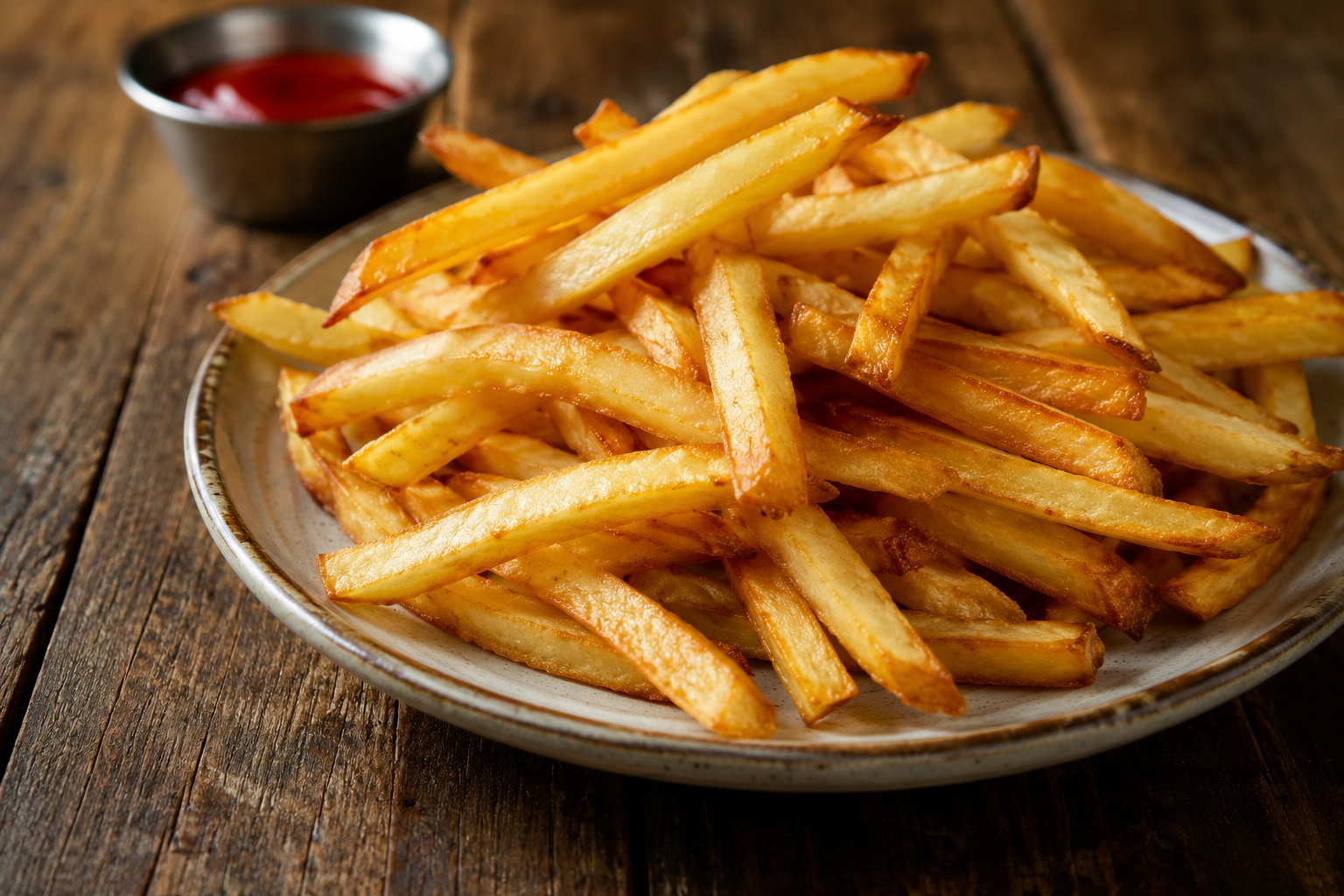
The second fry is where the fries develop their golden color and crisp exterior.
After the first fry, the potatoes are given time to cool before going back into hotter oil. This second cooking stage drives off more surface moisture and promotes browning, creating the crunchy crust we associate with great French fries.
The inside remains soft and fluffy because the potato’s interior contains more moisture than the outer surface.
Chef RBS Tip: Don’t overcrowd the fryer or pan. Adding too many fries at once can lower the oil temperature and make the fries absorb more oil instead of becoming crisp.
Oil Temperature Makes a Big Difference
If the oil isn’t hot enough, fries can become greasy and soft instead of crisp. If the oil is too hot, the outside can brown too quickly while the inside is still undercooked.
For a traditional double-fry method, the first fry is usually done at a lower temperature, followed by a hotter second fry to crisp and brown the exterior.
Chef RBS Tip: Use a kitchen thermometer when possible. Consistent oil temperature is one of the easiest ways to get more consistent fries.
The Best Fries Have a Crisp Outside and Fluffy Center
Great French fries have a contrast in texture: crisp on the outside and soft and fluffy inside.
That texture comes from controlling moisture during cooking. The outside loses enough moisture to form a crisp crust, while the inside retains enough moisture to stay tender.
This is why potato choice, cutting, rinsing, drying, frying temperature and cooking time all matter.
Chef RBS Tip: If your fries are crisp immediately but become soft quickly, excess moisture or trapped steam may be the problem. Let freshly fried fries drain properly and avoid covering them while they’re still very hot.
How to Make Crispy French Fries at Home
Crispy French fries come down to one simple principle: control the moisture and the heat.
Choose a starchy potato, rinse away excess surface starch, dry the potatoes thoroughly and use the double-fry method for a crispier exterior.
Most importantly, keep your oil temperature consistent and avoid overcrowding the pan or fryer.
Chef RBS Tip: For restaurant-style fries, don’t rush the process. The combination of proper potato preparation, drying and two-stage frying is what creates that satisfying crunch outside and fluffy center.