Why Does Butter Burn? What Really Happens When Butter Gets Too Hot
Butter can make almost any dish taste richer and more flavorful—but heat it too much and it can quickly turn brown, smoky and bitter. Understanding what happens to butter as it gets hotter can help you cook with it more confidently.
In this guide, Chef RBS explains why butter burns, what the different stages of browning mean, and how to prevent burnt butter from ruining your food.
Butter Contains More Than Just Fat
Butter is mostly milk fat, but it also contains water and milk solids. Those milk solids include proteins and sugars, and they are the part that changes color and can burn as butter gets hotter.
When butter melts, the water begins to evaporate. As the temperature rises, the milk solids can start to brown, creating the nutty aroma and flavor associated with brown butter.
If the heat continues for too long, those milk solids can go from beautifully browned to burnt. That’s when butter develops a dark color, smoky smell and bitter taste.
Chef RBS Tip: Watch the color and aroma, not just the clock. Butter can move from perfectly browned to burnt surprisingly quickly.
Butter Goes Through Different Stages as It Heats
As butter heats, you can actually see and smell several changes happening.
Melted butter: The butter becomes liquid as its fat melts.
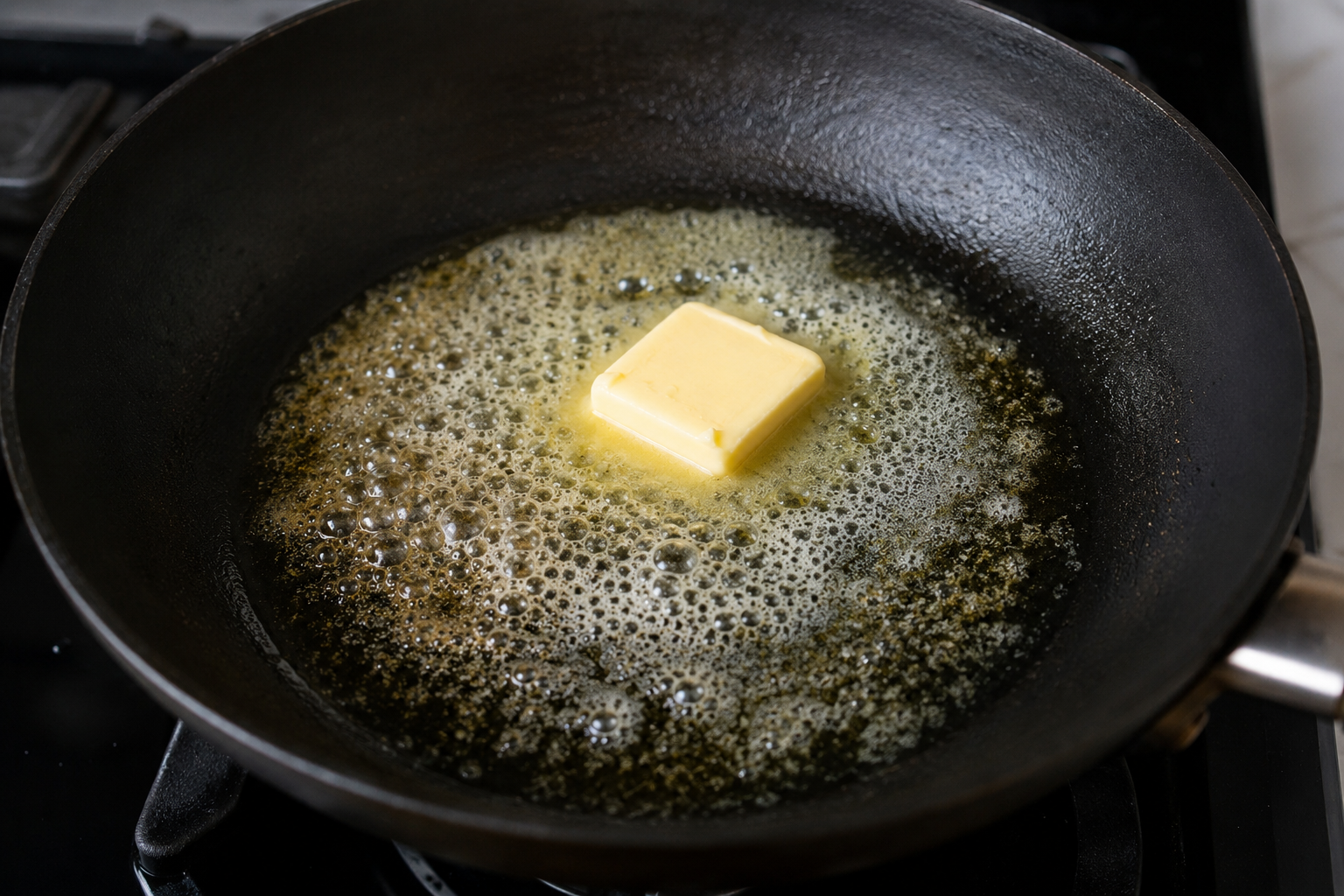
Foaming butter: Water in the butter turns into steam, creating bubbles and foam.
Brown butter: Once much of the water has evaporated, the milk solids begin to brown. The butter develops a nutty aroma and deeper flavor.
Burnt butter: If heating continues too far, the browned milk solids become very dark and eventually burn. The flavor turns bitter and the aroma becomes smoky.
Chef RBS Tip: Brown butter is a flavor-building technique—but the moment you see very dark milk solids and smell burning, you’ve gone too far.
Why Does Butter Turn Brown?
The brown color comes from the milk solids in butter. As the water evaporates and the temperature rises, these milk solids undergo browning reactions that create new flavors and aromas.
This is why properly browned butter has a rich, nutty taste that is very different from melted butter.
The key is controlling the heat. You want the milk solids to brown, but not continue heating until they burn.
Chef RBS Tip: When making brown butter, use a light-colored pan if possible. It makes the change from pale to golden-brown much easier to see.
Butter Can Burn Faster Than You Think
Because butter contains water and milk solids, it can change quickly once the water has evaporated. A pan that feels moderately hot can suddenly take butter from browned to burnt.
This is especially easy to do when you’re cooking at high heat or when you walk away from the pan for even a short time.
Chef RBS Tip: Stay close when browning butter. Once the butter starts foaming and the milk solids turn golden, keep watching it carefully and remove it from the heat when it reaches the color and aroma you want.
What Does Burnt Butter Taste Like?
Burnt butter has a very different flavor from properly browned butter. Instead of tasting nutty and rich, it can become bitter, smoky and unpleasant.
Once the milk solids have burned, simply adding more ingredients usually won’t remove that burnt flavor. If burnt butter is mixed into a delicate sauce, the bitterness can affect the entire dish.
Chef RBS Tip: If your butter has become very dark and smells burnt, it’s usually better to start again rather than trying to rescue the dish.
How to Prevent Butter From Burning
The easiest way to prevent burnt butter is to control the heat and watch the pan closely.
For everyday cooking, use medium or medium-low heat when working with butter. If you need high heat for searing or frying, consider using a cooking fat with a higher smoke point instead of relying on butter alone.
You can also combine butter with another cooking fat. This can make butter easier to use at higher cooking temperatures, although it does not make butter impossible to burn.
Chef RBS Tip: Add butter toward the end of cooking when you want its rich flavor without exposing it to prolonged high heat.
Can You Use Butter for High-Heat Cooking?
Regular butter is not the best choice for prolonged high-heat cooking because its milk solids can brown and burn relatively quickly.
However, butter is excellent for finishing dishes, sautéing at moderate temperatures, making sauces and creating brown butter. The goal is to use it where its flavor can shine without overheating it.
If you need a butter-like flavor at higher temperatures, clarified butter or ghee can be a better option because most of the water and milk solids have been removed.
Chef RBS Tip: Think of regular butter as a flavor ingredient, not just a cooking fat. Use the right form of butter for the temperature you’re cooking at.
How to Keep Butter From Burning
Butter isn’t difficult to cook with—you just need to understand how it reacts to heat. The water evaporates first, the milk solids can brown and create delicious nutty flavors, and too much heat can eventually turn those same solids bitter and burnt.
For better results, control your heat, watch the butter closely and choose the right type of butter or cooking fat for the job.
Chef RBS Tip: Don’t fear brown butter—learn to recognize the moment before it becomes burnt. That small difference can completely change the flavor of your dish.