Are Ultra Processed Foods Unhealthy?
Why are ultra-processed foods everywhere in America?
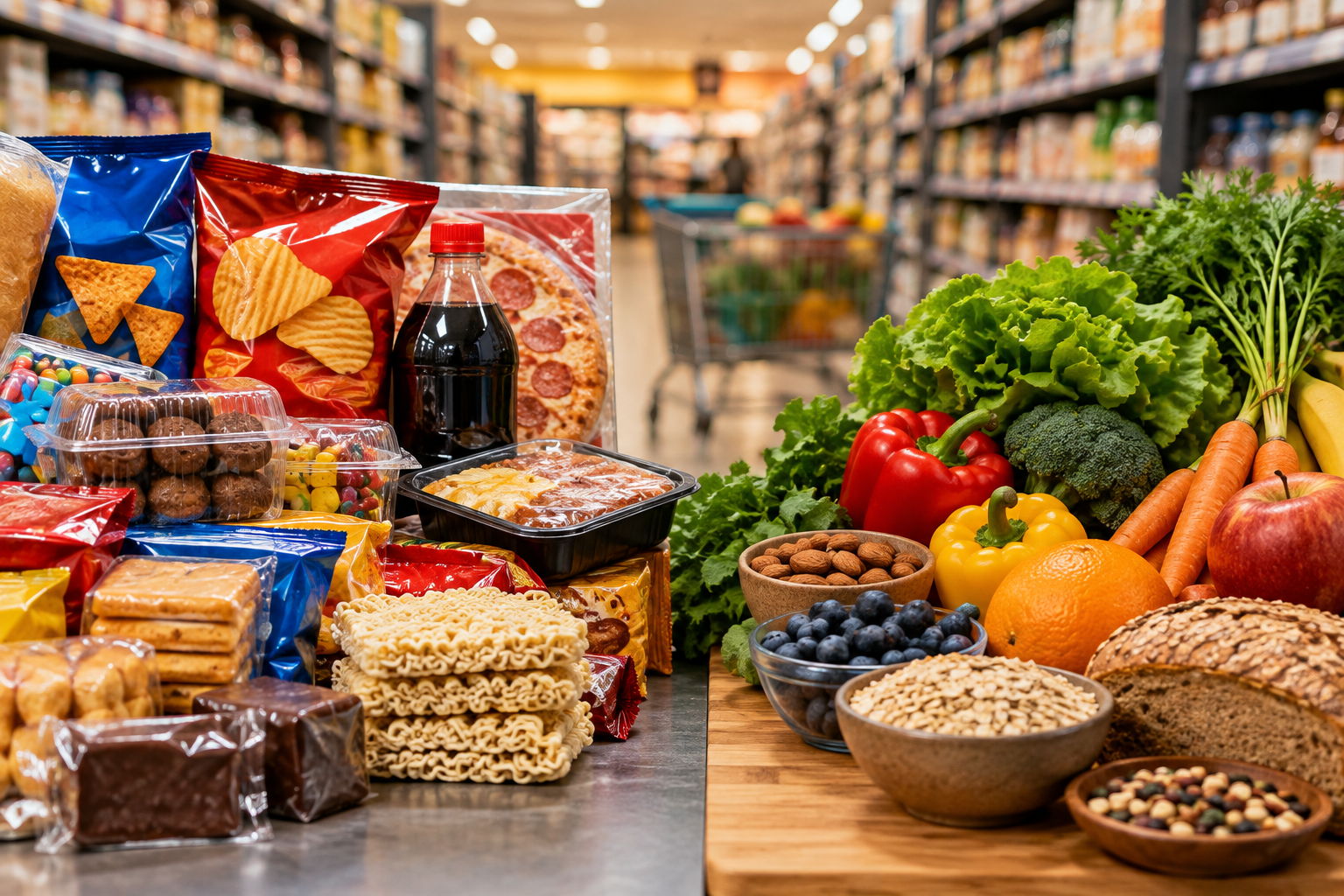
Walk through an American supermarket and you will find thousands of foods designed to be convenient, affordable, shelf stable, and ready to eat.
Some are barely changed from the ingredients they started with. Others have been transformed through industrial processing into products that would be difficult to recreate in a normal home kitchen.
This is where the conversation around ultra-processed foods begins.
The term appears everywhere today, but it is often used as if every packaged or processed food is automatically unhealthy. That is not quite how food science works.
Processing can make food safer, extend shelf life, improve texture, and make ingredients available throughout the year. Fermentation, pasteurization, freezing, drying, and cooking are all forms of food processing.
The more interesting question is what happens when food is formulated far beyond its original ingredients and designed for maximum convenience, flavor, texture, and shelf life.
As a chef and food science professional, I think consumers deserve a more useful conversation than simply being told to “avoid processed food.”
What exactly is ultra processing, why is it everywhere, and what should Americans actually look for when choosing food?
What Does “Ultra Processed” Actually Mean?
The first thing to understand is that processed food and ultra-processed food are not the same thing.
Almost all food is processed in some way. Washing vegetables, grinding wheat into flour, pasteurizing milk, cooking rice, freezing vegetables, and fermenting yogurt all change food from its original state.
Processing itself is not the enemy.
The term “ultra-processed” is generally used for foods made through more extensive industrial formulation, often involving ingredients and additives that are uncommon in a typical home kitchen. These products may be designed to deliver a particular combination of taste, texture, appearance, convenience, and shelf stability.
Think about the difference between oats and a highly formulated packaged breakfast product. Both can be convenient, but the way they are manufactured and formulated can be very different.
This distinction matters because simply seeing a package in a supermarket does not tell you whether a food is ultra-processed.
The ingredient list and the way the product is formulated tell us much more.
That is why I prefer to look at the food itself rather than automatically dividing everything into “good” and “bad” based on whether it has been processed.
Why Are Ultra-Processed Foods So Common in America?
There is no single reason.
Convenience is probably one of the biggest.
Modern consumers are busy. A product that can stay on a shelf for months, require almost no preparation, and deliver a predictable taste is extremely attractive.
Cost also matters. Large-scale manufacturing can produce food efficiently, distribute it across the country, and make it available at a relatively low price.
Then there is consistency.
A packaged food company can formulate a product so that it tastes almost identical every time. The texture, sweetness, saltiness, color, and aroma can all be carefully controlled.
From a food technology perspective, that is impressive.
But the same characteristics that make these products convenient and appealing can also make them very easy to consume regularly.
When food is engineered for convenience, consistency, and strong sensory appeal, the question is no longer simply how it was processed. We also need to consider how the finished product fits into the overall diet.
This is one reason the ultra-processed food conversation has become so important in America.
Processing Is Not Automatically Bad
This is one of the most important points to understand.
Food processing has given us many useful things. Pasteurization helps make milk safer. Freezing can preserve vegetables and fruit. Canning can extend the life of nutritious foods. Fermentation can create entirely new flavors and textures.
Even professional kitchens depend on processing every day.
We chop, grind, cook, reduce, ferment, freeze, dehydrate, and combine ingredients to create food that would not exist in its original form.
So the question should not be:
“Has this food been processed?”
A better question is
“How has it been processed, what has been added, and what does the finished food contribute to my diet?”
That distinction helps avoid two extremes. One is believing that every packaged food is harmful. The other is assuming that a product is healthy simply because its packaging uses words such as “natural,” “wholesome,” or “clean.”
Food science is rarely that simple.
Understanding the difference between ordinary processing and extensive industrial formulation gives consumers a much better starting point for making informed choices.
Why Food Companies Make Foods This Way
From a food technology perspective, there is a reason manufacturers use different ingredients, processing methods, and formulations.
A product has to survive transportation, storage, and handling before it reaches the customer. It may need to remain stable for weeks or months and maintain a consistent texture and taste the same every time someone opens the package.
Manufacturers may also need to control moisture, prevent spoilage, protect flavor, and create a specific texture.
These are legitimate technical challenges.
The problem becomes more complicated when a product is designed primarily around maximum convenience and sensory appeal rather than the nutritional quality of the overall diet.
As a chef, I find this distinction fascinating because many of the techniques used by large food manufacturers have parallels in professional kitchens. We also care about texture, shelf life, consistency, flavor, and presentation.
The difference is scale.
A restaurant may prepare a sauce for today’s service. A manufacturer may need that same type of product to remain stable through production, shipping, supermarket storage, and finally the customer’s kitchen.
Food formulation is therefore not automatically about making food unhealthy. It is about solving technical problems at scale.
The important question is what nutritional and dietary consequences come with those solutions.
The Ingredient List Tells a Bigger Story
If you want to understand a packaged food, don’t stop at the front of the package.
Turn it around.
The ingredient list can tell you far more about how a product is made and what it contains.
Look at the first few ingredients. These are present in the greatest amounts by weight. Then look at the rest of the list and notice how many different ingredients are being used to create the final product.
You may see familiar ingredients such as flour, oats, milk, eggs, vegetables, or spices. You may also see ingredients added for texture, stability, flavour, color, or shelf life.
None of those ingredients should automatically be labelled “bad” simply because their names sound unfamiliar.
This is where food science matters.
An emulsifier, stabilizer, or acidity regulator may have a specific technical purpose. Understanding that purpose is more useful than judging an ingredient purely by how complicated its name sounds.
At the same time, a very long ingredient list can be a useful signal to pause and understand what you are actually buying.
Don’t fear the ingredient list. Learn to read it.
That is a much more practical approach to understanding ultra-processed food.
When “Healthy” Packaging Can Be Misleading
One of the easiest mistakes consumers can make is judging a food by the front of the package.
Words such as “natural,” “wholesome,” “light,” “protein,” “multigrain” or “made with real ingredients” can attract attention, but they do not tell the complete nutritional story.
A product can contain a positive-sounding ingredient and still be high in added sugar, sodium or calories.
The same applies to foods marketed as convenient solutions for busy lifestyles. Convenience can be useful, but it should not automatically be confused with nutritional quality.
This is particularly important when a product is promoted around one specific benefit.
If a cereal is marketed as high protein, look at the rest of the nutrition information. If a snack highlights whole grains, check what else is included. If a drink promotes a particular nutrient, look at the complete ingredient and nutrition panels.
One nutritional claim should never become the entire reason you trust a food.
As a chef, I would rather teach people to understand food than tell them which products they are allowed to eat.
The goal is not fear.
The goal is informed choice.
Does Ultra Processed Mean Unhealthy?
This is where the conversation needs some nuance.
The term “ultra-processed” describes a category of food based on how it is formulated and processed. It does not mean that every food in that category has exactly the same nutritional profile or that every minimally processed food is automatically nutritious.
Two packaged foods can look very different nutritionally even if both are highly processed.
The same is true in the other direction. A food can be minimally processed but still contain large amounts of saturated fat, sodium, or added sugar.
That is why I don’t like using processing level as the only measure of whether something belongs in a healthy diet.
Look at the whole picture.
Consider the ingredients, nutrition facts, portion size, frequency of consumption, and what the food replaces in your diet.
If a convenient packaged food helps someone eat more vegetables, whole grains, legumes, or other nutritious foods, that context matters.
If highly processed snacks and drinks consistently replace more nutritious foods, that context matters too.
The most useful approach is therefore not to fear every industrially made food.
It is to understand what you are eating and how often it fits into your overall diet.
How a Chef Looks at Ultra Processed Food
When I look at a packaged food, I don’t judge it simply by whether it is processed.
I look at what the food is trying to achieve.
Does it need to stay stable during storage? Is the texture important? Is moisture being controlled? Are ingredients being used for preservation, flavor, color, or consistency?
Then I look at the food from the customer’s perspective.
What does it contribute nutritionally? How filling is it? How much of it would someone normally eat? Is it replacing a more nutritious food or simply adding convenience to the diet?
This is how chefs and food professionals often think about food differently from consumers.
We don’t just see ingredients. We see function.
Understanding that function can make the ultra-processed food conversation much less frightening and much more useful.
Instead of asking whether an ingredient sounds complicated, ask why it is there.
Instead of asking whether a food is packaged, ask what the complete product provides.
And instead of believing every health claim on the front of a package, learn to look at the information behind it.
Food becomes much easier to understand when you stop fearing the science and start learning it.
What Should Americans Actually Do?
You don’t need to eliminate every packaged food from your kitchen.
A more realistic approach is to become a smarter food shopper.
Start by looking beyond the front of the package. Read the ingredient list and Nutrition Facts label. Compare similar products and pay attention to added sugar, sodium, fibre, and the overall nutritional value.
Choose foods that fit your needs rather than automatically buying something because it carries a health-focused claim.
At home, build more meals around foods you recognize and enjoy: vegetables, fruits, whole grains, beans, lentils, eggs, dairy, seafood, meat, nuts, and seeds.
Packaged foods can still have a place. They can make busy days easier, provide convenience, and help reduce food waste.
The goal is not perfection.
The goal is balance, awareness, and better choices more often.
As a chef, I believe food should be understood rather than feared. Once you understand how food is processed and why ingredients are used, you can make decisions with much more confidence.
Chef RBS Verdict
Ultra-processed food is not a simple story of good versus bad.
Food processing has helped make food safer, more affordable, more convenient, and more available. The real concern begins when highly formulated foods become a dominant part of the diet and start replacing a wider variety of nutritious foods.
Consumers don’t need to fear every package on a supermarket shelf.
They need to understand what is inside it.
Read the ingredients. Understand the nutrition. Look beyond the marketing.
And remember that a healthy approach to food is rarely about one ingredient, one label, or one trend.
It is about the overall pattern of what you eat.
As chefs and food professionals, our responsibility should not be to create fear around food science. It should be to make that science easier for people to understand.
Because the more you understand your food, the better decisions you can make about it.
Frequently Asked Questions About Ultra Processed Foods
What are ultra-processed foods?
Ultra-processed foods are generally highly formulated products made using industrial processing and combinations of ingredients that are uncommon in a typical home kitchen.
Is all processed food unhealthy?
No. Processing can improve food safety, shelf life, convenience, and availability. The level and type of processing, along with the food’s overall nutritional profile, matter.
How can I identify ultra-processed foods?
Start by reading the ingredient list and Nutrition Facts label. Look at the ingredients, nutritional values, and overall composition rather than relying only on claims on the front of the package.
Should I avoid all ultra-processed foods?
Not necessarily. A practical approach is to consider how often these foods are consumed and whether they are replacing more nutritious foods in the overall diet.
Are packaged foods always ultra-processed?
No. Packaged food can range from minimally processed foods such as frozen vegetables to highly formulated products. Packaging alone does not determine the level of processing.