How Did the Cyclospora Lettuce Outbreak Become a Food Safety Concern? The Food Safety Crisis: Changing Restaurant Salads
Lettuce seems like one of the simplest foods on a restaurant menu. It appears in salads, burgers, wraps, and sandwiches, usually served raw and ready to eat.
But in 2026, lettuce became the center of a major food safety story in America.
A multistate outbreak of Cyclospora illness was linked to iceberg lettuce, leading to recalls and widespread attention from food safety authorities. The outbreak was officially declared over in September, but the investigation into how the contamination occurred is still continuing.
For restaurants, this story is about much more than one ingredient.
Leafy greens are challenging because customers usually eat them without a final cooking step. That means receiving, storage, washing, preparation, temperature control, and preventing cross-contamination all become extremely important.
As a chef, I look at food safety differently from simply asking whether an ingredient looks fresh. A clean-looking lettuce leaf can still require careful handling throughout the entire food chain.
So what actually happened to America’s lettuce, what is Cyclospora, and what can restaurants and consumers learn from this outbreak?
Let’s break down the food safety science behind the story.
What Is Cyclospora?
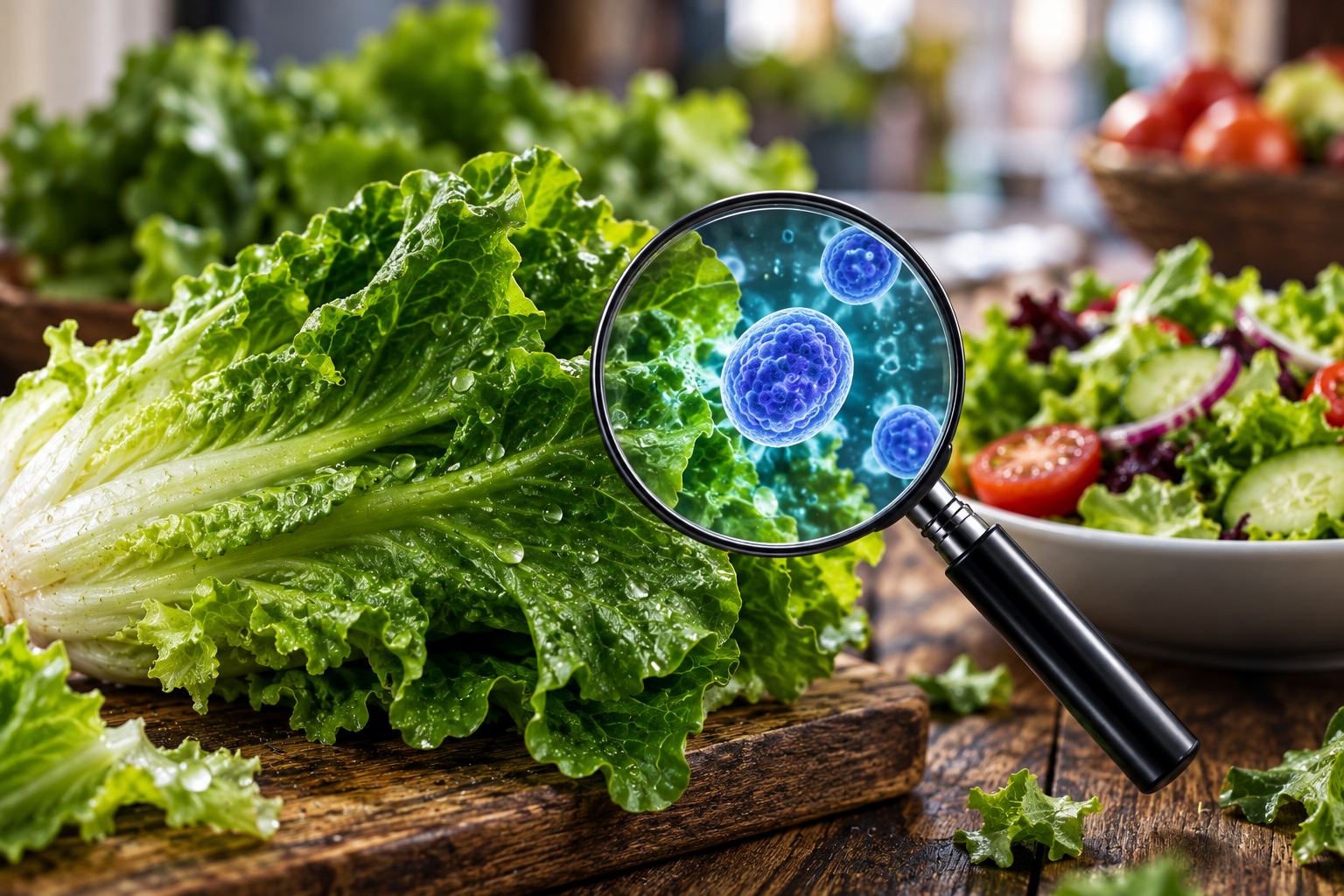
Cyclospora is a microscopic parasite that can cause an intestinal infection called cyclosporiasis.
Unlike many foodborne illnesses that people may associate with bacteria such as Salmonella or E. coli, Cyclospora is a parasite with a different life cycle and different control challenges.
People can become infected when they consume food or water contaminated with the parasite. Fresh produce can be particularly important because foods such as lettuce are often eaten raw.
Symptoms can include frequent, watery diarrhea, abdominal cramps, nausea, loss of appetite, weight loss, and fatigue. Symptoms may also come and go rather than remaining constant.
One important food safety point is that contaminated produce may look, smell, and taste completely normal.
This is why visual inspection alone is not enough to determine whether ready-to-eat produce is safe.
For restaurant kitchens, the lesson is simple: food safety starts long before the customer takes the first bite.
Why Is Lettuce So Difficult to Keep Safe?
When chicken, beef, or other foods are cooked properly, the cooking process can provide an important control step against many harmful microorganisms. A salad does not normally have that same final heat treatment.
Lettuce also passes through several stages before it reaches the customer. It can be grown, harvested, transported, stored, washed, cut, prepared, and finally served.
Every step creates an opportunity for contamination or cross-contamination if food safety controls are not followed properly.
Once lettuce is cut, the situation becomes even more important. Cutting increases the number of surfaces that can come into contact with equipment, hands, containers, and other foods.
This does not mean restaurants should avoid salads. It means ready-to-eat produce deserves the same serious attention as every other food safety operation in a professional kitchen.
Good receiving practices, clean equipment, proper hand hygiene, safe storage, and preventing cross-contamination all form part of the control system.
For chefs, food safety is not one single action. It is a chain, and every link matters.
How Did the Lettuce Become a Food Safety Concern?
The 2026 outbreak was associated with iceberg lettuce, which brought attention to a food safety problem that can be difficult to see with the naked eye.
According to the FDA, the recalled iceberg lettuce was associated with illnesses caused by Cyclospora, and the investigation focused on lettuce supplied from central Mexico. A voluntary recall was issued after the outbreak investigation identified the connection.
One important point is that not every head of lettuce was contaminated. The issue involved specific recalled products and supply chains associated with the investigation.
This distinction matters because food safety news can sometimes create unnecessary fear around an entire category of food.
Restaurants should not respond by assuming that all lettuce is unsafe. They should respond by strengthening their food safety controls and making sure their suppliers, receiving procedures, and traceability systems are reliable.
For a professional kitchen, knowing where an ingredient came from is just as important as knowing how it was stored.
Traceability is one of the most important tools a restaurant has when a food safety problem occurs.
What Should Restaurants Do With Lettuce?
The biggest lesson from a food safety outbreak is not to panic. It is to strengthen the system.
Restaurants should buy produce from reputable suppliers and maintain clear receiving records so ingredients can be traced if a recall occurs.
When lettuce arrives, staff should check the product, packaging, condition, and temperature according to the restaurant’s food safety procedures. Any recalled product should be isolated and handled according to the recall instructions.
Storage is equally important. Ready-to-eat produce should be protected from contamination and kept under appropriate refrigeration conditions.
During preparation, clean and sanitized equipment, proper hand hygiene, and separation from raw animal products are essential. Cutting boards, knives, containers, and preparation surfaces should never become a pathway for cross-contamination.
Restaurants should also make sure employees understand the difference between cleaning and sanitizing. Cleaning removes dirt and food residue, while sanitizing reduces microorganisms on a properly cleaned food-contact surface.
Finally, every restaurant should have a simple recall procedure. When a supplier or food safety authority identifies a problem, the kitchen should be able to quickly determine what product was received, where it was stored, whether it was used, and what action needs to be taken.
Good food safety is about having a system that still works when something goes wrong.
Does Washing Lettuce Make It Completely Safe?
Washing fresh produce is an important part of food preparation, but it is important not to think of washing as a guarantee that every hazard has been eliminated.
Rinsing can help remove dirt, debris, and some contaminants from the surface of produce. However, it does not turn potentially contaminated lettuce into a risk-free food.
This is especially important with Cyclospora because the parasite has a complex life cycle, and ordinary kitchen washing should not be treated as a substitute for proper supplier controls, recalls, and food safety procedures.
Restaurants should therefore follow the produce handling procedures required by their local food safety regulations and supplier guidance.
Another common mistake is using the same sink, equipment, or preparation area without proper cleaning and sanitizing between different food handling activities.
The safest approach is not to rely on one step.
Safe produce handling depends on the entire process, from an approved supplier and proper receiving to hygienic preparation, correct storage, and preventing cross-contamination.
For restaurant kitchens, that complete system is far more important than simply asking whether the lettuce has been washed.
What Does This Mean for Restaurant Salads?
Restaurant salads are unlikely to disappear because of one outbreak. In fact, salads remain an important part of many menus because customers want fresh, lighter, and vegetable-focused choices.
What can change is the way restaurants think about salad preparation.
A salad station may look simple, but it is a ready-to-eat food operation. Lettuce can come into contact with hands, knives, cutting boards, storage containers, refrigerator shelves, and other ingredients.
This makes workflow important.
In a professional kitchen, ready-to-eat vegetables should be protected from raw foods and unnecessary handling. Staff should follow established procedures for receiving, storing, preparing, and serving produce.
Menu planning can also help. Restaurants may review which leafy greens they use, how frequently they receive them, how much product is prepared in advance, and how effectively unused ingredients are managed.
The goal is not to remove salads from the menu. The goal is to make the salad operation safer and more controlled.
A well-designed kitchen should make the safe action the easy action for every member of the team.
What Should Consumers Know About the Lettuce Outbreak?
For consumers, the most important message is to understand the difference between a specific recall and an entire category of food.
The 2026 Cyclospora outbreak was associated with specific iceberg lettuce products, not every piece of lettuce sold in America.
Because the outbreak has been declared over and the recalled products are no longer expected to be available, consumers should follow current guidance from food safety authorities rather than avoid lettuce altogether.
When buying or eating fresh produce, basic food safety still matters. Keep refrigerated foods cold, prevent contact between raw and ready-to-eat foods, wash produce according to recommended guidance, and pay attention to food recalls.
Consumers should also remember that contaminated food may not look or smell unusual.
Food safety is not about making people afraid of food. It is about understanding risk and knowing how that risk is controlled.
That is the lesson I would take from the lettuce outbreak.
What Can Restaurants Learn From This Outbreak?
A food safety incident can teach a restaurant lessons that go far beyond the ingredient involved.
The first lesson is supplier control. Restaurants need to know who supplies their produce and maintain enough receiving information to trace products when a recall happens.
The second lesson is traceability. If a product is recalled, a kitchen should be able to identify where it went, whether it was used, and what action is required.
The third lesson is employee training. Food safety procedures only work when the entire team understands why they matter and follows them consistently.
The fourth lesson is ready-to-eat food control. Foods that are served without a final cooking step deserve particular attention because there is no later heat treatment to provide another control point.
And finally, restaurants need a culture where food safety is treated as part of food quality rather than an administrative requirement.
A great restaurant is not only one that serves delicious food. It is one that has systems in place to protect the customer every day.
That is where professional food safety becomes part of professional cooking.
What Happens Next for America’s Lettuce Supply?
The end of the outbreak does not mean the food safety conversation ends.
The FDA has continued investigating the source of the contamination, while the restaurant and produce industries continue to rely on supplier controls, traceability, and preventive food safety systems.
For restaurants, the practical response is not to remove lettuce permanently from menus. It is to become more disciplined about where produce comes from and how it moves through the kitchen.
This can also encourage restaurants to review their salad operations from a business perspective. How much lettuce is purchased? How much is prepared each day? How long does prepared produce remain in storage? Can the kitchen trace a batch quickly if a recall occurs?
These questions connect food safety with food cost, waste control, and operational efficiency.
Food safety and restaurant profitability should not be treated as separate subjects.
A safer kitchen can also be a better organized kitchen, with stronger purchasing, better inventory control, and clearer procedures for employees.
The lettuce story is therefore not simply about what went wrong. It is also an opportunity for restaurants to build better systems for the future.
Chef RBS Food Safety Takeaway
The 2026 lettuce outbreak is a reminder that food safety begins long before food reaches the customer’s plate.
As chefs, we cannot judge the safety of lettuce simply by looking at it. We need reliable suppliers, proper receiving procedures, good storage practices, hygienic preparation, and strong controls against cross-contamination.
For restaurants, the real lesson is system thinking.
Every ingredient has a journey from farm to supplier, from supplier to kitchen, and from kitchen to customer. A weakness at any stage can create a food safety problem.
Ready-to-eat foods deserve particular attention because there may be no final cooking step before they are served.
The goal should never be to create fear around salads or fresh produce. The goal is to understand the risks and build practical systems that control them.
Fresh food is valuable. Safe food is essential. A professional kitchen must deliver both.
Frequently Asked Questions
Is the 2026 Cyclospora lettuce outbreak still active?
No. The outbreak was declared over in September 2026. However, the FDA’s investigation into the source of contamination is continuing.
Was all lettuce in America recalled?
No. The recall involved specific iceberg lettuce products associated with the investigation. Consumers should follow current FDA recall information rather than assume all lettuce is unsafe.
Can contaminated lettuce look normal?
Yes. Food contaminated with a pathogen or parasite may not show obvious changes in appearance, smell or taste.
Does washing lettuce remove Cyclospora?
Washing can help remove dirt and some contaminants, but ordinary washing should not be considered a guarantee that contaminated produce is safe.
Why are restaurant salads a food safety concern?
Salads commonly contain ready-to-eat ingredients that are served without a final cooking step. This makes supplier control, hygiene, storage, and preventing cross-contamination particularly important.
What should restaurants do during a food recall?
Restaurants should identify the recalled product, stop using it, isolate it, and follow the instructions provided by the supplier and relevant food safety authorities. Good traceability records make this process much easier.
Should people stop eating lettuce?
There is no reason to treat all lettuce as unsafe because of a specific outbreak. Consumers should follow current public health and recall guidance and continue practicing basic food safety.