Are Frozen Blueberries Safe? What the 2026 E. coli Outbreak Means for Consumers and Restaurants
Are Frozen Blueberries Safe?
Frozen blueberries seem like one of the easiest foods to trust. They are convenient, have a long shelf life, and can go straight into smoothies, desserts, breakfast bowls, and sauces.
But a current food safety investigation in the United States is putting frozen blueberries under the spotlight.
The FDA is investigating an outbreak of E. coli O145:H28 linked to specific frozen blueberry products. The investigation has already led to recalls, and illnesses have been reported in multiple states.
This raises an important question that many consumers and restaurant operators may not have considered:
Can frozen fruit still carry harmful bacteria?
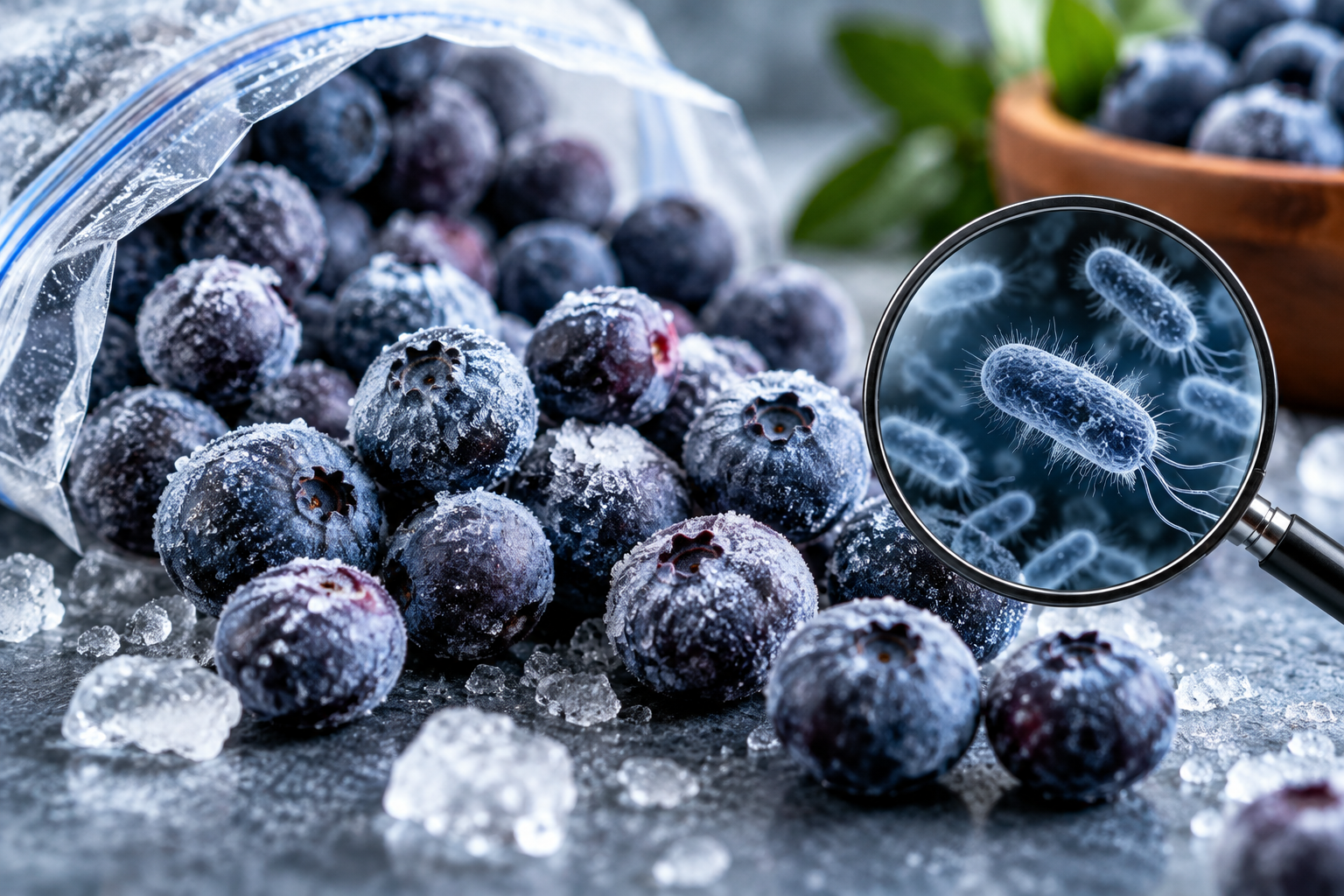
The short answer is yes. Freezing can preserve food and slow the growth of microorganisms, but it should not automatically be treated as a kill step.
As a chef, I think this story is important because frozen ingredients are widely used in professional kitchens. A bag of frozen fruit may look completely normal, but food safety depends on much more than appearance.
So what happened with the frozen blueberry investigation, how can E. coli be associated with frozen fruit, and what should consumers and restaurants actually do?
Let’s break down the food safety science behind the story.
What is E. coli?
E. coli is a group of bacteria that normally live in the intestines of people and animals. Many strains are harmless, but some can cause foodborne illness.
The strain involved in this investigation is E. coli O145:H28, a type of Shiga toxin-producing E. coli.
People can become infected when they consume food or water contaminated with the bacteria. Symptoms can include diarrhea, stomach cramps, and vomiting. Some infections can become serious and may lead to complications.
One important food safety point is that contaminated food may not look, smell, or taste unusual.
This is why food safety cannot depend on appearance alone.
The frozen blueberry investigation also highlights an important misconception about frozen foods: freezing is a preservation method, not a guarantee that harmful bacteria have been eliminated.
Understanding that difference is essential for both consumers and professional kitchens.
Why Doesn’t Freezing Kill E. coli in Frozen Blueberries? One of the biggest misconceptions about frozen food is that freezing automatically makes it safe.
Freezing temperatures can slow or stop the growth of many microorganisms, which is one reason freezing is such an effective preservation method. But that does not mean every harmful microorganism is destroyed.
Some bacteria can survive freezing and remain present when the food is eventually thawed.
This is why frozen blueberries should not be treated as though they have already been cooked or pasteurized simply because they have been stored at very low temperatures.
The difference between preservation and destruction is important.
Refrigeration and freezing help control food over time. A validated cooking or processing step, when appropriate, is what can provide a microbial reduction.
For restaurants, this matters because frozen fruit may be used directly in smoothies, desserts, sauces, and other ready-to-eat products.
Cold storage protects food quality and slows microbial growth, but cold storage should never be confused with a kill step.
That simple distinction can prevent a serious misunderstanding in both home kitchens and professional food operations.
How Can Frozen Blueberries Become Contaminated?
Frozen fruit can pass through many stages before it reaches a freezer in a home or restaurant.
Blueberries may be grown, harvested, sorted, processed, packaged, transported, and stored before they are finally used. If harmful bacteria enter the food chain at any stage, the finished product can potentially carry that contamination.
This is one reason food safety professionals look beyond the final package. The safety of a frozen ingredient depends on controls throughout the supply chain.
Another important point is that contamination does not necessarily make food look different. A package can appear normal while still requiring proper food safety controls.
For restaurants, this makes supplier approval and traceability extremely important. If a recall is announced, the kitchen needs to know which products it received, where those products are stored, and whether they have already been used.
Good inventory records can make this process much faster.
Food safety does not end when an ingredient reaches the freezer.
It continues through storage, handling, preparation and service.
What Should Restaurants Do If They Have Recalled Blueberries?
When a food recall is announced, speed and organization matter.
Restaurants should first identify whether they received the specific recalled product. This is where supplier invoices, delivery records, lot information, and inventory records become extremely valuable.
If a recalled product is found in the kitchen, staff should stop using it and follow the official recall instructions. The product should be separated from other ingredients so it cannot accidentally return to production.
Restaurants should also consider where the recalled ingredient may have been used. Frozen blueberries can become part of smoothies, desserts, sauces, breakfast dishes, and other menu items, so traceability needs to extend beyond the freezer.
Employees should know who is responsible for handling recalls and who makes the final decision about removing affected food from service.
A recall procedure should already exist before a recall happens.
When a kitchen has clear records and trained staff, a food safety alert can be handled quickly and systematically instead of creating confusion during service.
What Should Consumers Do With Frozen Blueberries?
Consumers should not assume that every frozen blueberry product is affected by the current investigation.
The important step is to check whether the specific product, brand, package information, or lot details match the official recall information from the FDA.
If a product is included in a recall, do not eat it. Follow the recall instructions for disposal or return, and avoid using recalled berries in smoothies, desserts, or other foods.
It is also important to prevent cross-contamination. If recalled frozen fruit has been handled in a kitchen, clean and sanitize food-contact surfaces and wash hands properly after handling the product.
Consumers should also remember that foodborne bacteria cannot reliably be detected by looking at or smelling food.
The safest response to a food recall is to follow the official information, not guess from the appearance of the food.
For current recall details, consumers should rely on official information from the FDA rather than social media posts or unverified online claims.
Why Is Traceability So Important in a Food Recall?
Imagine a restaurant receives several cases of frozen blueberries over a number of deliveries. Without proper records, it can become difficult to know which products are still in storage, which have already been used, and which menu items may have contained them.
Traceability solves that problem.
A professional kitchen should be able to connect an ingredient to its supplier, delivery information, and internal inventory. This gives the restaurant a much clearer picture when a recall occurs.
Traceability also helps reduce unnecessary waste. Instead of throwing away every similar ingredient in the freezer, a restaurant can identify the specific product covered by the recall and follow the official instructions.
This is especially important for ingredients used across multiple menu items. One package of frozen fruit might become part of smoothies, desserts, sauces, or breakfast preparations.
Good traceability protects customers, reduces confusion, and helps restaurants respond quickly.
It is one of those systems that may seem unimportant during normal service but becomes extremely valuable when something goes wrong.
What Does This Mean for Frozen Fruit in Restaurants?
Frozen fruit is valuable in professional kitchens because it offers convenience, consistent availability, and reduced preparation time.
But convenience should never replace food safety controls.
Restaurants using frozen fruit should have clear procedures for receiving, freezer storage, stock rotation, handling, and preparation. Staff should also know how to respond if a supplier announces a recall.
Frozen fruit can be used in products that are served immediately, such as smoothies, or in foods that receive further processing. The safety controls needed can differ depending on how the ingredient is used and whether a validated cooking or processing step follows.
This is where menu and process knowledge becomes important.
A chef should know not only what ingredient is being used but also where it goes next.
If a frozen ingredient is going directly into a ready-to-eat product, there may be no later step to reduce a biological hazard.
Professional food safety means understanding the complete process from receiving to service.
Frozen storage is one part of that process, not the entire safety system.
What Does Freezing Actually Do to Food?
Freezing is one of the most useful preservation methods in the food industry, but it is important to understand what it actually does.
When food is frozen, much of its water turns into ice. The low temperature slows many chemical reactions and greatly slows the growth of microorganisms.
This helps extend shelf life and preserve food quality.
But freezing does not mean that every microorganism present in the food has been destroyed. Some microorganisms can survive freezing and remain present when the food is thawed.
This is why the safety of frozen food still depends on what happened before freezing, how the product was processed, how it was transported, and how it is handled afterward.
Freezing preserves food. It should not automatically be treated as a sterilization step.
For chefs and food businesses, understanding this difference is essential when deciding how an ingredient should be stored, prepared, and served.
What Can Restaurants Learn From This Outbreak?
The frozen blueberry investigation is a reminder that food safety is not limited to fresh meat, dairy, or leafy vegetables.
Any ingredient can become part of a food safety system, including frozen products that may appear stable and low risk.
For restaurant operators, the key lessons are supplier approval, traceability, inventory control, and employee training.
Kitchens should know where ingredients come from, how they are stored, and which menu items they are used in. Staff should also understand what to do when a supplier or food safety authority announces a recall.
Another important lesson is to avoid assumptions.
Frozen does not automatically mean safe. Fresh does not automatically mean safe.
Food safety depends on the controls applied throughout the entire food chain.
A professional kitchen should therefore build systems that reduce risk before an ingredient reaches the customer’s plate.
For me as a chef, that is the real takeaway: good food starts with good ingredients, but safe food starts with good systems.
Chef RBS Food Safety Takeaway
The frozen blueberry investigation is a reminder that food safety begins long before an ingredient reaches the kitchen.
As chefs, we cannot judge the safety of frozen fruit simply by looking at the package. We need reliable suppliers, proper receiving procedures, accurate storage records, and clear traceability.
Freezing is an excellent preservation method, but it should not be confused with a process that automatically eliminates harmful bacteria.
For restaurants, the most important lesson is system thinking. Every ingredient has a journey from farm to processor, from processor to supplier, from supplier to kitchen, and finally to the customer.
A strong food safety system should be able to identify a problem quickly, isolate affected ingredients, and prevent them from reaching customers.
Safe food is not created by one good decision. It is created by a series of good decisions throughout the food chain.
That is the standard every professional kitchen should aim for.
Frequently Asked Questions
Can frozen blueberries carry E. coli?
Yes. Freezing can slow microbial growth and help preserve food, but it does not automatically eliminate harmful bacteria that may already be present.
Does freezing kill E. coli?
Freezing should not be treated as a reliable kill step for E. coli. Some bacteria can survive freezing and remain present when food is thawed.
Are all frozen blueberries affected by the current investigation?
No. The investigation concerns specific products and recalls. Consumers and restaurants should check the current official recall information rather than assume all frozen blueberries are affected.
What should a restaurant do if it has recalled blueberries?
Stop using the affected product, isolate it, and follow the official recall instructions. Check purchasing and inventory records to determine where the product was received and used.
Why is traceability important?
Traceability allows a restaurant to identify affected products quickly, determine which menu items may have used them, and take appropriate action without unnecessary confusion or waste.
Can contaminated blueberries look normal?
Yes. Harmful bacteria cannot reliably be detected by looking at, smelling, or tasting food.
Should consumers stop eating frozen fruit?
Not necessarily. Consumers should follow current recall notices and food safety guidance rather than treating all frozen fruit as unsafe.