Protein Chips: What Happens When Protein Becomes a Crispy Snack?
A chip is supposed to be crunchy.
Protein is not exactly famous for being crunchy.
So when I first started seeing high-protein chips appearing beside regular snacks, my chef brain immediately had one question:
How do you put more protein into a chip without losing the crunch people actually want?
That is the interesting part of protein chips.
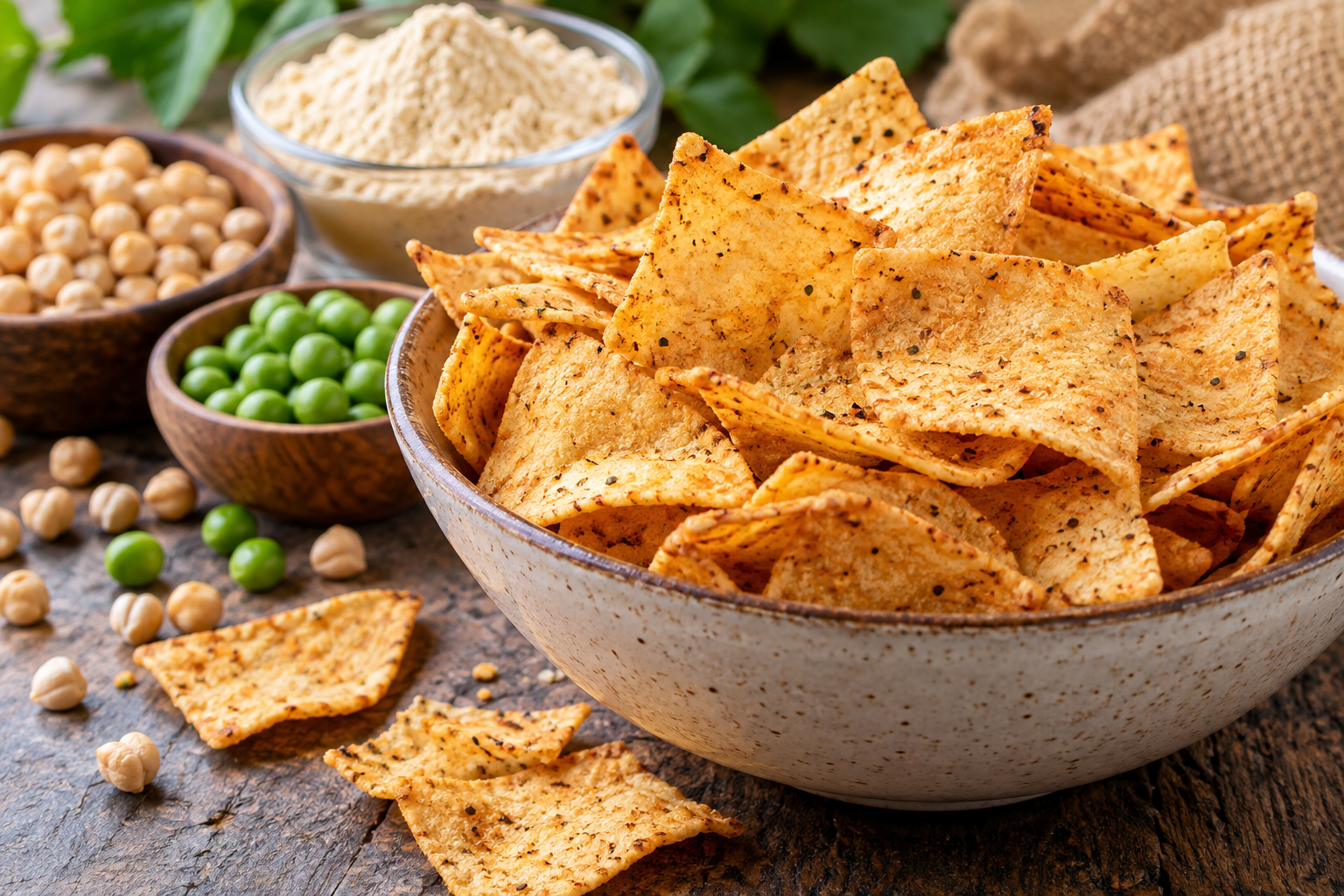
They are not simply ordinary chips with a little protein added. Depending on the product, the protein can come from ingredients such as dairy proteins, legumes, or other protein-rich sources, and each one behaves differently during processing.
The result is a new kind of snack where nutrition and texture have to work together.
And getting that balance right is harder than it looks.
1. Where Does the Protein Actually Come From?
The word “protein” on the front of a snack packet doesn’t tell you where that protein came from.
Protein chips can be made with different protein sources, depending on the product. You may see whey or milk proteins, pea protein, soy protein, lentil or other plant proteins in the ingredient list.
And this matters because proteins don’t all behave the same way.
Some can help create a lighter, crisp texture. Others can make a snack denser or harder if the formula isn’t balanced properly.
That’s why making a protein-rich chip is more than simply adding protein powder to a normal chip recipe.
The protein has to work with the starch, moisture, fat, and cooking process.
Chef RBS Tip: When comparing protein snacks, don’t look only at the big protein number on the front. Turn the packet around and check the actual protein source and full ingredient list.
2. Why Is Crunch So Difficult?
Here is where protein chips get interesting.
A good chip needs to be dry and crisp, but many protein ingredients naturally change the way a food holds moisture and forms its structure.
Add too much protein, and the texture can become dense, tough, or powdery.
Get the balance right and you can still get that satisfying snap and crunch.
Processing matters too. Ingredients are mixed, shaped, and cooked in carefully controlled conditions so the final product has the right moisture and texture.
For food manufacturers, this is a real formulation challenge.
You are not simply trying to increase protein.
You are trying to increase protein without ruining the eating experience.
Chef RBS Tip: In snack development, texture is part of the product. A high-protein snack that doesn’t taste or feel good will struggle to bring customers back.
3. What Makes Protein Chips Different From Regular Chips?
A regular potato or corn chip is mainly designed around starch, fat, moisture, and crunch.
Protein chips have another job.
They need to deliver a meaningful amount of protein while still behaving like a snack people actually want to eat.
That can change almost everything from the formulation to the cooking process.
The base may contain protein-rich ingredients alongside starches and other ingredients that help create the final structure. The goal is to produce a snack that is crisp enough to feel familiar but with a different nutritional profile.
This is why two chips can look almost identical in the packet and behave very differently when you bite into them.
Chef RBS Tip: Never judge a new snack only by its nutrition panel. In professional food development, taste, aroma, and texture are just as important as the numbers.
4. The Protein Trade-Off
Adding more protein to a snack sounds simple on paper.
In food development, it isn’t.
Protein can affect crispness, density, flavor, and even how a snack feels after you chew it. Push the protein level too far without adjusting the rest of the formula, and the product may lose the light texture people expect from a chip.
This is why protein snack development is really a balancing act.
You want enough protein to make the product meaningful, but you also need the starches, fats, moisture, and processing conditions to work together.
Chef RBS Tip: A successful protein snack should make you forget that you are eating a “high-protein” product. The nutrition matters, but the eating experience brings people back.
5. Why Protein Chips Are Suddenly Everywhere
Walk through a supermarket today and protein is no longer limited to shakes and bars.
It is showing up in chips, puffs, crackers, and other everyday snacks.
The reason is simple: people still want convenient snacks, but many are also looking for more protein in their daily diet.
That has pushed food companies to rethink familiar snack formats.
Instead of asking people to change their eating habits completely, the industry is adding protein to foods people already enjoy.
This is why protein chips are interesting as a food trend. They sit right between indulgence and nutrition.
And that combination is changing what the modern snack aisle looks like.
Chef RBS Tip: When a food trend moves from specialist stores into ordinary supermarkets, that’s when I start paying attention. It usually means the idea is becoming part of everyday eating.
6. Are Protein Chips Actually Healthy?
The word “protein“ can make a snack sound healthier than it really is.
But protein is only one part of the nutrition story.
A protein chip can provide useful protein, but you still need to look at the serving size, sodium, saturated fat, calories, and the full ingredient list.
Some newer products are clearly being designed around this demand. For example, PopCorners Protein provides 9 grams of protein per serving, while Doritos Protein provides 10 grams per ounce.
That doesn’t automatically make either product a healthy food. It simply shows how protein is being added to familiar snack formats.
Chef RBS Tip: Don’t let the word “protein” make the buying decision for you. Turn the packet around and look at the whole nutrition panel.
7. What I Look For as a Chef
When I pick up a new protein snack, I don’t start with the protein number.
I look at the whole product.
How long is the ingredient list?
How much sodium is there?
What is the main protein source?
Does the texture actually feel like a good snack?
I also look at the serving size. A large number on the front of the packet can look impressive until you see how small the serving actually is.
For me, a good protein snack should make sense from both sides: good nutrition and good food.
Chef RBS Tip: Read the front for the idea, but read the back for the truth about the product.
8. Chef RBS Kitchen Takeaway
Protein chips are an interesting example of how food is changing.
We are taking a familiar snack and asking it to do something extra: deliver more protein without losing the crunch people love.
From a chef’s point of view, that is the real challenge.
A good product needs more than a strong nutrition claim. It needs the right balance of flavor, texture, aroma, and nutrition.
And I think that is where this trend gets interesting.
The future of snacks may not be about choosing between “tasty” and “better nutrition.” Food developers are trying to make both work in the same bite.
Chef RBS Tip: Next time you see a protein snack, don’t just ask, “How much protein?” Ask, “Does it actually make a good snack?”
9. Protein in a Crunch
Protein chips show how quickly the snack world is changing.
The interesting part isn’t simply putting more protein into a chip. It is finding the right balance between protein, crunch, flavor, and nutrition.
As a chef, that’s what makes this trend worth watching.
The next time you see a protein chip, look beyond the front of the packet. Check the ingredients, nutrition panel, and serving size, then decide whether the product actually fits what you are looking for.
Sometimes the most useful food trend is the one that makes us read the label a little more carefully.
10. Protein Chips FAQ
What are protein chips?
Protein chips are snack products formulated to provide more protein than many traditional chips. They may use ingredients such as milk proteins, whey, pea, soy, or other protein-rich ingredients.
Are protein chips healthy?
Not automatically. A protein chip can provide useful protein, but its overall nutrition depends on ingredients, sodium, calories, fats, and serving size.
What gives protein chips their crunch?
The final crunch depends on the complete formulation and processing conditions. Protein has to work with starch, moisture, and other ingredients to create the desired texture.
What protein is used in protein chips?
It varies by product. Common sources can include whey or milk proteins, pea protein, soy protein, and other plant-based proteins.
Are protein chips better than regular chips?
They are different products rather than automatically better ones. Compare the protein, calories, sodium, fats, ingredients, and serving size to understand what you are actually buying.
Why are protein chips becoming popular?
Protein is moving beyond shakes and bars into familiar snack formats. Protein chips offer consumers a way to combine a familiar crunchy snack with additional protein.