Why Are Global Flavors Taking Over Modern Food?
Food is becoming more connected.
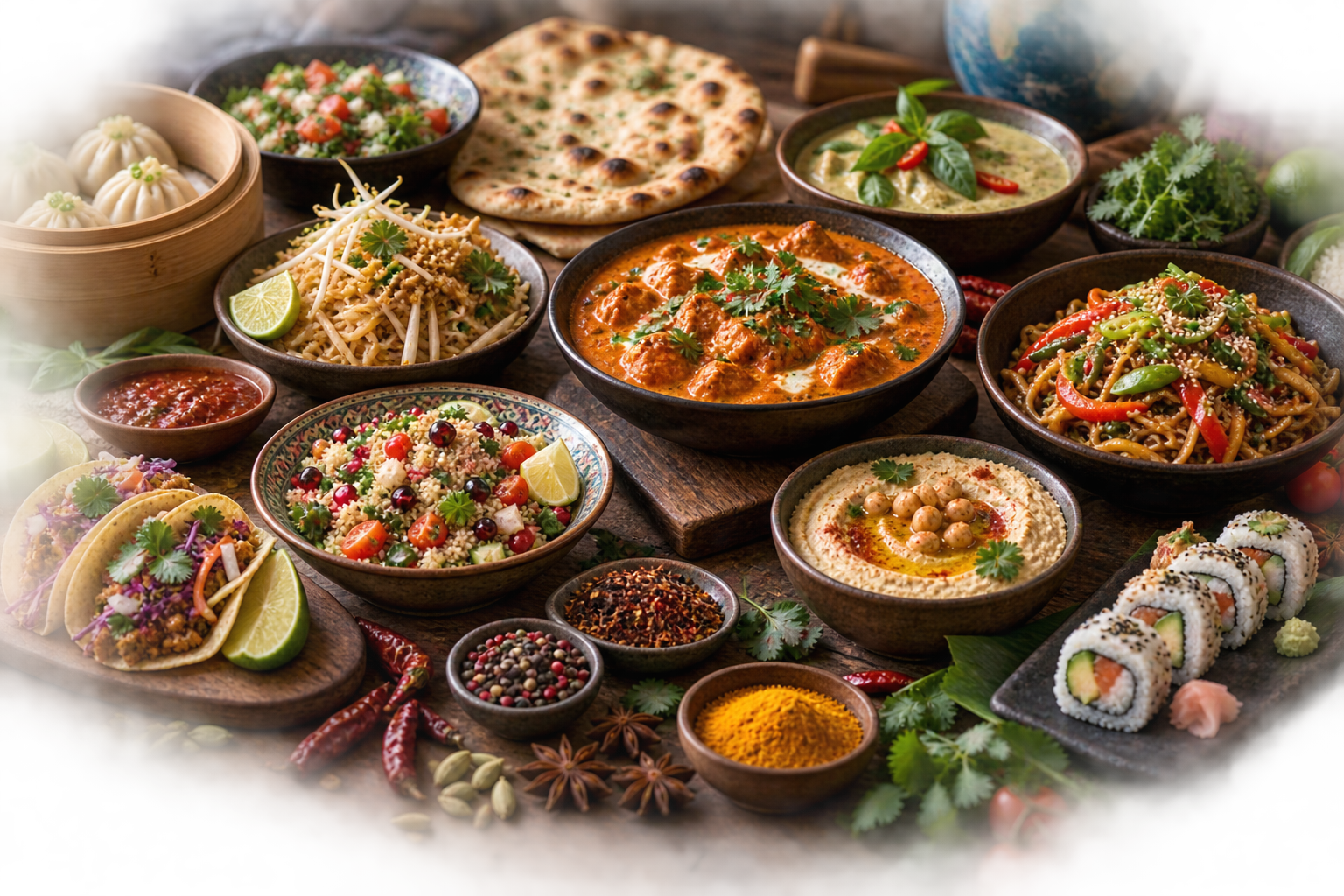
A spice that was once strongly associated with one region can now appear in kitchens, restaurants and food products thousands of kilometres away. A traditional sauce can become a marinade, a street-food flavor can find its way into a snack, and ingredients from completely different culinary traditions can come together on the same plate.
This does not mean traditional food is disappearing.
Something more interesting is happening.
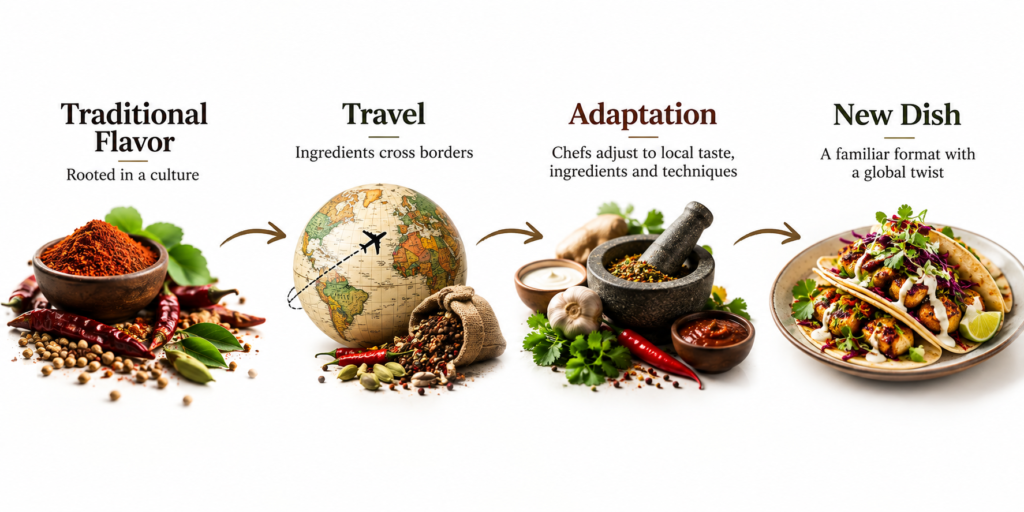
Traditional flavors are travelling, adapting and finding new formats.
For chefs and food businesses, this creates a fascinating opportunity. Consumers are becoming more curious about unfamiliar ingredients and cuisines, but they are also looking for ways to experience those flavors in formats they already understand.
That is why global flavors are becoming more than a restaurant trend. They are influencing menus, packaged foods, snacks, sauces, beverages and even the way chefs think about innovation.
But there is an important question behind this movement:
When a flavor travels from one culture to another, how does it change without losing its identity?
Why Are People Looking Beyond Familiar Flavors?
One of the biggest changes in modern food is simple: people are becoming more curious about what they have not tried before.
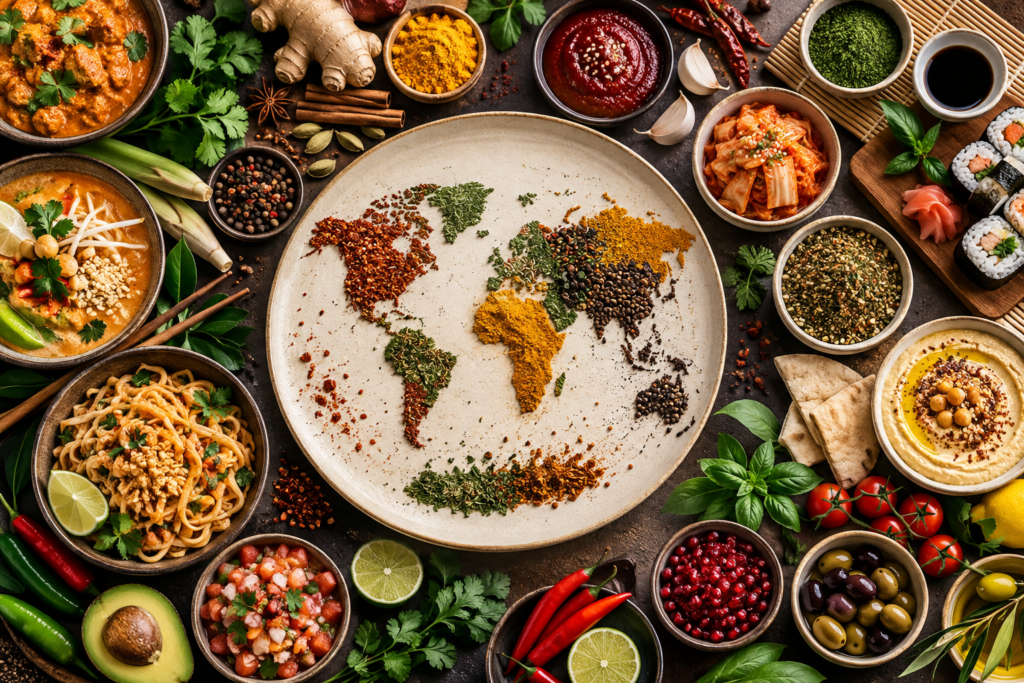
A dish no longer has to come from a person’s own culture to become part of their regular food choices. Ingredients, sauces, spices and cooking techniques now travel quickly through restaurants, supermarkets, travel, social media and home kitchens.
But curiosity does not always mean people want something completely unfamiliar.
Often, the most successful new foods combine something people already understand with a flavor they have never experienced before.
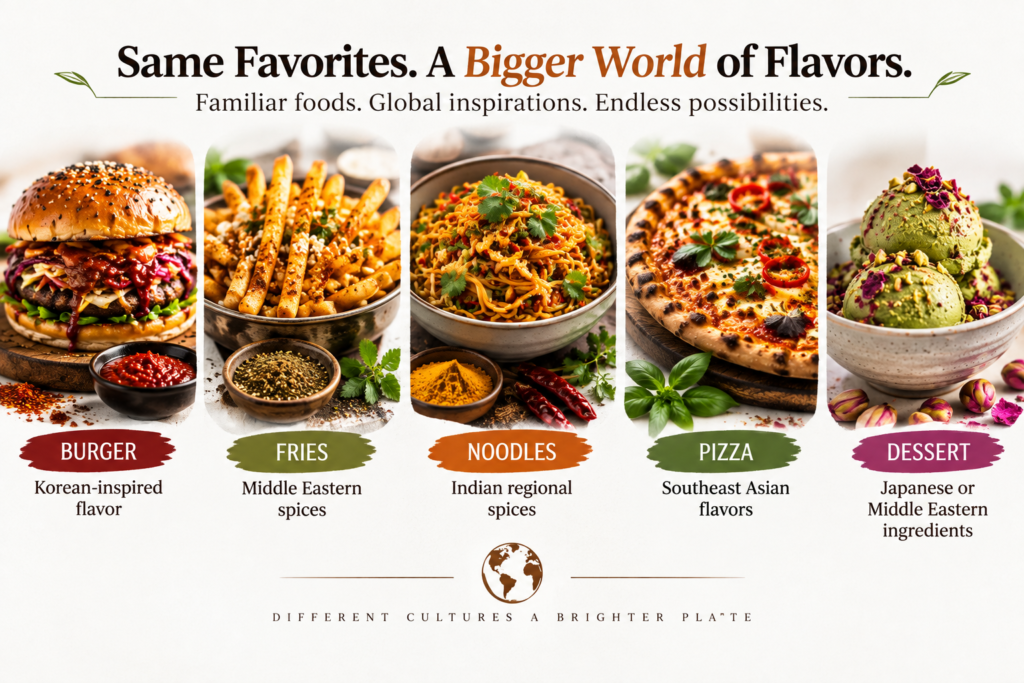
A familiar burger might get a Korean-style sauce. Fries might be finished with Middle Eastern spices. A noodle dish might use Indian regional flavors. A dessert might combine a traditional European format with ingredients from Asia or the Middle East.
This is one reason global food is becoming more interesting for both chefs and consumers.
The goal is not always to replace traditional cuisine. Instead, traditional flavors are being introduced in new formats that make them easier to discover.
For chefs, this creates an important creative opportunity:
Take a flavor with a strong identity, understand why it works, and then find a thoughtful way to introduce it to someone experiencing it for the first time.
That is very different from simply mixing ingredients together and calling it fusion.
When Flavors Travel, They Change
A flavor rarely stays exactly the same when it moves from one kitchen to another.
Chefs naturally adapt recipes to the ingredients available, the cooking equipment they use and the people they are cooking for. Sometimes a traditional ingredient is replaced because it is difficult to source. Sometimes the level of heat changes. Sometimes a familiar cooking method is combined with a technique from another culinary tradition.
This is how food evolves.
Think about how ingredients such as chilies, tomatoes, potatoes and spices have travelled across continents and eventually become deeply connected with cuisines far from where they originated.
Today, that process is happening much faster.
A chef can discover an ingredient from another part of the world, study its traditional use, and experiment with it almost immediately. A food manufacturer can then take that flavor profile and turn it into a sauce, snack, frozen product or ready-to-eat meal.
But adaptation works best when the reason behind the flavor is understood.
A chef who understands why a particular spice combination works can adapt it intelligently. Simply adding a famous ingredient to a dish does not automatically create a meaningful fusion.
The most interesting modern food often comes from understanding a traditional flavor first, then giving it a new place to live.
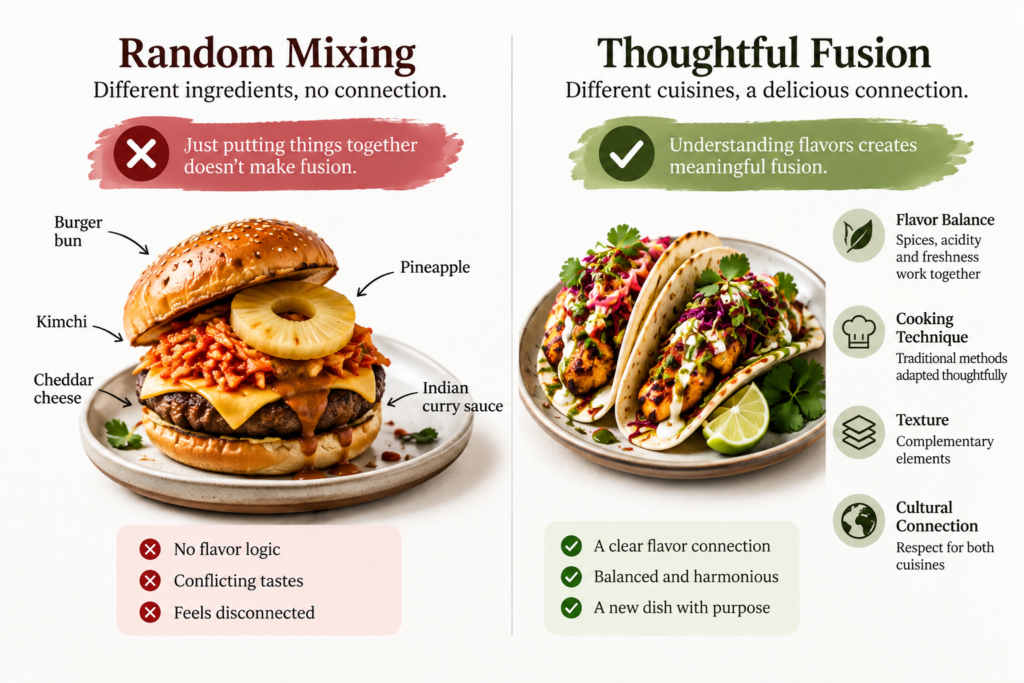
The Difference Between Fusion and Random Mixing
Fusion food is often misunderstood.
Putting ingredients from two different cuisines on the same plate does not automatically create a good fusion dish. The real skill is understanding why the original flavors work together before changing the format.
Every cuisine has its own logic.
It may come from the balance of heat, acidity, sweetness, bitterness, umami, fat, aroma or texture. Cooking techniques also matter. A spice blend may be designed to bloom in oil. A fermented sauce may provide both salt and umami. An herb may be added at the end because its fresh aroma would disappear during long cooking.
When chefs understand these details, they can adapt a traditional flavor without making it feel disconnected from its roots.
For example, using a familiar Western format to introduce an Indian spice profile can work beautifully. But the chef still needs to understand how those spices are traditionally toasted, blended and balanced.
Good fusion is not about putting everything together. It is about finding the connection between two food cultures.
That distinction is becoming increasingly important as global flavors move into restaurants, packaged foods and everyday cooking.
Why Social Media Is Accelerating Global Food Discovery
Food discovery used to depend heavily on travel, restaurants, cookbooks and recommendations from people around us.
Now, a person can discover a completely unfamiliar dish in seconds.
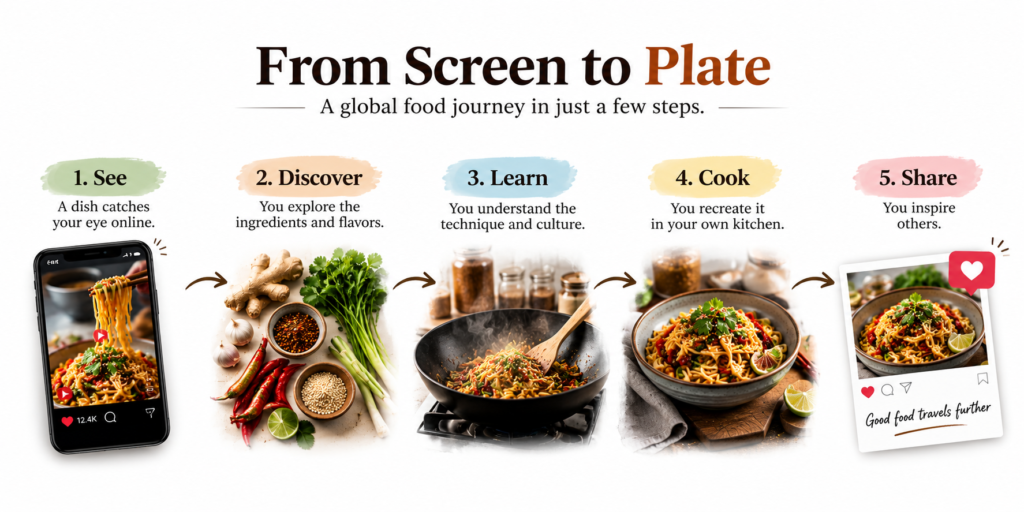
A short video can show how a sauce is prepared, how a traditional bread is cooked, how a spice blend is used or how a street-food dish is served. The viewer may never have heard of the dish before, but the visual experience creates curiosity.
This matters because food is highly visual.
People can understand the appearance, texture and preparation of a dish before they ever taste it. Once curiosity is created, they may search for the ingredient, look for a restaurant, buy a packaged version or try making it at home.
Social media has therefore become more than a place to share finished dishes.
It has become a global food discovery window.
There is also an interesting effect on chefs. A chef can see techniques and ingredients from another culinary culture, study them, and begin experimenting with them in their own kitchen.
But there is a responsibility here too.
Seeing a dish online is not the same as understanding its history or culinary context. The more global food becomes, the more important it is to learn where a flavor comes from, how it is traditionally used and why it matters to that cuisine.
That understanding can turn inspiration into meaningful food innovation rather than simply copying something that looks interesting on a screen.
Why Global Flavors Are Moving From Restaurants Into Everyday Food
Global flavors are no longer limited to specialist restaurants.
They are increasingly appearing in snacks, sauces, frozen meals, beverages, desserts, seasonings and everyday supermarket products.
That shift is important because packaged food can take a flavor that might once have been experienced only in a restaurant and make it available to millions of people.
Innova’s 2026 global flavor research describes this as “Cultural Remix”, with global and local flavors being combined across categories including ready meals, desserts, ice cream, savory snacks and milk-based products. Its research also reports that 51% of global consumers are seeking cuisines from other countries.
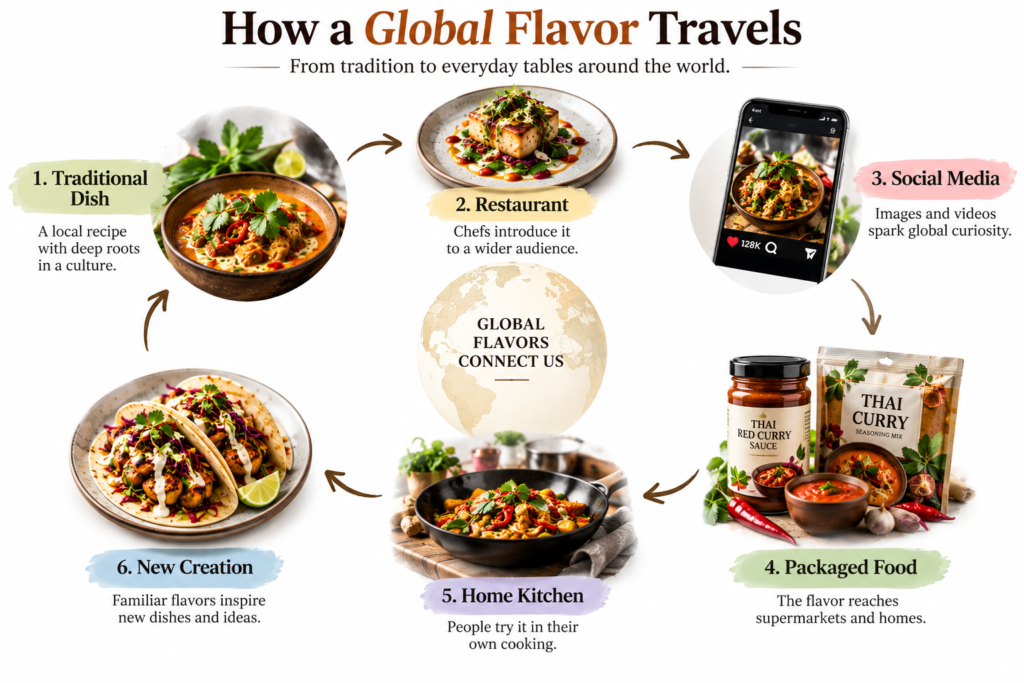
This creates an interesting cycle:
Restaurant → Consumer curiosity → Packaged product → Home kitchen → New restaurant idea
A flavor can begin with a traditional dish, become popular through restaurants or social media, then appear as a seasoning, sauce or snack. Consumers become familiar with it, and chefs can then take that familiarity somewhere else.
For food companies, this is also a practical way to make unfamiliar flavors less intimidating.
Instead of asking someone to try an entirely unfamiliar meal, a brand can introduce the flavor through something they already know.
That may be one of the biggest reasons global flavors are becoming part of everyday food rather than remaining niche culinary experiences.
Authenticity Still Matters
As global flavors become more accessible, there is another side of the conversation that should not be ignored: authenticity.
When a traditional dish travels, some adaptation is natural. Ingredients may not be available, local preferences may be different, and chefs may want to present the flavor in a new format.
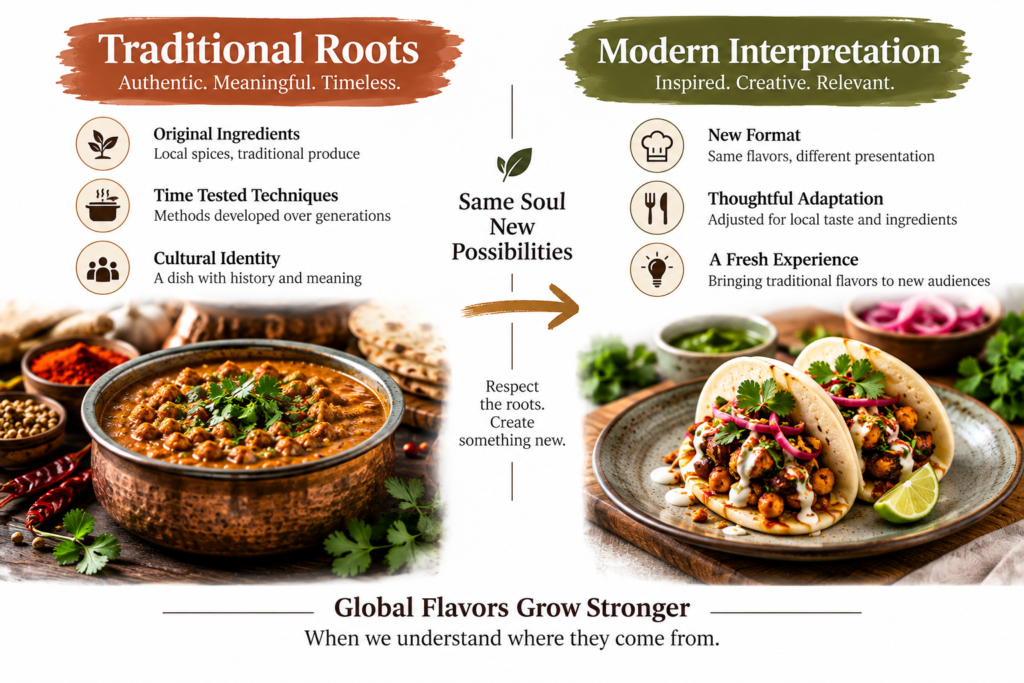
But adaptation should not mean removing the identity of the food.
There is a difference between saying “inspired by” and presenting an adapted dish as though it were exactly the traditional version.
For chefs, understanding the origin of an ingredient or technique is therefore becoming more important.
If you are working with a traditional spice blend, learn how it is normally built. If you are using a regional sauce, understand its role in the original cuisine. If you change an ingredient, know what that ingredient contributes to the dish: heat, acidity, aroma, texture, saltiness or depth.
This approach gives the chef much more freedom.
You can change the format while respecting the flavor.
You can create something modern without pretending it is traditional.
And sometimes, the best innovation comes from knowing the original recipe well enough to understand what should not be changed.
Why Chefs Are Combining Global Flavors With Local Ingredients
One of the most interesting developments in modern food is that chefs do not always need to import every ingredient from another country to create a global flavor experience.
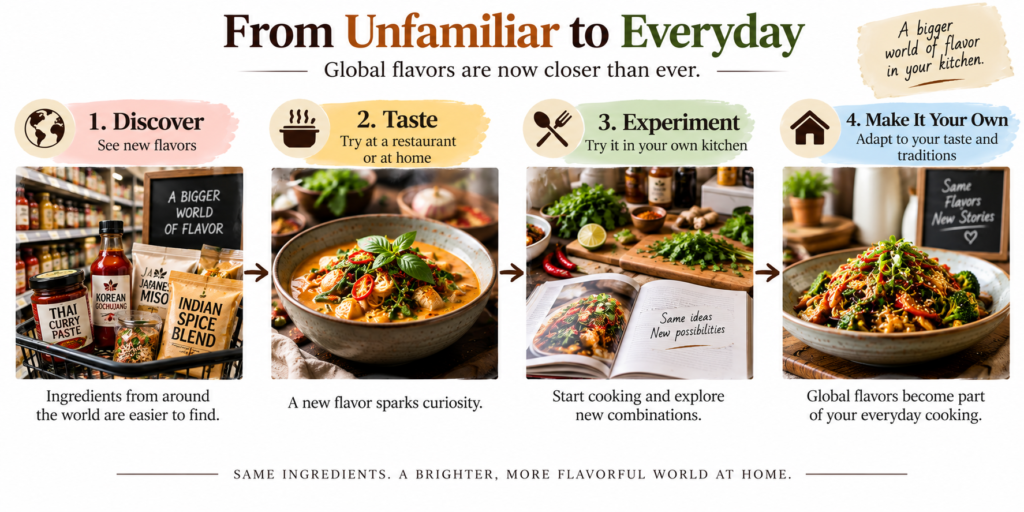
Sometimes the better approach is to use a local ingredient with a technique or flavor idea from somewhere else.
A local vegetable can be prepared using a cooking method traditionally associated with another cuisine. A familiar grain can carry a new spice profile. A regional fruit can become part of a dessert inspired by another culinary tradition.
This approach has several advantages.
Local ingredients can be fresher and easier to source. They can also reduce dependence on expensive or difficult-to-find ingredients while giving chefs an opportunity to create something that feels both familiar and new.
For food businesses, this can be especially useful.
Instead of trying to reproduce a dish exactly as it is made in another country, a chef can ask:
What is the essential flavor idea, and how can I express it using ingredients available here?
That question opens up much more creative possibilities.
It also means global food does not have to be about copying another cuisine.
It can become a conversation between local ingredients, traditional knowledge and modern culinary creativity.
Global Flavors Are Creating New Opportunities for Food Businesses
The rise of global flavors is not only changing what people eat. It is also changing what food businesses can create and sell.
For restaurants, global flavors can provide new menu ideas without requiring an entirely new concept. A familiar food format can become more distinctive through a different sauce, spice blend, garnish or cooking technique.
For food manufacturers, the opportunity is even broader.
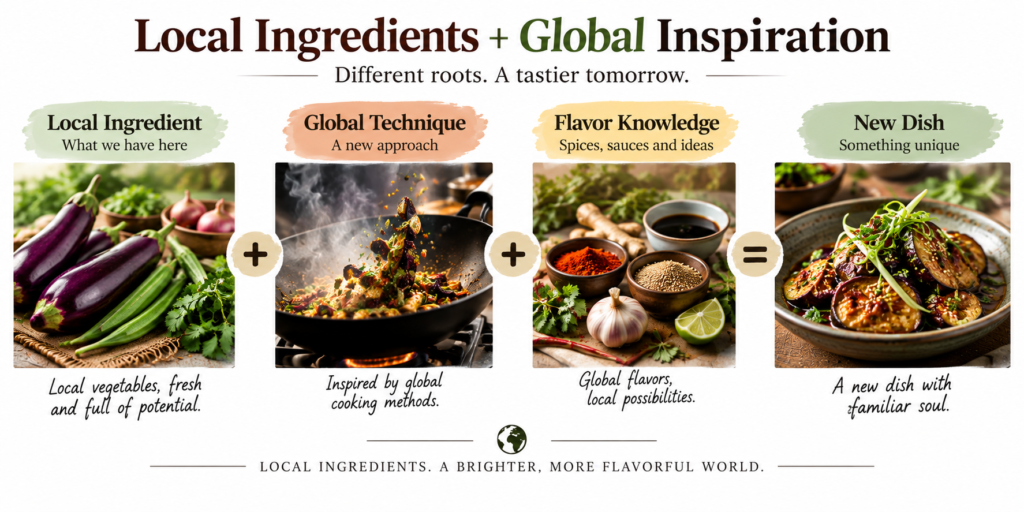
A single flavor profile can be developed into several formats:
- A cooking sauce
- A seasoning blend
- A snack
- A frozen meal
- A ready-to-eat product
- A beverage
- A marinade
- A restaurant ingredient
This gives food companies the ability to take one strong flavor idea and build an entire product family around it.
But successful food innovation still requires more than identifying a trendy flavor.
The product needs to work in the real world.
It must taste good, remain consistent during production, use ingredients that can be sourced reliably and make sense for the customer and the price point.
This is where culinary knowledge and food science come together.
A global flavor may attract attention, but good product development is what turns that attention into a repeat purchase.
The Chef’s Perspective: Learn the Flavor Before You Change It
As a chef, I find global flavors most interesting when they are approached with curiosity rather than simply treated as trends.
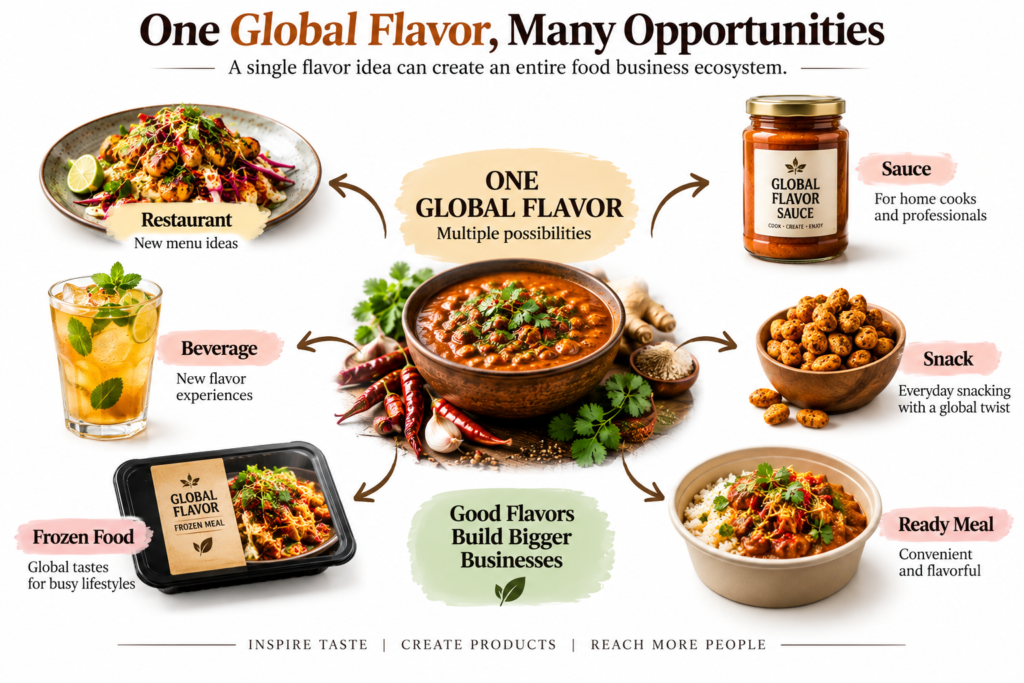
Before changing a traditional flavor, I want to understand it.
What is the main ingredient?
Which spices create its character?
Where does the acidity come from?
What cooking technique develops the flavor?
Is the texture an important part of the dish?
These questions matter because a dish is rarely defined by one ingredient alone.
Sometimes the identity comes from the combination of ingredients and technique.
This is particularly important when working with regional foods. A dish from one part of India, for example, may use completely different spices, cooking methods and flavor balances from another region, even though both are described broadly as “Indian food.”
The same principle applies to cuisines everywhere.
For me, food innovation becomes much more interesting when we research first, respect the original idea, and then experiment.
That is how a traditional flavor can become something new without becoming unrecognizable.
And perhaps that is the real opportunity behind global food.
We do not need to choose between tradition and innovation.
We can use knowledge of tradition to create better innovation.
Why Global Flavors Are Becoming More Accessible at Home
There was a time when trying an unfamiliar cuisine often meant finding a specialist restaurant or travelling to another city or country.
That barrier is much lower today.
Supermarkets and online food stores increasingly give home cooks access to ingredients that were once difficult to find. Spice blends, fermented sauces, noodles, pastes, pickles, oils and specialty ingredients can now become part of an ordinary home pantry.
This changes the way people learn about food.
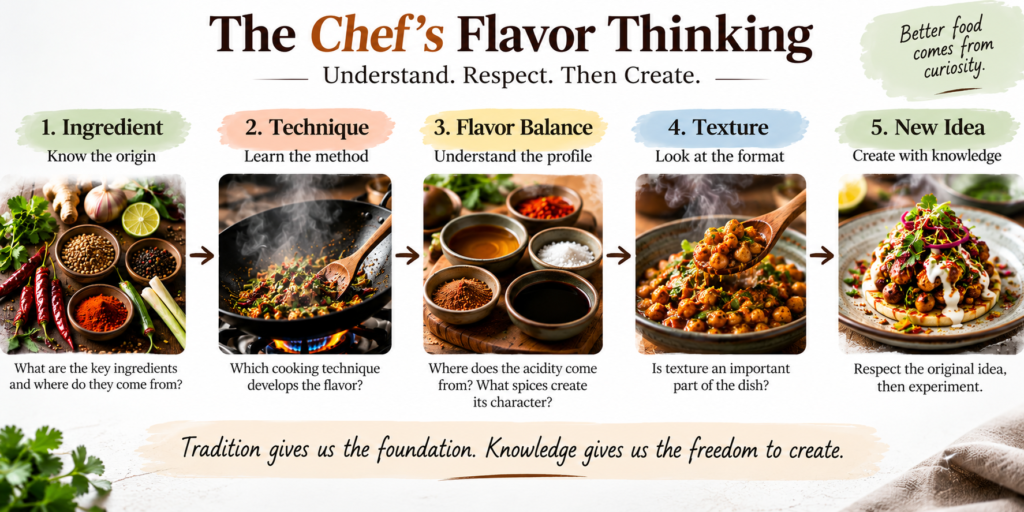
A person may first discover a flavor at a restaurant, see it again online, buy a packaged version and eventually begin using the ingredient at home.
The learning process becomes gradual.
First comes curiosity.
Then comes familiarity.
Then experimentation.
And eventually, that once-unfamiliar flavor can become part of someone’s normal cooking.
This is one reason global food culture is not simply spreading from one country to another. It is becoming more interactive.
Home cooks are adapting recipes to their own ingredients, preferences and traditions. Chefs are doing the same thing professionally.
The result is a constantly changing food landscape where culinary ideas can travel in both directions.
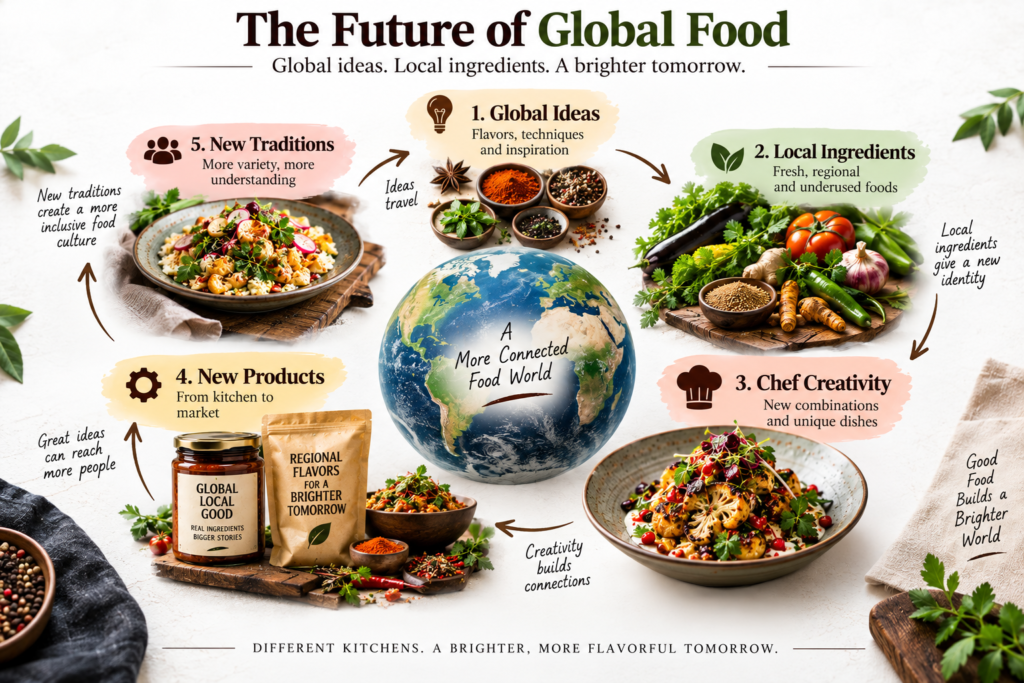
The Future of Global Food May Be More Local Than We Think
Global food does not necessarily mean that every kitchen will use the same ingredients.
In fact, the opposite may happen.
As chefs and food companies become more interested in international flavors, they may also look more closely at local ingredients, regional traditions and underused foods.
A chef can discover a cooking technique from another part of the world and apply it to a local vegetable. A food company can take a traditional regional flavor and develop it into a modern packaged product. A restaurant can introduce an unfamiliar spice through a dish that customers already understand.
This creates a two-way movement:
Global ideas travel in. Local ingredients give them a new identity.
That could make the next stage of food innovation less about copying famous international dishes and more about creating connections between cultures.
For chefs, this means having a wider culinary vocabulary.
For food businesses, it means more opportunities to develop products with a clear identity.
And for consumers, it means the food on the plate can tell a much bigger story.
The future of global food may not be about one cuisine replacing another.
It may be about different culinary traditions learning from each other while keeping their own character.
What Global Flavors Really Mean for Modern Food
The global food movement is not simply about discovering the next popular ingredient.
It is about connection.
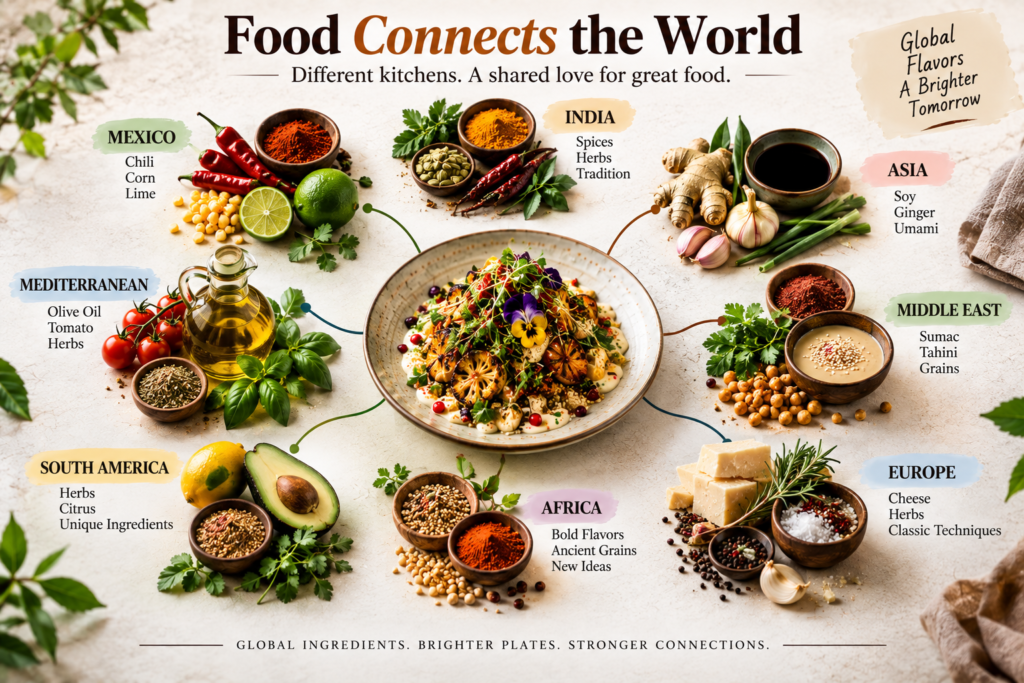
Ingredients travel. Techniques travel. Ideas travel. Chefs learn from other kitchens, home cooks experiment with unfamiliar flavors, and food businesses find new ways to introduce those flavors to wider audiences.
But the most interesting results usually happen when this exchange is thoughtful.
A traditional flavor can inspire a completely new dish. A local ingredient can carry an international technique. A familiar food can become a gateway to another culinary culture.
That is what makes modern food so exciting.
We are not limited to cooking only what we grew up with.
We can learn from food cultures around the world while still respecting where those ideas came from.
And perhaps the future of food is not about creating one global cuisine.
It is about creating more connections between cuisines.
Final Thoughts
Global flavors are changing modern food, but the most interesting part is not simply that more international ingredients are appearing on menus and supermarket shelves.
It is how those flavors are being understood, adapted and shared.
A traditional ingredient can inspire a modern product. A local vegetable can be transformed using a technique from another culinary culture. A dish discovered online can become part of someone’s everyday cooking. And a chef can take inspiration from another part of the world while still creating something with a clear local identity.
For me, that is where food innovation becomes meaningful.
Learn the tradition. Understand the flavor. Respect the culture. Then create something of your own.
The future of food does not have to be about one cuisine becoming dominant.
It can be about more cuisines being discovered, more ingredients being appreciated and more connections being created through food.
Because when flavors travel thoughtfully, the food becomes more diverse, not less authentic.