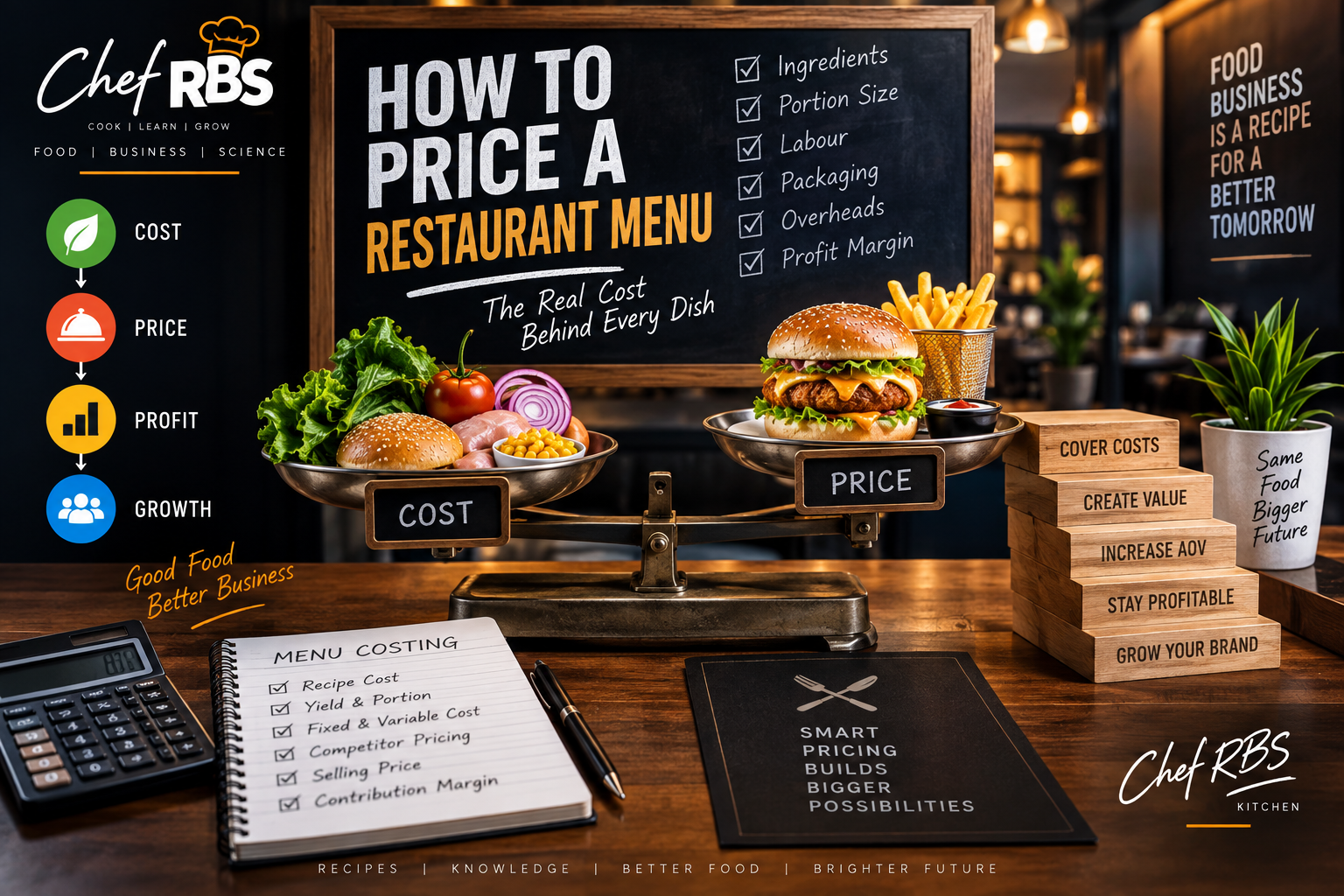
How to Price a Restaurant Menu: The Real Cost Behind Every Dish
Restaurant menu pricing can make or break a restaurant’s profitability. A dish can be delicious and popular and still lose your restaurant money.
One of the most common mistakes restaurant owners make is setting menu prices by looking at competitors or simply adding a markup to ingredient cost.
But the real cost of a dish goes far beyond the ingredients.
Your restaurant may also pay for labour, cooking energy, packaging, rent, equipment, food waste, delivery commissions, marketing and other operating expenses.
That’s why a dish with a 30% food cost doesn’t automatically mean you’re making 70% profit.
As a chef and food business consultant, I look at menu pricing from a different perspective: What does this dish really cost the business, and how much does it actually contribute?
In this guide, I’ll show you a practical way to price restaurant menu items by looking beyond food cost and understanding the numbers behind a profitable menu.
Don’t price your food by guesswork. Price it with a system.
Section 1 — Restaurant Menu Pricing: Never Price From Ingredient Cost Alone
The first number restaurant owners usually look at is the ingredient cost. That’s important—but it is only the beginning.
Imagine a burger costs $3.00 in ingredients. If you simply apply a markup and sell it for $6.00, it may look profitable.
But what about the takeaway box, sauce container, cooking oil, kitchen labour, electricity, food waste, rent and delivery-platform charges?
These costs don’t necessarily appear on the recipe costing sheet, but the business still has to pay them.
This is why restaurant pricing should start with recipe cost and then move toward total operating cost and desired contribution.
Chef RBS Tip
Food cost tells you what the food costs. It doesn’t tell you what the business earns.
Before deciding your selling price, understand the complete cost structure of the dish.
A good menu price should protect both your customer value and your business margin.
Section 2 — Accurate restaurant menu pricing starts with knowing exactly what one portion costs you to produce.
Before deciding what to charge, you need to know exactly what one portion costs you to produce.
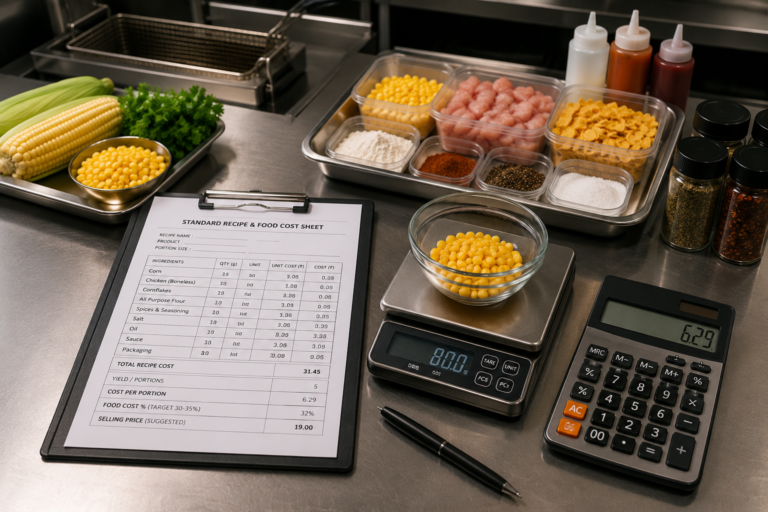
Start with a standardised recipe. Record every ingredient, its purchase price, the quantity used and the actual cost of that quantity.
For example:
Burger ingredient cost
Bun — $0.60
Patty — $1.40
Cheese — $0.40
Sauce & vegetables — $0.35
Cooking oil/other ingredients — $0.15
Total recipe cost = $2.90
This $2.90 is your recipe food cost per burger.
But don’t stop there. Your costing sheet should also account for yield and portion size. If a recipe produces 20 portions, divide the total usable recipe cost by 20 to determine the actual cost per serving.
Standardised recipes are particularly important when multiple employees prepare the same dish. Without fixed quantities and portion sizes, the cost of the same product can change from one shift to another.
Chef RBS Tip
If you don’t know the cost of one standardised portion, you don’t really know the cost of your menu.
Cost every recipe before deciding its selling price.
Section 3 — Calculate Your Food Cost Percentage
Once you know the exact cost of a portion, you can calculate the food cost percentage.
The basic formula is:
Food Cost % = (Food Cost ÷ Selling Price) × 100
For example, if your burger costs $3.00 to produce and sells for $10.00:
($3.00 ÷ $10.00) × 100 = 30% food cost
A 30% food cost can be a useful starting point for planning, but there is no universal percentage that makes every restaurant profitable. Your concept, cuisine, location, menu mix, operating costs and pricing strategy all matter.
This is why I recommend looking at food cost percentage together with contribution margin.
A product selling for $10 with a $3 food cost contributes $7 before other operating costs. That $7 can then help cover labour, rent, utilities, packaging, marketing and other expenses.
Chef RBS Tip
Don’t chase a low food-cost percentage just because it looks good on paper.
A slightly higher food-cost item that sells extremely well may contribute more total dollars to your business than a low-cost item that hardly sells.
Watch both percentage and contribution.
Section 4 — Add the Costs Your Recipe Sheet Doesn’t Show
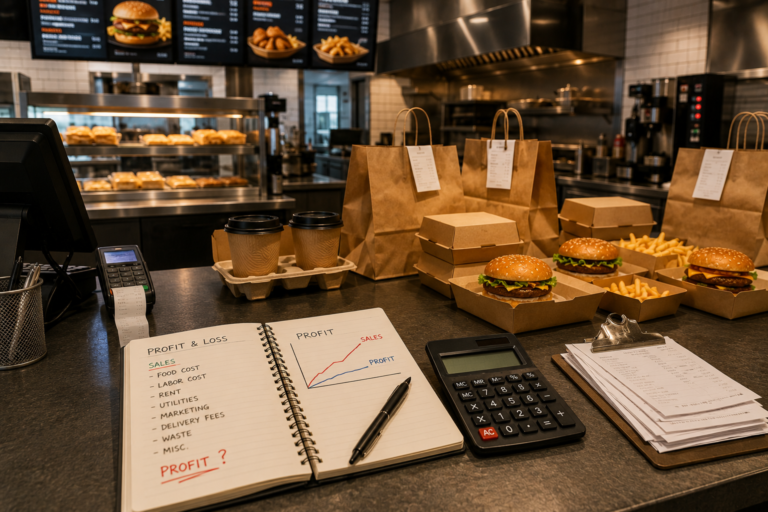
Your recipe costing sheet tells you what goes into the dish. Your restaurant P&L tells you what it takes to run the business.
After calculating ingredient cost, identify the additional costs that affect the selling price and profitability of the item.
These can include:
- Packaging — boxes, cups, containers, bags and cutlery
- Kitchen labour — preparation, cooking and assembly time
- Cooking utilities — gas or electricity
- Food waste — trimming, spoilage, overproduction and rejected portions
- Rent and occupancy costs
- Cleaning and operating supplies
- Marketing and promotional costs
- Delivery-platform commissions and discounts, where applicable
You don’t necessarily need to assign every overhead to every individual dish with perfect precision. But you should understand how these expenses affect the overall contribution and profitability of your menu.
A simple Chef RBS approach
Think about your menu in three layers:
1. Recipe Cost → What does the food itself cost?
2. Operating Cost → What additional costs are required to sell it?
3. Contribution → How much money remains to help cover fixed costs and generate profit?
This approach gives you a much more realistic picture than simply adding a markup to ingredient cost.
A restaurant doesn’t make money from the food cost percentage alone. It makes money from the money left after the real costs of selling the food.
Section 5 — Don’t Forget Portion Size and Yield
Two restaurants can buy the same ingredients and still have completely different food costs. One of the biggest reasons is portion control.
If your recipe says 150 g of chicken but your kitchen team regularly serves 180 g, the difference may look small on one plate. Multiply that difference by hundreds of orders, and it can become a significant cost.
Yield matters too. The amount you purchase is not always the amount you can serve. Meat may lose weight during trimming and cooking, vegetables may have peel and trimming waste, and sauces may reduce during cooking.
That’s why professional costing should consider usable yield and standardised portion size, not simply the purchase price of the raw ingredient.
Chef RBS Example
Suppose a kitchen buys 10 kg of raw chicken, but after trimming and processing only 8.5 kg is available for production.
Your usable yield is:
8.5 ÷ 10 × 100 = 85%
If you ignore that 15% loss when costing the recipe, your calculated food cost will be lower than the actual cost.
Chef RBS Tip
Weigh portions during recipe trials. Don’t rely on “one scoop”, “one handful” or “approximately this much”.
Standardise the portion, record the yield and train the team to reproduce it consistently.
Small portion differences become big numbers when multiplied by daily sales.
Section 6 — Calculate Your Break-Even Selling Price
Before setting a selling price, you should understand the minimum price your business can realistically charge while still covering the costs associated with selling the product.
Start with your recipe cost and add the variable costs that increase when you sell another portion, such as packaging, transaction fees or delivery-platform charges where applicable.
For example:
Recipe cost: $3.00
Packaging: $0.50
Other variable selling costs: $0.50
Total variable cost = $4.00
If you sell the item for $10, the amount remaining after these variable costs is:
$10 − $4 = $6 contribution
That contribution then helps the restaurant pay fixed operating expenses such as rent, salaried labour and other overheads before the business reaches its actual net profit.
This is why simply saying “I doubled my food cost, so I made 100% profit” can be misleading.
Chef RBS Tip
Don’t confuse markup, gross margin, contribution and net profit. They are different numbers.
Know what remains after each layer of cost before deciding your final menu price.
Section 7 — Check Your Competitors Without Copying Their Prices
Competitor pricing is useful information, but it should never be the only reason you set your price.
Look at restaurants offering similar products in your area and compare:
- Selling price
- Portion size
- Ingredients and quality
- Packaging
- Customer reviews
- Dining or takeaway experience
- Delivery pricing and offers
A competitor may sell a burger for $8 while yours needs to be $10. That doesn’t automatically mean your price is too high. Your product may have a larger portion, better ingredients, higher operating costs or a different customer experience.
At the same time, if customers consistently see similar products at a much lower price, you need a clear reason for your premium.
Chef RBS Tip
Don’t ask, “What price is my competitor charging?”
Ask:
“Why would my customer pay my price instead?”
Your price should reflect your costs, your positioning and the value you deliver—not simply what another restaurant prints on its menu.
Use competitors as a reference point, not as your pricing formula.
Section 8 — Use Menu Psychology to Increase Average Order Value
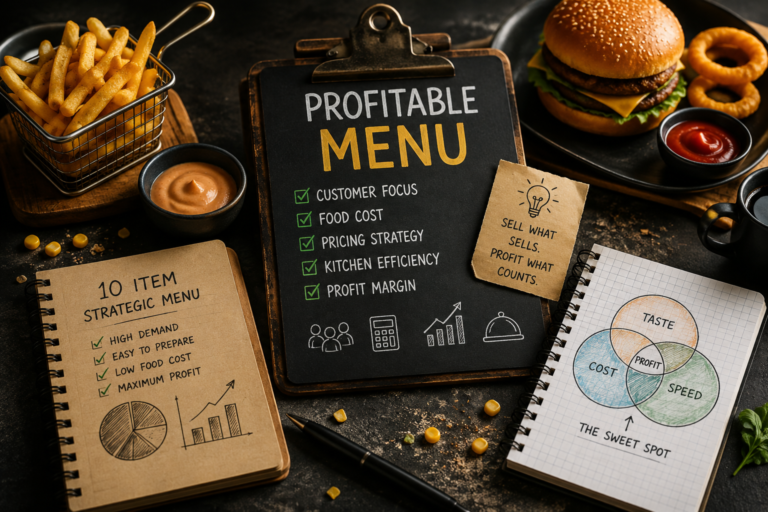
A profitable menu isn’t only about the price of individual dishes. It’s also about how customers choose what to buy.
Your menu should make it easy for customers to understand your best products and build a complete order.
For example, instead of offering only a burger, you could offer:
Burger → Burger + Fries → Burger + Fries + Drink
This gives customers different spending options while creating opportunities to increase the restaurant’s average order value (AOV).
You can also use complementary add-ons such as extra cheese, sauces, sides, desserts or beverages when they genuinely improve the customer’s meal.
The important point is not to pressure customers into buying more. Give them clear choices and useful combinations.
Chef RBS Tip
Look at your menu from the customer’s perspective:
“If I order this main item, what naturally goes with it?”
A well-designed menu can increase the value of each order without simply increasing the price of every product.
Better menu design can improve both customer experience and restaurant revenue.
Section 9 — Restaurant Menu Pricing: Review and Reprice Your Menu Regularly
A menu price that works today may not work six months from now.
Ingredient prices change. Wages change. Packaging costs change. Delivery commissions and promotional costs can change. Even customer buying behaviour can shift.
That’s why menu pricing should be treated as an ongoing process rather than a one-time decision.
Review your menu regularly and check:
1. Recipe cost — Have ingredient prices increased?
2. Portion size — Is the kitchen following the standardized recipe?
3. Sales volume — Which products are selling and which are slowing down?
4. Contribution — Which products are generating the most money after variable costs?
5. Customer response — Are customers accepting the current price?
If a product’s cost has increased significantly, you may need to adjust the recipe, portion, supplier, selling price or menu position.
Chef RBS Tip
Don’t wait until your monthly profit statement tells you something is wrong.
Track your menu before the problem becomes expensive.
A good restaurant menu is never completely finished. It should evolve with your costs, customers and business performance.
Final Conclusion — Price for Profit, Not Just Sales
The right restaurant price is not simply the highest price a customer will pay. It is the price that creates value for the customer while giving the business enough contribution to operate and grow.
Start with an accurate standardized recipe. Understand your ingredient cost, yield and portion size. Then consider packaging, labour, waste, operating expenses and other variable costs that affect the economics of the sale.
Use competitor pricing as a reference, but don’t copy it blindly. Understand your customer, your positioning and the value your restaurant provides.
Most importantly, keep reviewing your numbers. Food prices change, portions drift and customer behaviour changes. Your menu pricing must change with them.
The Chef RBS Pricing Rule
Know your cost → Know your customer → Know your contribution → Then set your price.
A busy restaurant isn’t automatically a profitable restaurant.
Profitable restaurants know the numbers behind every dish.
— Chef RBS