Why Does Food Stick to the Pan? The Science of Sticking, Searing & Cooking
Why Does Food Stick to the Pan Even When You Use Oil?
In this article, Chef RBS breaks down what is actually happening between food and the pan, why stainless steel can be surprisingly good for searing, when oil helps, and how to know when your food is ready to release.
This is where food science becomes useful in the kitchen.
What Is Actually Happening When Food Sticks?
When food first touches a hot pan, it does not immediately form a smooth, clean contact with the cooking surface.
There are tiny irregularities on both the food and the pan. Food also contains water, proteins, sugars, and other compounds that change as they are heated.
Take a piece of fish or chicken. Its surface contains moisture and proteins. When that surface hits a hot pan, the moisture begins to evaporate and the proteins start changing. As cooking continues, the surface develops browning and new flavor compounds.
During this stage, some of those compounds can form strong interactions with the metal surface.
That is why food can appear to be stuck firmly to a stainless-steel pan when you try to move it too early.
But something interesting happens as cooking continues.
As the surface becomes drier and the crust develops, the food can become easier to release. What initially feels like sticking can sometimes be part of the normal searing process.
This is one of those moments where professional cooking is less about constantly moving the food and more about knowing when to leave it alone.
Why Does Stainless Steel Make Food Stick?
Stainless steel has a reputation for making food stick, but the pan itself is not necessarily the problem.
Unlike a coated nonstick pan, stainless steel gives food direct contact with a metal cooking surface. That makes temperature control and timing much more important.
If a piece of fish, chicken, or meat is placed into a pan that is not properly heated, its surface can interact with the metal before a good sear develops. If you immediately try to move it, the food may resist.
There is another common mistake: adding wet food to the pan.
Water on the surface has to evaporate before the food can properly brown. If the surface is very wet, the pan spends part of its energy driving off moisture instead of building the dry, browned crust you want.
This is why chefs often dry the surface of food before searing and preheat the pan before adding it.
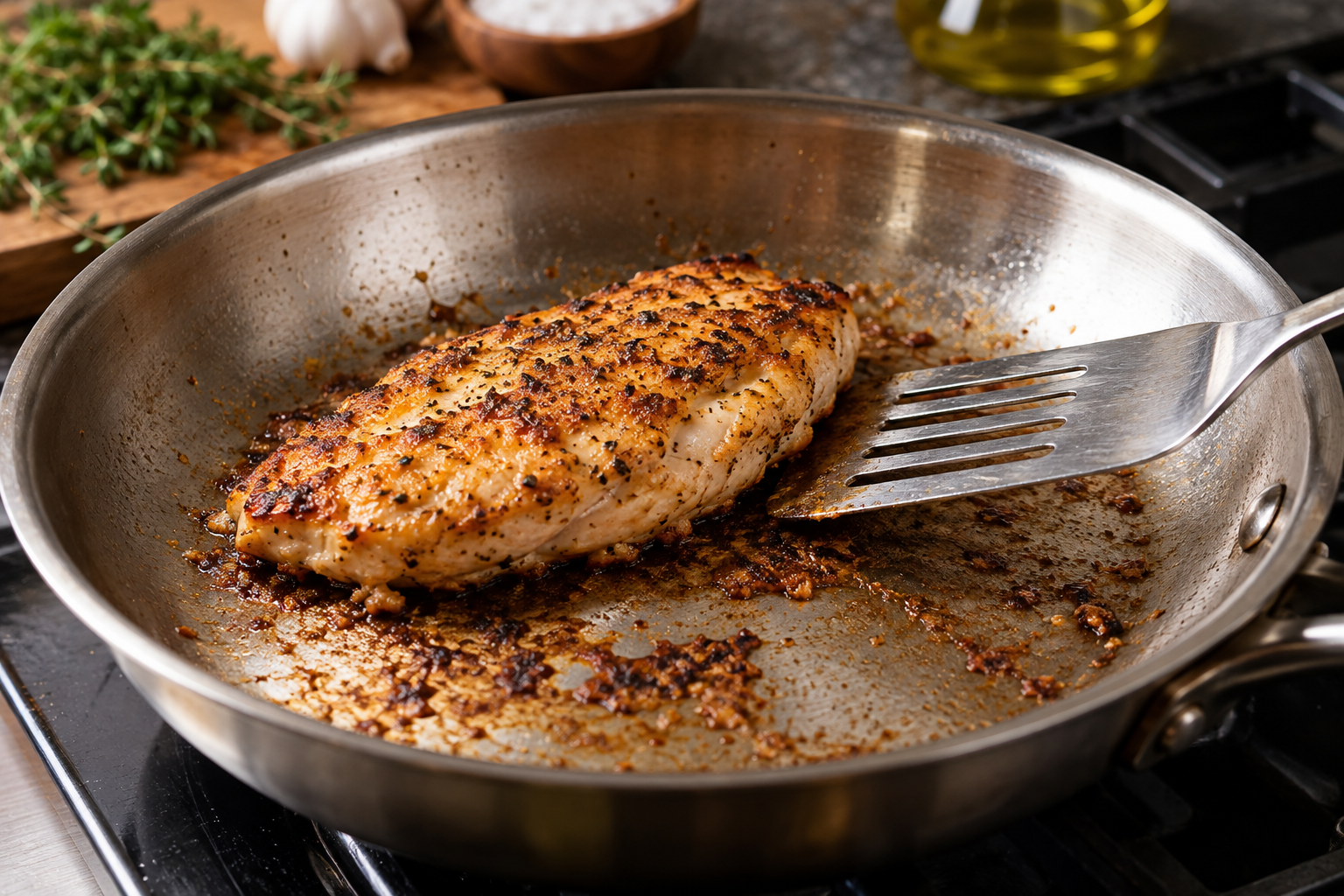
Once the conditions are right, stainless steel can produce an excellent sear and, surprisingly, the food may release much more easily than expected.
The trick is not fighting the pan.
It is controlling what happens before the food touches it.
Does More Oil Prevent Food From Sticking?
Not necessarily.
Adding more oil can help create a barrier between food and the cooking surface, but oil cannot compensate for every other cooking mistake.
If the pan is poorly heated, the food is very wet, or you try to move the food before the surface has developed a crust, adding extra oil may not solve the problem.
The amount of oil also depends on the food. A thin coating can be enough for many searing applications. Too much oil can make some foods greasy without giving you a better crust.
There is another important detail: the oil itself needs to be suitable for the cooking temperature. Different cooking oils have different smoke points and flavor characteristics, so the choice should match the cooking method.
From a chef’s perspective, the better approach is to control the whole process:
Dry food → preheat pan → add appropriate oil → place food carefully → allow the surface to sear → test for release.
Oil is part of the equation, but it is not the entire solution.
Why Does Food Sometimes Release From the Pan by Itself?
This is one of the most useful things to understand about searing.
You place a piece of food into a hot pan, and, after a short time, it may initially feel firmly attached. If you try to lift it immediately, it resists.
But after more cooking, the same piece can suddenly release much more easily.
Why?
As the surface continues cooking, moisture decreases and a browned crust develops. The contact between the food and the pan changes as that surface transforms.
This does not mean every piece of food will magically release at the same moment. Different foods, pan temperatures, moisture levels, and cooking methods behave differently.
But if you are searing a steak, chicken, or fish and it is resisting when you try to turn it, forcing it can tear the developing crust.
A better habit is to check rather than pull.
Gently slide a spatula underneath or give the food a careful test. If it still feels firmly attached, it may simply need more time.
Sometimes the best technique for preventing sticking is patience.
What Does the Maillard Reaction Have to Do With Sticking?
This is where sticking becomes more interesting.
When foods such as meat, chicken, or fish are heated, the surface can undergo the Maillard reaction. This group of chemical reactions contributes to the brown color, roasted aromas, and complex flavors associated with seared food.
The reaction needs the right conditions. Surface moisture has to decrease enough for the food to become hot and dry enough for significant browning to occur.
That is one reason a wet piece of meat behaves differently from a properly dried piece.
There is also a practical chef lesson here: browning and sticking can happen at the same time.
The food may initially develop a strong connection with the pan while the crust is forming. As cooking progresses and the surface changes, release can become easier.
So when you see a browned layer developing on the bottom of a steak or piece of fish, don’t automatically assume that sticking means something has gone wrong.
Sometimes that contact is helping create exactly the crust and flavor you want.
Why Does Cold Food Stick More Easily?
Food temperature can also affect what happens when it meets a hot pan.
Cold food contains more heat that needs to be supplied before its surface reaches the temperature needed for effective browning. If the food is also wet, the pan first has to deal with that surface moisture.
This is particularly noticeable with foods such as fish, chicken, and vegetables.
That does not mean every ingredient should be brought to room temperature before cooking. Food safety and the specific recipe still matter. But surface preparation is extremely important.
Pat the food dry, prepare the pan properly, and avoid putting a heavily wet surface directly onto the cooking surface when your goal is a strong sear.
The chef’s lesson is simple:
You cannot build a dry, browned crust on a surface that is still covered with excess water.
Why Does Fish Stick More Than Some Other Foods?
Fish can be particularly challenging to sear because its flesh is delicate and its surface can contain a lot of moisture.
A piece of fish also has a softer structure than a firm piece of meat. If it sticks and you try to pull it away forcefully, the surface can break before the crust has finished developing.
This is why chefs pay close attention to drying, pan temperature, and timing when cooking fish in stainless steel.
Start with a dry surface, use an appropriately heated pan, and avoid repeatedly moving the fish during the early stage of cooking.
Then test whether it is ready to release.
If the crust has developed properly, the fish should become easier to move without tearing it apart.
The same principle applies to many delicate foods: the less you disturb the surface while it is developing, the better your chance of keeping the crust intact.
5 Common Reasons Food Sticks to the Pan
If food is sticking badly, one of these five factors is often involved:
1. The food surface is too wet.
Excess moisture delays browning and can interfere with the crust you are trying to develop.
2. The pan is not properly preheated.
A cold or unevenly heated pan may not give the food the surface heat needed for good browning.
3. You move the food too early.
The crust may not have developed enough to release cleanly.
4. The pan is overcrowded.
Adding too much food at once can reduce the pan’s temperature and increase moisture around the ingredients.
5. The cooking surface is not suitable for the job.
Different pans behave differently. Nonstick, stainless steel, and cast iron each have their own strengths and require different techniques.
The important point is that sticking usually has a cause. Instead of automatically adding more oil, look at the entire cooking process.
That small change in thinking can make a big difference in your kitchen.
Stainless Steel, Cast Iron, or Nonstick: Does the Pan Matter?
Yes. The cooking surface changes how food behaves.
Stainless steel is excellent for searing and browning, but it rewards good temperature control and patience. Food can initially adhere to the surface while a crust develops.
Cast iron holds heat very well and can create a strong sear. A properly maintained cast-iron surface can also become increasingly easier to cook on over time.
Nonstick pans are designed to reduce the interaction between food and the cooking surface, making them particularly useful for delicate foods such as eggs, pancakes, and tender fish.
This doesn’t mean one pan is universally better than another. The right choice depends on what you are cooking and what texture you want.
A chef’s kitchen usually has different pans for different jobs for exactly this reason.
If your food keeps sticking, changing the pan may help, but understanding heat, moisture, and timing will often make a bigger difference than simply buying new cookware.
How to Stop Food From Sticking to a Pan
If you want a reliable starting routine, think about the process before the food touches the pan. You can apply the same principles across many everyday recipes.
First, prepare the surface of the food. Pat meat, fish, or vegetables dry when appropriate.
Next, preheat the pan according to the cooking method. You want the cooking surface ready before the food goes in, rather than trying to heat everything at the same time.
Add an appropriate amount of cooking oil and allow it to spread across the cooking surface.
Then place the food down carefully and leave it alone while the first side cooks.
This last step is where many home cooks go wrong. Constantly lifting, turning, and moving food prevents a consistent crust from developing and can make delicate food break apart.
When you think the food is ready, test it gently rather than pulling hard.
If it releases, turn it.
If it does not, give it a little more time.
That simple habit can completely change the way you cook on stainless steel and other uncoated pans.
The Chef’s Rule: Don’t Fight the Pan
One of the biggest changes you can make when cooking is to stop treating sticking as an immediate problem.
If food sticks, the first reaction is often to scrape it, turn it, or add more oil.
Instead, pause and ask three questions:
Is the surface of the food dry?
Is the pan properly heated?
Has the food had enough time to develop a crust?
If those conditions are right, the food may release more easily as cooking continues.
This is particularly useful when searing meat or fish in stainless steel. You are not trying to prevent every moment of contact between the food and the pan. You are trying to create the right conditions for controlled browning and eventual release.
Once you understand that difference, cooking becomes much less about fighting the pan and much more about reading what is happening on the surface of the food.
That is a small technique, but it is one of the most useful lessons professional cooking can teach.
Final Thoughts
Food sticking to a pan is not always a sign that you have done something wrong.
In many cases, it is the result of moisture, heat, surface contact, and timing all interacting at once. Understanding those factors gives you much more control than simply adding extra oil or buying a different pan.
Dry the food when appropriate, heat the pan properly, use the right amount of oil, and give the food time to develop its crust before trying to move it.
Most importantly, learn to read the food rather than fight it.
Once you understand what is happening between the food and the cooking surface, stainless steel and other uncoated pans become much less intimidating.
And that is the real science behind a good sear.