Why Does Plant-Based Meat Change Color When Cooked?
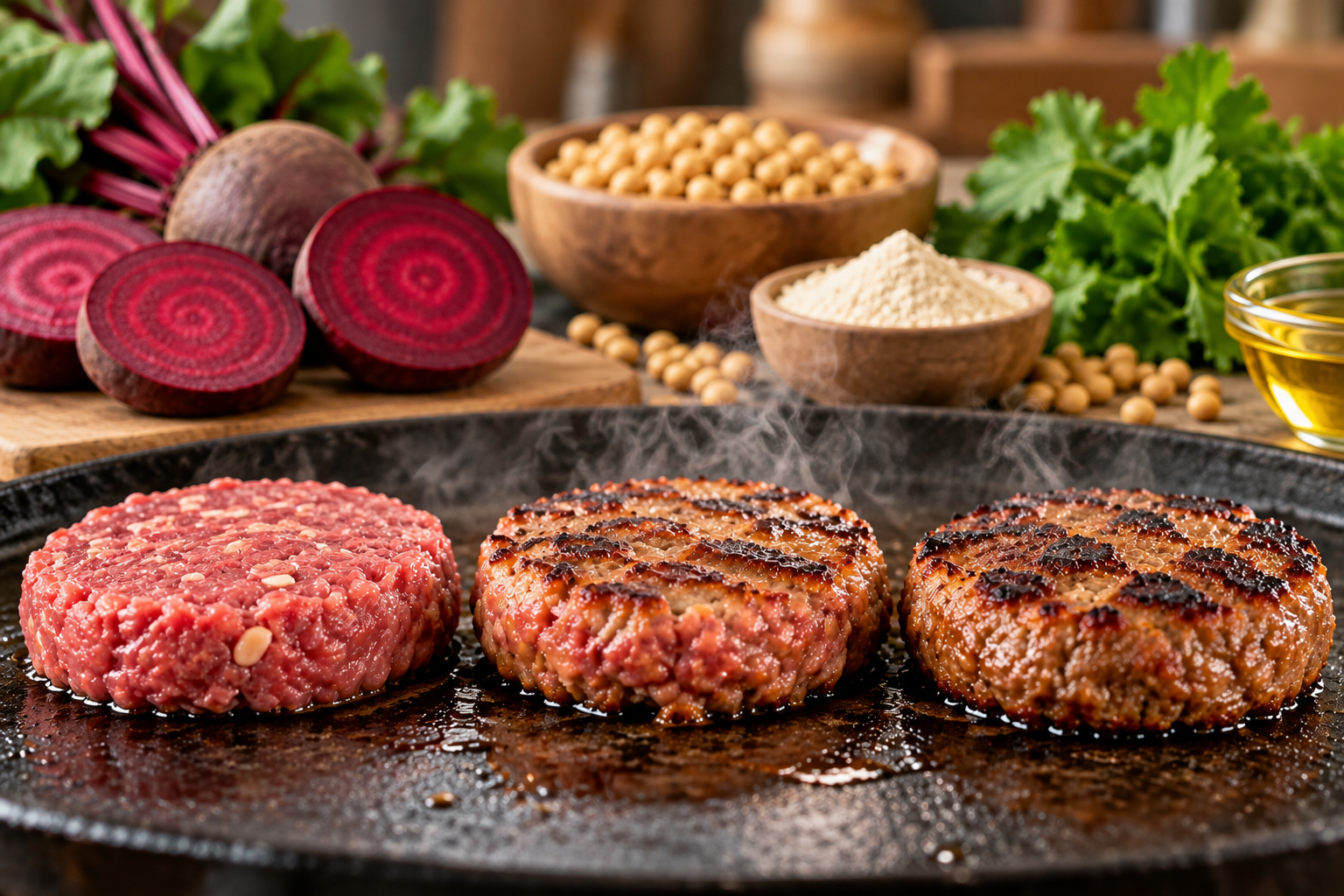
Why plant-based meat changes color is a question worth exploring, especially when a plant-based burger turns from pink or reddish to brown on the grill. Its color can also change during refrigerated storage.
As a chef, I look at color as more than presentation. It can reveal how ingredients respond to heat, how pigments behave, and how well a product maintains its appearance during storage.
As a chef, I look at color as more than presentation. It can tell us something about how a product behaves during cooking, how its ingredients interact, and how well its appearance holds up during storage.
But plant-based meat does not behave exactly like beef. Its color depends on the proteins, natural or added pigments, moisture, acidity, oxygen exposure, and heat used in the formulation.
Understanding these changes is useful whether you are cooking a plant-based burger at home, developing a menu, or working on a new food product.
Let’s look at what actually happens beneath the surface.
What makes plant-based meat change color?
Plant-based meat gets its color from the ingredients used to make it. Unlike beef, which contains the natural pigment myoglobin, plant-based products rely on different combinations of plant proteins, pigments, and other ingredients to create their appearance.
Some products use ingredients such as beetroot extracts to create a reddish color. Others rely on plant-derived compounds and carefully developed formulations to resemble the appearance of meat.
When heat reaches the surface of a plant-based burger, several changes can happen:
- Browning reactions: Heat can trigger the Maillard reaction between certain amino acids and reducing sugars, creating the brown crust associated with grilled food. The same browning reaction helps develop the roasted flavors we enjoy in many cooked foods. You can explore the science behind food browning in more detail in our guide to why restaurant food tastes better.
- Pigment changes: Heat can alter the color of natural or added pigments, depending on their chemical properties.
- Moisture loss: As the surface dries, its color and texture can change, helping create a more browned exterior.
- Ingredient interactions: Protein type, acidity, and other formulation ingredients can affect how the color develops during cooking.
The important point is that not every plant-based burger changes color in the same way. A product designed to look pink before cooking may behave differently from one made to brown naturally on the grill.
For chefs, this is why the ingredient list and cooking instructions matter as much as the appearance of the raw product.
Why does plant-based meat change color in the refrigerator?
Cooking is not the only stage at which a plant-based burger can change its appearance. Color may also shift during refrigerated storage, even before the product reaches the grill.
The reason often comes down to how the ingredients respond to oxygen, light, moisture, and time.
- Oxygen exposure: Some pigments react with oxygen, which can change the color of the product.
- Pigment stability: Natural and added colorants differ in how well they retain their color under refrigerated conditions.
- Moisture changes: Water loss or moisture moving within the product can affect its surface appearance.
- Packaging: Packaging influences how much oxygen and light reach the food, so it can affect color retention.
The formulation makes a difference, too. A burger colored with beetroot-derived ingredients may behave differently from one that uses other pigments or a different protein blend.
For food developers, this is an important lesson: choosing a pigment is only part of the job. The real challenge is keeping the product’s color consistent throughout processing, packaging, distribution, and storage. Research on plant-based meat alternatives confirms that oxygen, pH, temperature, and pigment selection all influence color stability.
Research confirms that pigment stability depends on factors such as temperature, oxygen exposure, and pH, although the effects vary by formulation. This is explored in detail in research on color changes in plant-based meat.
One important distinction: A change in color does not automatically mean a product has spoiled, and normal-looking color does not guarantee safety. Always follow the product’s storage instructions and use-by date.
How chefs can manage color when cooking plant-based burgers
A good plant-based burger should deliver more than an attractive color. It should have a well-browned surface, a pleasant texture, and consistent results from one service to the next.
In a professional kitchen, consistency starts with understanding the product rather than treating every plant-based patty like beef.
1. Preheat the cooking surface.
A properly preheated grill or pan helps the surface brown efficiently. If the surface is too cool, the burger may release moisture and steam before developing the crust you want.
2. Avoid moving the patty too early.
Give the surface enough contact time to develop browning. Moving or pressing the burger repeatedly can interfere with crust formation and affect its texture.
3. Control the heat.
Excessive heat can darken the exterior before the center is adequately heated. Follow the manufacturer’s cooking instructions, particularly for frozen or commercially prepared patties.
4. Watch the surface, not just the clock.
Thickness, moisture content, formulation, and starting temperature all influence cooking time. Color is useful for assessing browning, but it cannot reliably confirm that a product has reached a safe temperature.
5. Test before changing the cooking method
If a patty consistently becomes too dark or remains pale, check the cooking temperature, cooking time, and product specifications before adjusting your process.
A chef’s takeaway
The goal is not to force every plant-based burger to look exactly like beef. It is to achieve the best color, texture, and flavor that the particular formulation can deliver.
When should a color change concern you?
Color is useful when assessing food quality, but it is not a reliable safety test on its own.
A plant-based burger may darken because of pigment reactions, oxidation, or changes during storage. That does not automatically mean the product has spoiled. Equally, a burger that still looks normal may contain harmful microorganisms if it has been mishandled.
As a chef, I look at the whole picture rather than judging a product by appearance alone.
Pay attention to these warning signs:
- Unexpected discoloration: Especially when it appears alongside other signs of deterioration.
- Unusual odors: A sour, rancid, or otherwise unexpected smell may indicate a quality problem.
- Slimy or abnormal texture: Changes that are inconsistent with the product’s normal condition deserve attention.
- Damaged packaging: Leaks, broken seals, or swollen packaging can be reasons for caution.
- Poor storage conditions: A product left outside its recommended temperature range may be unsafe even if it looks and smells fine.
If you suspect a product has spoiled, do not taste it to check. Follow the manufacturer’s storage instructions, respect the use-by date, and discard questionable food when necessary.
The key lesson: Color helps you assess appearance and cooking performance. Safe handling, correct storage, and the manufacturer’s instructions are what help you manage food safety.
How food manufacturers can improve color stability
For food manufacturers, maintaining the color of plant-based meat is a product-development challenge. A burger may look appealing when it leaves the production line, but that appearance needs to remain consistent through packaging, transport, storage and cooking.
The solution starts with understanding how the ingredients behave together.
Choose pigments carefully. Natural and added colorants respond differently to heat, oxygen, acidity and light. Their performance should be tested in the actual product, not just in isolation.
Control the formulation. Protein type, moisture, acidity and other ingredients can influence color development. Small formulation changes may affect the finished product’s appearance.
Evaluate packaging. Packaging that limits oxygen and light exposure may help protect sensitive pigments, depending on the formulation and storage conditions.
Test the complete shelf life. Manufacturers should assess color at different stages of storage, under the intended conditions, and after cooking. This helps identify changes before the product reaches customers.
Standardize cooking performance. Clear cooking instructions and repeatable preparation methods help kitchens achieve more consistent results.
From a chef’s perspective, the best formulation is not necessarily the one that looks perfect on day one. It is the one that delivers reliable appearance, flavor and texture throughout its intended shelf life.
Final thoughts
Plant-based meat changes color for many of the same broad reasons other foods do: heat changes its ingredients, pigments react with their environment, and storage conditions affect appearance.
But every formulation behaves differently. Understanding the ingredients and how they respond to cooking and storage helps chefs prepare better products and helps manufacturers develop more consistent ones.
The real goal is not simply to make plant-based meat look like beef. It is to create a product that performs well from production to plate.
That is where food science and professional cooking come together.