
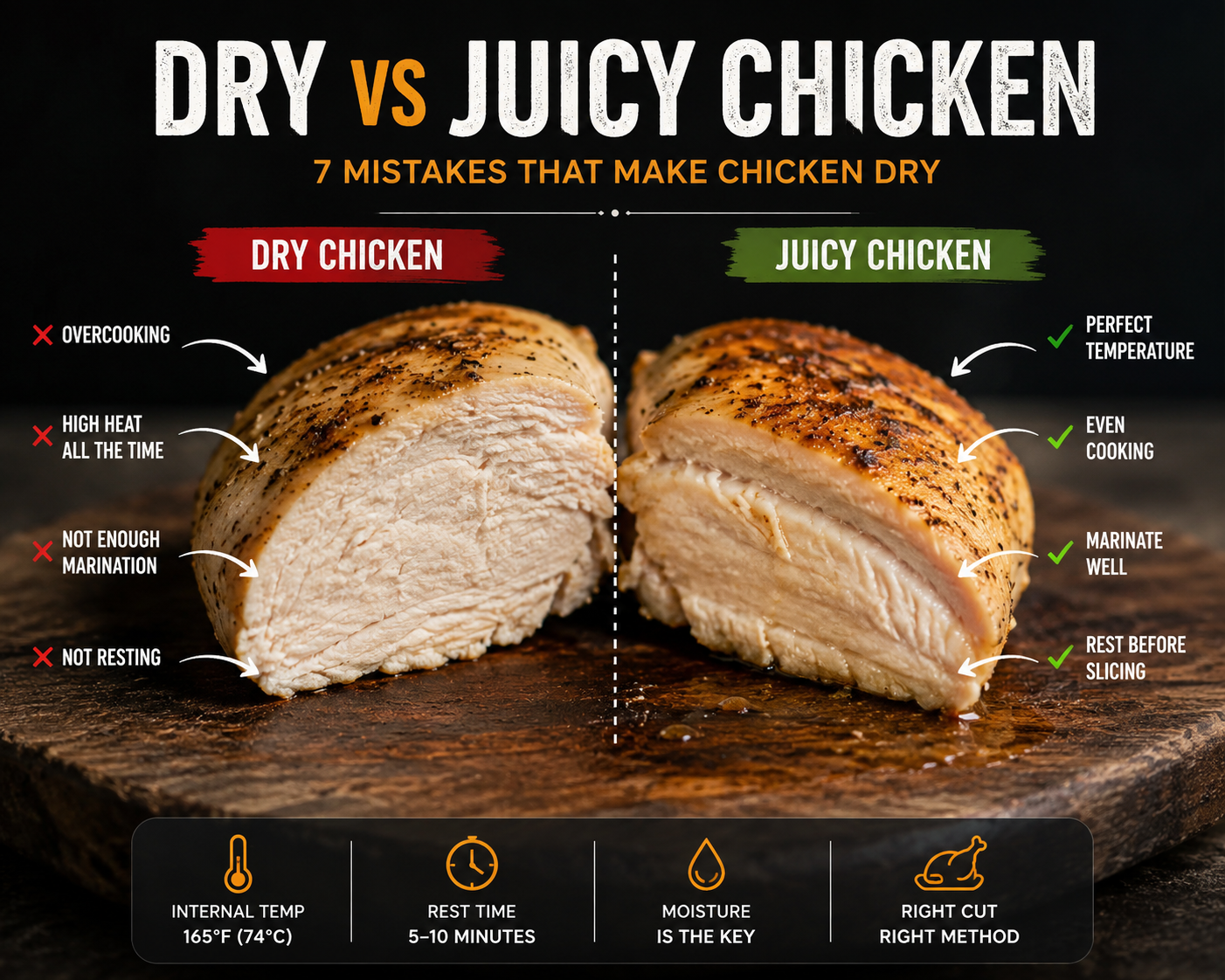
Why Does Chicken Get Dry? 7 Cooking Mistakes Explained
Dry chicken is one of the most common cooking problems, but the reason isn’t complicated. Chicken loses moisture when its proteins tighten during cooking, especially when it is overcooked. In this guide, Chef RBS explains 7 common mistakes that can make chicken dry—and what you can do to keep it juicy, tender and flavorful.
Overcooking the Chicken
The most common reason chicken becomes dry is simply cooking it for too long. As chicken heats up, its muscle proteins tighten and squeeze out moisture. The longer you cook it beyond the point of doneness, the more moisture you lose.
This is especially noticeable with chicken breast because it contains less fat than darker cuts.
Cooking Chicken Straight From the Fridge
Very cold chicken can cook unevenly. The outside may become overcooked while the center is still catching up. This can lead to a dry exterior and less juicy meat.
For more even cooking, let chicken sit out briefly while you prepare your ingredients, rather than putting it straight from a very cold refrigerator into a hot pan.
Using High Heat for Too Long
High heat can cook the outside of chicken very quickly while causing the surface to lose moisture. If the chicken stays over high heat for too long, the proteins tighten and the meat becomes firm and dry.
For juicy chicken, use enough heat to develop good browning, then control the cooking temperature so the chicken reaches doneness without being unnecessarily overcooked.
Not Using Enough Fat or Marinade
Chicken breast is naturally lean, so it can dry out easily during cooking. Using a suitable marinade can help improve flavor and texture, while a small amount of oil can help the surface brown more evenly.
Marinades containing ingredients such as yogurt, buttermilk or acidic ingredients can also change the texture of chicken. The key is to balance the marinade and avoid leaving chicken in a strongly acidic marinade for too long.
Cutting the Chicken Too Soon
Resting chicken after cooking gives the meat time to settle before you cut into it. If you slice it immediately, more of the hot juices can escape onto the plate.
Let cooked chicken rest for a few minutes before slicing. This simple step can help the meat feel juicier and more tender when you eat it.
Skipping the Meat Thermometer
Guessing when chicken is cooked can easily lead to overcooking. A food thermometer gives you a much more reliable way to check doneness.
For food safety, chicken should reach an internal temperature of 165°F (74°C). Check the thickest part of the meat without touching the bone.
Once the safe temperature is reached, continuing to cook unnecessarily can make the chicken drier.
Choosing the Wrong Cut of Chicken
Different chicken cuts behave differently during cooking. Chicken breast is lean and can become dry quickly, while thighs contain more fat and connective tissue and are generally more forgiving.
If you want especially juicy chicken, choosing the right cut for your cooking method can make a big difference. Slow cooking, grilling, frying and roasting each work better with different cuts.
How to Keep Chicken Juicy and Tender
The secret to juicy chicken isn’t complicated: avoid unnecessary overcooking, use the right cooking temperature, choose the right cut and check doneness with a thermometer.
Once you understand how heat affects chicken proteins and moisture, you can make consistently tender chicken at home or in a professional kitchen.
Chef RBS Tip: Control the cooking process instead of relying only on cooking time. Temperature is one of the most useful tools for getting better chicken every time.