Beef Tallow 2026: The Powerful Comeback of an Old Cooking Fat
Something old is suddenly becoming one of America’s most talked-about cooking fats.
Beef tallow was once a familiar ingredient in professional kitchens and traditional home cooking. Then it largely disappeared from mainstream cooking as other oils became more common.
Now it is back.
In 2026, beef tallow is appearing on grocery shelves, in restaurant kitchens, and inside new snack products. Whole Foods Market even placed tallow at the top of its 2026 food trend predictions.
But what exactly is beef tallow?
Why are chefs and food companies using it again?
And what actually happens when you cook with this old-fashioned fat?
From a chef’s perspective, the interesting story isn’t simply that tallow is trending.
It’s why an ingredient that nearly disappeared from everyday cooking has suddenly become relevant again.
Let’s look at the science, cooking properties, and food trend behind the powerful return of beef tallow.
What Exactly Is Beef Tallow?
Before understanding why beef tallow is trending, it helps to understand what it actually is.
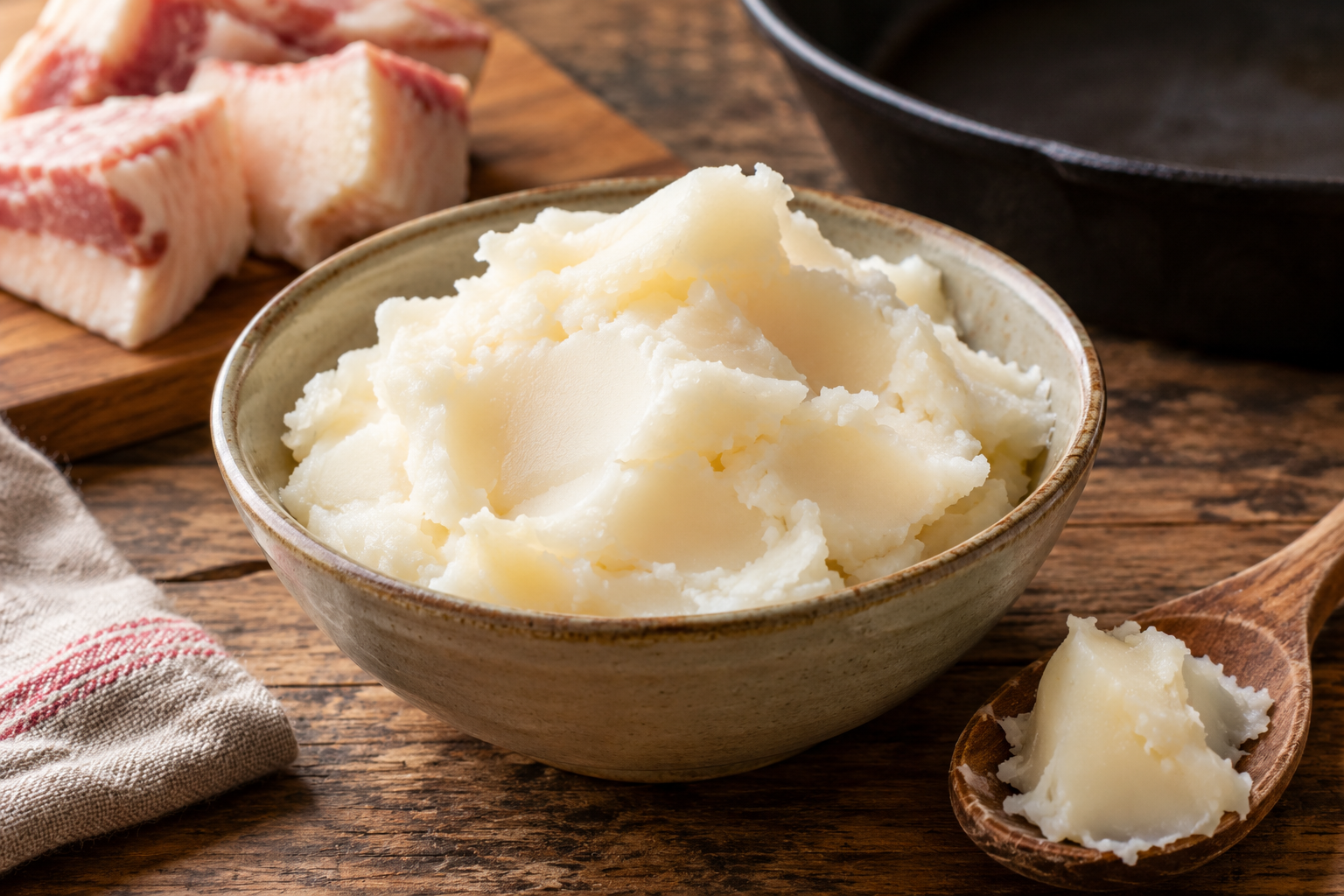
Beef tallow is rendered beef fat.
In simple terms, beef fat is slowly heated so that the fat separates from moisture and remaining tissue. The purified fat is then strained and cooled, producing a firm cooking fat that can be stored and used later.
The quality can vary depending on the fat used and how carefully it is rendered. Fat from around the kidneys, known as suet, is traditionally valued for producing a cleaner, more neutral tallow.
Why do chefs care about it?
Tallow behaves differently from many liquid cooking oils.
It is solid or semi-solid at room temperature, melts when heated, and can handle relatively high cooking temperatures. It also has a distinct savory character that can add depth to foods.
That makes it particularly interesting for:
- French fries
- Roasted potatoes
- Searing meat
- Deep frying
- Roasting vegetables
- Pastry and baking
Whole Foods’ 2026 trend report specifically highlights tallow’s traditional use in frying and baking, along with its high-heat performance and rich flavor.
But there is a bigger question:
What actually happens to food when you cook it in beef tallow instead of a neutral oil?
That’s where the chef’s side of this trend gets interesting.
Why Is Beef Tallow Suddenly Trending Again?
The return of beef tallow is not happening by accident.
For years, many consumers became more familiar with vegetable oils and other liquid cooking fats. Tallow remained associated with traditional cooking and older recipes.
Now food companies are bringing it back in new ways.
Current 2026 industry reporting shows beef tallow appearing in fries, snacks, crackers, chips, and other packaged foods, while restaurants are also experimenting with it as a cooking fat.
There is also a strong nostalgia factor.
People are rediscovering traditional cooking methods and asking a simple question:
“What did cooks use before modern food processing changed the way we cooked?”
But nostalgia alone doesn’t explain the comeback.
Tallow has practical culinary characteristics that make it attractive to chefs. It is solid at room temperature, melts with heat, and contributes a distinctive savory flavor.
That combination makes it particularly interesting for foods where texture and flavor matter as much as the cooking method itself.
And that’s where the tallow trend becomes more than a social media story.
It’s an example of an old cooking technique being rediscovered and adapted for modern food.
What Makes Tallow Different for Frying?
One reason chefs are paying attention to beef tallow again is its behavior during cooking.
When heated, tallow melts into a clear cooking fat that can be used for frying and roasting. Its relatively high smoke point makes it suitable for many high-temperature cooking applications, while its beefy flavor can influence the finished food.
This is especially noticeable with potatoes.
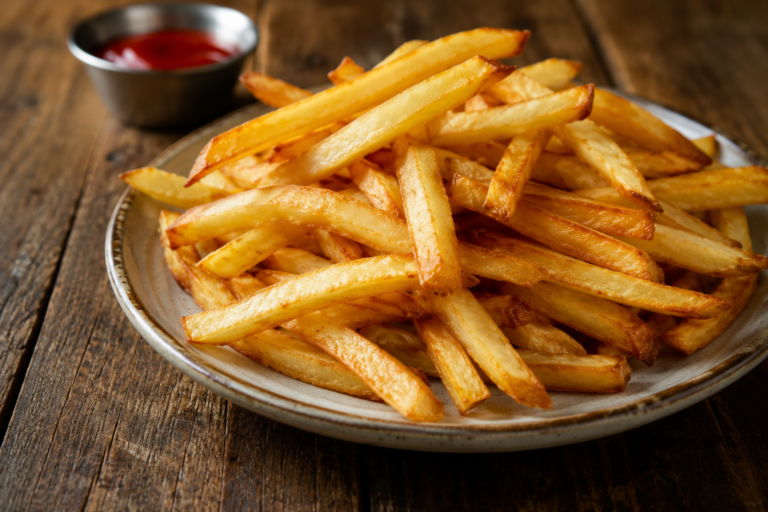
When fries are cooked in tallow, the fat can contribute a deeper savory character that you don’t get from a completely neutral oil.
But there is an important distinction.
A higher smoke point doesn’t mean you should heat the fat without limits.
Every cooking fat can degrade when repeatedly overheated or poorly handled. In a professional kitchen, temperature control, filtration, and proper storage are just as important as choosing the fat itself.
That’s why tallow isn’t automatically a better frying fat.
It is simply a different tool, with its own flavor and cooking characteristics.
And for chefs, choosing the right fat is often about matching the fat to the food rather than searching for one universal winner.
Why Do Tallow Fries Taste Different?
One of the easiest ways to understand the appeal of beef tallow is to taste it in something simple.
French fries are a perfect example.
Potatoes themselves have a relatively mild flavor, so the cooking fat can make a noticeable difference.
Tallow can add a subtle savory richness while allowing the potato’s crispy exterior to remain the star. The result isn’t necessarily a completely different fry, but the overall flavor can feel deeper and more rounded.
There is also a texture component.
The way a potato fries depends on several factors: the potato variety, moisture, starch, frying temperature, and cooking time. The fat is only one part of the equation.
That’s an important chef’s lesson.
You can change the cooking fat, but you cannot rescue poorly prepared potatoes with expensive fat.
For consistently crisp fries, the fundamentals still matter:
Good potatoes + correct preparation + controlled temperature + proper frying technique.
Tallow simply adds another layer to the process.
And that may be one reason restaurants and food brands are experimenting with it again.
Is Beef Tallow Healthier Than Vegetable Oil?
This is where the tallow conversation becomes more complicated.
You will often see claims that beef tallow is automatically healthier because it is traditional or less processed. But the cooking fat you choose is only one part of the overall diet.
Beef tallow contains a significant amount of saturated fat, so it should not simply be presented as a health food.
At the same time, saying that tallow is automatically “bad” doesn’t tell the whole story either.
From a chef’s perspective, the more useful question is
What are you using the fat for, how much are you using, and what does the overall dish look like?
Tallow can have excellent culinary properties for certain applications. But flavor and cooking performance are different questions from long-term nutrition.
So when you see “beef tallow 2026” trending online, separate the two conversations:
Cooking performance is one question.
Nutrition is another.
That distinction helps us understand the trend without turning a cooking ingredient into a health claim.
Why Are Food Companies Putting Tallow Into More Products?
The tallow comeback becomes even more interesting when you look beyond the restaurant kitchen.
Food companies are finding new ways to use this traditional fat in packaged foods and modern products.
Tallow is appearing in products such as fries, chips, crackers, and other savory foods, giving manufacturers another way to create a distinctive flavor and cooking profile.
This is an important shift.
Instead of selling tallow only as a cooking fat in a jar, companies can use it inside foods consumers already buy.
That makes the trend much easier to scale.
For food developers, tallow also creates an interesting formulation question:
Can a traditional ingredient give a modern product a more distinctive taste or texture?
That is exactly the type of question that can turn an old kitchen ingredient into a new commercial opportunity.
And if the current tallow revival continues, we may see many more familiar foods quietly changing the fat they are made with.
Why Are Restaurants Bringing Tallow Back?
The return of beef tallow is also creating opportunities in restaurant kitchens.
For chefs, changing the cooking fat can change more than just the ingredient list. It can influence flavor, aroma and the character of the finished food.
Tallow can be particularly interesting in dishes where a savory, rich flavor works naturally.
Think about:
- French fries
- Roast potatoes
- Fried chicken
- Burgers
- Roasted vegetables
- Savory pastries
But professional kitchens have another consideration: consistency.
A restaurant needs the same result every day, from the first batch of fries to the last.
That means chefs need to consider the fat’s cost, storage, filtration, cooking temperature, replacement schedule, and the flavor it contributes to the dish.
So the tallow comeback isn’t simply about following a food trend.
For a restaurant, it becomes a practical menu-development decision:
Does this fat make the dish better enough to justify using it?
That’s a much more useful question than simply asking whether tallow is fashionable.
What Does the Tallow Trend Mean for Food Businesses?
The return of beef tallow creates an interesting opportunity for food businesses because it can be used in both traditional dishes and modern product development.
For a restaurant, tallow could become part of a signature frying method.
For a food manufacturer, it could become an ingredient that gives a product a distinctive flavor or cooking characteristic.
For a chef, it can simply be another tool in the kitchen.
But there is one thing businesses should not overlook:
A food trend only becomes commercially useful when the numbers work.
Before switching from an existing cooking oil or fat, a business needs to calculate:
- Cost per kilogram
- Oil or fat usage
- Frying performance
- Product yield
- Storage requirements
- Replacement frequency
- Customer response
The ingredient may create a different flavor, but the final product still needs to make sense financially.
That’s where professional food development becomes different from simply following a trend.
The real question isn’t “Is tallow popular?”
It’s “Can tallow create a product customers value while still making business sense?”
The Traditional Fat Meets Modern Food
What makes the beef tallow comeback particularly interesting is the contrast between old cooking methods and modern food culture.
Tallow isn’t a newly invented ingredient. It has been used in cooking for generations.
What’s new is the context.
Today, the same traditional fat is being discussed alongside modern packaged foods, restaurant innovation and changing consumer preferences.
That creates an interesting food cycle:
Old ingredient → forgotten → rediscovered → reinvented.
This pattern happens more often than we realize.
Food trends don’t always come from something completely new. Sometimes consumers rediscover an ingredient that already has a long culinary history and find a new reason to use it.
Beef tallow is a powerful example of that process.
And for chefs, it is a reminder that culinary history can become food innovation when an old technique meets a new generation of consumers.
What Could Be Next for Beef Tallow?
The beef tallow trend is still developing, and its future will depend on more than social media attention.
If consumers continue to enjoy the flavor and cooking performance, food companies and restaurants have plenty of room to experiment with it.
We could see more tallow used in:
- Restaurant fries and roasted potatoes
- Savory snacks
- Crackers and baked foods
- Specialty cooking fats
- Traditional recipes redesigned for modern menus
- Premium food products
But there is an important distinction.
A food trend can create curiosity, but repeat purchases come from the product itself.
If tallow helps create food that tastes better, performs well in the kitchen, and makes commercial sense, its return could become more than a short-lived trend.
And that’s what makes Beef Tallow 2026 worth watching.
Frequently Asked Questions About Beef Tallow 2026
What is beef tallow?
Beef tallow is rendered beef fat that has been separated from moisture and other solids and is commonly used as a cooking fat.
Why is beef tallow trending in 2026?
Beef tallow is being rediscovered by consumers, chefs, and food companies, with new products and restaurant applications bringing the traditional cooking fat back into attention.
Is beef tallow good for frying?
Tallow can be suitable for high-temperature cooking and frying, but proper temperature control and handling are still important.
Why do fries cooked in beef tallow taste different?
Tallow can contribute a distinctive savory flavor to fried foods. However, potato variety, preparation, and frying technique also have a major effect on the final result.
Is beef tallow healthier than vegetable oil?
There isn’t a simple answer. Tallow contains significant saturated fat, so its nutritional profile should be considered separately from its culinary performance.
Can restaurants use beef tallow?
Yes. Restaurants can use tallow for applications such as frying and roasting, provided the flavor, food safety, storage, operating procedures, and cost work for the business.
Is beef tallow just another food fad?
Its current popularity is a genuine food trend, but how long it lasts is uncertain. Continued use will depend on consumer demand, product quality, and whether businesses find practical applications for it.