Why Does Healthy Food Taste Bland? A Chef’s Guide to Making Healthy Food Delicious
Why does healthy food sometimes taste so boring?
You can have fresh vegetables, lean protein, whole grains, and good ingredients on the plate, yet still finish the meal thinking, “I don’t want to eat this again.”
I have seen this problem in professional kitchens too. The issue is often not the ingredients. It is how they are cooked, seasoned, and combined.
Healthy food does not have to mean dry chicken, plain vegetables, or a bowl of steamed ingredients with no character. Good cooking is about building flavor while still respecting the ingredients.
As a chef, I look at a healthy dish differently. I think about browning, seasoning, acidity, texture, aroma, and temperature. Small changes in these areas can turn a simple plate into something people actually want to eat.
In this article, I will explain why healthy food can taste bland and the practical chef techniques I use to make it more flavorful without turning it into a heavy meal.
2. Healthy Food Is Not the Same as Bland Food
One of the biggest mistakes people make is thinking that healthy cooking means removing everything that makes food enjoyable.
Less oil does not mean less flavor.
More vegetables do not mean less satisfaction.
A lighter meal does not have to be plain.
The real difference is how you create flavor.
For example, broccoli can be steamed until soft and served with almost no seasoning. It can also be roasted at high heat until the edges develop a deeper, toasted flavor, then finished with lemon, black pepper, and a small amount of olive oil.
The vegetable has not changed.
The cooking has changed.
The same principle works with chicken, fish, eggs, beans, lentils, tofu, grains, and almost any other ingredient.
As a chef, I don’t start by asking, “How can I make this dish healthier?”
I start by asking:
“How can I make this ingredient taste its best?”
Then I look at how to keep the dish balanced without unnecessary ingredients.
That small change in thinking can completely change the way you cook healthy food.
3. The First Chef Secret: Don’t Under-Season Healthy Food
When people try to make food healthier, one of the first things they often reduce is salt.
Reducing excessive sodium can be reasonable, but removing seasoning completely is not the answer.
Salt does more than make food taste salty. Harvard’s Nutrition Source explains that herbs, spices, and citrus can add flavor while helping reduce reliance on salt. Used carefully, it helps bring out the natural flavors of vegetables, grains, eggs, meat, and other ingredients.
The bigger problem I see in cooking is often under-seasoning rather than healthy ingredients.
Imagine roasting carrots with no salt, no herbs, and no other seasoning. Even good carrots can taste flat.
Now season them properly before cooking, roast them until they develop some color, and finish them with a little lemon juice and fresh herbs.
Suddenly, the carrot tastes much more interesting.
Season in Layers
Good cooks don’t always add all the seasoning at the end.
Seasoning can happen at different stages of cooking:
- Season vegetables before roasting.
- Season protein before cooking.
- Taste sauces while they are developing.
- Adjust seasoning near the end.
- Finish with fresh herbs, citrus, or another acidic ingredient when appropriate.
This builds a more complete flavor.
Chef RBS Tip
Don’t automatically blame healthy ingredients when food tastes boring.
Taste the dish first.
If the food is flat, ask whether it needs salt, acidity, aroma, browning, or texture before deciding that the ingredient itself is the problem.
That is one of the simplest ways to make healthy cooking taste much better.
4. Cooking Method Can Change Everything
The same ingredient can taste completely different depending on how you cook it.
This is especially important when making healthy food because people often rely too heavily on boiling or steaming.
Steaming has its place, but it is not the only way to cook vegetables or protein.
Roasting
Roasting can develop deeper flavors and browned edges.
Try roasting carrots, cauliflower, broccoli, sweet potatoes, or zucchini with a small amount of oil, salt, and spices.
The high heat creates more complex roasted flavors while keeping the ingredient recognizable.
Sautéing
A quick sauté can bring out the aroma of garlic, onions, ginger, and spices before the main ingredients are added.
You do not need a large amount of oil. A properly heated pan and good timing can do much of the work.
Grilling
Grilling adds another layer of flavor through browning and light charring.
Chicken, fish, vegetables, tofu, and even fruit can benefit from this technique.
Baking
Baking is useful when you want controlled cooking with minimal hands-on work.
Fish, chicken, vegetables, and grain-based dishes can all be baked with herbs, spices, and simple sauces.
Chef RBS Tip
Before adding more sauce or seasoning to a bland dish, look at the cooking method.
Sometimes the ingredient simply needs better heat management.
A carrot that is boiled until soft will give you one result. A properly roasted carrot with browned edges will give you another.
Healthy cooking should not remove cooking technique. It should make better use of it.
5. Acidity Can Make Healthy Food Taste Alive
One of the easiest ways to improve a healthy dish is to add a little acidity.
When I say acidity, I mean ingredients such as lemon juice, lime juice, vinegar, tomatoes, yogurt, or other naturally acidic foods.
Acidity does not simply make food sour. In the right amount, it can make other flavors feel clearer and more balanced.
Think about grilled chicken.
If you eat it with only salt and pepper, it can taste fine but somewhat flat. Add a little lemon juice after cooking, and suddenly the chicken tastes brighter.
The same thing happens with vegetables.
Roasted vegetables can become much more interesting with a small splash of lemon juice or vinegar just before serving.
Don’t Add Too Much
This is where balance matters.
Too much acidity can make a dish sharp or sour. The goal is not to make the food taste like lemon or vinegar.
You want enough to lift the other flavors.
As a chef, I often taste a dish and ask:
“Is this missing seasoning, or is it missing brightness?”
Those are not always the same problem.
Chef RBS Tip
Keep a lemon or another simple acidic ingredient nearby when cooking.
Sometimes a few drops added at the end can do more for a healthy dish than adding another sauce or extra fat.
6. Texture Is the Missing Piece in Many Healthy Meals
A healthy dish can have good ingredients and still feel boring if everything on the plate has the same texture.
This is something I pay close attention to as a chef. Why Does Food Texture Matter?
Imagine a plate with soft steamed vegetables, soft rice, and tender chicken. Nothing is necessarily wrong with the ingredients, but the eating experience can feel flat.
Now add something crisp or fresh.
It could be toasted seeds, roasted vegetables with browned edges, fresh cucumber, nuts, or a small crunchy garnish.
Suddenly, the meal has contrast.
Think About Texture
Try combining:
- Soft + crisp
- Creamy + crunchy
- Tender + fresh
- Warm + cool
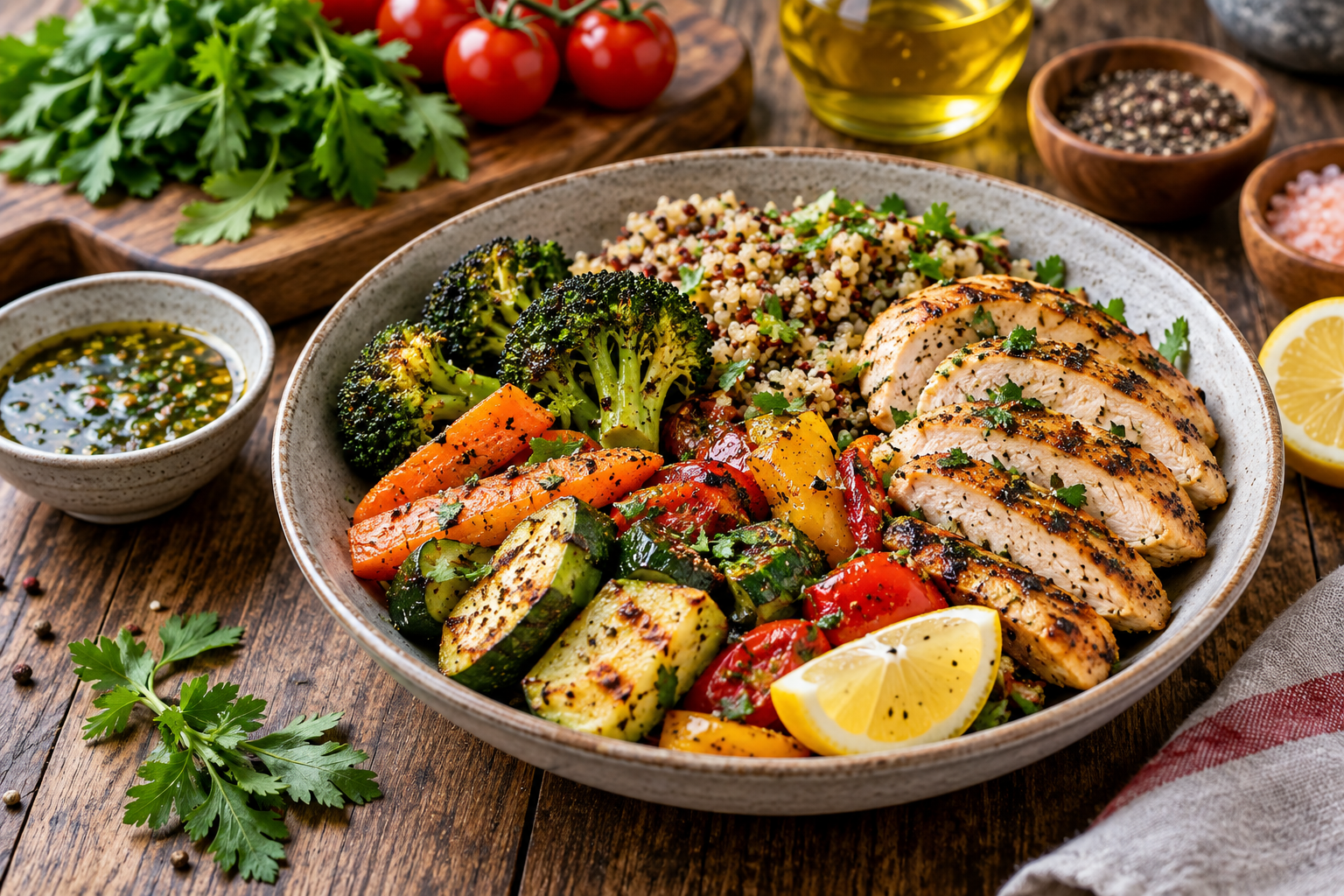
For example, a grain bowl can have warm rice, tender chicken, crisp vegetables, and a cool yogurt-based sauce.
You have not necessarily added a large amount of food. You have simply created more contrast.
Texture Can Also Make Food Feel More Satisfying
When every bite feels different, you tend to experience the meal differently.
This is one reason restaurant chefs think beyond flavor alone. Taste, aroma, and texture work together.
Chef RBS Tip
When a healthy meal feels boring, don’t immediately add more seasoning.
Look at the plate and ask:
“What texture is missing?”
Sometimes adding one simple crunchy or fresh element can completely change the dish.
7. Healthy Food Still Needs Aroma
Before food reaches your tongue, your nose is already involved in the eating experience.
A dish can contain good ingredients and still seem uninteresting if it has very little aroma.
This is why professional kitchens pay attention to garlic, onions, ginger, herbs, spices, citrus zest, and toasted ingredients.
Build Aroma Before Adding the Main Ingredient
When making a stir-fry, for example, gently cooking garlic and ginger in a hot pan can create a strong aromatic base.
With Indian-style cooking, blooming spices in a little oil can release their aroma before vegetables, lentils, or other ingredients are added.
Fresh herbs can bring another layer at the end.
Even lemon or lime zest can add a strong citrus aroma without needing much juice.
Aroma Does Not Require a Heavy Sauce
This is important when trying to make lighter meals.
You can create a lot of characters with:
- Fresh herbs
- Garlic
- Ginger
- Toasted spices
- Citrus zest
- Black pepper
- Chopped scallions
- Toasted seeds
The amount may be small, but the effect can be noticeable.
Chef RBS Tip
When a healthy dish tastes flat, smell it as well as taste it.
Ask yourself whether the dish has enough aroma.
Sometimes the solution is not more salt or more sauce. It may simply need fresh herbs, toasted spices, garlic, citrus zest, or another aromatic element to make the food more inviting.
8. Healthy Food Needs Balance, Not Just Fewer Ingredients
Another common mistake is trying to make a dish healthy by removing too many ingredients.
People sometimes remove oil, sauces, carbohydrates, seasoning, and anything they consider “rich.” What remains may technically look very light, but it can also become dry, unsatisfying, and difficult to enjoy.
As a chef, I prefer to think about balance rather than elimination.
A small amount of olive oil can help carry flavors. Yogurt can add creaminess. Nuts and seeds can provide crunch. Rice, potatoes, or whole grains can make a meal feel complete.
The goal is not to make every ingredient as low as possible.
The goal is to make the whole meal work together.
Think About the Complete Plate
A satisfying meal might contain:
- A protein source
- Vegetables
- A suitable carbohydrate
- A small amount of fat
- Seasoning and herbs
- Something acidic or fresh
- Different textures
The exact combination depends on the cuisine and your personal food preferences.
A Mediterranean-style plate may use olive oil, herbs, and yogurt. An Indian meal may use lentils, vegetables, spices, and a small amount of ghee or oil. An Asian-inspired bowl may use tofu, vegetables, rice, and a flavorful sauce.
Healthy cooking does not have to erase culinary identity.
Chef RBS Tip
Don’t ask, “What can I remove?”
Ask:
“What does this dish actually need?”
That question usually leads to better cooking.
9. How Chefs Make Vegetables Taste Better
Vegetables are often blamed when a healthy meal tastes boring.
But in many cases, the problem is not the vegetable. It is the cooking technique.
A carrot can be boiled, roasted, grilled, or sautéed, and each method gives it a different flavor and texture.
Start With Proper Preparation
Cut vegetables according to how you plan to cook them.
Small pieces cook quickly. Larger pieces take longer and can develop better texture when roasted.
Do not overcrowd a roasting tray or pan. When too many vegetables are packed together, they can release moisture and start steaming instead of browning.
Use Heat Properly
High enough heat can help vegetables develop browned edges and deeper roasted flavors.
But high heat does not mean burning the food.
The goal is controlled browning.
Finish Instead of Overloading
Once vegetables are cooked, finish them with something that complements their natural flavor.
Try:
- Lemon juice
- Fresh herbs
- Black pepper
- Yogurt
- Toasted seeds
- A small amount of olive oil
- Spices
- A light vinegar dressing
The finishing ingredient should support the vegetable rather than hide it.
One of My Simple Chef Tests
Take a carrot and cook half of it by boiling and half by roasting.
Taste both.
You will notice that the ingredient is the same, but the flavor and texture can be completely different.
That is an important lesson in healthy cooking:
You don’t always need more ingredients. Sometimes you need better technique.
Chef RBS Tip
Before deciding that you don’t like a particular vegetable, cook it another way.
The difference between a vegetable people avoid and one they ask for again can sometimes be as simple as heat, seasoning, and timing.
10. The Chef’s Way to Fix a Bland Healthy Plate
Sometimes you have already cooked the food, but the finished plate still tastes flat.
Don’t throw it away. Diagnose it.
As a chef, I usually look at a bland dish through a few simple questions.
Is It Properly Seasoned?
If the food tastes flat, it may simply need better seasoning.
Taste before adding more. Then adjust gradually.
Does It Need Acidity?
If the dish tastes heavy or dull, a little lemon juice, lime juice or vinegar may brighten it.
Is There Enough Aroma?
Fresh herbs, garlic, ginger, toasted spices, or citrus zest can add another layer without completely changing the dish.
Is There Enough Texture?
If everything is soft, add something crisp or fresh.
Toasted seeds, nuts, fresh vegetables, or roasted ingredients can provide contrast.
Does It Have Enough Browning?
A piece of chicken, tofu, or vegetable that has been cooked without developing color can taste very different from one that has been properly browned.
Sometimes the next time you cook it, the answer is simply better heat management.
A Simple Example
Imagine a plate of:
Grilled chicken + brown rice + steamed broccoli
Nothing is wrong with these ingredients.
But if the plate feels boring, I might add:
- Lemon and herb yogurt sauce
- Properly seasoned broccoli
- A few toasted seeds for crunch
- Fresh herbs
- A little black pepper
Now the same basic ingredients have different flavors, aromas, and textures.
Chef RBS Tip
When a dish is bland, don’t immediately reach for a heavy sauce.
First identify what is missing.
Salt? Acidity? Aroma? Browning? Texture?
Once you identify the problem, you can fix the dish with much less effort.
11. Healthy Food Can Still Be Comforting
Healthy eating does not mean giving up the foods and flavors you enjoy.
In fact, some of the best healthy meals are built around familiar comfort foods, with a few thoughtful changes.
Think about a bowl of soup.
You can build it around vegetables, beans, lentils, chicken or fish, then add herbs, spices, and a flavorful stock. It can be comforting without needing a heavy cream-based sauce.
The same idea works with pasta, rice bowls, curries, wraps, and roasted meals.
Keep the Flavor, Improve the Technique
You don’t always need to completely redesign a dish.
For example:
- Roast potatoes instead of over-frying them.
- Add vegetables to pasta rather than removing pasta completely.
- Use yogurt and herbs for a creamy sauce.
- Add beans or lentils to soups and stews.
- Use grilled or roasted ingredients to build deeper flavor.
- Use fresh herbs and citrus to finish the dish.
These changes keep the food recognizable while improving the overall balance.
Food Should Still Feel Enjoyable
This matters because people are more likely to continue eating foods they genuinely enjoy.
If every healthy meal feels like a punishment, it becomes difficult to maintain the habit.
As a chef, I would rather make a really good bowl of food with sensible portions and thoughtful cooking than create something so restrictive that nobody wants to eat it again.
Chef RBS Tip
Don’t try to make healthy food taste like something it isn’t.
Let vegetables taste like vegetables. Let good chicken taste like chicken. Use cooking technique, seasoning, and balance to bring out what is already there.
That is where good healthy cooking starts.
12. Healthy Cooking Is About Technique, Not Perfection
You do not need to cook every meal perfectly.
A healthy approach to cooking is about building good habits and understanding what makes food enjoyable.
Sometimes you will roast vegetables. Sometimes you will make pasta. Sometimes dinner will be a simple sandwich or a bowl of leftovers.
That is normal.
What matters is understanding how to make everyday food work better.
Use What You Have
You don’t need a special ingredient just because a recipe calls for it.
If you have broccoli instead of zucchini, use broccoli.
If you have beans instead of lentils, adapt the dish.
If fresh herbs are not available, use suitable dried herbs or spices.
Cooking becomes much easier when you understand the principle behind a recipe, rather than following every ingredient rigidly.
Learn a Few Basic Techniques
If you know how to:
- Roast vegetables properly
- Sear protein
- Cook grains correctly
- Build a simple sauce
- Balance salt and acidity
- Add texture
- Use herbs and spices
You can create hundreds of different meals from ordinary ingredients.
That is much more useful than memorizing hundreds of recipes.
Chef RBS Tip
Learn techniques, not just recipes.
Once you understand why food browns, how acidity balances flavor, and how texture changes a dish, you can make better decisions in your own kitchen.
That is when healthy cooking becomes easier, more flexible, and much more enjoyable.
13. My Chef Rule: Make Healthy Food You Would Happily Serve Someone Else
This is probably the most important lesson I can share.
If you are making healthy food only because you think you should eat it, you may eventually get tired of it.
Instead, cook it as if you were serving it to someone you care about.
Think about the temperature.
Think about the aroma.
Think about the color.
Think about texture.
Taste before serving.
Even a simple bowl of vegetables and protein deserves that attention.
Don’t Hide the Food
A common approach is to cover healthy ingredients with a lot of sauce because the food itself does not taste good.
I prefer the opposite.
Make the main ingredient taste good first.
Roast the vegetables properly. Brown the chicken. Season the lentils. Cook the fish carefully. Then add a sauce or dressing that supports the food.
Make the Plate Look Good
We eat with our eyes too.
A little color from fresh herbs, tomatoes, leafy greens, or roasted vegetables can make a simple meal much more inviting.
You don’t need restaurant-style decoration.
Just avoid putting everything on the plate in one pile.
Chef RBS Tip
Before serving, take one final taste.
Ask yourself:
“Would I happily serve this to someone else?”
If the answer is no, don’t assume the food needs to be less healthy.
It may simply need better cooking, better seasoning, or better balance.
That’s the difference between food that is merely healthy and food that is healthy and enjoyable.
14. Final Thoughts: Healthy Food Should Still Taste Good
Healthy food does not have to be boring.
If a meal tastes bland, the answer is not always more sauce, more fat, or completely different ingredients. Often, the solution is much simpler.
Cook the ingredient properly. Season it carefully. Build aroma. Add acidity. Create texture.
These small techniques can make a big difference.
You can take the same chicken, vegetables, lentils, fish, or grains and create completely different meals simply by changing the cooking method and flavor combination.
That is what I enjoy most about cooking.
Healthy food should not feel like a compromise. It should be food that you genuinely want to eat.
Good ingredients + good technique + good balance = food you can enjoy again and again.
Chef RBS