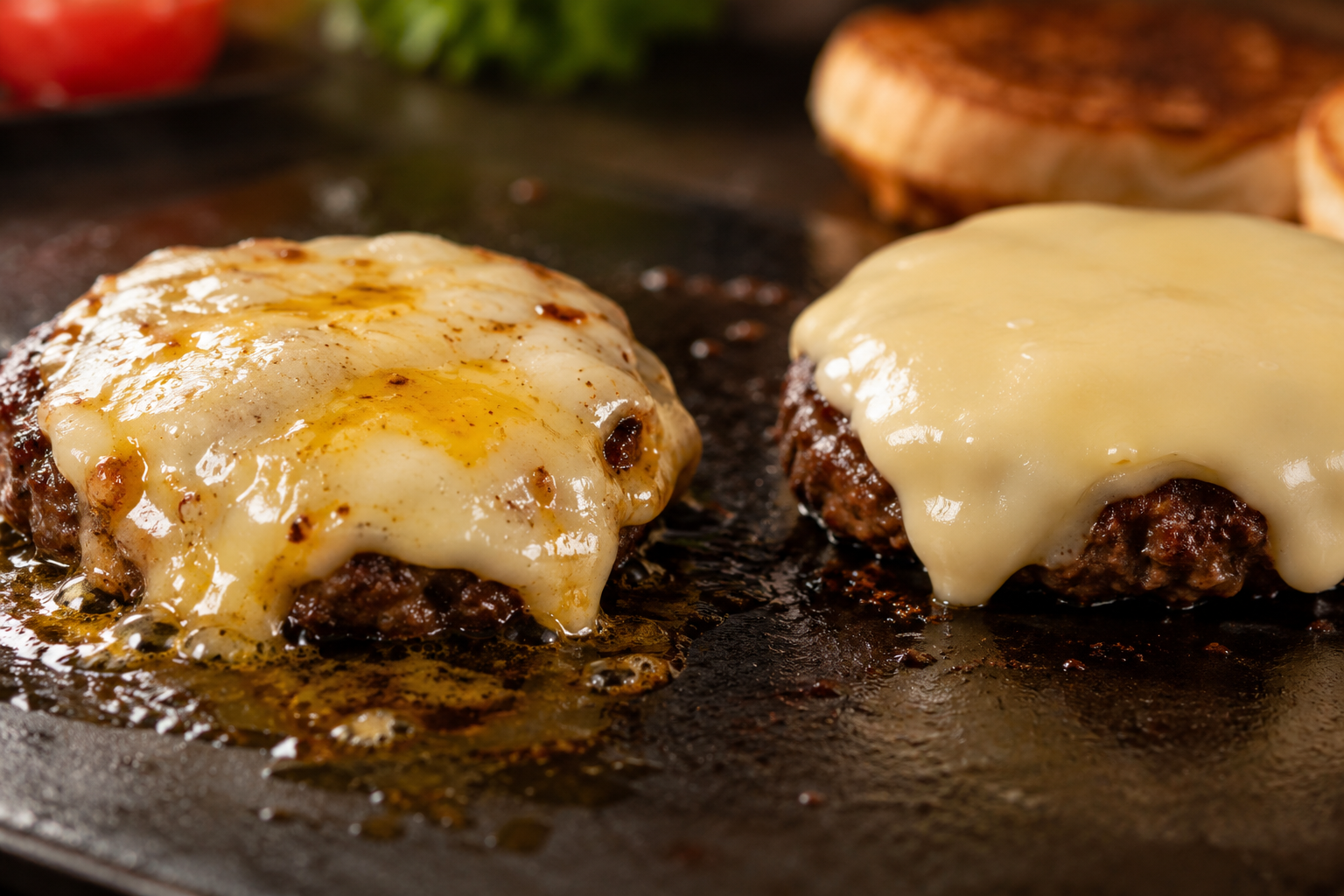
Why Does Cheese Get Oily When It Melts? The Food Science Explained
Have you ever melted cheese for a burger, grilled sandwich or pasta and noticed something strange? Instead of becoming smooth and creamy, the cheese suddenly releases a layer of oil and leaves behind a dry or rubbery mass.
It can look like the cheese has simply “gone wrong”, but there is actually some fascinating food science happening inside it.
Cheese is a complex structure made mainly from milk fat, water, proteins and minerals. When you heat it, these components respond differently to temperature. The way they interact determines whether the cheese melts into a smooth, stretchy layer or separates into oil and a firm protein-rich mass.
As a chef, I see this difference regularly in professional kitchens. The same cheese can behave beautifully in one preparation and become oily in another, depending on the cheese itself, the temperature, moisture and how it is heated.
So, why does cheese get oily when it melts? Let’s break down what is really happening.
What Is Actually Happening When Cheese Melts?
Cheese doesn’t simply turn from solid to liquid when you heat it. Its internal structure starts changing as temperature rises.
Cheese contains a network of casein proteins holding fat and water within its structure. When heated, the fat begins to soften and flow. At the same time, the protein network changes and becomes more flexible.
In a cheese that melts well, these changes happen in a relatively controlled way. The fat remains distributed through the protein and water rather than separating completely.
But when the balance is disturbed, the fat can escape from the protein network. That’s when you see that familiar shiny layer of oil sitting on top of the melted cheese.
So oily melted cheese isn’t simply a problem with “too much fat”. It is often a sign that the cheese’s fat, protein, moisture and heat conditions are no longer working together as a stable structure.
Why Some Cheeses Melt Smoothly and Others Turn Oily
Not all cheese is designed to melt in the same way. The difference comes down to the cheese’s moisture, fat content, acidity, age and protein structure.
Younger, higher-moisture cheeses often soften and melt more easily because their protein network is less tightly packed. Many cheeses used for pizza, burgers and grilled sandwiches are chosen specifically because they can soften, stretch and flow while retaining enough structure to hold the melted fat.
Aged cheeses usually have a firmer and more concentrated structure. When heated strongly, their protein network can contract and release fat more readily, producing a greasy or oily appearance.
This is why simply choosing a cheese with a strong flavour does not always give you the best melting performance.
In professional cooking, chefs choose cheese based not only on flavour but also on how they want it to behave under heat. A cheese that tastes excellent cold may not necessarily be the best cheese for a smooth sauce or a perfectly melted burger topping.
How Heat Makes Cheese Release Oil
Temperature is one of the biggest factors controlling how cheese melts.
As cheese heats up, its milk fat softens and becomes more mobile. If the cheese structure can hold that fat in place, you get a smooth melted texture. But if the protein network breaks down or contracts too much, the fat can separate and collect on the surface.
This is especially noticeable when cheese is exposed to very high heat for too long. Instead of giving the cheese time to soften gradually, intense heat can push the structure beyond the point where it can hold the fat and moisture together.
This is one reason I avoid treating all cheese the same way in a professional kitchen. A cheese sauce, burger topping and grilled sandwich may all require different heat control.
More heat does not always mean better melting. In many cases, gentle and controlled heating gives you a much better result.
Why Restaurant Cheese Sauces Stay Creamy
A smooth cheese sauce is not simply melted cheese. It is an emulsion, where fat and water are kept distributed together instead of separating into two layers.
This is why professional cheese sauces often use more than just cheese. Ingredients such as milk, cream, butter, starch or other emulsifying components can help create a stable mixture.
The technique matters too. Adding cheese to excessive heat can encourage fat separation, while controlled heating allows the cheese to incorporate more smoothly into the surrounding liquid.
This is particularly important in restaurant kitchens, where a sauce may need to remain creamy during holding and service rather than looking perfect for only a few seconds.
The chef’s goal is not simply to melt cheese. The goal is to control the cheese’s structure so that fat, water and protein work together.
That small difference in thinking can completely change the final result.
Why Cheese Becomes Greasy Instead of Stretchy
The stretchy texture people associate with melted cheese depends heavily on the structure of the cheese and how that structure responds to heat.
When the protein network remains flexible enough, the cheese can soften and stretch while holding much of its fat and moisture within the structure. But if the network contracts too much, the fat can separate and move toward the surface.
You may notice this with cheese that has been heated for too long, especially when it is exposed to intense direct heat. The surface becomes shiny and greasy while the remaining cheese becomes firmer and less elastic.
Moisture also plays an important role. As water is lost during heating, the balance between protein, fat and water changes. The cheese can become more concentrated and less able to maintain the smooth texture you were expecting.
This is why the best melted cheese is usually about control rather than maximum temperature. The right cheese, enough moisture and gentle heating can make a much bigger difference than simply turning up the heat.
Can You Stop Cheese From Getting Oily?
You cannot completely prevent cheese from releasing fat, because melting naturally changes its structure. But you can greatly improve the result by controlling the cheese, temperature and cooking method.
Choose the right cheese: If you want a smooth melt, select a cheese known for good melting behaviour rather than relying only on flavour.
Use moderate heat: Give the cheese time to soften instead of exposing it to intense heat. High temperatures can encourage fat separation.
Don’t overcook it: Once cheese has reached the texture you want, continuing to heat it can make the structure break down further.
Add moisture when appropriate: For sauces, a suitable liquid can help maintain a smoother texture, especially when combined with ingredients that help stabilise the mixture.
Control the process: In a professional kitchen, consistent results come from controlling temperature, timing and formulation rather than hoping the cheese behaves perfectly every time.
The key lesson is simple: if your melted cheese is oily, the solution is not always less cheese. It is often better control of heat and structure.
Does Adding Milk or Water Stop Cheese From Getting Oily?
Adding a liquid can help when you are making a cheese sauce, but simply adding water or milk to melted cheese does not automatically prevent separation.
The final texture depends on how the liquid, fat and proteins interact. If the mixture is heated too aggressively, the cheese can still separate even when liquid is present.
In sauces, chefs often use a combination of controlled heat, sufficient moisture and ingredients that help stabilise the emulsion. Starch can also help thicken the water phase and reduce the tendency of fat to separate.
This is why a properly prepared cheese sauce behaves very differently from a slice of cheese placed directly into a very hot pan.
Think of it as building a stable system rather than simply melting cheese. Once you understand that difference, creamy cheese sauces become much easier to control.
The Chef Trick for Smoother Melted Cheese
One of the simplest ways to improve melted cheese is to control the temperature and timing rather than trying to force the cheese to melt quickly.
In a professional kitchen, I prefer to bring cheese into the dish when the surrounding ingredients are already at a suitable temperature. This reduces the need to expose the cheese to intense direct heat for a long period.
For a burger or grilled sandwich, for example, the goal is to melt the cheese enough to become soft and cohesive without continuing to cook it until the fat separates.
For a cheese sauce, I focus on creating the liquid base first and then incorporating the cheese gradually under controlled heat. This gives the proteins and fat a better chance of remaining part of a stable mixture.
Good cheese melting is a technique, not just an ingredient choice.
Once you understand how heat affects fat, moisture and protein, you can predict the result instead of simply hoping the cheese melts correctly.
Chef RBS Kitchen Test: Which Cheese Melts Best?
A simple kitchen test can show why cheese behaves differently under heat.
Take three different cheeses and cut them into similar-sized pieces. Heat each one using the same pan, the same temperature and the same cooking time. Observe how quickly each cheese softens, how much oil appears, how stretchy it becomes and how much structure remains after melting.
I recommend recording four things:
1. Melting speed
How quickly does the cheese soften?
2. Oil separation
Does fat collect around the cheese?
3. Stretch and elasticity
Does the melted cheese remain cohesive and stretchy?
4. Final texture
Is it creamy, stretchy, firm, rubbery or greasy?
This is the kind of simple testing I use when developing food products. Instead of choosing an ingredient only because it tastes good, you evaluate how it performs under the exact conditions where you intend to use it.
The best cheese is not necessarily the most expensive cheese. It is the cheese that gives you the flavour and melting performance your dish actually needs.
Why Processed Cheese Often Melts Differently
If you have ever compared a processed cheese slice with a natural cheese, you may have noticed that they behave very differently when heated.
Processed cheese products are formulated specifically for consistent melting. Their composition can include emulsifying salts and other ingredients that help keep fat, water and proteins distributed more evenly during heating.
This can make them particularly useful for burgers, sandwiches and cheese sauces where a smooth, consistent melt is important.
Natural cheeses can offer more complex flavour and character, but their melting behaviour depends strongly on their moisture, acidity, age and protein structure.
This is an important lesson in food product development: the best ingredient depends on the job you need it to perform. Flavour, texture, appearance, cost and processing performance all matter.
That is why professional kitchens and food manufacturers often evaluate cheese not only by taste, but also by its performance during cooking and holding.
Why Restaurant Cheese Sometimes Melts Better Than Home Cheese
Have you ever ordered a burger or grilled sandwich at a restaurant and wondered why the cheese seems perfectly melted, while the same cheese at home becomes oily or rubbery?
The difference is often not the cheese alone. Professional kitchens control several variables at the same time.
The cooking surface, temperature, contact time, moisture from other ingredients and timing of service all affect the final result.
A chef may also choose a specific cheese or cheese blend based on how it performs during cooking. The cheese might be combined with a sauce, placed under controlled heat or added at exactly the right stage of preparation.
At home, it is easy to put cheese into a very hot pan and wait for it to melt. By the time it looks fully melted, the cheese may already have gone past its ideal texture.
Restaurant results often come from process control, not a secret ingredient. When you control heat, timing, moisture and the cheese itself, you have much more control over the final melt.
How to Fix Oily Cheese on a Burger or Sandwich
If cheese has already started releasing oil, the first thing to do is stop adding heat. Continuing to cook it aggressively will usually make the separation worse.
If you are preparing a burger or sandwich, use the residual heat of the cooked ingredients to finish melting the cheese rather than keeping it directly over a very hot surface.
Another useful approach is to choose a cheese or cheese blend that is designed to melt well for the application. A cheese that performs consistently can make a bigger difference than trying to rescue a poorly melting cheese with extra heat.
For sauces, the solution is different. A stable cheese sauce needs the right balance of liquid, fat, protein and stabilising ingredients. If the sauce has already separated, simply stirring harder may not completely restore it.
The best fix is prevention: choose the right cheese, control the heat and stop cooking as soon as the desired texture is reached.
Frequently Asked Questions About Oily Melted Cheese
Why does cheese get oily when it melts?
Cheese can become oily when heat causes its fat to separate from the protein and moisture structure. Excessive heat or prolonged cooking can make this separation more noticeable.
Does high heat make cheese more oily?
It can. Very high or prolonged heat can cause the protein structure to contract and release more fat. Controlled heating usually gives a better result.
Why does my cheese become rubbery after melting?
Overheating can cause the protein network to tighten and moisture to be lost, leaving the cheese firmer and less flexible.
Which cheese melts without becoming oily?
There is no single best cheese for every application. Melting performance depends on moisture, fat, acidity, age and protein structure. Cheeses formulated or selected for melting generally give more consistent results.
Can milk make melted cheese smoother?
Milk can help when making a cheese sauce, but simply adding milk does not guarantee a smooth result. Heat control and the balance of fat, water, protein and stabilising ingredients are also important.
Why does restaurant cheese melt so smoothly?
Restaurants often control the cheese selection, temperature, moisture, cooking time and application more precisely. The technique and process can be just as important as the cheese itself.
Final Thoughts
Cheese getting oily when it melts is not simply a sign of bad cheese. It is a result of how fat, moisture, protein and heat interact inside the cheese.
Once you understand that structure, melted cheese becomes much easier to control. The right cheese, controlled temperature and correct timing can make the difference between a smooth, creamy melt and a greasy, rubbery result.
As a chef, I always look at ingredients from two sides: how they taste and how they perform. That approach becomes especially important in restaurant kitchens and food product development, where consistency matters just as much as flavour.
The next time your cheese releases oil, don’t just blame the cheese. Look at the heat, the cooking time, the moisture and the type of cheese you are using.
Good cooking becomes easier when you understand the science behind it.