
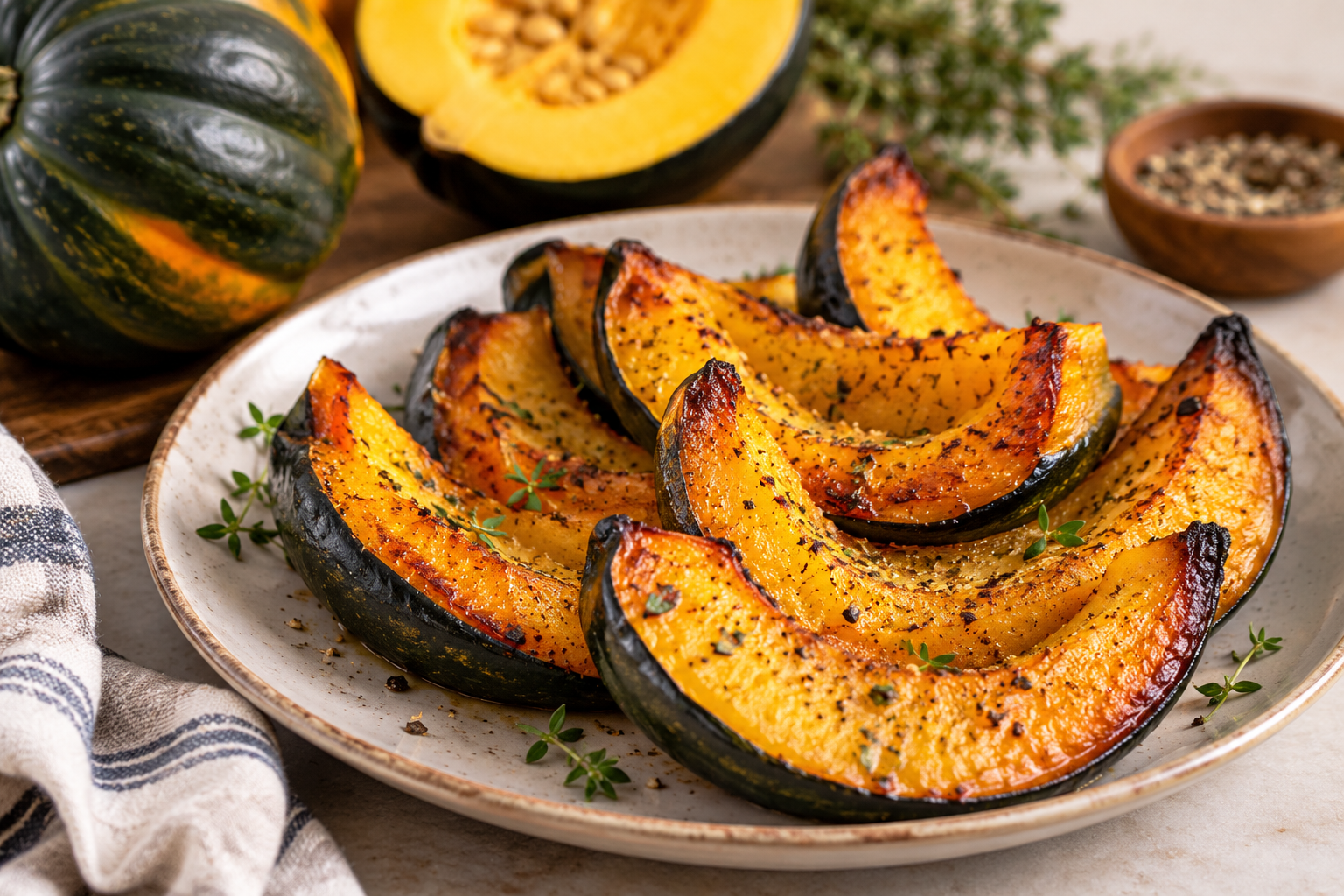
Roasted Acorn Squash: How to Cook It Perfectly
Introduction
Acorn squash is one of my favorite winter squash varieties to roast because it needs very little to taste good. When it is cooked properly, the edges become lightly caramelized while the center turns soft, creamy, and naturally sweet.
The problem I often see is undercooked squash in the center or squash that becomes too soft and watery. The key is simple: cut it evenly, season it properly, and give it enough time in a hot oven to develop good browning.
In this recipe, I’ll show you my straightforward chef method for making roasted acorn squash at home, including how to cut it, how to season it and how to know when it is perfectly cooked.
Chef RBS Tip: Don’t judge acorn squash only by its cooking time. Look for a tender center and nicely browned edges. That’s where the flavor is.
How to Choose a Good Acorn Squash
When buying acorn squash, choose one that feels heavy for its size and has firm, unbroken skin. A good squash should not have soft spots, deep cuts, or areas that look damaged.
The skin can vary from dark green to green with orange patches. A little orange color is normal and doesn’t necessarily mean the squash is overripe.
Chef RBS Tip: Pick up a few and compare them. The one that feels heavier and firmer for its size will usually have a good amount of usable flesh.
Ingredients
- 1 medium acorn squash
- 1½ tablespoons olive oil
- ½ teaspoon salt
- ¼ teaspoon black pepper
- ½ teaspoon garlic powder
- ½ teaspoon dried thyme
- 1 teaspoon maple syrup or honey, optional
Why Roasting Works So Well for Acorn Squash
Roasting brings out the natural sweetness of acorn squash while removing excess moisture from the surface. The high oven heat also helps the edges caramelize, giving the squash a deeper, richer flavor.
That’s why I prefer roasting over simply steaming or boiling when I want better texture and more concentrated flavor.
Chef RBS Tip: Give the squash enough space on the baking tray. If the pieces are crowded, they are more likely to steam instead of roast.
How to Cut Acorn Squash
Cutting acorn squash can feel awkward because the skin is quite firm. I prefer to cut it in half from the stem end to the bottom, rather than trying to cut through the stem itself.
- Place the squash on a stable cutting board.
- Carefully cut it lengthwise in half.
- Use a spoon to scoop out the seeds and stringy pulp.
- Place each half cut-side down and cut into even wedges.
Try to keep the wedges similar in thickness. This helps them cook at roughly the same rate and gives you more even browning.
Chef RBS Tip: If the squash is particularly hard to cut, don’t force the knife. A few minutes of gentle warming in the microwave can soften it slightly and make cutting easier.
Season the Acorn Squash.
Place the squash wedges in a bowl and add the olive oil, salt, black pepper, garlic powder, and dried thyme.
Toss gently until the seasoning coats all sides. If you like a slightly sweeter roasted squash, add a small amount of maple syrup or honey.
Arrange the wedges on a baking sheet in one layer, leaving a little space between them. Don’t overcrowd the pan. Good airflow helps the squash roast and brown instead of steaming.
Chef RBS Tip: Keep the seasoning simple. Acorn squash already has a naturally sweet, nutty flavor, so you don’t need a long list of spices to make it taste good.
Roast the Acorn Squash
Preheat your oven to 425°F (220°C).
Place the seasoned squash wedges on a baking sheet, cut side down. Roast for about 25 to 35 minutes, depending on the size and thickness of the wedges.
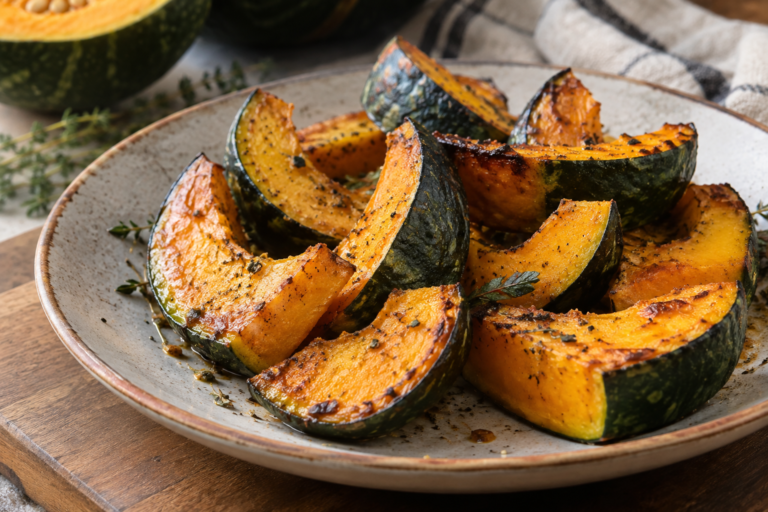
The squash is ready when a fork slides easily into the thickest part and the edges have developed a deep golden-brown color.
If the center is tender but you want more browning, give it another 3 to 5 minutes in the oven.
Chef RBS Tip: Don’t keep opening the oven to check. Let the high heat do its job and check near the end of the cooking time.
How to Know When Acorn Squash Is Done
Don’t rely on the timer alone. The easiest way to check roasted acorn squash is with a fork.
The thickest part should be completely tender, and the edges should have a good golden-brown color. The flesh should give easily when pressed with a fork but still hold its shape.
If the squash is browning too quickly while the center is still firm, reduce the oven temperature slightly and continue roasting until tender.
Chef RBS Tip: Browning gives you flavor, but tenderness tells you the squash is actually cooked. Look for both.
Serving Roasted Acorn Squash
Roasted acorn squash is best served hot and fresh from the oven while the edges are still caramelized and the center is soft.
You can serve it as a simple side dish with roasted chicken, grilled fish, or steak. It also works well in grain bowls, salads, or as part of a vegetarian meal.
For a finishing touch, add a small drizzle of maple syrup, a little fresh thyme, or a pinch of flaky salt just before serving.
Chef RBS Tip: Let the natural sweetness of the roasted squash do most of the work. A simple finish usually tastes better than covering it with too many sauces or spices.
How to Store and Reheat Roasted Acorn Squash
Let the roasted squash cool, then place it in a covered container and refrigerate it. For the best texture, use it within 3 to 4 days.
To reheat, use an oven or air fryer rather than the microwave if you want to bring back some of the roasted edges.
Chef RBS Tip: Reheat at 375°F (190°C) until warmed through. Avoid overheating, which can make the squash soft and watery.
Common Mistakes When Roasting Acorn Squash
A few small mistakes can make roasted acorn squash turn out soft, watery, or unevenly cooked.
- Overcrowding the pan: Too much squash on one tray creates steam instead of good browning.
- Cutting uneven pieces: Thick and thin pieces will finish at different times.
- Using too little oil: A light coating helps the surface brown properly.
- Opening the oven too often: This lets heat escape and can slow roasting.
- Taking it out too early: Check the thickest part with a fork before serving.
Chef RBS Tip: The goal isn’t simply to make the squash soft. You want a tender center with properly browned edges. That combination gives roasted acorn squash its best flavor and texture.
Quick Chef RBS Takeaway
Roasting acorn squash is simple, but the details make the difference. Cut the squash evenly, season it lightly, give it enough space on the baking tray, and roast at high heat until the center is tender and the edges are nicely browned.
If you’re cooking acorn squash for the first time, don’t focus only on the cooking time. Use the texture and browning as your final guide.
Chef RBS Tip: Good roasted squash should be tender inside, caramelized around the edges, and still hold its shape.
FAQ
How long does it take to roast acorn squash?
At 425°F (220°C), acorn squash wedges usually take about 25 to 35 minutes, depending on their size and thickness.
Do you peel acorn squash before roasting?
No. The skin can be left on while roasting. It helps the wedges hold their shape and can soften during cooking.
Why is my roasted acorn squash watery?
Overcrowding the baking sheet can trap steam and prevent proper browning. Give the pieces enough space so the hot air can circulate.
Can I make roasted acorn squash ahead of time?
Yes. Roast it, cool it properly, and refrigerate it in a covered container. Reheat it in the oven or air fryer to bring back some of the roasted texture.
Can I eat the seeds?
Yes. Acorn squash seeds can be cleaned, seasoned, and roasted separately, similar to pumpkin seeds.
Conclusion
Roasted acorn squash doesn’t need complicated preparation. With a few basic ingredients and the right oven temperature, you can turn it into a flavorful side dish with caramelized edges and a tender center.
The main things to remember are even cutting, enough space on the baking tray, high heat, and checking the thickest part for tenderness.
That’s the method I use when I want acorn squash that is simple, well-browned, and full of natural flavor.

One Comment