
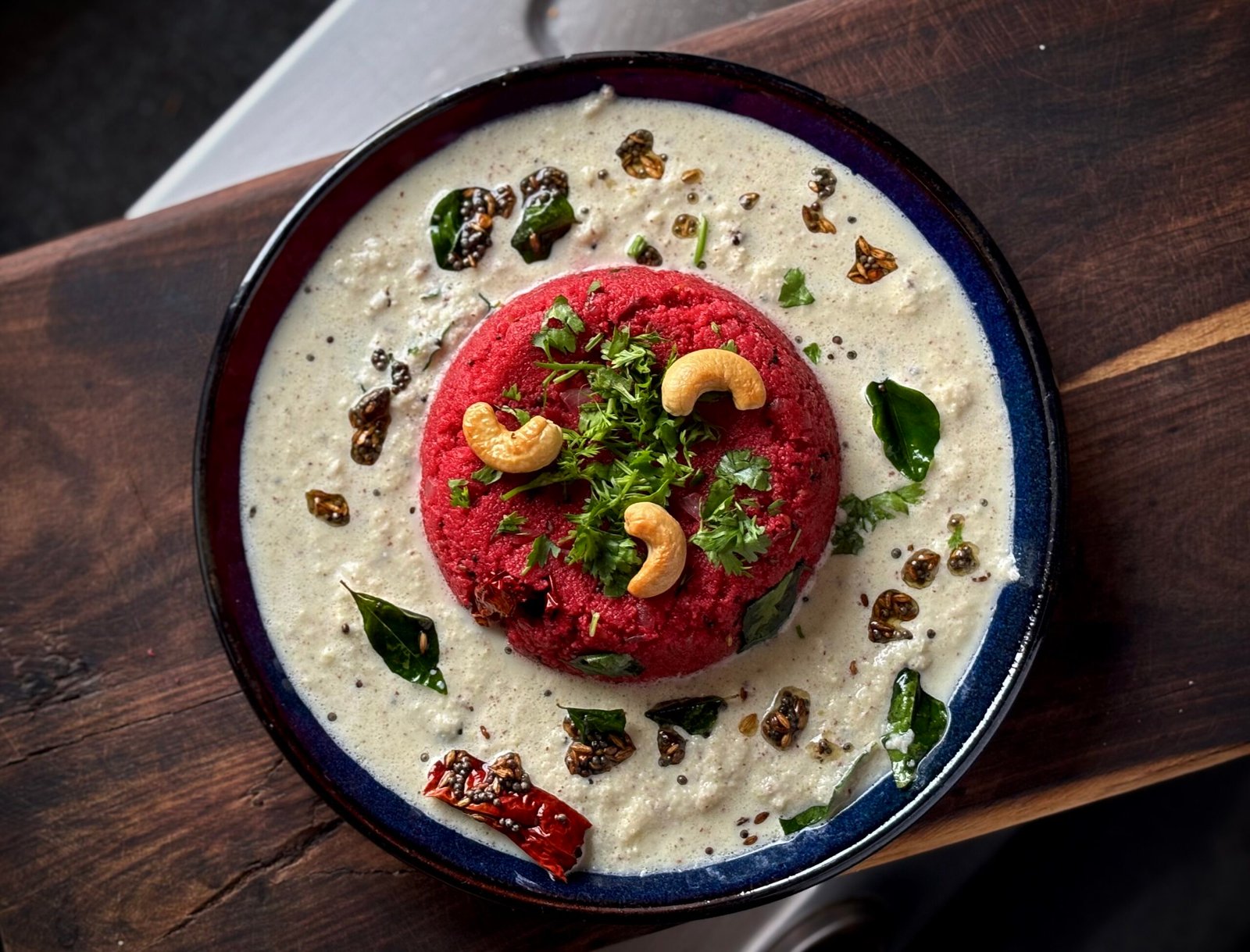
Beetroot Milk Upma with Coconut Chutney
Beetroot upma is a simple Indian breakfast, but a few thoughtful changes can completely transform it.
In this recipe, I use fresh beetroot blended with milk as the cooking liquid for roasted semolina. The result is a naturally vibrant beetroot-coloured upma with a creamy texture and a gentle earthy flavour.
The semolina is first roasted in ghee until it develops a light nutty aroma. It is then combined with a traditional tempering of mustard seeds, cumin, green chilli, curry leaves, onion and cashews before being cooked in the beetroot milk.
I serve the upma as a dome with fresh coconut chutney and a fragrant tempering of mustard seeds, cumin, curry leaves and dried red chilli around it.
It is a colourful way to give a familiar breakfast a completely different presentation and flavour.
Chef RBS Tip: The beetroot is blended into the milk rather than simply added as pieces. This gives the semolina a beautiful natural colour and allows the beetroot flavour to develop throughout the dish.
Ingredients
For the Beetroot Milk Upma
- Fine semolina (rava): 200 g
- Beetroot, peeled and chopped: 200 g
- Full-fat milk: 500 ml
- Ghee: 7 g
- Cooking oil: 20 ml
- Mustard seeds: 4 g
- Cumin seeds: 3 g
- Green chillies, finely chopped: 10 g
- Curry leaves: 10 to 12 leaves
- Onion, finely chopped: 100 g
- Cashews, split: 30 g
- Salt: 7 g, or to taste
- Sugar: 5 g, or to taste
- Fresh coriander: 15 g
For the Coconut Chutney
- Fresh grated coconut: 100 g
- Green chilli: 10 g
- Curry leaves: 6 to 8 leaves
- Salt: 4 g
- Water: 100 to 120 ml
For the Chutney Tempering
- Oil: 10 ml
- Mustard seeds: 2 g
- Cumin seeds: 1 g
- Curry leaves: 5 to 6 leaves
- Dried red chillies: 2 pieces
Yield: 4 portions
Cooking time: Approximately 20 to 25 minutes
Roast the Semolina
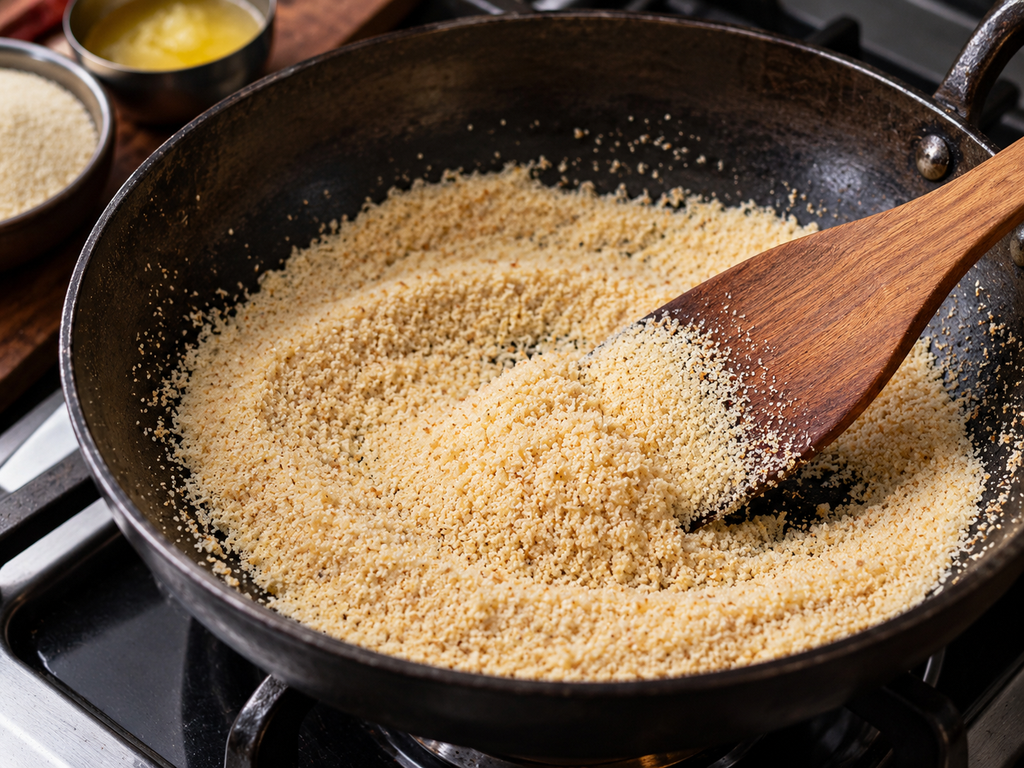
Place a heavy-bottomed pan over medium heat.
Add 7 g ghee and then add 200 g fine semolina (rava).
Roast the semolina, stirring continuously, until it releases a pleasant nutty aroma and turns a light golden colour.
Do not let it become dark brown.
Transfer the roasted semolina to a bowl and keep it aside.
Chef RBS Tip: Roasting the rava properly is important because it develops a deeper, nutty flavour and helps create the right texture in the finished upma.
Prepare the Tempering
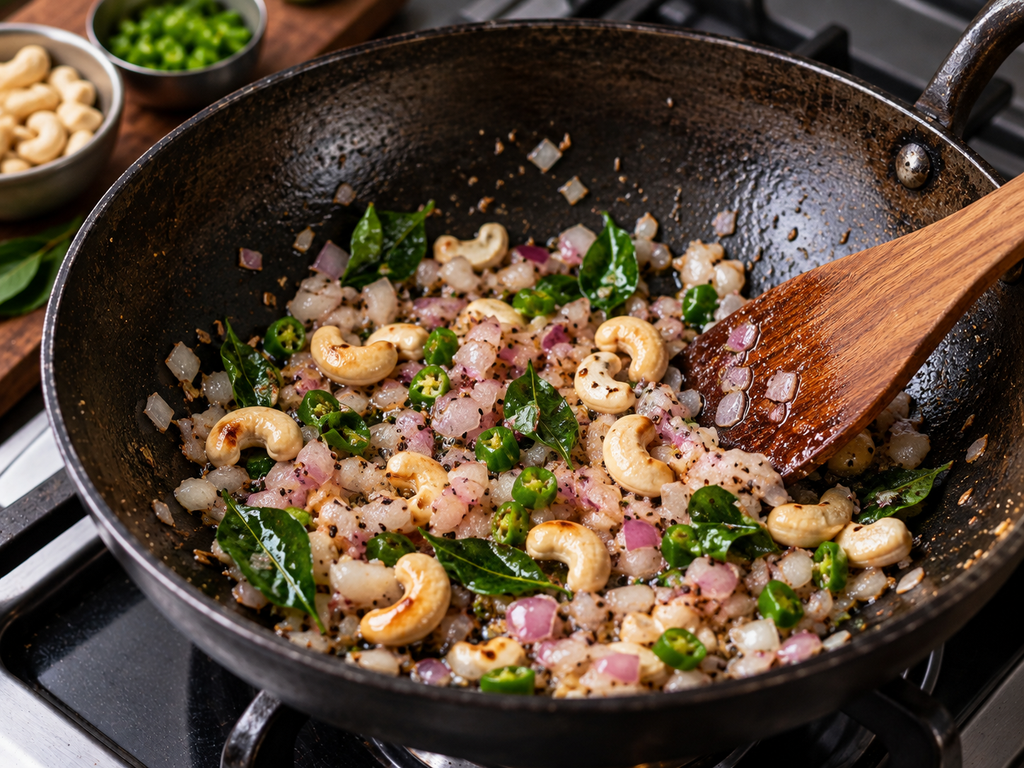
Use the same pan over medium heat and add 20 ml cooking oil.
Add 4 g mustard seeds and 3 g cumin seeds. Allow them to crackle and release their aroma.
Add:
- 10 g finely chopped green chillies
- 10 to 12 curry leaves
Sauté briefly, then add 100 g finely chopped onion and 30 g split cashews.
Cook, stirring occasionally, until the onion softens and the cashews become light golden brown.
Turn off the heat and transfer the entire tempering mixture into the bowl containing the roasted semolina.
Mix well and keep aside.
Chef RBS Tip: Using the same pan after roasting the rava allows the remaining roasted ghee and semolina flavours to become part of the tempering.
Combine the tempering with the roasted rava
Turn off the heat.
Add the prepared onion, cashew and tempering mixture to the bowl containing the roasted rava.
Mix everything together gently until the tempering is evenly distributed through the semolina.
Keep this mixture aside while you prepare the beetroot milk.
Chef RBS Tip: Keeping the roasted rava and tempering together before adding the liquid makes the final cooking process easier and helps distribute the cashews, spices and aromatics evenly throughout the upma.
Make the Beetroot Milk
Add 200 g peeled and chopped beetroot and 500 ml full-fat milk to a blender.
Blend until the beetroot is finely processed and the milk becomes a smooth, vibrant beetroot-coloured mixture.
For an extra-smooth texture, you can strain the mixture before cooking.
Chef RBS Tip: Blending the beetroot directly with the milk distributes its colour and flavour throughout the upma instead of leaving pieces of beetroot in the finished dish.
Cook the Beetroot Milk
Pour the beetroot milk into a clean heavy-bottomed pan.
Place it over medium heat and bring it to a gentle simmer.
Do not allow the milk to boil aggressively. Once it is hot and gently simmering, you are ready to add the prepared rava mixture.
Chef RBS Tip: A gentle simmer helps you control the milk while keeping the beetroot colour bright and making it easier to incorporate the semolina smoothly.
Add the Rava Mixture and Cook the Upma
Once the beetroot milk reaches a gentle simmer, gradually add the prepared roasted rava and tempering mixture.
Stir continuously as you add the rava to prevent lumps.
Add 7 g salt and continue stirring over medium heat.
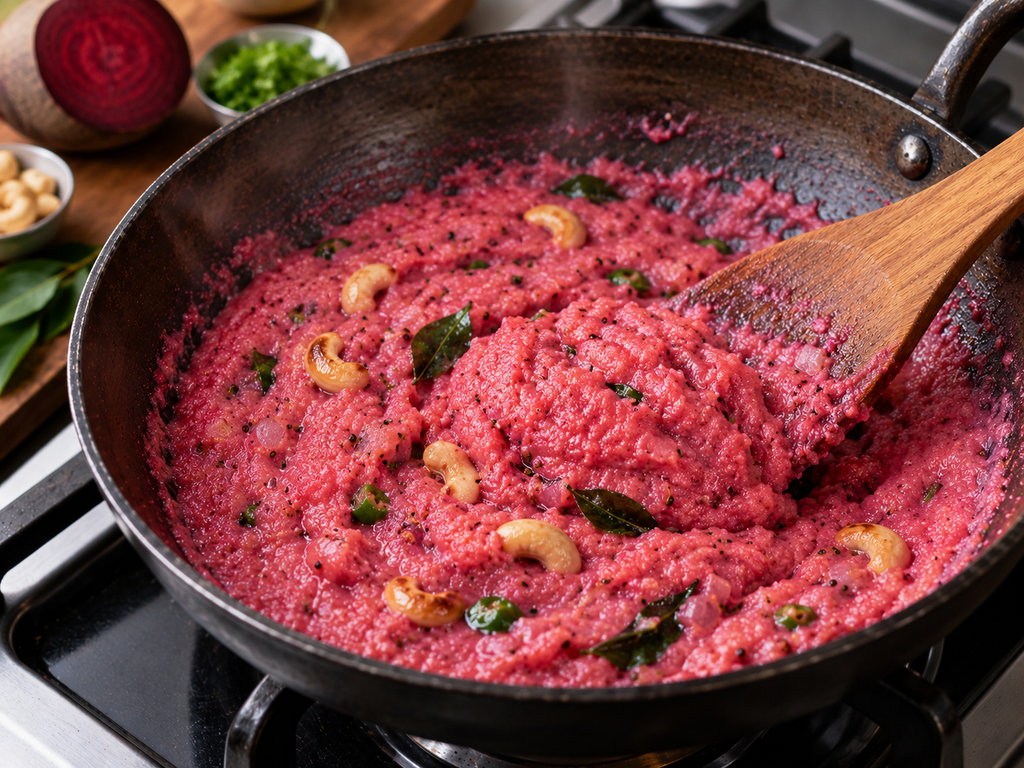
Cook until the semolina absorbs the beetroot milk and becomes soft, creamy and fully cooked.
If the upma becomes too thick before the rava is completely cooked, add a small amount of warm milk and continue cooking until you reach the desired consistency.
Chef RBS Tip: Keep stirring while adding the rava. This is the key step for achieving a smooth, lump-free upma.
Balance the Flavour
Once the semolina is fully cooked and the upma has reached a soft, creamy consistency, taste it.
Add 5 g sugar and mix well.
The sugar is not meant to make the upma sweet. It gently balances the natural earthy flavour of the beetroot and rounds out the overall taste.
Adjust the salt if needed.
Finish with 15 g freshly chopped coriander and mix gently.
The finished upma should be soft, creamy and vibrant, with the roasted nuttiness of the rava, aromatic tempering and balanced beetroot flavour.
Chef RBS Tip: Beetroot has a naturally earthy character. A small amount of sugar can make the flavour feel more balanced without making the dish taste sweet.
Prepare the Coconut Chutney
Add the following to a blender:
- 100 g fresh grated coconut
- 10 g green chilli
- 6 to 8 curry leaves
- 4 g salt
- 100 to 120 ml water
Blend until smooth but with a slight natural texture. For general guidance on preparing and handling fresh foods safely, see the USDA Food Safety and Inspection Service.
Transfer the chutney to a bowl and keep it ready for plating.
Chef RBS Tip: Keep the chutney slightly thick rather than making it too watery. It should hold its shape around the beetroot upma when plated.
Temper the Coconut Chutney
Heat 10 ml oil in a small tempering pan over medium heat.
Add:
- 2 g mustard seeds
- 1 g cumin seeds
- 2 dried red chillies
- 5 to 6 curry leaves
Allow the mustard seeds to crackle and let the dried red chillies and curry leaves release their aroma.
Turn off the heat and immediately pour the hot tempering over the prepared coconut chutney.
Mix gently.
Chef RBS Tip: The dried red chilli adds a gentle roasted aroma and a little heat to the chutney tempering, while mustard and cumin give it the familiar South Indian-style finishing flavour.
Shape and Plate the Beetroot Upma
Lightly grease a small bowl or mould with a little oil or ghee.
Fill the bowl with the hot beetroot upma and gently press it down so the mixture takes the shape of the bowl.
Place your serving plate over the bowl and carefully turn it upside down.
Lift the bowl gently to reveal the dome-shaped beetroot upma in the centre of the plate.
Now spoon the prepared coconut chutney around the dome, creating a neat circular border.
Garnish the top with:
- Fried cashews
- Fresh coriander
- A few curry leaves from the chutney tempering
Serve immediately while the upma is warm.
Chef RBS Tip: The dome presentation turns a simple breakfast into a restaurant-style plate. Keep the chutney slightly away from the top of the dome so the natural beetroot colour remains the visual focus.
Chef RBS Serving Note
This Beetroot Milk Upma brings together roasted semolina, creamy beetroot milk, aromatic tempering and fresh coconut chutney in one plate.
The natural beetroot colour makes the dish visually striking, while the coconut chutney adds a fresh contrast to the earthy, creamy upma.
For chefs and food entrepreneurs, practical recipe development is also an important part of food business.
Chef RBS Tip
The key to this recipe is balance:
Roast the rava well.
Blend the beetroot smoothly with milk.
Add the rava gradually while stirring.
Balance the beetroot with a small amount of sugar.
Finish with a fragrant chutney tempering.
That combination gives a simple upma a completely different character while keeping the recipe practical enough to make at home. For more practical food science ideas, explore the Chef RBS Food Science collection.
Recipe Summary
Yield: 4 portions
Preparation: 15 minutes
Cooking: 20 to 25 minutes
Total: Approximately 40 minutes
Cuisine: Indian
Course: Breakfast
Diet: Vegetarian