Natural Flavors vs. Artificial Flavors: What’s Really Different?
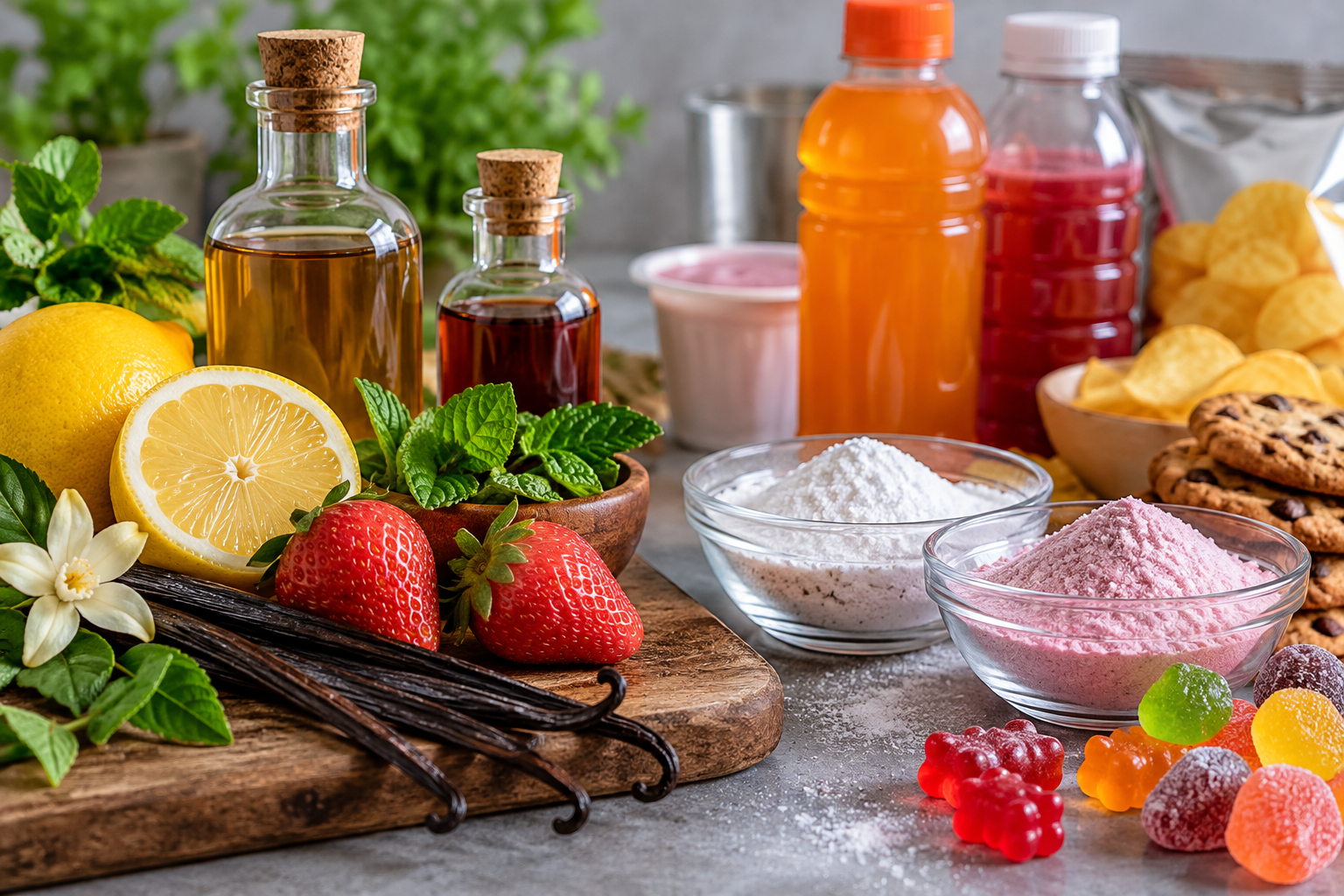
Turn over a packet of cookies, a drink, or a flavored yogurt, and you’ll probably see the words “natural flavors” or “artificial flavors.”
One sounds wholesome. The other sounds suspicious.
But food science isn’t quite that simple.
As a chef, I don’t judge an ingredient by whether its name sounds natural. I want to know where it comes from, what it does, and how it affects the finished food.
So what’s actually different between natural and artificial flavors?
The answer may surprise you.
1. What Are Natural Flavors?
The word “natural“ can be misleading if we assume it means “healthier.”
In food labeling, a natural flavor is generally a flavoring substance derived from a natural source, such as fruit, vegetables, spices, herbs, or other plant or animal sources.
But here’s the interesting part: natural flavor doesn’t mean the whole food came from that source.
A strawberry-flavored product, for example, may contain a natural flavor that helps create a strawberry-like taste without containing a large amount of actual strawberries.
As a chef, I see flavors as tools. Their job is to create a particular taste or aroma consistently.
So don’t read “natural” as automatically meaning “better.”
2. Natural vs Artificial: The Important Difference
The biggest difference is where the flavoring substance comes from, not whether one automatically makes a food healthy and the other unhealthy.
Artificial flavors are made using substances that are not derived from natural sources. They are often designed to reproduce a specific flavor accurately and consistently.
That can be useful in food manufacturing. A flavor needs to taste the same whether the product is made today or six months from now.
So when you see “artificial flavor,” don’t automatically assume the food is bad.
And when you see “natural flavor,” don’t assume it’s automatically good.
The flavor source is only one small part of the food’s overall story.
3. Does Natural Flavor Mean Healthier?
Not necessarily.
A natural flavor can still be part of a food that is high in sugar, sodium, calories, or saturated fat. The word “natural” describes the source of the flavor, not the complete nutritional quality of the product.
Think about it like cooking: adding a natural vanilla flavor doesn’t suddenly make a dessert low in sugar.
That’s why I always look at the whole food, not one attractive word on the label.
Natural doesn’t automatically mean nutritious.
4. Why Do Food Companies Use Flavorings?
Flavoring is often about consistency.
Fresh ingredients can vary with season, variety, harvest, and storage. A food manufacturer may use a flavoring to help the finished product deliver a more consistent taste from batch to batch.
For example, a strawberry-flavored drink needs to taste recognizably like strawberry every time you buy it.
As a chef, I understand this challenge. In a restaurant, we also work hard to make sure the same dish tastes right every day.
The important thing is to understand the role of the flavoring rather than judging the entire food by one ingredient.
5. What Should You Look for on the Label?
When I read a food label, I don’t try to judge every ingredient individually.
I look at the bigger picture.
First, check the serving size. Then look at added sugar, sodium, saturated fat, protein, and fiber. After that, read the ingredient list to understand what you’re actually buying.
And don’t forget the food itself.
A flavored yogurt, sauce, or snack can contain natural or artificial flavors and still be a reasonable choice depending on its overall nutrition and how much you eat.
Don’t let one word on the package make the decision for you. Read the whole story.
6. The Simple Truth
Natural and artificial flavors are not a simple good-versus-bad story.
The word “natural” tells you something about the source of the flavor. It doesn’t tell you that the entire product is healthy.
Likewise, “artificial” tells you the flavoring isn’t from a natural source. It doesn’t tell you that the entire food is unhealthy.
As a chef, I care more about the whole product, the ingredients, the nutrition, and how it fits into your diet.
So next time you see those words on a package, don’t panic and don’t be impressed.
Read the label. Understand the food. Then make your choice.
7. Quick FAQ
Are natural flavors healthier than artificial flavors?
Not automatically. The source of the flavor does not determine the overall nutritional quality of the food.
Are artificial flavors safe?
Approved food flavorings are evaluated for their intended use. The bigger picture still matters: look at the complete ingredient list and nutrition information.
Why do food companies use artificial flavors?
They can provide a consistent taste and aroma and help manufacturers reproduce a specific flavor reliably.
Should I avoid foods with artificial flavors?
You don’t need to judge a food by that one ingredient alone. Look at the whole product, including sugar, sodium, saturated fat, protein, fiber, and serving size.
What is the easiest way to compare two products?
Compare the nutrition facts panel and ingredient lists side by side rather than choosing the product with the more appealing marketing claim.