How Does a Croissant Get Hundreds of Crispy Layers? The Secret of Pastry Lamination
Have you ever pulled apart a fresh croissant and wondered how something made from flour, butter, and water becomes so light, crisp, and flaky?
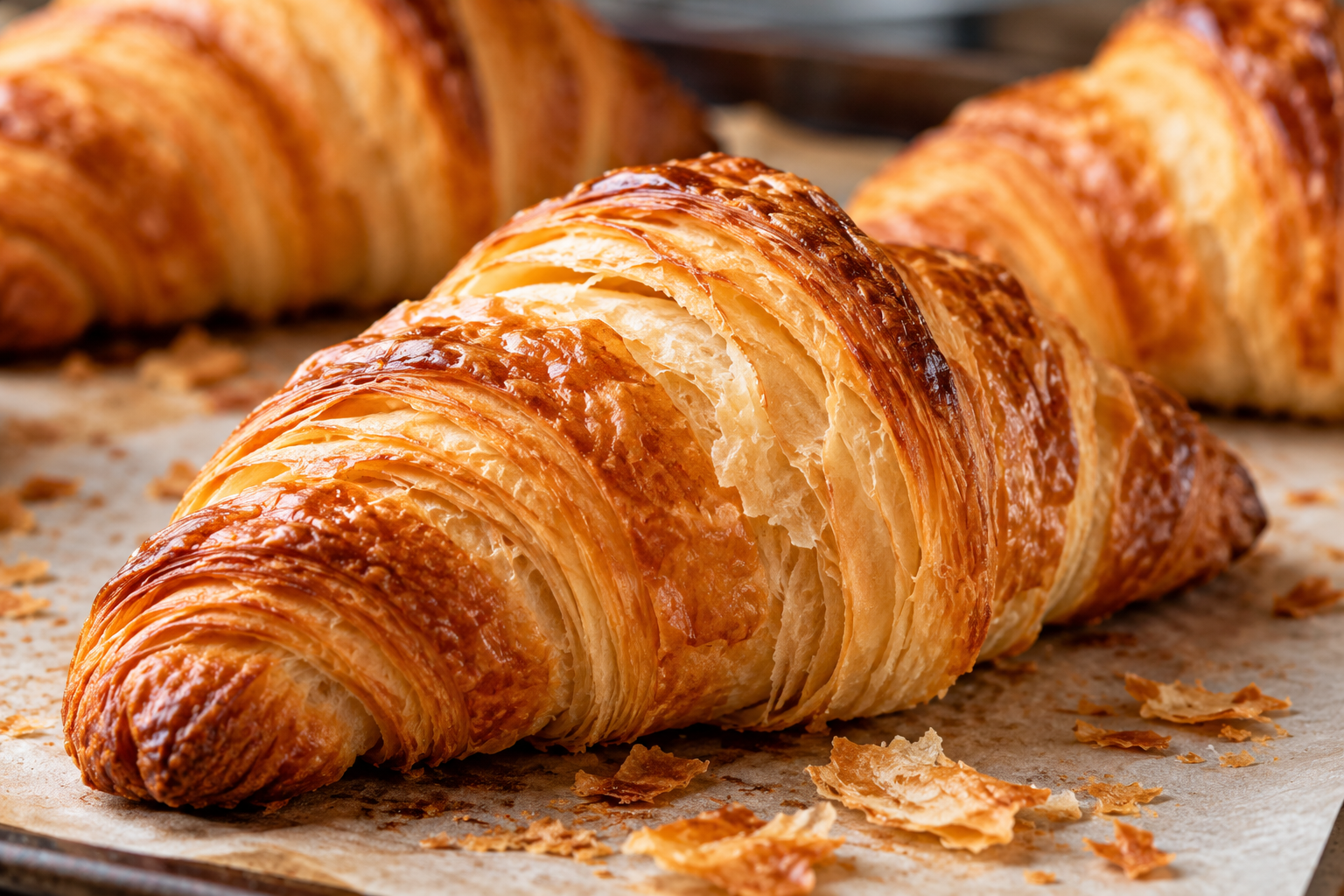
The outside shatters into delicate flakes. Inside, tiny pockets form a beautiful honeycomb pattern. Yet the ingredients are surprisingly simple.
The secret is not just in the recipe. It is in the way the dough is folded, the butter is handled, and the pastry reacts to heat.
This technique is called lamination, and it is what gives croissants and puff pastry their signature layers. Get it right, and the pastry rises into delicate, crisp sheets. Get it wrong, and you may end up with a greasy, dense result.
So what actually happens inside the oven? And why can a small mistake with butter make such a big difference?
Let’s look at the science behind those irresistible layers, the mistakes that ruin them, and the techniques professional chefs use to get better results.
The Secret Is in the Layers, Not the Ingredients
A croissant and a regular bread roll can contain similar basic ingredients, yet their textures are completely different. So what makes one flaky and the other soft and chewy?
It comes down to how the butter and dough are arranged.
In croissant making, cold, pliable butter is enclosed in dough. The dough is then rolled out and folded repeatedly, building up thin alternating layers.
During baking, moisture turns into steam, helping separate the dough layers. The structure sets in the oven, leaving behind the flaky texture we love.
Here’s the interesting part: more folds do not automatically mean a better croissant. If the butter breaks, melts too early, or blends into the dough, those delicate layers can lose their definition.
The real skill is creating layers that survive until baking.
What Actually Makes Croissants Rise in the Oven?
Here’s where the magic happens. A carefully folded pastry goes into the oven, and suddenly those thin layers begin to expand.
The secret ingredient is steam.
Butter contains a little water, and the dough also holds moisture. As the pastry heats up, this water turns into steam. The expanding steam helps push apart the layers of dough, creating the pastry’s characteristic lift.
But steam alone isn’t enough. The butter must remain layered until baking begins, and the dough needs to develop enough structure to hold its shape as it expands.
As baking continues, the dough sets and the outer surface turns golden and crisp. Inside, the separated layers form the delicate structure that makes a good croissant so satisfying to pull apart.
As the pastry bakes, the water in the butter turns to steam, helping separate the dough layers and create a light, flaky texture. Learn more about how butter creates flaky pastry layers.
A useful chef’s lesson: A croissant doesn’t become flaky simply because the oven is hot. It becomes flaky because the layers are prepared correctly before they reach the oven.
The Butter Mistake That Can Ruin Your Croissants
Imagine spending hours folding pastry, only to pull flat, greasy croissants out of the oven. One small problem could be responsible: the butter was at the wrong consistency.
Butter needs to be firm enough to hold its shape but flexible enough to roll without cracking.
- Too cold: The butter breaks into pieces, creating uneven layers.
- Too soft: It smears into the dough or leaks out during rolling.
- Just right: It spreads evenly, helping the pastry develop distinct layers.
Here’s a simple test: gently press the butter. It should bend under pressure without crumbling or feeling greasy.
Chef RBS tip: If you notice oily streaks or butter leaking from the dough, stop rolling and chill it before continuing. Working faster or pressing harder can make the problem worse.
The goal isn’t simply to keep butter cold. It’s to keep it flexible enough to roll alongside the dough.
Why Does Croissant Dough Need Resting Time?
Ever rolled pastry dough only to find it keeps shrinking back? That’s not your rolling pin misbehaving. It’s the dough telling you it needs a rest.
When dough is rolled and folded, its gluten network becomes stretched and tense. Resting allows that network to relax, making the next rolling stage easier and helping the dough hold its shape.
Chilling also firms up the butter, which helps preserve the delicate layers during handling.
What happens when you rush?
- The dough becomes difficult to roll evenly.
- It may shrink back after shaping.
- The butter can soften too much, increasing the risk of leakage.
Resting times depend on the recipe, dough temperature, and working conditions. Follow the recipe’s chilling instructions rather than relying on a fixed time for every batch.
Chef RBS tip: If the dough keeps resisting the rolling pin, don’t fight it. Cover it and let it rest in the refrigerator before continuing. A little patience now can save the layers you’ve worked hard to build.
Why Do Croissants Sometimes Turn Out Dense Instead of Airy?
A croissant can look golden and beautiful on the outside but reveal a disappointing, heavy centre when you break it open. The problem isn’t always the lamination. Sometimes, the dough hasn’t fermented properly.
Croissants are made with yeast, unlike traditional puff pastry. Yeast produces gas that helps the dough expand, while steam helps separate the laminated layers during baking. Both processes contribute to the final texture.
Here are three common reasons croissants turn out dense:
- Underproofing: The shaped croissants haven’t had enough time to expand before baking.
- Damaged butter layers: Butter that cracks or melts into the dough can prevent proper separation.
- Poor fermentation: Weak yeast activity or unsuitable proofing conditions can limit the dough’s expansion.
There’s a useful clue to look for before baking. Properly proofed croissants should look noticeably puffier, feel lighter, and show a delicate wobble when the tray is gently moved. The exact signs depend on the recipe and room temperature.
Chef RBS tip: Don’t rush proofing just because the croissants look ready on the outside. Their internal structure needs time to develop before the oven can finish the job.
A good croissant depends on several stages working together: fermentation, lamination, proofing, and baking. A mistake at any one stage can affect the final result.
Croissant Troubleshooting: What Went Wrong?
Even experienced bakers occasionally get disappointing results. The good news is that your pastry often gives you clues about what went wrong.
| Problem | Possible cause | What to try |
|---|---|---|
| Flat croissants | Underproofing or damaged layers | Check proofing and butter consistency. |
| Butter leaking onto the tray | Butter too warm or proofing conditions too hot | Keep the dough cool during lamination. |
| Dense interior | Insufficient fermentation or poor expansion | Allow adequate proofing time. |
| Uneven layers | Inconsistent rolling or cracked butter | Roll evenly and check butter flexibility. |
| Pale, soft crust | Insufficient baking | Follow the recipe’s baking guidance and check for proper browning. |
Understanding moisture is important in pastry baking, just as it is when learning why food loses its crisp texture.
These are clues, not absolute diagnoses. For example, butter leakage can have several causes, and a dense interior may result from more than one problem.
The best approach is to change one thing at a time. If you adjust the butter temperature, proofing time, and oven settings all at once, it becomes difficult to identify what actually improved the result.
Keep brief notes from each batch. Over time, you’ll learn how your dough behaves in your kitchen and which adjustments make the biggest difference.
The Chef’s Secret to Better Croissants
Great croissants don’t depend on one secret ingredient. They depend on getting several small details right.
Keep the butter flexible, roll the dough evenly, allow enough resting and proofing time, and let the oven do its work. Each step prepares the pastry for the next.
The most important lesson is this: flaky pastry starts with good technique long before it reaches the oven.
Once you understand how butter, dough, steam, and fermentation work together, croissant making becomes less about guesswork and more about control. And that’s the difference between simply following a recipe and understanding the craft behind it.
That is the beauty of food science. It helps explain not just what works, but why it works.
Frequently Asked Questions About Pastry Lamination
Are croissants and puff pastry made using the same technique?
Both use lamination, where dough and butter are layered through rolling and folding. Croissants also contain yeast, which contributes to fermentation and expansion, while traditional puff pastry relies primarily on steam for its lift.
Why does butter leak out of croissants during baking?
Butter leakage can result from damaged layers, butter that becomes too soft, or unsuitable proofing conditions. Consistent rolling, appropriate chilling, and controlled proofing help protect the laminated structure.
Does more folding always create flakier pastry?
No. Additional folds increase the theoretical number of layers, but excessive folding or poor handling can make the layers less distinct. The aim is to create thin, even layers rather than simply maximize their number.
Can you laminate pastry without butter?
Other fats can be used in some laminated pastry recipes, but their melting behavior and flexibility differ. These differences affect how the dough handles and how the finished pastry develops its texture.
What is the most important factor in successful lamination?
There isn’t just one. Butter consistency, even rolling, resting time, fermentation for yeasted dough, and correct baking conditions all contribute to the result. Good lamination comes from keeping these stages working together.