Why Is Reheated Rice Risky? The Food Safety Science Behind Leftover Rice
That leftover rice in your fridge may look completely harmless. But would you know when it becomes unsafe to eat?
Rice is one of those foods we cook in batches, save for later, and reheat without giving it much thought. I do the same in the kitchen.
The important part isn’t simply reheating rice. The real food-safety question is what happened to the rice before it went back into the pan or microwave.
One particular bacterium, Bacillus cereus, is the reason cooked rice deserves more attention than it usually gets.
As a chef, I’ll break down what actually happens to leftover rice, how to cool and store it safely, and whether reheating really makes it safe again.
1. Why Can Rice Become Unsafe?
Cooked rice contains moisture and nutrients that can support bacterial growth if it is handled incorrectly.
The main concern is Bacillus cereus. Its spores can survive cooking and may remain in the rice. If cooked rice is left at room temperature for too long, those spores can grow and produce toxins.
And here’s the part many people miss:
Putting the rice back in the fridge doesn’t undo what happened while it was sitting out.
That is why the way you cool and store rice after cooking matters just as much as reheating it.
2. What Happens When Cooked Rice Sits Out?
This is where the real risk begins.
Freshly cooked rice is hot, but once it starts cooling at room temperature, Bacillus cereus spores can become a concern if the rice is held improperly.
You may not notice anything unusual. The rice can still look, smell and taste perfectly normal.
That’s why food safety isn’t something you can judge with your senses alone.
In a professional kitchen, we don’t rely on smell or appearance. We control time and temperature from cooking through storage.
3. Why Reheating Doesn’t Remove Every Risk
Here’s the part that surprises many home cooks.
Reheating rice can make it hot again, but heat isn’t a reset button. If harmful toxins have already formed because the rice was stored improperly, simply reheating it may not make the rice safe again.
That’s why the safer approach starts before reheating.
Cool cooked rice promptly, refrigerate it properly, and reheat only what you plan to eat. Good storage habits are much more important than trying to fix poorly stored rice later.
4. How to Cool Rice Safely
Once the rice is cooked, don’t leave a large pot sitting on the counter for hours.
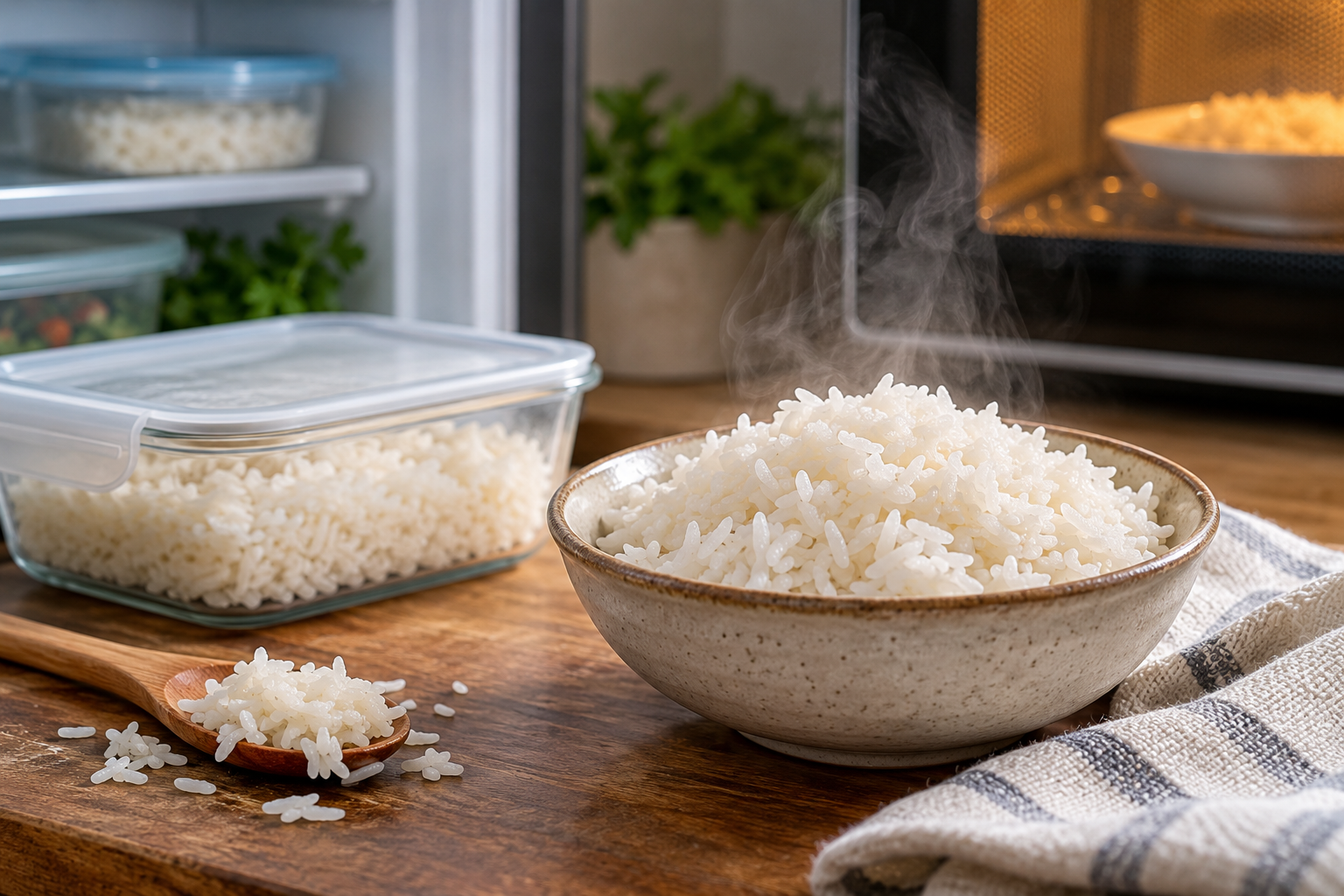
For safer storage, get the rice cooling and into the refrigerator promptly. If you’ve made a large batch, spreading it into smaller, shallow portions can help it cool faster.
Then keep it refrigerated until you’re ready to eat.
As a chef, I think of it this way:
Cooking kills many bacteria. Good cooling and storage stop the survivors from getting the opportunity to grow.
5. How Many Times Can You Reheat Rice?
I wouldn’t keep reheating the same batch of rice again and again.
A better kitchen habit is simple: take out only the portion you plan to eat and leave the rest refrigerated.
Reheat that portion until it is thoroughly hot, then eat it rather than cooling and reheating it repeatedly.
The bigger safety issue isn’t a magic number of reheats. It’s how long the rice spent at unsafe temperatures before and between reheating.
That small habit makes leftover rice much easier to manage safely.
6. What About Reheating Rice in a Microwave?
A microwave is fine for reheating rice, but don’t treat it differently from rice reheated on the stove.
Put only the portion you plan to eat into a microwave-safe dish and heat it until it is thoroughly hot throughout.
If the rice has been left sitting at room temperature for a long time, though, the microwave isn’t going to rescue it.
Safe storage comes first. Reheating comes second.
7. Can You Eat Cold Leftover Rice?
Yes, cold rice can be eaten safely if it has been cooled and refrigerated properly.
The temperature itself isn’t the main issue. The important question is how the rice was handled before it became cold.
If cooked rice was cooled promptly and kept refrigerated, you can eat it cold in dishes such as rice salads or use it as part of another meal.
But if rice has been sitting out for too long, eating it cold doesn’t make it safer.
With leftover rice, storage history matters more than serving temperature.
8. How Long Can Cooked Rice Stay in the Fridge?
The safest approach is to refrigerate cooked rice promptly rather than leaving it on the counter and deciding later.
Keep the refrigerator cold, store the rice in a clean, covered container, and use it within a short period rather than letting leftovers sit for several days.
If you aren’t sure how long the rice has been stored, don’t rely on smell or appearance alone. When food safety is uncertain, throwing it away is safer than taking the chance.
As a chef, my rule is simple:
Cook it properly. Cool it quickly. Store it cold. Reheat only what you need.
9. A Chef’s Simple Rule for Leftover Rice
Leftover rice doesn’t need to be scary. It just needs to be handled properly.
Cook it well, cool it promptly, keep it refrigerated, and reheat only the portion you need. Don’t assume that rice is safe simply because it looks or smells normal.
The key lesson is simple:
Don’t try to make unsafe rice safe again. Handle it safely from the moment it leaves the stove.
10. FAQ
Is reheated rice safe to eat?
Yes, if it was cooled, stored and reheated properly. The main concern is how the rice was handled before reheating.
Can you reheat rice twice?
It’s better to portion leftovers and reheat only what you plan to eat. Repeated cooling and reheating creates more opportunities for poor temperature control.
Can you eat rice cold from the fridge?
Yes, provided it was cooled and refrigerated safely after cooking.
Can reheating rice kill Bacillus cereus?
Reheating can kill many bacteria, but it may not eliminate toxins that were produced while rice was improperly stored. That’s why safe storage comes first.
How do you know if leftover rice is unsafe?
You can’t reliably tell by smell, appearance or taste. If the storage history is uncertain, the safest choice is to discard it.