Kewpie Mayo vs. Regular Mayo: Why Do They Taste So Different?
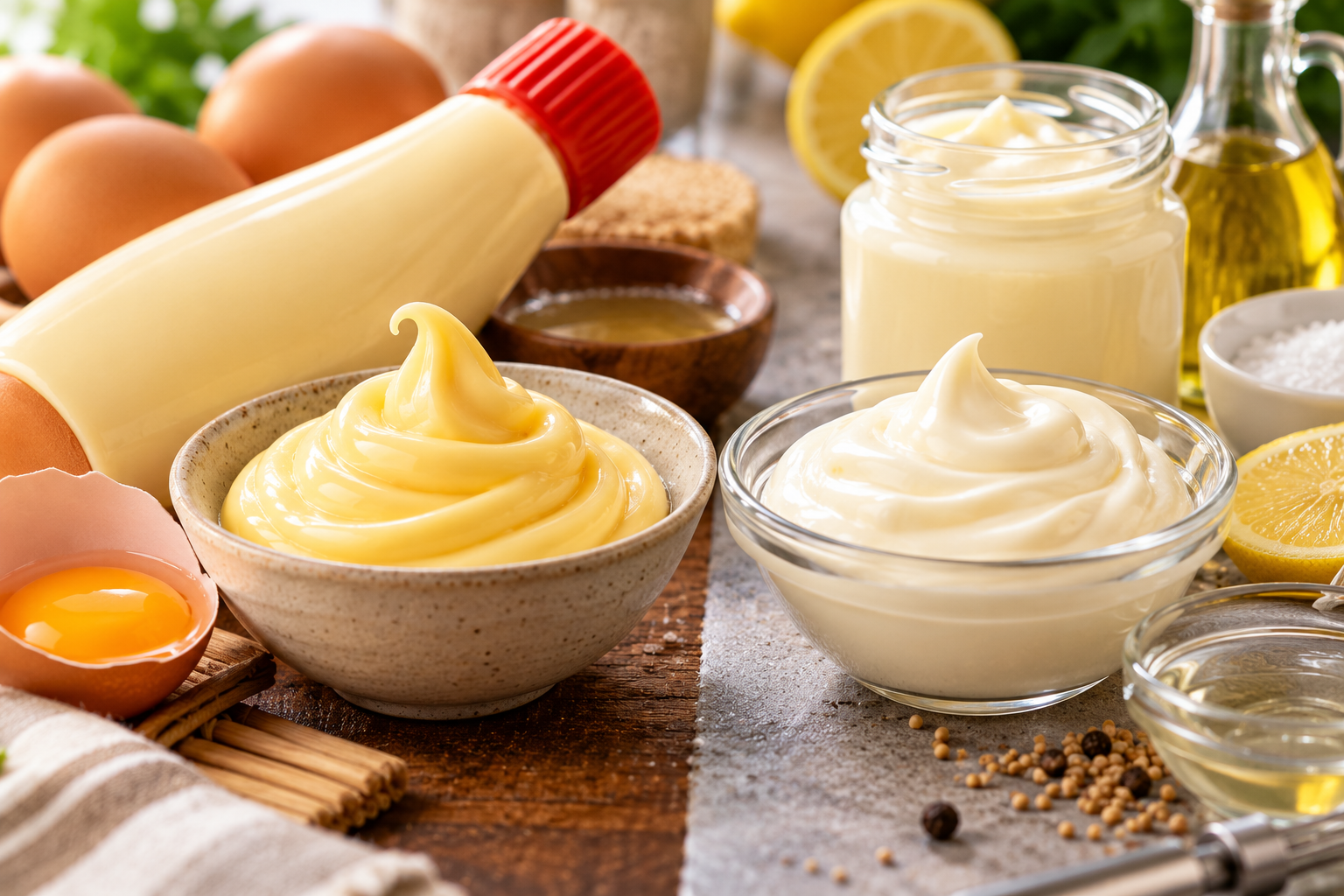
Two mayonnaise bottles. Similar colour. Similar purpose. But one can taste richer, tangier, and more savoury than the other.
That is why Kewpie mayo vs regular mayo has become an interesting comparison for curious home cooks, food lovers, and anyone who enjoys discovering why ingredients behave differently.
Kewpie mayonnaise is known for its rich egg-yolk flavour, creamy texture, and savoury taste. Regular mayonnaise can be milder, more balanced, or more sharply acidic, depending on the brand and recipe.
So, is Kewpie actually better? Or does it simply work better with certain foods?
Let’s look at the ingredients, the food science, and how a chef would choose between them.
What Is Kewpie Mayo?
Kewpie is a Japanese mayonnaise brand first introduced in 1925. Its signature Japanese-style mayonnaise is made primarily with egg yolks, vegetable oil, and vinegar.
According to Kewpie’s official explanation, using egg yolks rather than whole eggs helps create its rich flavour and distinctive umami character.
Umami is often described as a savoury, mouth-filling taste. You may recognise it in mushrooms, aged cheese, tomatoes, or a well-made stock.
Kewpie brings that savoury quality to a creamy condiment.
It is commonly used in sandwiches, salads, sushi, Japanese-style egg sandwiches, and savoury snacks. It can also be used as a base for dressings and dipping sauces.
Chef’s note: Kewpie is not just a different bottle of mayonnaise. Its ingredient formulation gives it a different flavour profile, which can change how a dish tastes.
Kewpie Mayo vs. Regular Mayo: The Main Differences
The biggest differences are usually the egg formulation, vinegar blend, flavour intensity, and the way each product is balanced.
| Feature | Kewpie Japanese-style mayo | Regular mayonnaise |
|---|---|---|
| Egg formulation | The signature Japanese version uses egg yolks | Often uses whole eggs or egg yolks, depending on the brand |
| Flavour | Rich, tangy, savoury, with noticeable umami | Often milder, creamy, and tangy |
| Texture | Smooth and creamy | Creamy, with thickness varying by brand |
| Acidity | Depends on its vinegar blend. | Depends on the acid and formulation used. |
| Best uses | Egg sandwiches, sushi, savoury toppings, dipping sauces | Sandwiches, potato salad, coleslaw, dressings |
| Best choice | When you want a richer, more savoury taste | When you want a familiar, versatile mayonnaise flavour |
These are general differences, not rules for every bottle. Some regular mayonnaise brands are rich and tangy, while some Kewpie products have different formulations for different markets.
1. The Egg-Yolk Secret
This is one of the most important differences.
Egg yolks contain natural emulsifiers, including lecithin. These help oil and water stay mixed instead of separating into two layers.
In mayonnaise, tiny droplets of oil are dispersed throughout a water-based mixture containing vinegar and other ingredients. This structure is called an emulsion.
Egg yolks help stabilise that emulsion and contribute to mayonnaise’s creamy mouthfeel.
Kewpie’s Japanese mayonnaise uses egg yolks rather than whole eggs. That formulation contributes to its rich, savoury character.
Regular mayonnaise can also use egg yolks, so the difference is not simply that one contains yolks and the other does not. The complete recipe matters, including the proportions of ingredients and the choice of vinegar.
That is why reading the ingredient label can tell you more than judging the packaging.
2. Why Does Kewpie Taste More Savoury?
The answer lies in the combination of egg yolks, acidity, and seasoning.
Egg yolks contribute richness. Vinegar provides acidity, which helps balance the fat. Seasonings and the overall formulation influence the final savoury impression.
Kewpie describes its Japanese mayonnaise as having a rich flavour and umami associated with its egg-yolk-based formulation. The company has also researched compounds that may contribute to the richness of egg-yolk mayonnaise.
This does not mean every person will find Kewpie more delicious. Taste depends on what you enjoy and what you are eating it with.
For example, a richer mayonnaise may complement a savoury egg sandwich, while a milder mayonnaise may be better when you want the flavour of fresh herbs or vegetables to stand out.
The chef’s takeaway: Think of mayonnaise as a seasoning ingredient, not just a creamy sauce. Its acidity, richness, and savoury notes can change the balance of an entire dish.
3. Is Kewpie Creamier Than Regular Mayo?
It can feel creamier, but the result depends on the exact products being compared.
Creaminess is influenced by the amount of oil, the size of oil droplets, the emulsifier system, and how the emulsion is manufactured.
Kewpie explains that controlling the fineness of its oil droplets is part of how it creates its smooth texture.
When oil droplets are dispersed finely and evenly, the mayonnaise can feel smooth and cohesive on the tongue.
However, regular mayonnaise can also have an exceptionally smooth texture. A direct comparison between two specific products is more useful than assuming all Kewpie products are creamier than every other mayonnaise.
If you want to compare them at home, taste both at the same temperature and use the same quantity. Try them plain first, then with a piece of bread or a simple boiled egg.
Notice the first impression, acidity, richness, and how long the flavour stays in your mouth.
4. Which Mayo Is Better for Different Foods?
This is where the comparison becomes useful in a real kitchen.
Kewpie mayo works well with:
Egg sandwiches: Its rich, savoury flavour pairs naturally with cooked eggs.
Sushi and rice bowls: A small amount can add creaminess and a tangy finish.
Roasted or fried vegetables: Its richer flavour can complement browned, savoury ingredients.
Dipping sauces: Combine it with chilli sauce, garlic, or a little citrus juice to create a quick sauce for snacks.
Savoury sandwiches: Use it when you want the mayonnaise to contribute noticeable flavour rather than simply add moisture.
Regular mayonnaise works well with:
Coleslaw: A familiar creamy dressing can balance cabbage, carrots, and vinegar.
Potato salad: A milder mayonnaise lets potatoes, herbs, mustard, and other seasonings share the spotlight.
Classic sandwiches: It adds moisture without necessarily dominating the other ingredients.
Everyday dressings: It is a versatile base for herb mayonnaise, sandwich spreads, and simple creamy sauces.
Important: These are suggestions, not strict rules. You can use either style wherever you enjoy the flavour.
5. Can You Substitute Kewpie for Regular Mayo?
Yes, in most everyday recipes.
You can usually replace regular mayonnaise with Kewpie in sandwiches, salads, dips, and sauces using a similar amount to start.
But expect a possible change in flavour. A recipe made with Kewpie may taste richer, more savoury, or differently tangy.
For a dressing, taste before adding extra vinegar, lemon juice, salt, or sugar. The mayonnaise may already provide enough acidity and seasoning.
For a delicate potato salad, start with a little less than the recipe calls for, mix gently, and add more if needed.
For a spicy dipping sauce, Kewpie may provide enough richness that you need less additional seasoning.
A useful kitchen rule: When changing a major ingredient, adjust the seasoning only after tasting the finished mixture.
6. Is Kewpie Healthier Than Regular Mayo?
Not automatically.
Both products are typically rich in fat and calories because mayonnaise is made largely from oil. The nutritional differences depend on the specific products, serving sizes, and formulations.
Kewpie’s egg-yolk-based recipe does not automatically make it healthier than regular mayonnaise. Likewise, a familiar supermarket mayonnaise is not automatically the better choice.
Compare the nutrition labels for:
- Calories per serving
- Total fat and saturated fat
- Sodium
- Serving size
- Ingredients that matter to your dietary needs
If you are managing a specific health concern, the overall amount you eat and the rest of your diet matter more than the brand name alone.
Also, mayonnaise products can differ by country. Check the label on the bottle you actually buy rather than assuming every product carrying the same brand name has an identical recipe.
7. How to Choose the Right Mayo
Instead of asking which mayonnaise is best, ask what you want it to do.
Choose Kewpie when you want a richer, savoury mayonnaise that contributes its own character to the dish.
Choose regular mayonnaise when you prefer a familiar flavour or need a flexible base for a dressing, salad, or sandwich spread.
If you are unsure, try both with the same food. A simple boiled egg or plain sandwich is a useful starting point because the other flavours will not overpower the mayonnaise.
You may find that you prefer Kewpie for one dish and regular mayonnaise for another.
That is not a compromise. It is how good ingredient selection works.
Frequently Asked Questions
Does Kewpie mayo taste different from regular mayo?
Yes, it often does. Kewpie Japanese-style mayonnaise is known for a rich egg-yolk flavour and savoury umami character. Regular mayonnaise varies widely by brand and formulation.
Why is Kewpie mayo so creamy?
Its texture comes from the mayonnaise emulsion, the ingredients used, and the manufacturing process. Kewpie says it pays particular attention to the fineness of its oil droplets to create a smooth mouthfeel.
Can I use Kewpie mayo in tuna salad?
Yes. It can add a rich, tangy flavour to tuna salad. Start with your usual amount, taste the mixture, and adjust other seasonings if necessary.
Is Japanese mayonnaise the same as American mayonnaise?
Not always. Japanese-style mayonnaise commonly uses an egg-yolk-focused formulation, while American products vary by brand. Ingredient lists and flavour profiles can overlap, so check the specific product rather than relying only on its country of origin.
Does Kewpie mayo contain raw eggs?
The formulation and processing depend on the product and market. Check the package for ingredients and pasteurization or food-safety information. Do not assume every mayonnaise product has identical processing.
Final Takeaway: It’s About the Job, Not the Hype
Kewpie mayo and regular mayonnaise are both useful kitchen ingredients. The difference is how their recipes balance richness, acidity, savory flavor, and texture.
For a bold, savory egg sandwich or a flavorful dipping sauce, Kewpie may be the better fit. For a classic coleslaw or a flexible everyday dressing, regular mayonnaise may work just as well.
As a chef, I choose ingredients based on the dish I want to create, not simply because a product is trending.
Try both, taste carefully, and let the food decide.
For more practical explanations of food science and cooking, explore the guides at Chef RBS Kitchen.