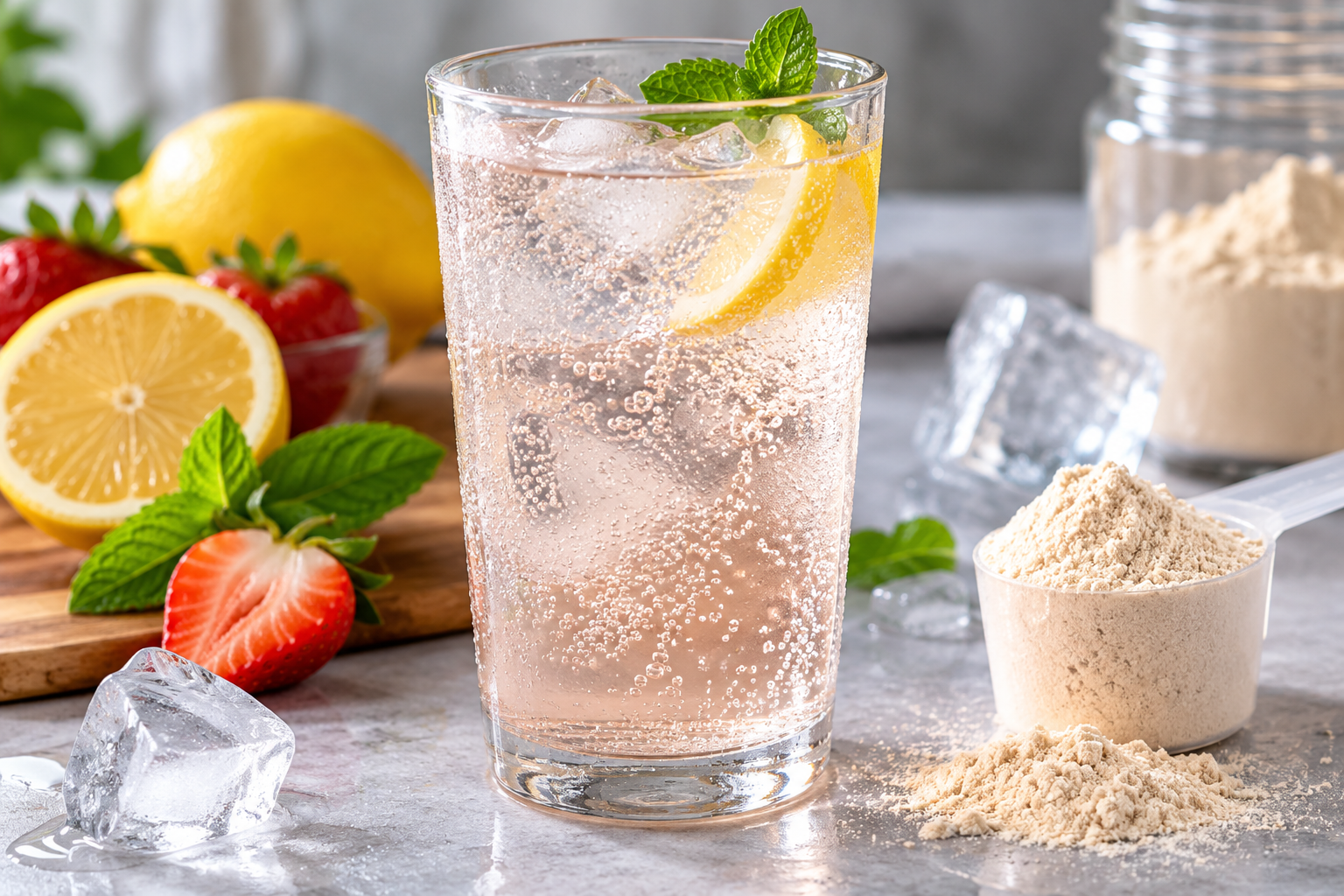
What Is Protein Soda? The Food Science Behind the New Fizzy Protein Trend
Protein has spent years living in shakes, smoothies, and sports drinks. Now it is turning up somewhere far less expected: soda.
At first glance, protein soda sounds almost contradictory. Soda is usually associated with something light, sweet, and fizzy. Protein drinks tend to be thicker, creamier, and more substantial. Putting the two together creates an interesting food science problem.
How do you add meaningful protein to a sparkling drink without making it feel like a protein shake?
That is the part I find most interesting as a chef.
A good fizzy drink should feel clean and refreshing when you take a sip. Protein can change that experience. Depending on the type and amount used, it can affect the drink’s clarity, mouthfeel, flavor, and stability. Acidity, sweeteners, flavoring, and carbonation then have to work around those changes.
So protein soda isn’t simply a case of mixing protein powder with sparkling water.
There is some real formulation work behind the idea.
In this article, we’ll look at what protein soda actually is, why it has suddenly attracted attention, what happens when protein meets carbonation and acidity, and what to look for if you’re thinking about trying one.
Because once you understand what is happening inside the glass, the trend becomes much more interesting than just another new beverage on the shelf.
What Exactly Is Protein Soda?
Before we get into the science, let’s clear up what protein soda actually means.
Protein soda is a carbonated beverage that has been formulated to provide protein along with the familiar qualities of a fizzy soft drink. Depending on the product, it may contain protein from sources such as whey protein or other protein ingredients.
The important word here is formulated.
You cannot simply take an ordinary protein shake, pour it into sparkling water, and expect the result to behave like soda. Protein changes the way a beverage looks and feels, while carbonation changes how the drink behaves in the bottle and in the glass.
A well-made protein soda aims for something quite different from a traditional shake. It should be light, refreshing, and easy to drink, while still delivering a useful amount of protein.
That’s where the interesting part begins.
Two drinks can contain the same amount of protein but feel completely different in the mouth. One may be clear and crisp, while another can be cloudy, thick, or slightly chalky. The difference comes down to the protein source, concentration, acidity, sweeteners, flavors, and the way the beverage is processed.
Chef RBS Tip: When I look at a new food trend, I don’t start with the marketing claim. I start with the formulation. The ingredients and their interaction usually tell you much more about the product.
Why Is Protein Soda Suddenly Popular?
Protein has become much more visible in everyday food and drinks. It is no longer limited to gym shakes or specialized sports nutrition.
That shift helps explain the interest in protein soda.
For some consumers, the appeal is simple: they want more protein without drinking another thick shake every day. A fizzy drink can feel lighter, more refreshing, and more like an everyday beverage.
There is also a flavor opportunity.
Traditional protein drinks often lean toward milkshake-style flavors such as chocolate, vanilla, or coffee. Protein soda moves in a different direction, using brighter profiles such as fruit, citrus, and other refreshing flavors.
That changes the whole drinking experience.
But popularity alone doesn’t tell us whether a protein soda is a good product. From a chef’s perspective, the more useful question is
Does the formulation actually deliver a pleasant drink?
A successful protein soda has to balance protein with sweetness, acidity, aroma, carbonation, and mouthfeel. If even one of those elements is poorly controlled, the drink can quickly feel more like a protein supplement than a soda.
That balance is what makes this category worth watching.
Why Is It Difficult to Put Protein in Soda?
This is where protein soda gets genuinely interesting.
Carbonated drinks are usually built around a simple sensory goal: bright flavor, clean finish, and plenty of refreshment. Protein can make that balance harder to achieve.
Proteins are large molecules, and their behavior changes depending on the surrounding conditions. In a beverage, factors such as acidity, temperature, protein concentration, and other ingredients can affect how the protein behaves.
That matters because a protein drink that becomes cloudy, forms particles, or develops an unpleasant texture is unlikely to feel like the crisp soda people expect.
Carbonation adds another challenge.
The drink needs to hold dissolved carbon dioxide while remaining physically stable. At the same time, the protein needs to stay properly dispersed throughout the beverage rather than creating a texture that feels heavy or gritty.
This is why a good protein soda is more than a clever ingredient combination. It is a formulation exercise.
The goal is not simply to get protein into the bottle.
The goal is to get the protein there without losing the drinking experience.
Chef RBS Tip: In beverage development, I always think about the first sip and the last sip. A product can look impressive on a label, but if the mouthfeel becomes tiring after a few sips, the formulation still needs work.
What Type of Protein Is Used in Protein Soda?
Not all protein behaves the same way in a drink.
For protein soda, the choice of protein is especially important because the beverage needs to stay light, refreshing, and stable rather than turning thick or grainy.
One protein that often comes up in clear protein beverages is whey protein isolate. It can provide a high proportion of protein while allowing manufacturers to create a drink that is much lighter in appearance and texture than a traditional protein shake.
But the protein itself is only part of the story.
The final drink also depends on acidity, sweetness, flavoring, water quality, and processing. Change one of these, and the way the protein behaves can change too.
Think about it like cooking a sauce. You can start with excellent ingredients, but the final result still depends on how those ingredients are brought together.
The same principle applies here.
Chef RBS Tip: When evaluating a protein beverage, don’t look only at the number of grams of protein. Look at the entire ingredient list and ask yourself how the product is achieving its texture, flavor, and stability.
Why Clear Protein Matters in a Fizzy Drink
When you hear protein soda, the word “protein” might make you imagine a thick shake.
That is exactly what beverage developers are trying to avoid.
A clear or nearly clear protein drink can feel much closer to a conventional soft drink. You can see the difference immediately: instead of a creamy-looking beverage, the drink can have a lighter appearance and a cleaner finish.
But clarity isn’t just about appearance.
It is closely connected to the way the protein is formulated and how it behaves in the drink. If the protein interacts poorly with the acidity or other ingredients, the beverage can become cloudy or develop an unpleasant texture.
This is one reason clear protein beverages have become an interesting area of product development.
The challenge is to deliver the protein while keeping the drink refreshing.
In simple terms:
The less the protein interferes with the drinking experience, the more naturally the beverage can feel like soda.
That is a difficult balance, and it is one of the reasons protein soda is more interesting from a food-science perspective than it first appears.
What Does Protein Do to the Taste and Texture?
Protein itself does not have to make a drink taste heavy, but it can change the way a beverage feels in your mouth.
This is one reason some protein drinks have that familiar thick, creamy, or slightly chalky character.
A fizzy protein drink has a different goal.
You want the bubbles to feel lively, the flavor to come through clearly, and the finish to stay clean. If the protein is too noticeable, the drink can lose that refreshing quality.
This is where formulation becomes important.
The amount and type of protein, along with acidity, sweeteners, and flavor compounds, all contribute to the final sensory experience. A well-designed drink tries to keep the protein benefits while making the beverage feel closer to something you would naturally reach for on a hot day.
As a chef, I think of this as texture management.
A good product doesn’t just deliver ingredients. It controls how those ingredients are experienced from the first sip to the last.
Why Carbonation Changes the Experience
Now we get to the part that makes protein soda different from an ordinary protein drink: carbonation.
Those bubbles aren’t just there for visual effect.
Carbon dioxide dissolves into the beverage and creates the familiar sparkling sensation when you drink it. That sensation can make a beverage feel lighter and more refreshing, which is useful when the drink also contains protein.
But carbonation doesn’t fix a poor formulation.
If the base beverage already has an unpleasant aftertaste or heavy mouthfeel, bubbles won’t hide the problem. In fact, the contrast can make the difference more noticeable.
This is why the best protein soda formulations need to balance several things at once:
protein + acidity + sweetness + flavor + carbonation + mouthfeel
Get the balance right, and the drink can feel surprisingly close to a conventional sparkling beverage.
Get it wrong, and you may end up with something that tastes like a protein shake wearing a soda costume.
That distinction is important.
A successful protein soda doesn’t try to make protein taste like soda. It designs the entire drink so the protein fits naturally into the soda experience.
Is Protein Soda the Same as a Protein Shake?
Not really.
Both can provide protein, but they are designed around very different drinking experiences.
A traditional protein shake is usually built to feel substantial. Milk, yogurt, fruit, nut butters or protein powders can give it body and thickness. It can work well as a filling snack or part of a meal.
Protein soda takes the opposite approach.
The goal is generally to keep the beverage light, sparkling and refreshing, while still providing protein. That means the formulation has to control the protein’s effect on texture much more carefully.
Think of the difference this way:
A protein shake wants you to notice the body. A protein soda wants you to notice the refreshment.
Neither approach is automatically better. They simply serve different occasions.
For someone who enjoys the taste and texture of a traditional shake, protein soda may seem unusual. For someone who finds thick protein drinks tiring, the lighter format may be more appealing.
And that’s probably one of the biggest reasons this category has attracted attention: it offers another way to consume protein without making every protein drink feel like a shake.
What Should You Look for in a Protein Soda?
If you’re curious about protein soda, don’t judge it by the word “protein” on the front of the can.
Turn the package around and read the label.
Start by checking the Nutrition Facts label and the protein amount. Then look at the serving size, sugar or other sweeteners, calories and the complete ingredient list. Two drinks can both be marketed as protein beverages but have very different formulations.
Also pay attention to what you actually enjoy drinking.
A beverage can look impressive nutritionally and still be a poor choice for you if you dislike the flavor, sweetness or aftertaste. From a chef’s perspective, sensory quality matters too.
And remember that protein soda is still a beverage, not a magic shortcut to a better diet.
If you already get enough protein from your regular meals, adding a protein drink may not provide much additional value. If you’re using one because it is convenient, the important thing is understanding what you’re actually buying. A balanced diet should still provide a variety of foods, including sources of protein and fiber.
Chef RBS Tip: Don’t let the front of the package make the decision for you. The ingredient list and nutrition panel tell the more useful story.
Protein Soda Is More Than a Trend
What makes protein soda interesting is not simply the word protein.
It is the attempt to combine two very different food experiences: the nutritional purpose of a protein drink and the light, refreshing character of a sparkling beverage.
That combination creates a genuine formulation challenge.
The protein has to work with the acidity. The flavor needs to cover or complement any unwanted protein notes. Sweetness has to feel balanced. Carbonation needs to remain enjoyable. And the final drink still has to feel refreshing enough that you actually want another sip.
That is why I find this category more interesting than a simple viral food trend.
It shows how modern food development often works: take something consumers already understand, change one important part of the experience, and solve the technical problems that come with it.
Whether protein soda becomes a long-term beverage category or simply another short-lived trend remains to be seen.
But from a chef’s perspective, the experiment itself is worth watching.
The Chef RBS Takeaway
Protein soda is an interesting example of how food trends and food science meet.
The idea sounds simple: put protein into a fizzy drink. But creating a beverage that is refreshing, stable and pleasant to drink requires much more than adding protein to sparkling water.
The protein source, acidity, sweetness, flavor and carbonation all have to work together.
And that’s the bigger lesson.
When you see a new food trend, don’t look only at the marketing around it. Look at what is actually happening inside the food or drink.
Sometimes the most interesting part of a trend isn’t the trend itself.
It’s the science that makes it possible.
FAQ
What is protein soda?
What type of protein is used in protein soda?
Is protein soda the same as a protein shake?
Why is protein soda fizzy?
Why is clear protein used in some protein drinks?
Does protein affect the taste of soda?
Is protein soda healthy?
How much protein does protein soda contain?
What should you look for when buying protein soda?
Why is protein soda becoming popular?