
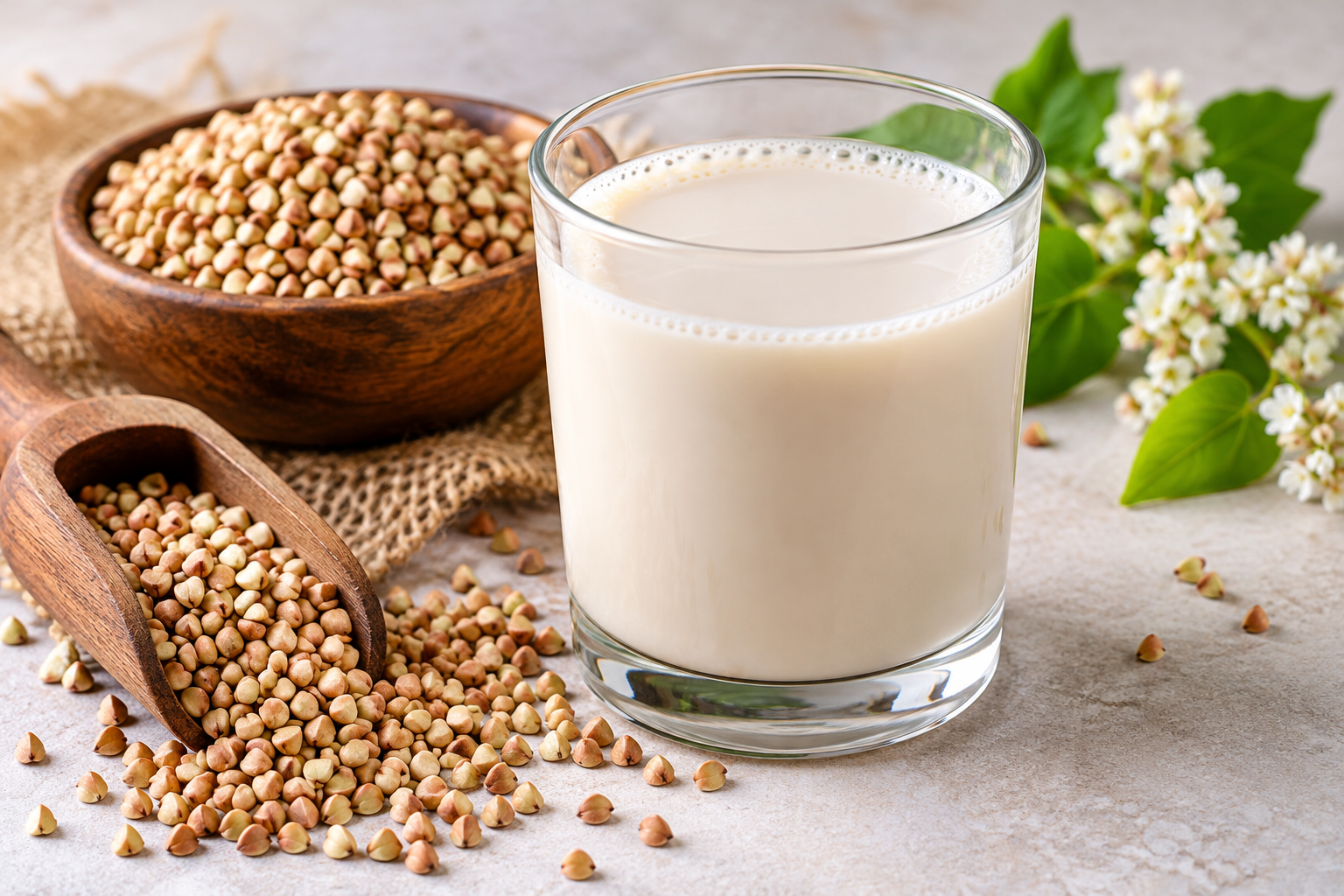
Buckwheat Milk: What Is It, and Is It Worth Trying?
Imagine seeing buckwheat milk on a supermarket shelf. You might wonder what buckwheat has to do with milk or even whether it contains wheat.
Here’s the surprise: buckwheat isn’t actually wheat. It’s a seed that has been used in cooking for generations, and now it’s finding a new place in the plant-based milk aisle.
But is buckwheat milk really worth trying? Let’s look at how it’s made, what it tastes like, and what you should know about its nutrition before buying it.
What Is Buckwheat Milk?
Buckwheat milk is a plant-based drink made from buckwheat and water, sometimes with a few extra ingredients for flavor and texture.
But here’s the surprising part: buckwheat isn’t actually wheat. It’s a seed used much like a grain in foods such as noodles, pancakes, and porridge.
Now, food producers are giving this familiar ingredient a new role as a milk alternative.
Its nutritional value depends on how the drink is made, so the ingredient name alone doesn’t tell the whole story.
How Is Buckwheat Milk Made?
Turning buckwheat into a milk alternative is an interesting example of how food processing can change the way we use an ingredient.
The basic idea is simple: buckwheat ingredients are combined with water and processed into a drink. Depending on the recipe, the mixture may be blended, filtered, or formulated with additional ingredients to create a smoother texture.
Why might a manufacturer add oil? As a chef, I know that fat can help give a drink a fuller mouthfeel instead of leaving it feeling thin and watery.
The exact process and ingredients vary by brand, so it’s always worth checking the carton to see what you’re actually drinking.
What Does Buckwheat Milk Taste Like?
Taste is often what determines whether a new food becomes part of our daily routine. So, what should you expect from buckwheat milk?
Buckwheat can have a mild, earthy, nutty flavor. However, the final taste depends on the ingredients and how the drink is processed. Some versions may also contain vanilla or other ingredients that make the flavor smoother.
From a chef’s perspective, a milk alternative doesn’t always need a strong flavor. If it works well with coffee, cereal, or a smoothie without overpowering the other ingredients, that can be a real advantage.
The easiest way to judge it? Try a small serving on its own first, then see how it works with your favorite breakfast or drink.
Is Buckwheat Milk Healthy?
A new milk alternative can sound exciting, but its health value depends on more than its main ingredient.
Whole buckwheat contains protein, minerals, and other nutrients. However, a buckwheat drink may contain different amounts because processing can change how much of the original seed ends up in the final product.
As a chef, I always recommend checking the nutrition label rather than judging a product by its name. Look at protein, calories, sugar, fat, and dietary fiber to see whether it fits your needs.
One important detail: a drink made from a nutritious seed is not automatically as nutritious as the whole seed itself. The ingredients and processing make a difference.
What Does the Nutrition Label Tell You?
One example is BAM’s Hint of Vanilla Buckwheat Milk, listed by Whole Foods Market. Its nutrition label provides the following information per one-cup serving (240 mL):
- Calories: 120
- Protein: 4 g
- Total carbohydrates: 18 g
- Total fat: 3 g
- Total sugars: 1 g
- Dietary fiber: 0 g
These figures apply to this specific product, not all buckwheat milk. <Link url=”https://www.wholefoodsmarket.com/grocery/product/bam-buckwheat-milk-hint-of-vanilla-b0cgw5hmqb” title=”View the product listing and nutrition facts“/>.
Here’s something worth noticing: whole buckwheat contains fiber, but this drink lists zero grams per serving. That is why you should never assume a finished drink has the same nutritional value as the whole ingredient it comes from.
If you’re choosing a plant-based milk for everyday use, compare the protein, sugar, fiber, and calories with your usual option. Also check whether it provides nutrients such as calcium and vitamin D, especially if you use it instead of dairy milk.
Buckwheat Milk vs. Oat Milk vs. Almond Milk
Not all plant-based milks are made the same way, and the best choice depends on what you want from them.
Buckwheat milk is an interesting option if you want to try something different. Its nutritional profile depends on the recipe, so check the label before comparing it with other drinks.
Oat milk is popular for its creamy texture and is often used in coffee, smoothies, and breakfast recipes.
Almond milk is available in many unsweetened, lower-calorie versions, although these often contain relatively little protein.
Here’s the chef’s tip: don’t choose a milk alternative based on its name or popularity alone. Compare protein, calories, added sugars, and fortification, especially if you use it as a regular replacement for dairy milk.
Each option has its place in the kitchen. The trick is finding one that suits your taste, nutritional needs, and how you plan to use it.
Can You Use Buckwheat Milk in Coffee and Cooking?
A new ingredient becomes more interesting when you discover how to use it in everyday cooking. Buckwheat milk may work in several familiar ways, although the results depend on the product.
In smoothies: Blend it with bananas, berries, or other fruits for a quick breakfast.
With cereal and oats: Pour it over your favorite breakfast cereal or use it to prepare overnight oats.
In baking: Try it in recipes that call for plant-based milk. Keep in mind that differences in fat, protein, and consistency can affect the final texture.
In coffee: Start with a small amount to see how the flavor works. Not every plant milk froths well or remains stable when heated, so test the product before relying on it for your daily coffee.
My advice as a chef is simple: an ingredient may work beautifully in one recipe but not another. Start with a small experiment before making it a regular part of your kitchen.
Is Buckwheat Milk Gluten-Free?
Buckwheat is naturally gluten-free, despite what its name might suggest. This makes it an interesting ingredient for people who need to avoid gluten.
However, there is one important detail: the finished product matters. Cross-contact during manufacturing or other ingredients in the recipe can affect whether a particular drink is suitable for someone following a strict gluten-free diet.
If you have celiac disease, check the product label and look for reliable gluten-free certification or clear information from the manufacturer.
Also, remember that gluten-free does not mean allergen-free. Buckwheat itself can cause allergic reactions in some people, so anyone with a buckwheat allergy should avoid it.
Is Buckwheat Milk Better for the Environment?
Buckwheat is interesting not only as a food ingredient but also as an agricultural crop. Farmers can grow it as a cover crop, helping suppress weeds and providing flowers that attract pollinators.
But does that automatically make buckwheat milk more environmentally friendly than oat or almond milk? Not necessarily.
The environmental impact of a finished product depends on several factors, including farming practices, water and energy use, processing, packaging, and transportation.
From a chef’s perspective, exploring new ingredients is exciting, but we should look beyond the marketing. Understanding how a crop is grown and how a product is made gives us a more complete picture.
Is Buckwheat Milk Worth Trying?
If you enjoy discovering new foods, buckwheat milk is worth exploring. It offers another option in the growing world of plant-based drinks, especially for people who like experimenting with different ingredients.
However, it isn’t automatically healthier than oat, almond, soy, or dairy milk. Your choice should depend on the taste you enjoy, the nutrients you need, and how you plan to use it.
Before buying a carton, check the ingredient list and nutrition label. If possible, try a small serving first to see whether you like the flavor and texture.
The Chef RBS Takeaway
Buckwheat milk is a reminder that familiar ingredients can find surprising new uses. A seed traditionally used in noodles, pancakes, and porridge is now making its way into the plant-based milk aisle.
What interests me most as a chef is not simply that it is a new trend, but how processing can turn an everyday ingredient into something entirely different.
My advice? Stay curious, read the label, and taste before you judge. The best food choices are the ones that make sense for your needs and work well in your everyday kitchen.