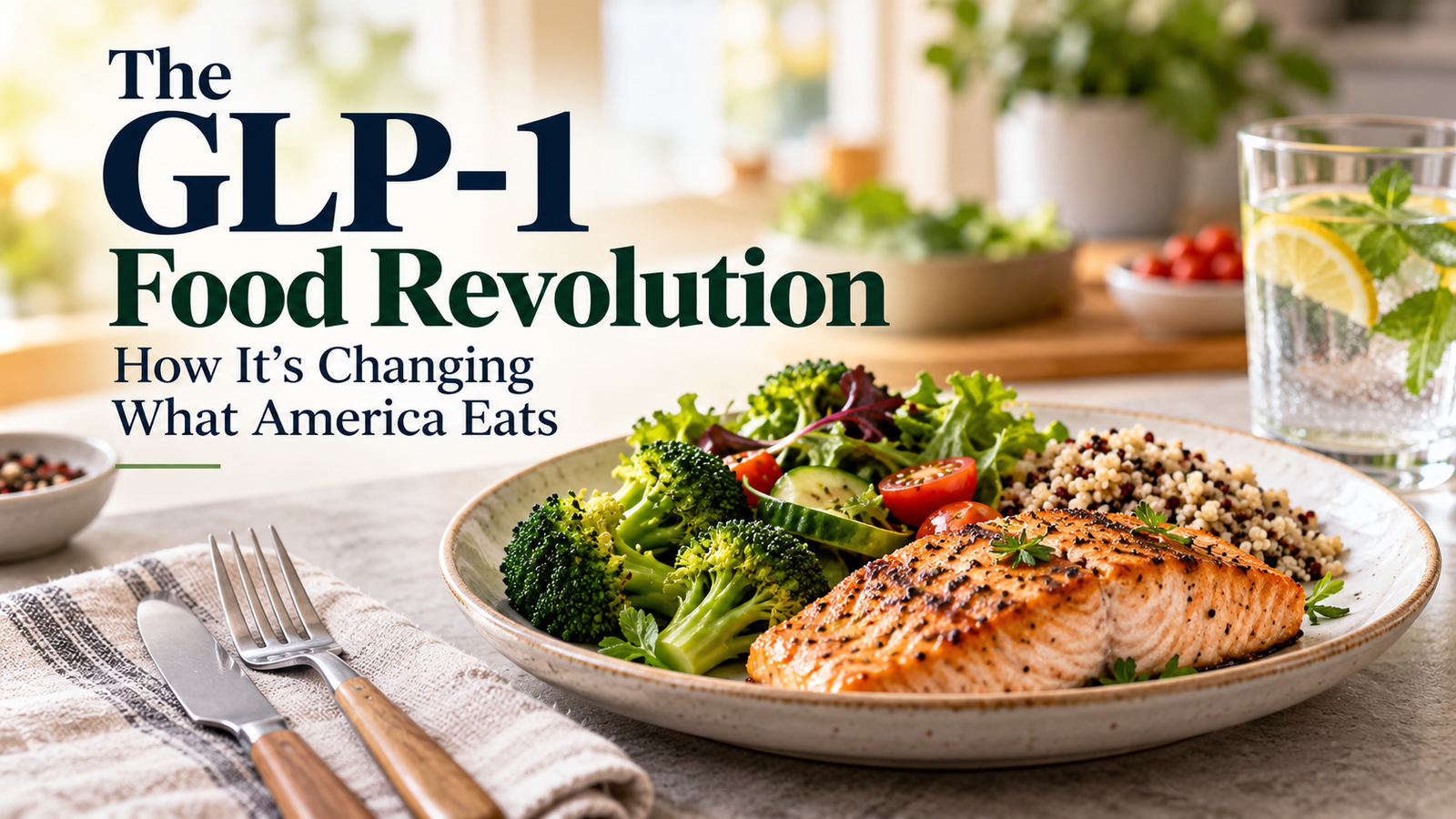
The GLP-1 Food Revolution: How Weight-Loss Drugs Are Changing What America Eats
Something interesting is happening in America’s food industry: the way people eat is changing, and food companies are paying attention.
Medications known as GLP-1 receptor agonists, including semaglutide and tirzepatide, can reduce appetite and food intake in many people who use them. This is influencing conversations about GLP-1 food trends, from smaller meal portions to foods that deliver more nutritional value in every serving.
For food manufacturers, restaurants, and chefs, this raises an important question: how do you create meals that remain satisfying when people may want to eat less?
From a chef’s perspective, the answer involves more than reducing portion sizes. Flavor, texture, protein, essential nutrients, and the overall eating experience all deserve attention. The challenge is to make smaller meals count without compromising culinary quality.
This shift could influence how America develops, markets, and serves food. Understanding the science behind GLP-1 medications and the changing food landscape helps separate meaningful industry changes from marketing hype.
Research from PwC on GLP-1 consumer trends in 2026 examines how the growing use of these medications may influence grocery purchasing habits and food spending in the United States.
Quick Answer: What Are GLP-1 Food Trends?
GLP-1 food trends refer to changes in food choices, product development, and eating habits associated with medications that affect appetite and fullness. As these medications become more widely used, food companies are exploring smaller portions, protein-rich foods, nutrient-dense meals, and convenient options that help people meet their nutritional needs.
However, there is no single diet that suits everyone using GLP-1 medications. The most useful approach is to focus on balanced nutrition, food quality, and individual needs rather than assuming that smaller portions alone make a meal healthier.
For chefs and food businesses, the opportunity is to create meals that combine nutritional value, satisfying flavor, and appropriate portion sizes without making exaggerated health claims.
What Are GLP-1 Medications, and Why Are They Affecting the Food Industry?
GLP-1 stands for glucagon-like peptide-1, a hormone involved in regulating blood glucose and appetite. GLP-1 receptor agonist medications act on this system and can help people feel full sooner, stay full longer, and reduce their food intake. Some medications in this category are prescribed for type 2 diabetes, chronic weight management, or other approved indications, depending on the product.
For the food industry, the important point is that a change in appetite can change how people approach meals. Some users may prefer smaller servings, while others may pay closer attention to protein, hydration, and the nutritional value of what they eat. Individual experiences vary, and not everyone taking these medications follows the same eating pattern.
Why Food Companies Are Paying Attention
Food manufacturers and restaurants are exploring how changing consumer needs could influence product development. Potential areas of interest include:
- Smaller, satisfying portions: meals designed to deliver flavor and nutritional value without unnecessarily large servings.
- Protein-rich options: foods that help consumers meet their protein needs as part of a balanced diet.
- Nutrient-dense choices: meals offering useful nutrients in a manageable portion.
- Convenient formats: ready-to-eat meals, snacks, and single-serve products that fit different appetites and routines.
These are emerging product-development directions, not proof that every person using GLP-1 medication wants the same foods.
The Chef’s Perspective
In professional kitchens, reducing portion size is relatively easy. Maintaining a meal’s appeal is the real challenge.
A smaller plate still needs balance: a good source of protein, suitable accompaniments, appealing texture, and enough flavor to make the meal enjoyable. The goal is not simply to serve less food but to make each component purposeful.
For Chef RBS Kitchen, this is where the GLP-1 food trends discussion becomes especially interesting: food science and culinary skill can help businesses respond to changing appetites without turning a medical trend into a marketing gimmick.
How GLP-1 Medications Could Change What People Eat
One of the most important questions behind the GLP-1 food revolution is what happens when a person’s appetite changes but their nutritional needs remain important.
When someone eats less, the quality of their food choices can become more significant. Smaller meals may leave less room for foods that provide protein, vitamins, minerals, and other essential nutrients. This makes thoughtful meal planning important, particularly for people experiencing reduced appetite or digestive side effects.
1. Protein Becomes an Important Consideration
Protein supports muscle maintenance and many essential functions in the body. During weight loss, preserving muscle is an important consideration, although individual needs depend on factors such as age, health, activity, and the amount of weight lost.
For food developers, this creates opportunities to make protein-rich options more appealing and convenient. Eggs, fish, yogurt, beans, lentils, tofu, and lean meats can all feature in balanced meals, depending on a person’s preferences and dietary requirements.
The culinary challenge is to offer variety rather than adding protein to every product simply because it is trending.
2. Fiber, Hydration, and Digestive Comfort Matter Too
Protein is only one part of the picture. Fiber-rich foods, adequate fluids, and a balanced eating pattern also matter, particularly because some people taking GLP-1 medications experience constipation, nausea, or other gastrointestinal side effects.
Oats, beans, lentils, vegetables, fruit, and whole grains can contribute fiber. However, increasing fiber suddenly may worsen digestive discomfort for some people, so changes should be gradual and tailored to individual tolerance.
From a product-development perspective, this creates an opportunity to combine ingredients thoughtfully instead of relying on a single headline claim such as “high protein.”
3. Smaller Portions Need Better Flavor
A smaller serving should not mean a less enjoyable meal. When developing portion-controlled products, chefs can use aromatic herbs, spices, acidity, contrasting textures, and well-balanced seasoning to create a satisfying eating experience.
For example, a modest bowl of lentil soup with vegetables and yogurt may offer more variety than a large serving built around one ingredient. The nutritional value will depend on the recipe and portion, but the principle is straightforward: good meal design is about balance, not simply size.
Food companies are increasingly exploring portion-conscious products and reformulations that aim to combine convenience, nutrition, and flavor. Whether these products succeed will depend on taste, affordability, and genuine nutritional value, not just the trend behind the packaging.
Important note: People using GLP-1 medications should follow individualized advice from their healthcare professional, especially if they struggle to eat or drink enough.
How Food Companies Are Responding to the GLP-1 Food Trend
The food industry is beginning to look beyond traditional product development. Instead of focusing only on bigger portions, indulgence, or added protein, companies are exploring how food can better fit changing appetites and nutritional priorities.
Research into GLP-1 consumers suggests that the opportunity extends across grocery products, snacks, dairy, prepared meals, and foodservice. However, the market is still evolving, and consumer preferences differ. Not every product marketed toward GLP-1 users will meet a genuine nutritional need.
The Main Product Opportunities
Protein-rich foods: Yogurt, eggs, fish, legumes, and convenient protein-containing meals can help consumers incorporate protein into their diets.
Smaller ready-to-eat meals: Single-serving soups, balanced bowls, and prepared meals may appeal to people who prefer smaller portions or find large meals uncomfortable.
Nutrient-dense convenience foods: Products combining useful nutrients, appealing flavor, and convenient preparation could attract consumers who want more value from a smaller serving.
Thoughtful snack options: Rather than simply adding protein to familiar snacks, manufacturers can explore combinations of protein, fiber, and other nutrients while paying attention to taste and portion size.
What This Means for Restaurants
Restaurants do not necessarily need a separate GLP-1 menu. A more practical starting point is to offer flexible portion sizes, balanced meal combinations, and clear menu descriptions.
For example, a restaurant could offer a smaller grilled fish or tofu bowl with vegetables and a suitable grain portion while allowing customers to choose accompaniments according to their preferences.
From a chef’s perspective, this is a product-development challenge as much as a marketing opportunity. The strongest concepts will solve a real customer problem while delivering food people genuinely enjoy.
Businesses should also avoid claiming that a dish is medically suitable for everyone using GLP-1 medications. Nutrition needs, medication effects, and individual tolerances vary, so marketing should remain accurate and evidence-based.
GLP-1 Food Trends: What Should Consumers Look for When Buying Food?
With more products competing for attention, the packaging can be confusing. Words such as “high protein,” “high fiber,” “low calorie,” and “nutrient-dense” may sound appealing, but they do not automatically mean a product is the best choice.
A better approach is to look at the complete nutritional picture.
Check These Four Things
- Protein content: Compare the amount per serving rather than relying only on the words “protein-rich” on the front of the package.
- Fiber and other nutrients: Look at fiber, vitamins, and minerals alongside the overall ingredient list.
- Serving size: Check whether the nutrition information refers to the amount you will actually eat.
- Ingredients and tolerability: Consider added sugars, sodium and ingredients that may trigger digestive discomfort for you.
Do Not Confuse Marketing With Medical Advice
A product labelled “GLP-1 friendly” is not automatically clinically proven to support weight management or suitable for everyone taking these medications. There is no single food product or universal eating plan that replaces individualized nutritional guidance.
People experiencing persistent nausea, vomiting, difficulty drinking enough fluids or difficulty meeting their nutritional needs should contact their healthcare professional.
The Chef RBS approach: Choose food for its actual nutritional value, ingredient quality and taste, not just because it carries a trending label.
Is the GLP-1 Food Revolution a Lasting Trend or Just Marketing Hype?
The GLP-1 food trend has a meaningful reason to exist: when appetite, portion preferences and eating habits change, food businesses have to reconsider how they develop and serve meals. But not every product launched around this trend will succeed.
Some products may offer genuine value through convenient portions, balanced nutrition and better ingredient choices. Others may simply repackage familiar foods with new claims to attract attention.
From a chef’s perspective, the difference comes down to what is on the plate. Does the food taste good? Does it offer meaningful nutritional value? Is the portion appropriate for its intended purpose? And does the product deliver what its packaging promises?
These questions matter beyond GLP-1 medications. They connect to a wider shift toward more intentional eating, practical convenience and better food quality.
My view: the lasting opportunity is not to build an entire food industry around one medication trend. It is to use changing consumer needs as a reason to make everyday food more thoughtful, balanced and enjoyable.
That is a stronger foundation for food businesses than chasing a headline.
Chef RBS Verdict: What the GLP-1 Food Revolution Means
The GLP-1 food revolution highlights an important lesson for the food industry: changing appetites can change what people expect from a meal.
For chefs and food businesses, the opportunity is to create food that delivers genuine nutritional value, appealing flavor and convenient portions. Protein matters, but so do fiber, variety, ingredient quality, hydration and the overall eating experience.
Consumers should look beyond marketing claims and choose foods that fit their individual nutritional needs. People taking GLP-1 medications should seek personalized guidance from qualified healthcare professionals when making significant dietary changes.
My final thought: the future of food is not simply about eating less. It is about making better-informed choices and creating meals where every ingredient has a purpose.
At Chef RBS Kitchen, that is where food science and professional cooking come together.
Frequently Asked Questions About GLP-1 Food Trends
1. What are GLP-1 food trends?
GLP-1 food trends refer to changing food preferences and product development associated with medications that affect appetite and fullness. Areas of interest include protein-rich foods, nutrient-dense meals and smaller portions.
2. Why are food companies focusing on GLP-1 users?
Food companies see an opportunity to respond to changing appetites and eating habits. They are exploring convenient meals, portion-controlled products and foods that provide useful nutrients without compromising taste.
3. What foods should people taking GLP-1 medications eat?
There is no universal diet for everyone taking these medications. Depending on individual needs and tolerance, a balanced eating pattern may include protein sources, vegetables, fruit, whole grains and other nutrient-rich foods. A healthcare professional or registered dietitian can provide personalized guidance.
4. Is high-protein food always better for GLP-1 users?
No. Protein is important, but overall nutrition matters too. Fiber, hydration, vitamins, minerals and individual dietary requirements also deserve attention. Protein needs vary from person to person.
5. Will GLP-1 medications change the food industry?
They may influence product development, restaurant portions and convenience-food choices as businesses respond to changing consumer needs. The scale and long-term effects of these changes remain uncertain.
6. Is the GLP-1 food trend likely to last?
The medication market and associated food preferences will continue to evolve. Products that deliver genuine nutritional value, good flavor and convenience may have more lasting appeal than products relying mainly on GLP-1-related marketing.
Final Takeaway
The GLP-1 food revolution is challenging food companies to rethink how they develop meals, balance nutrition and deliver satisfying flavor in smaller portions.
For chefs, the real opportunity is to combine food science with culinary skill. Better food is not simply about eating less. It is about making thoughtful choices and making every ingredient count.