Fire-Cooked Food: The Chef’s Guide to Smoke, Char, and Browning
There is something different about food cooked over a real flame. The aroma reaches you before the first bite, the surface develops deeper color, and even familiar ingredients can suddenly taste more complex.
As a chef, I have always found that fire does more than cook food. It changes the surface, concentrates flavors, creates roasted aromas, and introduces smoke and char that are difficult to reproduce with gentle cooking.
But what is actually happening when food meets fire?
The answer involves high heat, moisture loss, browning reactions, smoke compounds, and fat, all working together to create the flavor we associate with fire-cooked food.
Quick Answer: What Makes Fire-Cooked Food Different?
Fire-cooked food gets its distinctive character from several things happening at the same time.
High heat browns the surface, moisture escapes, fats react with the heat, and smoke can add another layer of aroma. The result is a combination of roasted, toasted, smoky, and sometimes slightly bitter flavors that you don’t get from boiling or gentle steaming.
The important point is that char is only one part of the flavor. A well-cooked piece of food can have deep browning and a little char while still retaining moisture and sweetness inside.
That balance is what experienced cooks look for. Too little heat and the food can remain pale and bland; too much direct flame can turn useful browning into burnt bitterness.
What Happens to Food When It Meets Fire?
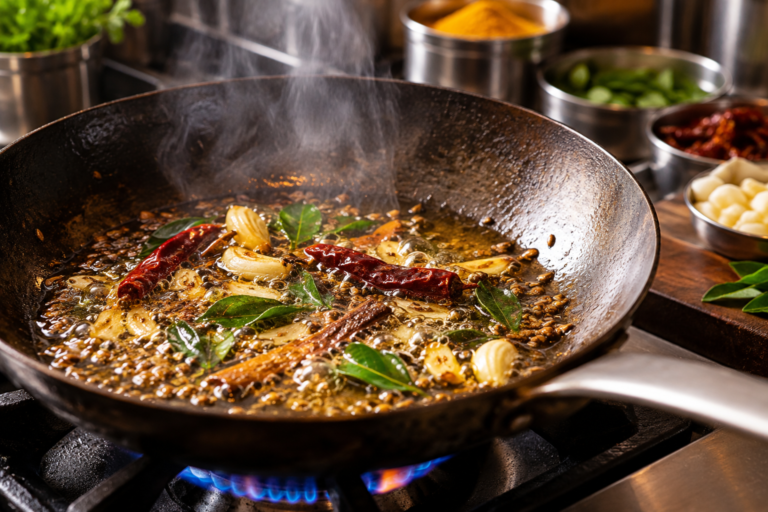
When food hits a very hot grill, pan, or open flame, the surface changes rapidly. Water begins to evaporate, the temperature of the outer layer rises, and the ingredients start developing new aromas and colors.
One of the most important changes is browning. Heat triggers chemical reactions that create hundreds of new flavor and aroma compounds, turning a pale surface into something deeper, roasted, and savory.
This is where the Maillard reaction becomes important. Proteins and certain sugars react under sufficient heat, producing the browned crust associated with grilled meat, roasted vegetables, toasted bread, and many other foods.
There is another process happening too: caramelization. This involves sugars breaking down under heat and can contribute sweet, toasted, and deeper flavors.
Fire, therefore, isn’t giving food just one flavor. It is creating a whole collection of flavors at the surface.
And that is why two pieces of the same ingredient can taste completely different when one is boiled and the other is properly browned over high heat.
Smoke: The Flavor You Can’t Get From Heat Alone
Browning can happen without smoke, but smoke adds another dimension.
When wood or other organic material burns or smolders, it produces a mixture of volatile compounds. Some of these compounds settle on the food’s surface and contribute aromas that we recognize as smoky, woody, roasted, or even slightly sweet.
This is why the same chicken, vegetable, or piece of bread can taste very different when cooked over charcoal or wood compared with a conventional pan.
But good smoke should support the food, not hide it. Too much smoke can create harsh, bitter, or acrid flavors, especially when fat drips directly onto a flame and produces heavy smoke.
In professional cooking, the goal is usually controlled exposure: enough smoke to add character, enough heat to develop browning, and enough control to keep the natural flavor of the ingredient recognizable.
Char: The Fine Line Between Flavor and Burnt Food
Char is one of the most misunderstood parts of fire-cooked food.
A little controlled charring can add bitterness, smokiness, and roasted depth, especially on vegetables, meat, and flatbreads. It can create contrast against the softer, sweeter interior of the food.
But “char” should not simply mean burning.
As a chef, I look for controlled browning with small areas of deeper char, rather than covering the entire surface in black. Once food becomes heavily burnt, the flavor can turn harsh and bitter, and the original ingredient becomes difficult to taste.
The best fire cooking often comes from contrast: deeply browned edges, a little char, and a moist or tender center. That contrast is part of what makes flame-cooked food so satisfying.
Fire, Fat, and Moisture: The Chef’s Balancing Act
Fire cooking becomes much more interesting when you understand the relationship between heat, fat, and moisture.
Moisture keeps the inside of food tender, while the surface needs to become hot enough for browning. If the food is too wet, the surface temperature stays lower for longer, and browning is delayed.
Fat can help carry flavor and improve the way heat reaches the surface, but excess dripping fat can create sudden flames and heavy smoke. This is especially important when grilling fatty meats.
In professional kitchens, the aim isn’t simply to use the highest possible heat. It’s about controlling the heat so the outside develops flavor while the inside reaches the desired texture without drying out.
That balance is one of the biggest differences between simply cooking over fire and actually understanding fire cooking.
Fire Cooking Across Different Foods
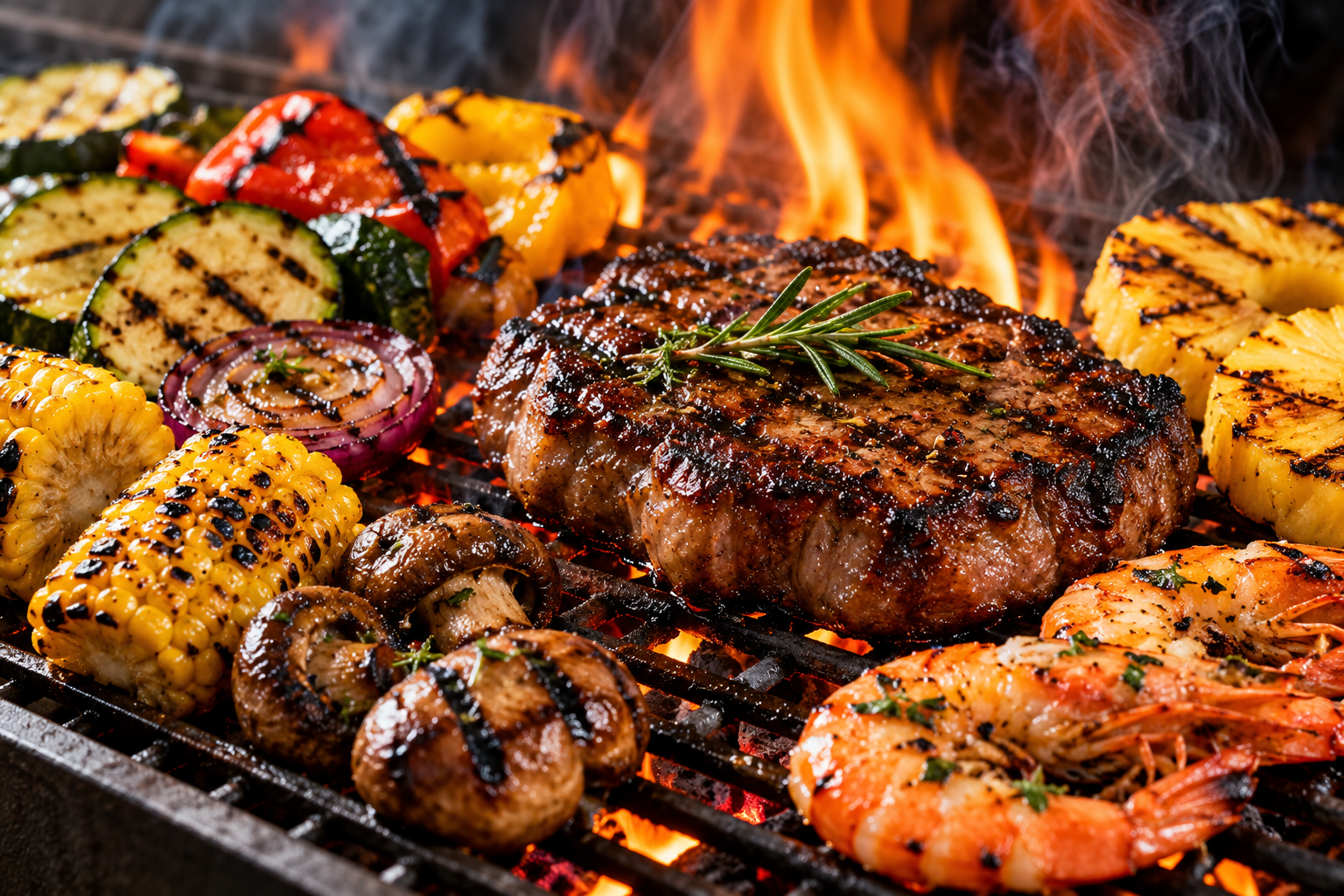
The effect of fire changes depending on what you’re cooking. Meat, vegetables, bread, and fruit all respond differently to high heat, which is why the same flame can produce completely different results.
With meat, the goal is often a browned exterior with a juicy interior. Vegetables can develop concentrated sweetness and smoky edges, while flatbreads can blister and char quickly because their surfaces are relatively thin.
Fruit is another interesting example. Grilling or roasting can soften the flesh, concentrate its natural sugars, and create deeper roasted notes. Peaches, pineapple, and even citrus can take on a completely different personality after brief exposure to high heat.
This is where a chef’s judgment matters. There isn’t one ideal fire temperature or cooking time for everything. The ingredient, size, moisture, fat content, and desired texture all determine how aggressively it should meet the flame.
The same cooking process can also transform the texture of food, from crisp and blistered surfaces to tender interiors, which is part of the science of food texture.
Smoke, Char, and Browning: What Should You Actually Aim For?
For good fire-cooked food, more smoke and more char do not automatically mean more flavor. The best results come from controlling several elements at once.
Aim for a surface that is deeply browned, lightly charred, and aromatic, while the inside remains properly cooked and moist. The exact balance depends on the ingredient.
A few simple principles help:
- Dry the surface when you want stronger browning.
- Preheat the grill or cooking surface so the food starts browning quickly.
- Don’t overcrowd the cooking area, because excess moisture can slow browning.
- Control the flame rather than allowing uncontrolled burning.
- Turn food when necessary to develop an even crust without burning one side.
- Rest meat after cooking so its internal juices can redistribute.
The chef’s goal is not to make food look black. It is to create layers of flavor through controlled heat.
Chef RBS Perspective: Fire Is a Cooking Tool, Not Just a Heat Source
After years in professional kitchens, I see fire as more than a way to make food hot. It is a tool for controlling flavor, texture, aroma, and surface color.
The difference is often in the small decisions: how close the food is to the flame, how dry its surface is, when it is turned, how much smoke it receives, and when it is removed from the heat.
A good cook learns to read those signals rather than relying only on a timer.
For me, the most satisfying fire-cooked food has contrast: a deeply browned or lightly charred exterior, a smoky aroma, and an interior that still tastes like the ingredient itself. That balance is where technique matters more than simply turning up the heat.
Chef RBS Verdict: Is Fire-Cooked Food Really Better?
I wouldn’t say fire automatically makes food better. It gives the chef another set of tools to build flavor.
When heat, smoke, browning, fat, and moisture are controlled properly, fire can create layers of flavor that are difficult to achieve through gentle cooking alone. But uncontrolled flames can just as easily turn those desirable flavors into bitterness and burnt notes.
The real skill is knowing when to push the heat and when to pull the food away.
That is why great fire cooking isn’t about making food as dark or smoky as possible. It is about finding the point where the ingredient develops a beautiful crust and aroma while still tasting like itself.
Chef RBS verdict: Respect the flame, control the heat, and let the ingredient lead. Fire should enhance food, not overpower it.
FAQ: Fire-Cooked Food
Is fire-cooked food healthier than other cooking methods?
Not automatically. Fire cooking can be part of a healthy diet, but the nutritional result depends on the ingredient, cooking method, temperature, and how heavily the food is charred.
What gives fire-cooked food its smoky flavor?
Smoke contains volatile compounds produced during the burning or smoldering of wood and other organic material. Some of these compounds reach the food’s surface and contribute smoky, woody, and roasted aromas.
What is the difference between browning and charring?
Browning develops complex roasted flavors through reactions such as the Maillard reaction and caramelization. Charring goes further, creating darker, more intensely roasted, and sometimes bitter flavors.
For additional food-safety guidance when grilling or cooking meat at high temperatures, the USDA’s grilling and food safety guidance is a useful reference.
Does charcoal make food taste better?
Charcoal can provide a distinctive smoky environment and high heat, but it doesn’t automatically make food better. Temperature control, ingredient preparation, and cooking technique still matter.
Why does grilled food develop a crust?
High surface heat removes moisture and promotes browning reactions. As the surface becomes drier and hotter, it develops the darker color, aroma, and texture associated with a good crust.
How much char is too much?
There isn’t one universal point, but heavily blackened food can become unpleasantly bitter and may indicate excessive burning. From a cooking perspective, aim for controlled browning with limited char, rather than burning the entire surface.
Final Takeaway
Fire cooking is not simply about putting food over a flame. It is about controlling heat to build browning, aroma, smoke and texture without losing the character of the ingredient.
The best results come from balance: enough heat to create a flavorful surface, enough control to avoid excessive burning, and enough attention to keep the inside tender.
In the kitchen, fire is not just heat. It is a flavor-building tool.