Koji: The Tiny Mold Behind Big Flavors
Some of the biggest flavors in cooking start with something that doesn’t look very exciting.
Koji is one of them.
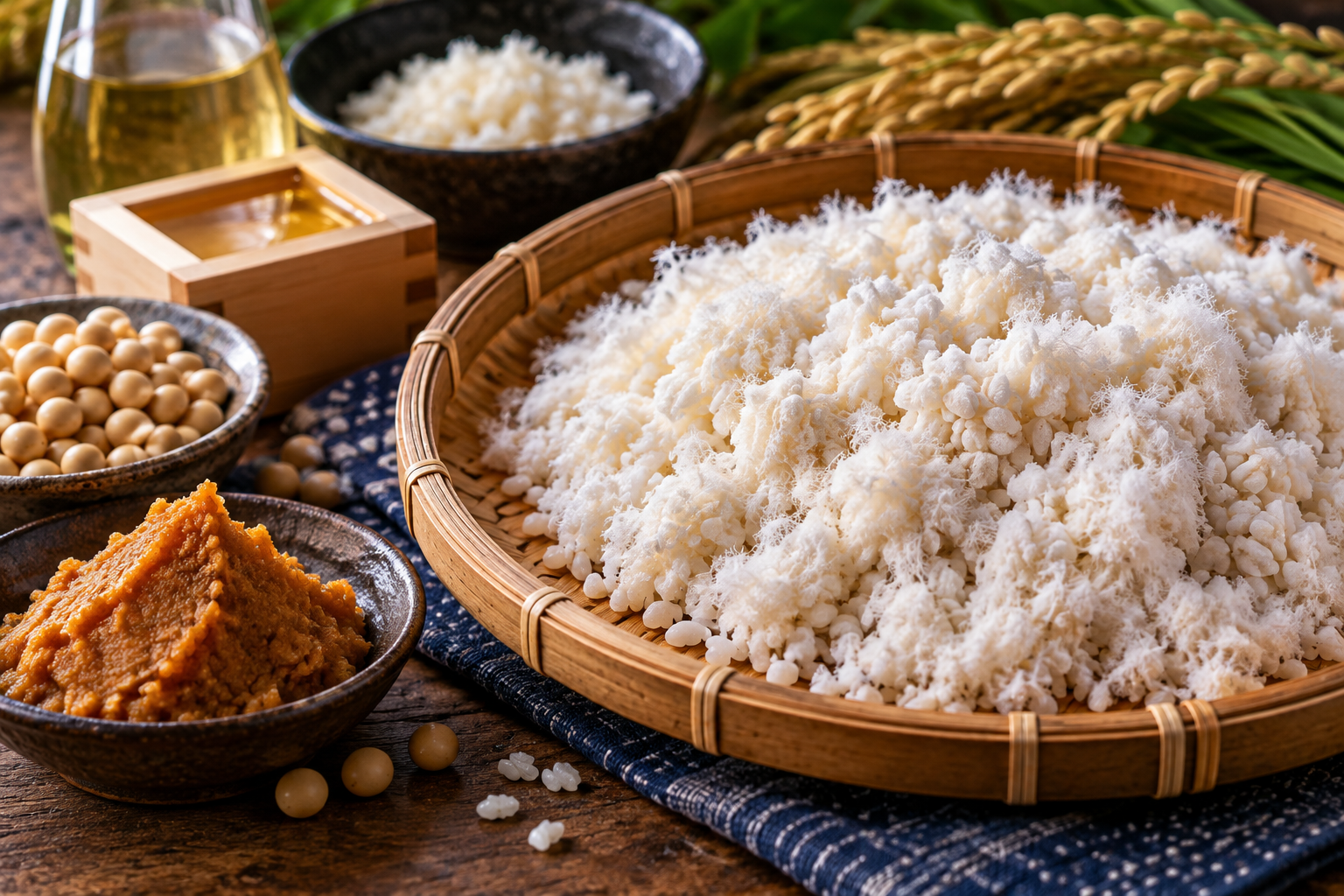
It can look like ordinary rice covered with a soft white growth. But give koji the right conditions, and it starts breaking down starches and proteins, creating the building blocks for sweetness, aroma, and umami.
As a chef, that’s the part I find fascinating.
You are not simply adding a new ingredient to a dish. You are using a natural process to change what an ingredient can taste like.
And once you understand what koji is doing, foods like miso, soy sauce, and sake start to make a lot more sense.
So let’s keep it simple and look at what this little mold is actually doing in the kitchen.
1. What Koji Actually Is
Koji is a cultured grain, most commonly rice, that has been inoculated with a useful mold called Aspergillus oryzae.
That may not sound very appetizing.
But this mold is the reason koji is so useful.
As it grows, it produces enzymes that break down starches and proteins in the grain. Those changes create smaller compounds that our taste buds recognize as sweet, savory, and deeply flavorful.
The important thing is that koji isn’t usually the final flavor.
It is more like a flavor maker.
That same idea sits behind foods such as miso, soy sauce, and sake, although each product uses koji differently.
Chef RBS Tip: Don’t think of koji as just another seasoning. Think of it as a tool that helps transform an ingredient.
2. The Little Mold Doing Big Work
The interesting part of koji is not really the mold itself.
It is what the mold does.
The enzymes produced during growth start breaking down complex starches and proteins into smaller compounds. That makes the grain easier to transform and gives fermentation much more flavor to work with.
Starch can become simpler sugars.
Proteins can contribute to amino acids and savory flavor.
And suddenly, something as simple as cooked rice becomes the starting point for much more complex food.
Chef RBS Tip: When you taste a koji-based food, look beyond salt and spice. Ask yourself where the sweetness, aroma, and umami are coming from. That’s where you start noticing the work Koji has done.
3. How Koji Creates Sweetness and Umami
This is where koji gets really interesting.
Koji produces enzymes that break down the starches and proteins in the grain. Those changes create simpler sugars and amino acids, which add sweetness and savory depth.
That is why koji can make food taste much more complex without simply adding more salt, sugar, or seasoning.
As a chef, I think of it as unlocking flavor that was already sitting inside the ingredient.
The process takes time, but the result can be surprisingly deep.
A little sweetness here.
More umami there.
And a longer, more satisfying finish.
Chef RBS Tip: When developing a koji-based dish, taste the ingredient at different stages. The flavor can change noticeably as the enzymes continue doing their work.
4. Where You Already Find Koji
You may have eaten koji without realizing it.
It plays an important role in foods such as miso, soy sauce, and sake. The same basic culture helps start very different fermentation processes, depending on the ingredients and how it is used.
That’s what makes koji so useful in food.
It isn’t tied to one finished product.
The same little culture can help create something salty and savory like miso, something intensely aromatic like soy sauce, or something very different in sake production.
For a chef, that versatility is the exciting part.
Chef RBS Tip: When you see miso or soy sauce on a menu, remember that the flavor story may have started much earlier, with koji.
5. Why Chefs Are Paying Attention to Koji
For chefs, koji is interesting because it can do more than add flavor.
It can change an ingredient.
A simple vegetable, grain, or protein can develop deeper savory notes, more aroma, and a different texture when koji is used correctly.
It also fits the way many chefs think today: get more flavor from the ingredient instead of simply adding more seasoning.
But koji isn’t magic.
Temperature, moisture, time, and hygiene all matter. Small changes during fermentation can change the final result.
Chef RBS Tip: Start with a small controlled batch when experimenting with koji. Taste, record what happened, and adjust one variable at a time. That is much safer than changing everything at once.
6. What Makes Good Koji Work
Good cooking starts with control.
The grain needs the right moisture. The culture needs suitable conditions to grow. Time matters too.
Too little control, and the flavor can become inconsistent.
For me, this is where professional kitchen discipline matters. Fermentation may look simple from the outside, but clean equipment, controlled conditions, and careful observation are essential.
You also need to understand what you are trying to achieve.
Are you looking for sweetness? More umami? A particular aroma?
Once you know the target, you can make better decisions during the process.
Chef RBS Tip: Don’t chase a strong fermented smell just because it seems more powerful. Good koji should contribute useful flavor, not overpower everything around it.
7. The Chef RBS Kitchen Takeaway
What I like most about koji is that it teaches a simple lesson from the kitchen:
Good flavor doesn’t always come from adding more.
Sometimes it comes from giving an ingredient the right conditions and enough time to change.
That idea is useful far beyond koji.
When I develop food, I always look for ways to get more flavor from the ingredient itself before reaching for extra salt, sugar, or seasoning.
Koji is a fascinating example of that approach.
It takes something as ordinary as a grain and gives it the potential to become much more complex.
Chef RBS Tip: When experimenting with fermentation, patience is part of the recipe. Taste, observe, and record the changes instead of rushing the process.
8. Koji FAQ
Koji is a cultured grain, commonly rice, grown with Aspergillus oryzae. The culture produces enzymes that help transform starches and proteins into compounds that contribute sweetness and umami.
What does koji taste like?
Koji itself can have a mild sweet, savory, and slightly nutty character. Its final flavor depends on how it is used and what ingredient it is helping ferment.
Is koji the same as miso?
No. Koji is a culture used to start or support fermentation, while miso is a finished fermented food. Koji is one of the important ingredients used in making many types of miso.
What foods are made with koji?
Koji is used in traditional foods and beverages, including miso, soy sauce, and sake. Chefs also use it in newer applications to develop flavor and texture.
Is koji a type of mold?
Yes. Food-grade koji commonly uses Aspergillus oryzae, a mold selected for food fermentation. It is very different from molds associated with food spoilage.
Why do chefs use koji?
Koji can help develop deeper flavor, sweetness, umami, and aroma. It gives chefs another way to transform an ingredient rather than relying only on added seasoning.