No Artificial Colors: What It Really Means on Food Labels
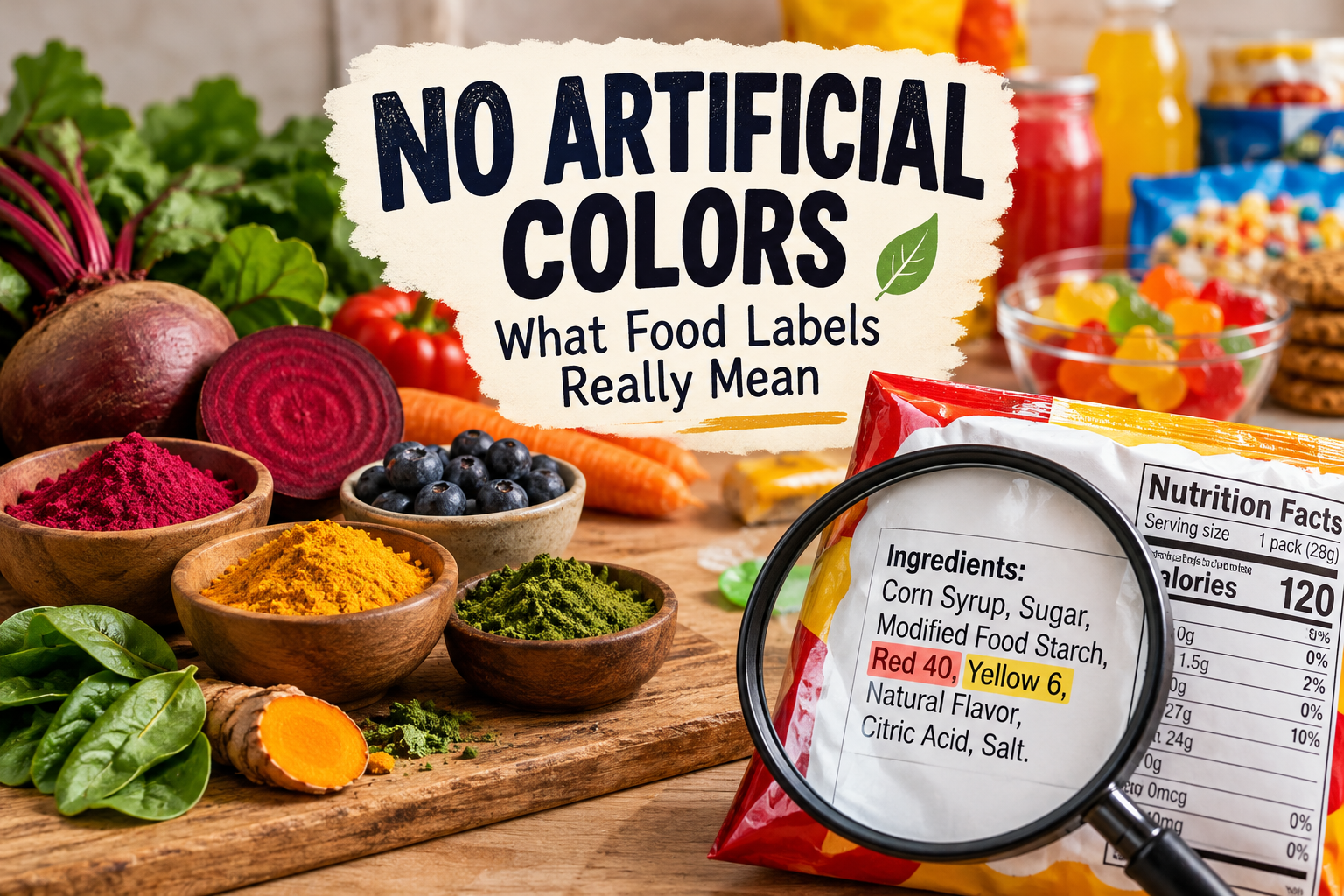
Walk through a supermarket in the United States and you will find products carrying claims such as “no artificial colors,” “made with natural colors,” and “no synthetic dyes.” These phrases can influence what people put in their shopping carts, but do they all mean the same thing?
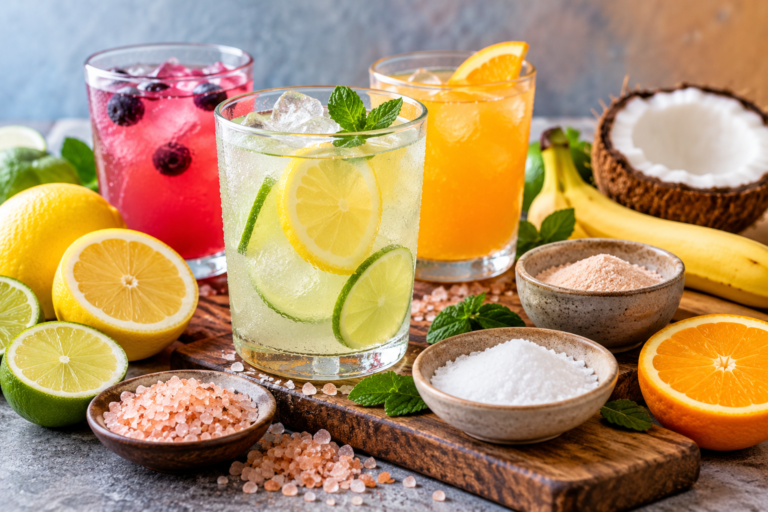
As a chef, I know that color plays an important role in how we experience food. The golden appearance of a baked product, the bright color of a fruit drink, or the rich red shade of a sauce can influence how appealing it looks before we take the first bite.
Food colors may come from natural sources or be produced synthetically. However, the words on the front of a package do not tell the whole story. To understand a product, it helps to look beyond its marketing claims and examine the ingredients.
In this guide, we will explore what “no artificial colors” means, how natural and synthetic food colors differ, and what consumers should know when reading food labels. The goal is not to create fear around food additives but to make informed choices based on facts.
1. What Does “No Artificial Colors” Mean?
The phrase “no artificial colors” is a claim about the coloring ingredients used in a product, but its meaning can depend on the applicable labeling rules.
On February 5, 2026, the U.S. Food and Drug Administration (FDA) announced that it intends to exercise enforcement discretion for certain voluntary “no artificial colors” claims on foods that do not contain FD&C Act-certified colors listed in 21 CFR Part 74. This policy gives manufacturers greater flexibility to use these claims when products contain certain alternative color additives. However, the policy does not mean that every product making this claim contains no added colors. Consumers should still read the ingredient list carefully.
For example, a product might use:
- Beet-derived color to create red or reddish-purple shades.
- Annatto extract to add yellow or orange tones.
- Beta-carotene to create yellow or orange colors.
- Synthetic color additives to provide consistent, vivid shades.
The FDA lists several natural-source color additives, including annatto, dehydrated beets, and beta-carotene. These are still color additives and must meet applicable FDA requirements.
The important point is that “no artificial colors” does not necessarily mean “no added colors.” Nor does the claim, by itself, establish that a product is healthier or more nutritious.
Consumers should read the full ingredient list and consider the product as a whole, rather than relying only on the wording on the front of the package.
2. Natural vs. Synthetic Food Colors
The main difference between natural and synthetic food colors is how they are sourced and manufactured. Natural-source colors are obtained from materials such as plants, vegetables, minerals, or other permitted sources, while synthetic colors are produced through chemical manufacturing.
Both types can be used to give foods a consistent appearance, but their performance can differ depending on the food and processing conditions.
Natural-source food colors
These colors come from permitted sources such as plants and vegetables. Examples include beet-derived color for red shades, turmeric-derived color for yellow, and beta-carotene for yellow-orange tones.
Their performance can vary with heat, acidity, light, and storage. A color that looks bright in one recipe may fade or change in another.
Synthetic food colors
Synthetic colors are manufactured to provide particular shades and consistent results. Some certified colors can produce vivid hues that are difficult to achieve with certain natural-source alternatives.
Manufacturers may choose them for their stability, predictable appearance, and suitability for a specific food product.
Does the source determine whether a color is safe?
Not by itself. Natural origin does not automatically make a color safer, and synthetic origin alone does not establish that a color is harmful. Safety depends on the specific substance, how it is used, exposure, and the applicable regulatory requirements.
In the United States, the FDA regulates food color additives. Some require batch certification, while others are exempt from certification but must still comply with applicable regulations.
A chef’s takeaway: Choose a coloring ingredient based on its intended use, performance, flavor impact, and food safety requirements, not just whether its source sounds natural.
3. Are Natural Food Colors Safer?
The word “natural” often sounds healthier, but the source of a food color alone does not determine whether it is safe. Natural-source and synthetic food colors must be evaluated based on the specific substance, how it is used, and the applicable food safety requirements.
A color extracted from a plant is not automatically safer in every situation, just as a synthetically produced color is not automatically harmful. What matters is the available safety evidence and whether the color additive is permitted for its intended use.
What does the FDA say?
In the United States, the Food and Drug Administration (FDA) regulates color additives used in food. Some color additives require batch certification before use, while others are exempt from certification but must still meet applicable regulatory requirements.
This distinction is important because “natural” and “synthetic” describe the source or method of production, not a complete safety assessment.
What should consumers consider?
When choosing products, look beyond the color claim and consider:
- The ingredient list: Identify the color additives used in the product.
- The overall nutrition profile: Check added sugars, sodium, saturated fat, and serving size where relevant.
- The intended use: Food additives are evaluated under specific conditions of use.
- The full product: A “no artificial colors” claim does not automatically make a product more nutritious.
A chef’s perspective
In professional kitchens, color is only one part of food quality. Flavor, texture, ingredient quality, food safety, and consistency matter just as much. The same principle applies when shopping: a label claim can be useful, but it should not replace a closer look at the ingredients and the product as a whole.
4. How to Read Food Labels
When a food package says “no artificial colors,” the next step is to check the ingredient list. The front of the package is designed to attract attention, while the ingredient list provides more detail about what the product contains.
Here is what to look for when shopping in the United States.
1. Read the full ingredient list.
Read the ingredient list carefully. FDA-certified colors must generally be declared by their listed names, such as Red 40 or Yellow 5. Some colors exempt from batch certification may be declared using broader terms such as “artificial color” or “color added,” rather than naming each color individually. Carmine and cochineal extract have specific naming requirements. Remember that labels do not always identify every coloring ingredient by a familiar everyday name.
2. Understand that natural colors are still added colors.
A product can contain colors derived from plants or other natural sources and still have added coloring ingredients. Therefore, “no artificial colors” does not necessarily mean “no added colors.”
3. Do not confuse color claims with nutrition claims.
A product labeled “no artificial colors” may still contain substantial amounts of added sugar, sodium, or saturated fat. The color claim tells you something about coloring ingredients, not the overall nutritional quality of the food.
4. Check the serving size and nutrition facts.
Compare serving sizes and review the Nutrition Facts panel. This helps you assess the product beyond its appearance or marketing message.
5. Remember that labels provide different kinds of information.
Ingredient lists, nutrition facts panels, and front-of-package claims serve different purposes. Reading them together gives you a more complete picture of the product.
A chef’s tip: When comparing two similar products, I would look at the complete ingredient list, nutritional information, and overall quality rather than choosing solely because one package says “natural” or “no artificial colors.”
5. What Consumers Should Look For
Choosing foods with fewer unnecessary additives can be a personal preference, but it is worth making that decision with the full product in mind. A “no artificial colors” claim can help you identify products that meet a particular coloring standard, but it should not be the only factor guiding your purchase.
Here are five practical things to consider when shopping.
1. Look beyond the front label.
Words such as “natural,” “clean,” and “no artificial colors” can attract attention. Read the ingredient list to understand which coloring ingredients are actually used.
2. Compare similar products.
If two products serve the same purpose, compare their ingredients and nutrition facts panels. You may find differences in added sugars, sodium, saturated fat, or other ingredients that matter more to your dietary needs.
3. Understand why color is used
Food color can help maintain a familiar appearance, compensate for color changes during processing, or make a product look more appealing. Its presence alone does not tell you whether the food is nutritious or unhealthy.
4. Consider your own priorities.
Some consumers prefer products made without certain synthetic colors. Others focus on price, taste, nutrition, allergies, or ingredient preferences. Choose according to your needs rather than assuming every product with a particular label claim is better.
5. Avoid judging food quality by appearance alone.
Bright colors do not automatically mean better quality, and duller colors do not necessarily mean a product is healthier. Flavor, texture, freshness, food safety, and nutritional value all deserve attention.
The bottom line
A label claim is a starting point, not a complete assessment of a food. Reading the ingredients and nutrition facts together helps you make a more informed choice.
6. A Chef’s Perspective on Food Colors
After more than 15 years in professional kitchens, I have learned that the appearance of food matters, but it should never be the only measure of quality.
Color can influence our expectations before we taste a dish. A tomato sauce, for example, may look more appealing when it has a rich red color, while a curry may develop its characteristic golden appearance from ingredients such as turmeric. In commercial food production, color additives can also help products maintain a consistent appearance from batch to batch.
However, good cooking is about much more than appearance.
As a chef, I focus on ingredient quality, flavor, texture, consistency, and food safety. When selecting ingredients for a recipe or evaluating a finished product, I consider the purpose of each ingredient and how it affects the final result.
Natural-source colors can be useful, but they may respond differently to heat, acidity, light, and storage conditions. Synthetic colors can offer greater consistency in certain applications. The right choice depends on the product, its intended use, and the applicable food safety requirements.
My advice to consumers is simple: do not let a single label claim make the decision for you. Understand what the claim means, read the ingredients, and consider the overall nutritional value of the food.
Food labels are valuable tools when we know how to interpret them. The goal is not to fear food additives, but to make informed choices based on evidence rather than marketing language.
Chef Rahul Sonawane (Chef RBS)
7. Frequently Asked Questions
1. What does “no artificial colors” mean?
It generally indicates that a product does not use certain artificial coloring ingredients. In the United States, the meaning of this voluntary claim can depend on applicable FDA guidance and enforcement policies. Always check the ingredient list for more information.
2. Are natural food colors safer than synthetic colors?
Not automatically. Safety depends on the specific color additive, its intended use, exposure, and applicable food safety requirements. Natural origin alone does not establish that a substance is safer.
3. Does “no artificial colors” mean no added colors?
No. A product may contain added colors derived from sources such as beets, annatto, or beta-carotene while making a qualifying “no artificial colors” claim.
4. How can I identify food colors on a label?
Read the ingredient list and look for named color additives or ingredients used for coloring. If you want to understand a particular additive, consult reliable regulatory information, such as the U.S. FDA’s food color additive resources.
5. Do artificial colors make food unhealthy?
The presence of a color additive alone does not determine the overall nutritional quality of a food. Consider the full ingredient list, Nutrition Facts panel, serving size, and relevant dietary needs.
6. Why do food manufacturers use colors?
Food colors can help create a consistent appearance, restore color lost during processing, or give a product its expected visual characteristics. Their suitability depends on the food and intended application.
7. Should I always choose products without artificial colors?
That depends on your preferences and dietary priorities. Compare the complete product rather than relying on one label claim. Ingredient quality, nutrition, food safety, taste, and affordability all matter.
Learn more about ultra-processed foods and how to understand their ingredients.
References
- U.S. Food and Drug Administration (FDA). FDA Takes New Approach to “No Artificial Colors” Claims.
- U.S. Food and Drug Administration (FDA). Letter to the Food Industry on “No Artificial Colors” Labeling Claims.
- U.S. Food and Drug Administration (FDA). Color Additives.