
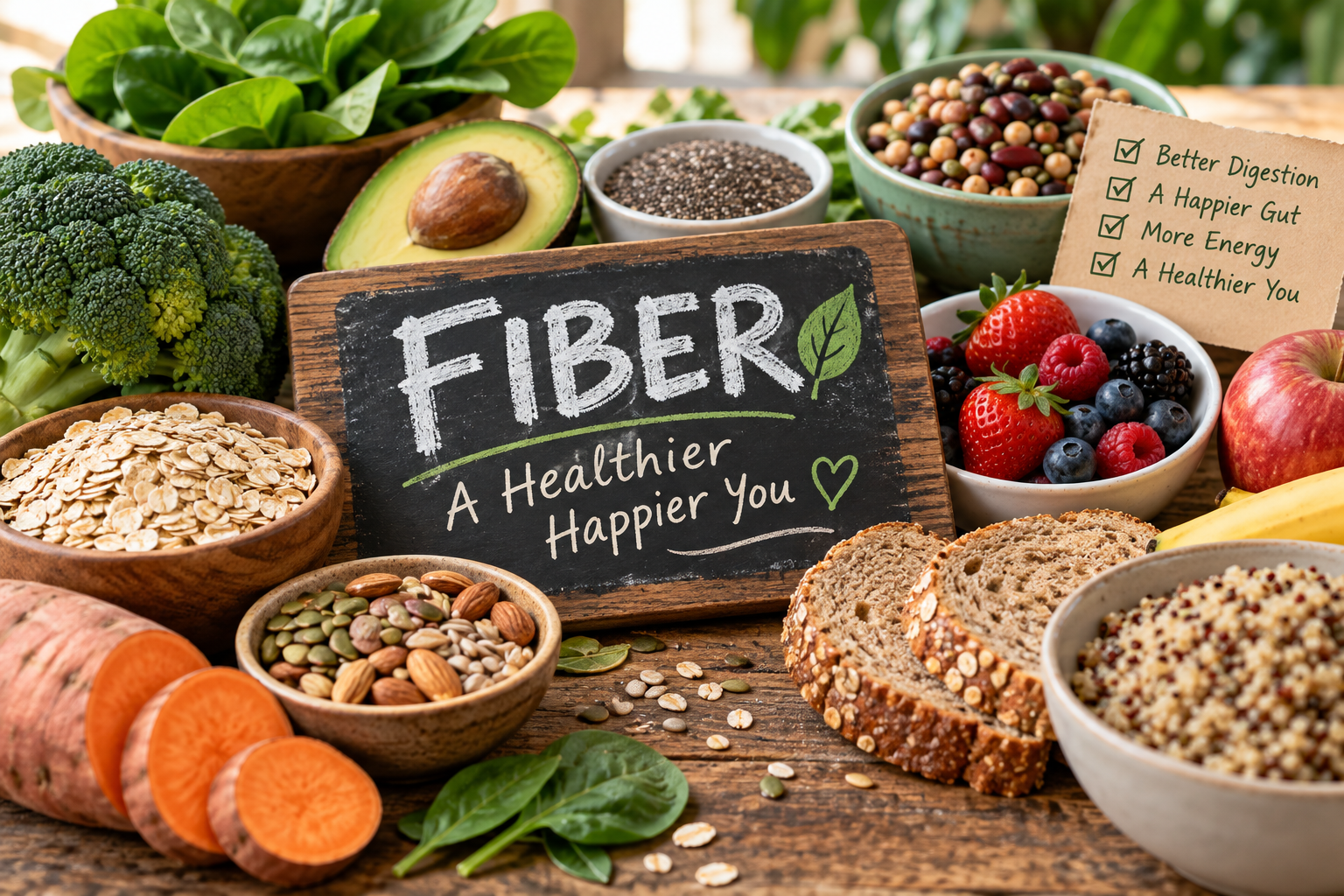
Fiber Trend: Why Americans Are Suddenly Obsessed With Fiber
The fiber trend is changing the way Americans think about food in 2026. From high-fiber cereals and snacks to beans, chia seeds, whole grains, and functional beverages, fiber is becoming a bigger part of the U.S. food conversation.
For years, protein dominated discussions about nutrition and food trends. Now fiber is gaining attention for a different reason: people are becoming increasingly interested in gut health, digestive health, fullness, and the role of fiber in everyday diets.
The trend has even created a new social media term: “fibermaxxing”—the idea of deliberately increasing fiber intake through food and, in some cases, fiber-rich products or supplements.
But is fiber simply another wellness trend, or is there real science behind America’s renewed interest?
As a chef and food technologist, I want to look beyond the headlines and explain what fiber actually does, where it comes from, why food companies are adding more of it, and what consumers should know before following the latest trend.
Because when it comes to food, a trend is interesting.
The science behind it is even more interesting.
Why Is the Fiber Trend Growing in the U.S.?
The fiber trend isn’t just a social media conversation. Grocery-shopping data shows that American consumers are actively searching for and buying more fiber-rich foods.
According to Instacart’s 2026 grocery data, the share of searches containing the word “fiber” increased 26.4% year over year. Fiber-rich categories are also appearing across more parts of the grocery basket rather than being limited to one type of health food.
Some of the biggest fiber-related movers on Instacart included:
- Sweet potatoes: +28%
- Frozen edamame: +25%
- Dried prunes: +23%
- Yams: +20%
- D’Anjou pears: +20%
- Chia seeds: +16%
- Pumpkin seeds: +16%
- Broccolini: +15%
This is important because it shows that the fiber trend isn’t limited to expensive supplements or specially marketed “health foods.” Many of the foods gaining attention are familiar ingredients that can be used in everyday cooking.
Americans Still Aren’t Getting Enough Fiber
There is another reason the subject has become important.
Federal dietary-intake analysis found that only about 6% of Americans age 1 and older had dietary fiber intakes above the Adequate Intake level. Among adults age 19 and older, the reported average intake was about 18.1 grams per day for men and 15.1 grams for women.
That creates a significant gap between consumer interest and actual intake.
In other words, Americans may be talking about fiber more than ever—but that doesn’t necessarily mean they are eating enough of it.
Why Is Fiber Suddenly Everywhere?
Several food trends are coming together at the same time.
Gut health has become a major consumer interest, while food companies are developing products around functional ingredients and digestive-health positioning.
At the same time, consumers are looking for foods that can deliver several attributes in one product:
Convenient + Filling + Nutritious + High in Fiber
Social media has added another layer with terms such as “fibermaxxing,” turning an established nutrition topic into something people can easily discuss, share, and experiment with.
The result is a shift in how fiber appears in the American food market.
It is no longer confined to bran cereal or traditional health-food aisles.
You can now find the fiber conversation in snacks, breakfast foods, beverages, frozen foods, seeds, fruit, vegetables, and everyday pantry staples.
What Exactly Is Dietary Fiber?
Before we understand why the fiber trend is growing, we need to understand what fiber actually is.
Dietary fiber is a type of carbohydrate that the human body does not fully digest. Unlike many digestible carbohydrates, fiber passes through the digestive system without being completely broken down and absorbed.
But there is an important detail:
Fiber is not one single ingredient.
Different types of fiber have different structures, behave differently in food, and can interact differently with the digestive system.
The U.S. Food and Drug Administration (FDA) defines dietary fiber to include certain naturally occurring fibers that are intrinsic and intact in plants, along with certain isolated or synthetic nondigestible carbohydrates that meet its criteria for beneficial physiological effects.
That means the fiber listed on a U.S. Nutrition Facts label can come from both naturally fiber-rich foods and certain added fiber ingredients.
Fiber Comes From Plants
Naturally occurring dietary fiber is found in foods such as:
- Fruits
- Vegetables
- Whole grains
- Beans
- Lentils
- Nuts
- Seeds
- Cereal bran
These foods don’t just provide fiber. They can also provide vitamins, minerals and other naturally occurring food components.
Fiber Can Also Be Added to Foods
This is where modern food technology becomes interesting.
Food manufacturers can use specific fiber ingredients to change the nutritional profile or functionality of a product.
Examples include:
- Psyllium
- Pectin
- Cellulose
- Guar gum
- Beta-glucan
- Certain forms of inulin and other nondigestible carbohydrates
However, not every isolated or added carbohydrate is automatically treated the same way under the FDA’s regulatory definition of dietary fiber. The FDA evaluates certain added fibers based on evidence of beneficial physiological effects.
For consumers, this is an important distinction.
A product saying “with fiber” doesn’t necessarily tell you what type of fiber it contains or how it behaves in the body.
That’s why reading the Nutrition Facts label can be more useful than relying only on the front-of-package marketing.
The Two Types You’ll Hear About Most
Fiber is commonly discussed as soluble and insoluble fiber.
These terms describe how different fibers interact with water and behave within food and digestion.
Soluble fiber can dissolve or disperse in water and may form a gel-like structure.
Insoluble fiber generally does not dissolve in water in the same way and contributes to the physical structure of plant foods.
But there’s a bigger lesson here:
Not all fiber behaves the same way.
For chefs and food developers, this matters because different fibers can affect a food’s:
- Texture
- Moisture
- Thickness
- Crispness
- Mouthfeel
- Processing characteristics
So when you see a food product promoted as “high fiber,” there is more happening behind the label than simply adding a generic powder.
Fiber is both a nutrition story and a food science story.
Soluble vs. Insoluble Fiber: What’s the Difference?
When people talk about dietary fiber, two terms appear again and again: soluble fiber and insoluble fiber.
The simplest way to understand the difference is to look at how the fiber behaves around water.
Soluble Fiber
Soluble fiber can dissolve or disperse in water and may form a gel-like material.
You can find soluble fiber in foods such as:
- Oats
- Barley
- Beans
- Lentils
- Apples
- Citrus fruits
- Chia seeds
From a food science perspective, soluble fiber can influence thickness, viscosity, and texture.
That’s one reason ingredients containing soluble fiber are useful not only nutritionally but also in food product development.
Insoluble Fiber
Insoluble fiber generally does not dissolve in water in the same way.
It is commonly found in:
- Whole grains
- Wheat bran
- Nuts
- Seeds
- Vegetables
- Fruit skins
Insoluble fiber contributes more to the physical structure of many plant foods.
Think about the difference between eating a whole apple and drinking a filtered apple beverage. The original plant structure contains components that are removed or changed during processing.
Why Does This Matter to a Chef?
For chefs and food technologists, the difference isn’t just about nutrition.
Fiber can change the way food behaves.
Depending on the type and amount used, fiber ingredients can influence:
Water absorption → Texture → Thickness → Crispness → Mouthfeel
That’s particularly important when developing products such as breads, snacks, cereals, pasta, and other processed foods.
Adding more fiber isn’t simply a matter of adding an ingredient and expecting the food to remain unchanged.
A food developer has to balance nutrition, flavor, texture, and consumer acceptance.
The Important Takeaway
Soluble and insoluble fiber are useful ways to understand fiber, but they don’t tell the entire story.
Different fibers can behave differently even within the same broad category.
So when you hear about the growing fiber trend, remember:
Fiber isn’t one ingredient.
It’s a large family of different components with different properties—and that’s what makes fiber such an interesting subject in modern food science.
Why Does Your Body Need Fiber?
Fiber is often described as something that simply “keeps you regular,” but its role in the diet is much broader.
Because different types of fiber behave differently, they can interact with digestion and the rest of the body in different ways.
Fiber Supports Normal Digestion
One of the best-known roles of dietary fiber is supporting normal bowel function.
Some fiber adds bulk to the contents of the digestive tract, while other types can hold water or form gel-like structures.
This is one reason fiber-rich foods are an important part of a balanced eating pattern.
Fiber Can Help You Feel Fuller
Fiber-rich foods can contribute to satiety, or the feeling of fullness after eating.
Foods such as beans, lentils, oats, vegetables, fruits, nuts, and seeds can provide fiber along with other nutrients.
For a chef, this creates an important connection between nutrition and menu design.
A meal doesn’t have to be complicated to be satisfying.
Fiber-rich ingredients, protein, vegetables, and whole grains can create meals with a combination of textures, flavors, and nutrients.
Fiber and Heart Health
Dietary patterns that are higher in fiber are associated with cardiovascular health.
The FDA has recognized certain relationships between dietary fiber and reduced risk of coronary heart disease, depending on the type of fiber and the conditions of the health claim. (fda.gov)
This is one reason fiber is more than a passing food trend.
fThe current fiber trend is bringing renewed attention to a nutrient that has been part of human diets for thousands of years.f
How Much Fiber Do You Need?
For U.S. Nutrition Facts labels, the FDA currently uses a Daily Value of 28 grams of dietary fiber per day, based on a 2,000-calorie diet. (fda.gov)
However, individual nutritional needs can vary.
The important practical message is not to treat 28 grams as a magic number that everyone must reach in exactly the same way.
Instead, build fiber into your diet consistently through a variety of foods.
Food First Makes the Culinary Approach Easier
You don’t necessarily need specialty products to start eating more fiber.
Consider simple ingredients already found in everyday kitchens:
Oats
Beans and lentils
Vegetables
Whole grains
Fruit
Nuts and seeds
From a chef’s perspective, this is where fiber becomes interesting.
The challenge isn’t simply increasing a number on a nutrition label.
It’s creating food that people genuinely enjoy eating.
Good nutrition should still taste good.
Fiber and the Gut Microbiome: What Happens Inside Your Digestive System?
One of the biggest reasons behind the current fiber trend is growing interest in the gut microbiome.
Your digestive system isn’t home to just human cells. It also contains trillions of microorganisms, including bacteria, that interact with the food passing through your digestive tract.
And some types of dietary fiber give these microorganisms something important to work with.
Some Fiber Reaches the Large Intestine
Unlike many digestible carbohydrates, certain fibers are not completely broken down and absorbed in the small intestine.
They can reach the large intestine, where some types are fermented by gut microorganisms.
Think of it as a food-science process:
Fiber → Large intestine → Gut microorganisms → Fermentation → Metabolites
The exact process depends on the type and structure of the fiber.
That’s why scientists don’t simply ask:
“How much fiber are you eating?”
They are also interested in:
“What type of fiber are you eating?”
What Does Fermentation Mean?
Fermentation occurs when microorganisms metabolize certain substances that reach the large intestine.
When some fibers are fermented, the process can produce compounds called short-chain fatty acids (SCFAs), including acetate, propionate and butyrate.
These compounds are an active area of scientific research because they can interact with the cells and environment of the digestive tract.
But it’s important not to oversimplify the science.
Different fibers can be fermented at different rates, and the composition of an individual’s gut microbiome can also influence what happens.
Why Variety Matters
This is one reason eating a variety of fiber-rich foods can be more interesting than focusing on a single “super fiber.”
Different foods provide different types and structures of fiber.
For example:
Beans and lentils
Oats and barley
Fruits
Vegetables
Nuts
Seeds
Each contributes a different combination of nutrients and fiber components.
The goal isn’t to find one magical ingredient.
It’s to create a varied eating pattern.
Fiber and the Modern Food Industry
The gut microbiome conversation has also influenced food product development.
Food companies are increasingly exploring fibers such as inulin, psyllium, beta-glucan and other functional fibers for use in cereals, beverages, snacks and other products.
But here’s where food science becomes especially important:
A fiber ingredient isn’t automatically equivalent to eating a whole fiber-rich food.
The type of fiber, amount, food matrix and processing method can all matter.
For chefs and food technologists, this opens up an interesting challenge:
How do you create convenient foods with meaningful fiber content while keeping the taste, texture and eating experience enjoyable?
That question is helping push the fiber trend beyond nutrition labels and into modern food innovation.
The Chef RBS Takeaway
Don’t think of fiber as simply something that passes through your digestive system.
Think of it as an ingredient that can interact with the food, the digestive process and the microorganisms living in your gut.
And that’s what makes fiber such a fascinating subject in food science.
Fibermaxxing: What Is It, and Does More Fiber Really Mean Better?
The fiber trend has created a new word across social media: “fibermaxxing.”
The idea is simple—deliberately increasing the amount of fiber in your daily diet.
That might mean adding more beans, vegetables, fruits, whole grains, seeds or other fiber-rich foods to meals.
It sounds straightforward.
But there is an important question:
Does eating more fiber always mean better results?
Not necessarily.
More Isn’t Automatically Better
Fiber is an important part of a healthy eating pattern, but suddenly consuming very large amounts can be uncomfortable for some people.
A rapid increase in fiber may lead to:
- Gas
- Bloating
- Abdominal discomfort
- Changes in bowel habits
This is particularly relevant for people who previously ate very little fiber and suddenly start adding large amounts of high-fiber foods or supplements.
Instead of going from low fiber to extremely high fiber overnight, a more practical approach is to increase fiber gradually and drink enough fluids.
Food First, Trend Second
Social media can make nutrition look like a competition:
More protein.
More fiber.
More supplements.
More functional ingredients.
But food doesn’t need to become a numbers game.
A balanced approach is more useful.
Instead of trying to consume the maximum possible amount of fiber, focus on regularly including a variety of fiber-rich foods in your meals.
For example:
Breakfast: oats + fruit + seeds
Lunch: beans or lentils + vegetables + whole grains
Snack: fruit + nuts
Dinner: vegetables + legumes + whole grains
This approach also gives you something that a fiber supplement may not provide on its own: a wider variety of foods and nutrients.
What About Fiber Supplements?
Fiber supplements can provide specific types of fiber, including ingredients such as psyllium.
But they shouldn’t automatically be viewed as a replacement for fiber-rich foods.
Whole foods can provide fiber alongside other nutrients and naturally occurring food components.
If you’re considering a large change in fiber intake or using a supplement for a specific health reason, individual circumstances matter, and professional guidance can be appropriate.
The Chef RBS View
Here’s the simplest way I look at the fiber trend:
Don’t chase the biggest number.
Chase better food.
A bowl of oats, a colorful vegetable dish, a lentil curry, beans with whole grains, or fruit with nuts can all become part of a naturally fiber-rich eating pattern.
You don’t need a complicated “fiber hack.”
You need good ingredients, good cooking and consistency.
Fibermaxxing may be a social-media trend.
Eating more fiber-rich foods can be a practical food habit.
The difference is understanding the science rather than simply following the hype.
The Best High-Fiber Foods Aren’t Fancy
One of the most interesting things about the fiber trend is that you don’t need expensive powders, specialty products or complicated recipes to add more fiber to your meals.
Many everyday foods naturally contain fiber.
For chefs, this is good news.
The ingredients are familiar, affordable and extremely versatile.
Beans and Lentils
Beans and lentils are among the easiest ways to build fiber into everyday meals.
They can be used in:
- Soups
- Curries
- Salads
- Wraps
- Grain bowls
- Dips
- Stews
They also provide plant protein, making them useful when designing satisfying meals.
Whole Grains
Whole grains can contribute fiber while adding texture and flavor to a dish.
Examples include:
- Oats
- Barley
- Brown rice
- Whole-wheat bread
- Whole-grain pasta
From a chef’s perspective, whole grains can also add interesting chew, nuttiness and texture.
Fruits
Fruit is another simple way to increase fiber intake.
Examples include:
- Apples
- Pears
- Berries
- Oranges
- Bananas
Whenever practical, eating whole fruit rather than relying entirely on juices keeps the food closer to its original form.
Vegetables
Vegetables can make a major contribution to a fiber-rich eating pattern.
Try ingredients such as:
- Broccoli
- Brussels sprouts
- Sweet potatoes
- Carrots
- Squash
- Beets
- Green peas
And don’t think of vegetables as just a side dish.
They can become the foundation of soups, curries, salads, sandwiches, wraps and main courses.
Nuts and Seeds
Nuts and seeds bring another combination of fiber, texture and flavor.
Examples include:
- Almonds
- Pistachios
- Peanuts
- Chia seeds
- Flaxseeds
- Pumpkin seeds
They can be added to breakfast bowls, salads, baked products or snacks.
The Chef’s Trick: Build Fiber Into the Dish
You don’t have to create a completely different menu to increase fiber.
Instead, look at what is already on the plate.
White rice → whole grain or mixed-grain option
Plain snack → nuts or seeds
Meat-heavy meal → add beans or vegetables
Sugary breakfast → oats + fruit + seeds
Side dish → vegetable-based side
Small ingredient changes can create a very different nutritional profile without making the food feel like “health food.”
Whole Foods vs. Fiber-Fortified Products
The current fiber trend has also created a growing market for packaged foods promoted as high-fiber.
These products can be convenient, but the words “high fiber” on the front of a package shouldn’t be the only thing you consider.
Check the Nutrition Facts label.
Look at:
- Total dietary fiber
- Serving size
- Added sugars
- Protein
- Sodium
- Overall ingredients
A product can contain added fiber and still be very different nutritionally from a minimally processed, naturally fiber-rich food.
Chef RBS Food-Science Lesson
Fiber doesn’t have to make food boring.
In fact, many fiber-rich ingredients can make food more interesting.
Beans add creaminess.
Seeds add crunch.
Whole grains add chew.
Vegetables add color and texture.
Fruit adds natural sweetness.
That’s the real culinary opportunity behind the fiber trend:
Use better ingredients—and make them delicious.
Why Food Companies Are Adding Fiber to Everything
The fiber trend is not happening only in people’s kitchens. It is also changing the way food companies develop and market products.
Walk through a U.S. grocery store and you can find fiber appearing in many different categories:
- Breakfast cereals
- Snack bars
- Breads
- Crackers
- Pasta
- Beverages
- Frozen foods
- Functional snacks
Why?
Because today’s consumer increasingly wants food that can offer more than one benefit.
A snack is no longer marketed simply as a snack.
It may now be positioned as:
Protein + Fiber + Convenience
or:
Gut Health + Fiber + Great Taste
This creates a major opportunity for food manufacturers.
Fiber Is Becoming a Product Feature
For years, fiber was often treated as something naturally present in whole grains, fruits, vegetables and legumes.
Now food companies are also using specific fiber ingredients to develop products with targeted nutritional and functional characteristics.
Some examples include:
Psyllium
Inulin
Beta-glucan
Pectin
Cellulose
These ingredients can behave very differently during food production.
And that brings us to an important food-science challenge.
Adding Fiber Can Change the Food
A food manufacturer cannot simply add a large amount of fiber and expect the original product to remain exactly the same.
Fiber can interact with water and other ingredients, which can influence:
- Texture
- Moisture
- Thickness
- Crispness
- Dough handling
- Mouthfeel
- Processing
- Shelf stability
Imagine developing a soft bakery product.
Add a new fiber ingredient and it may absorb water differently.
The dough can behave differently.
The finished product can become denser, drier or chewier.
The flavor perception may change.
So the food technologist has to reformulate the entire system—not simply add fiber to the recipe.
The Challenge: Healthy Doesn’t Mean People Will Buy It
This is where chefs have an important role.
Consumers may want more fiber, but they still expect food to taste good.
They don’t want:
“healthy but boring.”
They want:
Nutritious + Delicious + Convenient
That means successful high-fiber food development has to balance several factors at once.
Nutrition
↓
Texture
↓
Flavor
↓
Appearance
↓
Convenience
↓
Consumer acceptance
A product can have an impressive nutrition label and still fail if the eating experience isn’t enjoyable.
What’s Next for High-Fiber Foods?
The next generation of fiber products may focus less on simply putting a large number on the Nutrition Facts panel and more on combining different types of fiber with other desirable food characteristics.
That could mean products designed around:
Fiber + Protein
Fiber + Gut Health
Fiber + Convenience
Fiber + Great Texture
This is why the current fiber trend is particularly interesting from a food-technology perspective.
It isn’t only changing what consumers eat.
It is changing how food companies formulate food.
And for chefs and food technologists, that creates a new challenge:
Can we make higher-fiber food that people actually crave?
Is Fiber the New Protein?
For the past several years, protein has dominated the American food conversation.
Protein appeared everywhere—from breakfast cereals and yogurt to snack bars, drinks and ready-to-eat meals.
Now another nutrient is gaining attention: fiber.
But calling fiber “the new protein” may be too simplistic.
The more interesting development is that food companies and consumers are increasingly looking at protein and fiber together.
From High Protein to Protein + Fiber
The traditional food-marketing message was simple:
HIGH PROTEIN
Now consumers are increasingly seeing products positioned around several nutritional features:
HIGH PROTEIN + HIGH FIBER
This combination makes sense from a product-development perspective.
Protein can contribute to the nutritional profile of a meal or snack, while fiber can add another desirable nutritional characteristic.
But the challenge for food manufacturers is making both work in the same product.
Why Is This Difficult?
Protein and fiber can both influence the physical properties of food.
Depending on the ingredient and formulation, they can affect:
- Texture
- Moisture
- Viscosity
- Crispness
- Mouthfeel
- Flavor
- Processing
For example, increasing protein or fiber in a baked product can change how the dough handles and how the final product feels when eaten.
A food technologist therefore has to consider the entire formulation rather than focusing on one number on the nutrition label.
The U.S. Food Market Is Moving Toward Multiple Benefits
The current fiber trend fits into a larger shift in American food development.
Consumers increasingly look for foods that are convenient while also offering nutritional or functional benefits.
That has created opportunities for products positioned around combinations such as:
Protein + Fiber
Fiber + Whole Grains
Fiber + Gut Health
Protein + Convenience
Nutrition + Great Taste
The result is a food market where a single product may be expected to solve several consumer needs at once.
But Nutrition Numbers Aren’t Everything
A product with more protein or fiber isn’t automatically the right choice for every person.
The complete food matters.
Look beyond the front of the package and check the Nutrition Facts label and ingredient list.
Consider the serving size, dietary fiber, protein, added sugars, sodium and the overall composition of the food.
And from a chef’s perspective, there is another factor that cannot be ignored:
Taste.
A food can have an impressive nutrition profile, but if people don’t enjoy eating it, it is unlikely to become a lasting part of their diet.
The Chef RBS Perspective
I don’t see the future of food as:
Protein vs. Fiber.
I see it as:
Better nutrition + better food + better eating experience.
The real challenge for chefs and food technologists is to create products that combine nutritional value with great flavor, appealing texture and convenience.
That’s where the next stage of the American fiber trend becomes particularly interesting.
What Should You Look for on a U.S. Nutrition Facts Label?
The fiber trend has also changed what shoppers look for on food packages.
Words such as “high fiber,” “good source of fiber,” “with fiber” and “gut health” can make a product sound appealing. But the front of a package is only part of the story.
If you’re shopping in the U.S., the Nutrition Facts label gives you a more useful starting point.
Start With Dietary Fiber
The FDA currently lists 28 grams of dietary fiber per day as the Daily Value, based on a 2,000-calorie diet.
On the label, look for:
Dietary Fiber
Then check:
Grams per serving
and
% Daily Value (%DV)
The percentage helps you understand how much a serving contributes to the Daily Value.
What Does 5% or 20% Daily Value Mean?
For nutrients on the Nutrition Facts label, the FDA’s general guide is:
5% DV or less = low
20% DV or more = high
So instead of simply believing a package that says “with fiber,” turn the package around and check the actual Nutrition Facts panel.
Don’t Forget Serving Size
This is one of the easiest details to overlook.
Suppose a package contains several servings.
The fiber number shown on the label applies to one serving, not necessarily the entire package.
Always check:
Serving size → Fiber per serving → Number of servings
This becomes particularly important with snacks, cereals, baked products and ready-to-eat foods.
Look Beyond Fiber Alone
A food can contain fiber and still have a very different nutritional profile from another high-fiber product.
When comparing packaged foods, look at the complete label:
- Dietary fiber
- Protein
- Added sugars
- Sodium
- Calories
- Serving size
- Ingredient list
The goal isn’t to find one magic number.
It’s to understand what you’re actually buying.
“High Fiber” Doesn’t Tell You Everything
The phrase “high fiber” tells you something about the product, but it doesn’t explain the entire formulation.
Two products can contain similar amounts of dietary fiber while using very different ingredients and having completely different textures, flavors and nutritional profiles.
This is especially relevant as food companies respond to the growing fiber trend by developing products with added or isolated fiber ingredients.
As a chef and food technologist, I always look at the food from two sides:
What does the label say?
and
What is actually in the product?
Chef RBS Tip
Next time you see a product promoted as “high fiber,” don’t stop at the front of the package.
Turn it around.
Read the serving size.
Check the dietary fiber grams.
Look at the % Daily Value.
Read the ingredient list.
Then decide whether the product fits what you’re looking for.
The best food choice isn’t always the one with the biggest claim on the front of the package.
Sometimes, the most useful information is hiding on the back.
Why Can Fiber Change the Texture of Food?
The fiber trend isn’t only changing what consumers look for on a nutrition label. It is also creating a challenge for chefs and food technologists:
How do you add more fiber without ruining the food?
Fiber interacts with water and other ingredients, so adding a new fiber source can change how a product behaves during preparation and processing.
That’s why developing a high-fiber food isn’t as simple as adding fiber to an existing recipe.
Fiber Can Absorb Water
Some fibers have a strong ability to hold or interact with water.
When you change the amount or type of fiber in a recipe, the available water can change.
That can affect the final product.
For example, in a bakery product, changing the fiber content may influence:
Dough consistency → Moisture → Volume → Crumb → Chewiness
The same principle can apply to many other foods.
Fiber Can Change Mouthfeel
Have you ever eaten a food that feels unusually thick, dry, chewy or gritty?
The formulation may be part of the reason.
Different fiber ingredients can produce different sensations in the mouth.
Depending on the ingredient and concentration, fiber may contribute to:
- Thickness
- Creaminess
- Bulk
- Chewiness
- Dryness
- Graininess
- Softness
This is why food developers have to test more than nutritional numbers.
They have to test the eating experience.
Fiber Can Affect Crispy Foods Too
Here’s an interesting challenge for snack manufacturers.
Consumers want high-fiber snacks, but they also want them to be crispy.
Fiber can influence moisture distribution, and moisture is one of the enemies of crispness.
The food developer therefore has to balance:
Fiber + Water + Structure + Processing
to achieve the desired texture.
This is one reason food science becomes essential when creating modern high-fiber snacks.
Fiber in Bakery Products
Bakery products are another good example.
If a formulation is changed to increase fiber, the product may behave differently during mixing, baking and storage.
A food technologist may need to adjust:
- Water
- Flour ratios
- Mixing
- Baking conditions
- Fiber type
- Ingredient ratios
The objective isn’t simply:
“Add more fiber.”
It is:
“Add meaningful fiber while keeping the product delicious.”
The Chef RBS Food-Science Approach
This is where chefs and food technologists can work together.
A nutrition target tells you what you want to achieve.
Food science tells you how the ingredients behave.
Culinary development tells you whether people will actually enjoy eating it.
The successful product sits where all three meet:
Nutrition + Food Science + Great Taste
That’s one of the most interesting developments behind the modern fiber trend.
The future isn’t simply about putting more fiber into food.
It’s about making high-fiber food people actually want to eat.
Where Is the Fiber Trend Heading?
The fiber trend is becoming bigger than simply adding more fiber to breakfast cereal.
It is influencing how consumers think about everyday food—and how food companies approach product development.
The next stage is likely to be less about a single “miracle” ingredient and more about combining several qualities in one product.
From One Nutrient to Multiple Benefits
Today’s consumers increasingly encounter foods positioned around combinations such as:
Protein + Fiber
Fiber + Gut Health
Fiber + Convenience
Fiber + Whole Foods
Nutrition + Great Taste
This reflects a broader change in food culture.
People don’t necessarily want to choose between convenience and nutrition.
They increasingly want both.
Fiber Could Become More Visible Across Food Categories
The fiber conversation is already appearing in products beyond traditional high-fiber foods.
We are seeing interest across categories such as:
- Snacks
- Breakfast foods
- Bakery products
- Pasta
- Beverages
- Frozen foods
- Functional foods
For food developers, this creates an opportunity to rethink familiar products.
Could a snack contain more fiber without losing its crunch?
Could a bakery product deliver more fiber while remaining soft?
Could a convenient meal provide meaningful fiber without compromising flavor?
These are food-development questions, not simply nutrition questions.
The Challenge Will Be Taste and Texture
This may be the most important part of the story.
Consumers can try a new product because it says “high fiber.”
But they will buy it again only if they enjoy the product.
That means future fiber-focused foods will have to balance:
Nutrition
Flavor
Texture
Convenience
Price
The winning formulation isn’t necessarily the one with the most fiber.
It may be the one that provides a useful amount of fiber while delivering an eating experience people genuinely enjoy.
What This Means for Chefs
For chefs, the growing fiber trend creates an interesting opportunity.
Instead of treating fiber as a restriction, it can be treated as another ingredient-development challenge.
Beans can create creaminess.
Seeds can provide crunch.
Whole grains can add texture.
Vegetables can add color and structure.
Fruit can provide natural sweetness.
The chef’s job is to turn these ingredients into food people want to eat.
The Bigger Food-Industry Opportunity
The fiber conversation also shows how quickly nutrition trends can influence food development.
A nutrient that once received relatively little attention from everyday consumers is now influencing:
Shopping → Product development → Menu ideas → Social media → Food marketing
For Chef RBS, that’s what makes this trend particularly interesting.
Fiber isn’t just a nutrition topic anymore.
It has become a conversation about how we design, cook, market, and enjoy food.

One Comment