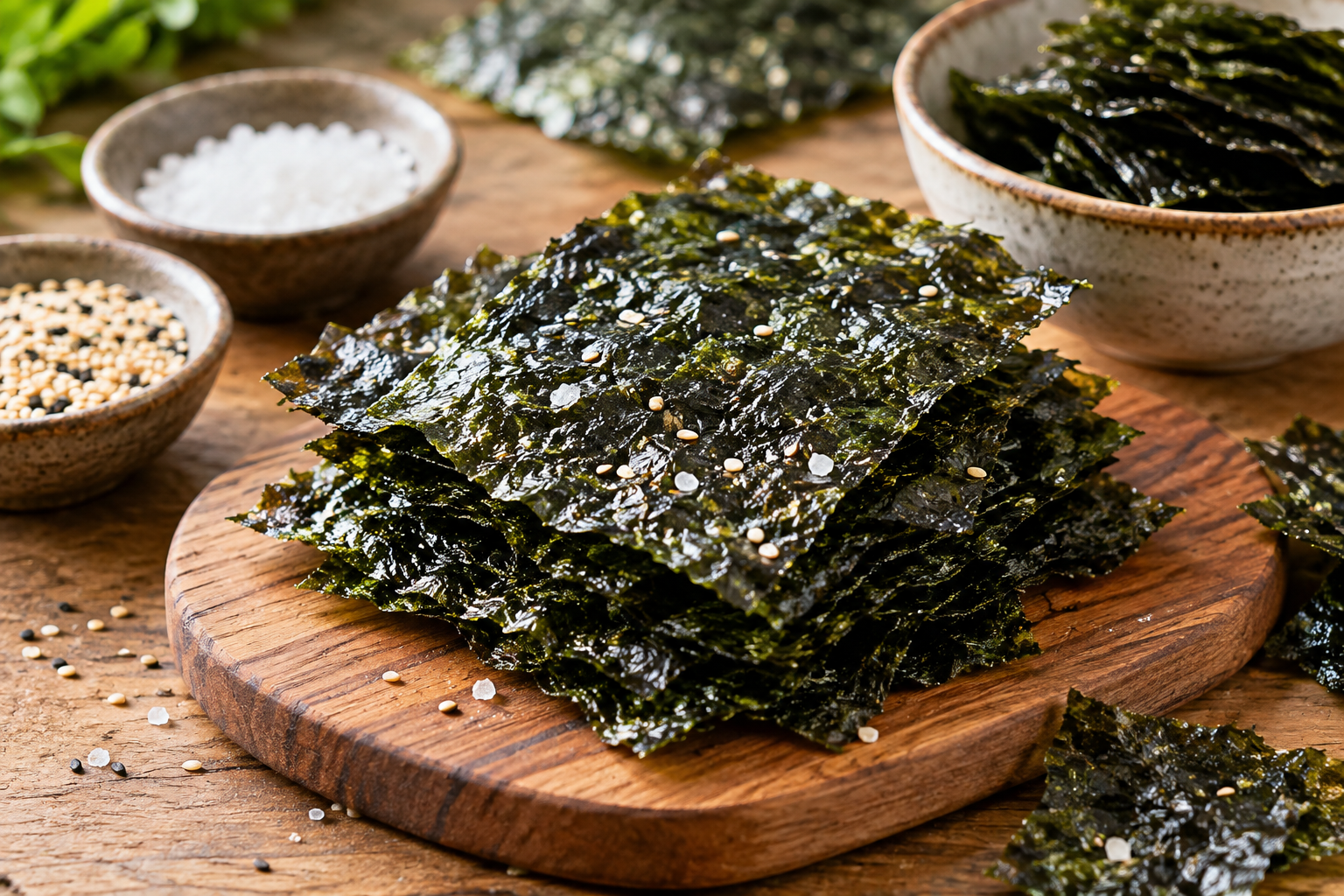
Seaweed Snacks: Are They Actually Healthy? A Chef Explains
Have you noticed those thin, crispy sheets of seaweed appearing everywhere lately?
They look almost too simple to be interesting. A dark green sheet, a little oil, some seasoning, and plenty of crunch. Yet seaweed snacks have moved from a niche Asian food to a popular packaged snack in supermarkets around the world.
As Chef RBS, I find them interesting for another reason: the same ingredient can become a very different food depending on how it is processed and seasoned.
So are seaweed snacks actually healthy, or are we giving them too much credit because they look light?
Let’s look at what seaweed snacks really contain, how they are made, what to watch on the label, and whether they deserve a regular place in your snack cupboard.
Understanding how seaweed is dried and roasted is a good example of food science in everyday cooking.
1. What Exactly Are Seaweed Snacks?
Seaweed snacks are usually made from edible marine algae that is dried and often roasted until it becomes thin and crisp.
But “seaweed” isn’t one single ingredient. Different varieties have different flavors, textures, colors, and nutrient profiles. That’s one reason seaweed snacks can taste surprisingly different from one brand to another.
Some are lightly roasted with a little oil and salt. Others come heavily seasoned with flavors designed more like conventional packaged snacks.
As Chef RBS, I look at that difference before calling any snack “healthy.” The original ingredient matters, but what happens to it in the factory matters too.
2. What Nutrients Do Seaweed Snacks Provide?
Seaweed can provide useful nutrients, including iodine, minerals, and small amounts of vitamins and other bioactive compounds. The exact nutrition varies widely depending on the type of seaweed and how the snack is processed.
But there is an important detail: seaweed snacks are usually eaten in small portions. So while they can contribute nutrients to your diet, I wouldn’t treat a few sheets as a major source of nutrition.
This is where the label becomes useful. Look at the serving size and nutrition panel rather than assuming that a food is highly nutritious simply because its main ingredient is seaweed.
As Chef RBS, I prefer to think of seaweed snacks as a flavorful, crunchy addition to a balanced diet, not a miracle food.
3. Why Do Seaweed Snacks Taste So Savory?
That savory, almost broth-like taste has a name: umami.
Seaweed naturally contains compounds such as glutamates that contribute to this deep savory flavor. When the seaweed is roasted, its aroma and flavor become even more noticeable, which is one reason a few crisp sheets can taste surprisingly satisfying.
Salt and seasonings can amplify that effect. This is where two seaweed snacks can be very different: one may let the natural flavor of the seaweed come through, while another may taste mostly like a salty-flavored snack.
If you enjoy seaweed for its distinctive taste, try a lightly seasoned version first. You may be surprised by how much flavor comes from the seaweed itself.
4. Can Seaweed Snacks Be High in Sodium?
Yes, and this is one place where the nutrition facts label matters more than the health claims on the front of the package.
Seaweed itself isn’t necessarily the problem. Salt, sauces, and seasoning blends can push the sodium much higher in some packaged varieties.
That doesn’t mean you need to avoid seaweed snacks. It simply means portion size matters.
If you’re eating them regularly, compare a few brands and choose the one with less sodium and a simple ingredient list. A lightly seasoned version can give you the crunch and umami without turning a small snack into a surprisingly salty one.
5. Are Seaweed Snacks Good for Weight Management?
They can fit into a weight-conscious diet, mainly because many seaweed snacks are light, crisp, and relatively low in calories per serving.
But there’s a catch: “low calorie” doesn’t automatically mean “eat without limits.” Some varieties contain added oils, and the serving size can be surprisingly small.
If you’re using seaweed snacks instead of chips or other salty snacks, they can be a useful option. Just check the package rather than eating straight from the bag.
For everyday eating, I would choose a simple roasted seaweed with moderate sodium and little added oil. It gives you the crunch without turning the snack into something much heavier.
6. What Should You Look for When Buying Seaweed Snacks?
Turn the packet around before you buy it. The front may highlight words like “natural,” “light,” or “healthy,” but the back tells you much more.
I would check four things:
- Sodium: Compare brands and choose a reasonable amount for your eating pattern.
- Added oil: Look for products that don’t rely heavily on oil.
- Serving size: A tiny packet may contain only one small serving.
- Ingredients: A shorter, simpler ingredient list is often easier to evaluate.
One more thing I would consider as Chef RBS: flavor should come from the seaweed too, not only from the seasoning. If salt and flavoring completely dominate the taste, you’re missing part of what makes seaweed interesting as an ingredient.
7. Are There Any Downsides to Eating Seaweed Snacks?
Seaweed snacks can be a good addition to your snack rotation, but more isn’t always better.
The biggest things I would watch are sodium and iodine. Seaweed can naturally contain significant amounts of iodine, and the amount can vary considerably between different types and products. If you eat seaweed very frequently or have been advised to monitor your iodine intake, it’s worth paying attention to the label.
Some products can also contain quite a bit of added salt or oil. That’s not a reason to avoid them, but it changes how I would use them.
Think of seaweed snacks as a snack, not a supplement. Variety is still one of the simplest rules for a good diet.
8. A Simple Chef RBS Verdict
Seaweed snacks can absolutely earn a place in a balanced snack routine. They offer a different texture and a naturally savory flavor, and some products provide useful nutrients.
But I wouldn’t buy them simply because the packet says “healthy.”
Look at the sodium, added oil, serving size, and ingredient list. Choose products that fit your overall diet, and keep variety in your snacks.
The best snack isn’t the one with the biggest health claim. It’s the one that fits your food choices consistently and sensibly.
9. Frequently Asked Questions
Are seaweed snacks healthy?
They can be a good snack choice, especially when lightly seasoned and eaten as part of a varied diet. Check the sodium, added oil, and serving size because products differ considerably.
Are seaweed snacks good for weight loss?
They can fit into a weight-management diet because many are light and relatively low in calories. However, portion size and the rest of your diet still matter.
Are seaweed snacks high in iodine?
Seaweed naturally contains iodine, but the amount can vary significantly depending on the type and product. If you regularly eat large amounts of seaweed, check the nutrition information and consider your overall iodine intake.
Why do seaweed snacks taste salty?
Some of the saltiness comes from added seasoning, while seaweed itself has a naturally savory, mineral-like flavor. Roasting can make that flavor more noticeable.
Can you eat seaweed snacks every day?
You can include them regularly if they fit your diet, but variety is important. Choose products with sensible sodium levels and avoid relying on seaweed snacks as a major source of nutrition.
What is the healthiest seaweed snack?
There isn’t one perfect product. Look for a simple ingredient list, moderate sodium, limited added oil, and a reasonable serving size.