Why Does Bread Get Stale? The Food Science Behind Staling
Have you ever opened a loaf of bread that was perfectly soft a day or two earlier, only to find that it has become dry, firm or strangely chewy?
Most people simply call this “stale bread,” but the science behind it is more interesting than it sounds. Bread can become stale even when it has not completely dried out. Its texture changes because the starches inside the bread slowly reorganize after baking, while moisture moves between different parts of the loaf.
After years of working with bread and professional kitchens, I find staling especially interesting because freshness is not controlled by one factor alone. Baking, cooling, storage temperature, moisture and even the way bread is packaged can influence how quickly its texture changes.
So, why does bread get stale? The answer starts with what happens to starch after the bread comes out of the oven.
What Does “Stale” Actually Mean?
Stale bread is not simply bread that has lost all of its moisture. That is one of the biggest misconceptions about bread staling. A loaf can still contain plenty of water and yet feel firm, dry or less pleasant to eat.
What changes is the way that water is distributed and held within the bread, along with changes taking place in its starch structure. After baking, the starches that were transformed during heating gradually begin to reorganize as the bread cools and sits in storage.
The crumb becomes firmer, the fresh softness disappears and the bread develops the characteristic texture we associate with staling.
This is why stale bread can sometimes be softened temporarily by reheating. You are not completely reversing the aging process. Heat can change the way moisture interacts with the starch again, making the bread feel softer for a while.
What Happens to Starch After Bread Is Baked?
During baking, the starch in flour absorbs water and changes structure as the dough is heated. This process is part of what gives freshly baked bread its soft, set crumb.
But the process does not simply stop when the bread comes out of the oven. As the loaf cools and is stored, some of the starch molecules gradually reorganize into a more ordered structure. This process is commonly referred to as starch retrogradation.
As retrogradation progresses, the crumb becomes firmer and loses some of the soft, fresh texture associated with newly baked bread. This can happen even when the loaf still contains a significant amount of moisture.
From a chef’s perspective, this is why freshly baked bread and day-old bread can behave very differently even when they look almost identical. The internal structure has changed, and that affects how the bread feels when you bite into it.
Why Bread Can Feel Dry Even When It Still Contains Water
The feeling of dryness is not determined only by how much water is present in the bread. What matters is also where that water is and how easily it can interact with the bread’s structure.
As bread ages, moisture can move between the crumb, crust and surrounding environment. At the same time, changes in the starch structure alter the way the crumb holds and releases water. The result can be a bread that feels noticeably drier and firmer even though it has not simply lost every bit of its moisture.
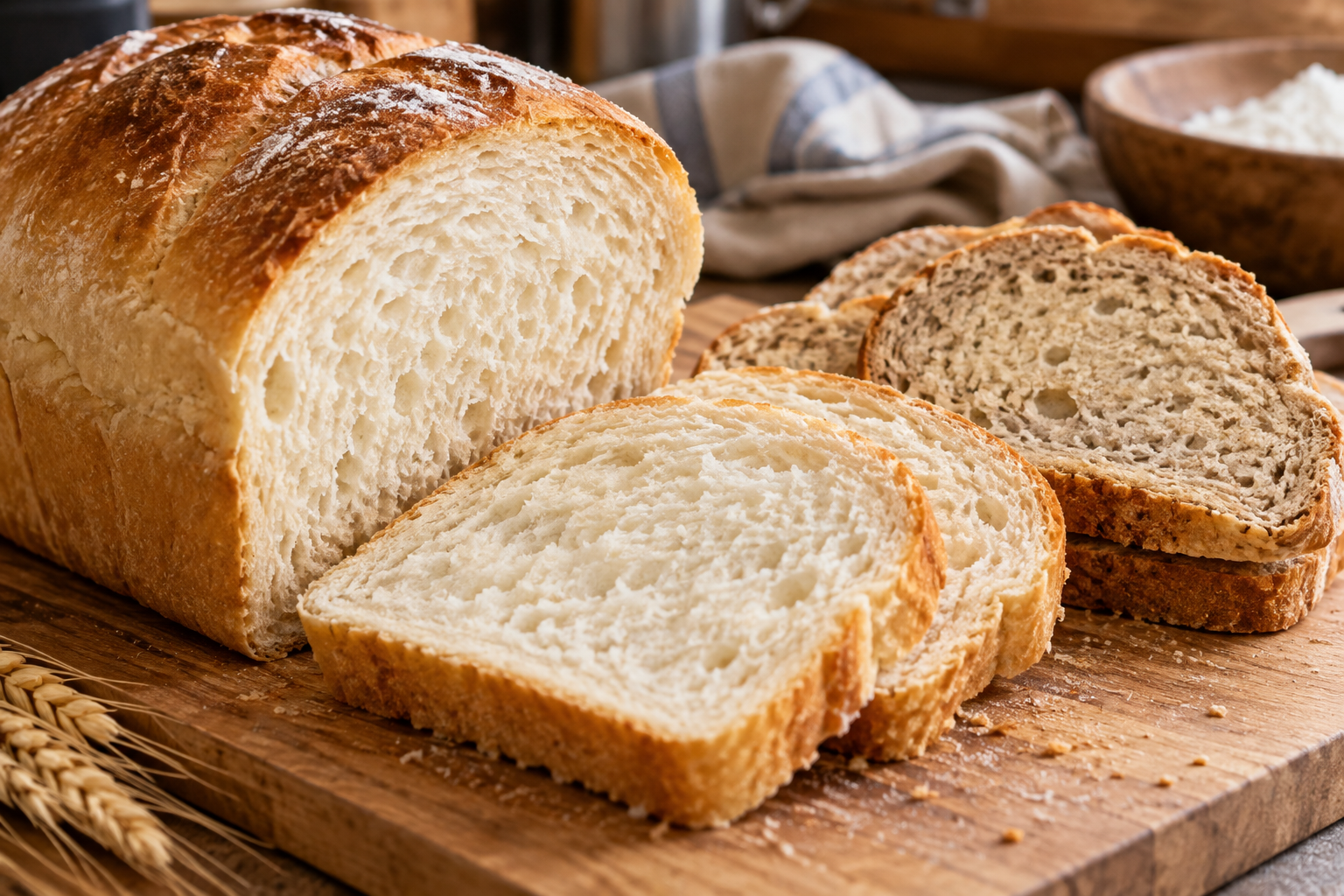
This is particularly easy to notice with soft sandwich bread. The loaf may still feel slightly moist when squeezed, yet the crumb can become noticeably less tender after a few days.
That distinction is important: staling is a structural and moisture movement problem, not simply a drying problem. Once you understand that, some common bread-storage advice starts to make much more sense.
Why Refrigerating Bread Can Make It Stale Faster
Many people put bread in the refrigerator because they want it to last longer. While refrigeration can slow the growth of some forms of spoilage, it is not necessarily the best environment for maintaining the soft texture of bread.
At typical refrigerator temperatures, the starch in bread can undergo retrogradation relatively quickly. As the starch structure reorganizes, the crumb can become firmer and lose the softness you associate with fresh bread.
This creates an important distinction between food safety, spoilage and quality. A storage method can help with one problem while making another worse. Refrigerating bread may influence how long it remains acceptable from a spoilage perspective, but the texture can deteriorate faster.
In a professional kitchen, storage decisions are made according to the type of bread and how soon it will be used. For everyday bread that you want to keep soft, room-temperature storage for short-term use or freezing for longer storage can often be more useful than simply putting the loaf in the refrigerator.
Why Freezing Bread Helps Preserve Freshness
If you are not going to eat bread within a few days, freezing is generally a better strategy for preserving its fresh texture than refrigeration. Freezing slows the molecular changes associated with staling and turns the water inside the bread into ice, greatly slowing the movement of moisture and the reactions that change the crumb.
The key is to protect the bread properly before freezing. Air exposure can lead to freezer burn and quality loss, particularly over longer storage periods. Wrapping the bread well and using an airtight freezer-safe bag or container helps limit exposure to air.
I also prefer freezing bread in portions rather than repeatedly thawing and refreezing an entire loaf. Slice it before freezing if you know you will use individual portions. You can then take out only what you need and reheat or thaw it when required.
Freezing does not make bread permanently “fresh,” but it is an effective way to slow the changes that make bread stale. For many types of bread, good freezing and thawing practices can preserve much more of the original eating quality than refrigeration.
Why Reheating Stale Bread Can Make It Soft Again
If you’ve ever warmed a day-old piece of bread and noticed that it suddenly feels soft again, you have seen an interesting part of bread science in action.
Heating the bread can temporarily change the behaviour of its starch and redistribute moisture within the crumb. The structure becomes softer, which can make the bread seem much fresher than it did before heating.
But there is an important catch. Reheating does not permanently reverse staling. Once the bread cools again, the starch can reorganize and the firmer texture can return. If the bread is heated too aggressively or for too long, it can also become dry because moisture is lost to the surrounding air.
This is why reheating works best as a short-term rescue technique rather than a way to restore bread permanently. The amount of heat and the way the bread is heated both matter.
How Bread Storage Affects Staling
The way you store bread can make a surprisingly large difference to how quickly its texture changes. Temperature, packaging and exposure to air all influence the condition of the loaf.
For short-term storage, keeping bread properly covered at room temperature can help limit unnecessary moisture loss. A suitable bread bag or airtight container can protect the loaf from excessive exposure to dry air while still allowing you to maintain its intended texture.
For longer storage, freezing is usually the better option. The important thing is to package the bread well before freezing so that air exposure is minimised. Once frozen, the bread should be thawed or reheated in a way that suits the type of bread.
I also recommend thinking about how much bread you actually need. If you regularly buy more than you can use within a few days, portioning and freezing it early is often better than waiting until the bread has already become noticeably stale.
Good storage doesn’t stop every change in bread quality, but it can slow those changes and help you get much more value from a loaf.
Why the Crust and Crumb Change Differently
Bread is not a uniform material. The crust and the crumb have different structures and different relationships with moisture, so they do not change in exactly the same way as the loaf ages.
The crust is formed during baking when the surface is exposed to much higher heat and loses more moisture. The crumb remains protected inside the loaf, where water and starch behave differently.
After baking, moisture can gradually move between these regions. A crust that was crisp when the bread was fresh may soften as moisture moves outward from the crumb, while the crumb itself becomes firmer as starch retrogradation progresses.
This is why a loaf can lose the contrast between a crisp crust and soft interior even before it seems completely dry.
For a chef, that contrast is an important part of bread quality. Freshness isn’t just about softness. It is also about the balance between crust, crumb, moisture and structure.
Why Different Breads Stale at Different Speeds
Not every type of bread becomes stale at the same rate. The recipe, baking process, moisture level, fat content, sugar, fibre and structure of the bread can all influence how quickly its texture changes.
A soft sandwich bread, crusty baguette and enriched brioche may all behave very differently after baking. Some breads are designed to retain a soft crumb, while others are valued for a crisp crust and chewy interior.
Ingredients also matter. Fat and sugar can influence how the crumb feels over time, while ingredients such as whole grains and seeds can change moisture distribution and texture.
Even the size and shape of the loaf matter. Smaller pieces have more surface area relative to their volume, which can affect moisture loss and how quickly the bread’s texture changes.
This is why there is no single “freshness clock” for every bread. Understanding the recipe and structure is more useful than simply saying that all bread stays fresh for the same number of days.
Does Homemade Bread Stay Fresh Longer?
Homemade bread can sometimes stay enjoyable for longer, but it depends heavily on the recipe and how it is stored.
Commercial bread often contains ingredients and processing methods designed to maintain softness and stability during storage. Homemade bread may have a simpler ingredient list, but that does not automatically mean it will stale faster.
The biggest difference I notice in professional kitchens is how the bread is handled after baking. Allowing bread to cool properly, protecting it from unnecessary air exposure and freezing what you will not use soon can make a significant difference.
If you bake at home, don’t judge freshness only by the number of days since baking. Look at the crumb, crust, aroma and texture. A loaf that is stored correctly can remain useful even after its peak freshness.
And if the bread has already become stale, don’t throw it away. Stale bread can become an ingredient for something completely different.
How Bakeries and Restaurants Manage Bread Freshness
In a professional kitchen, bread freshness is managed long before the customer takes the first bite. Chefs and bakers think about production timing, storage, portioning and service.
Bread is often produced according to expected demand rather than simply making large quantities and hoping they sell. This helps reduce the amount of bread sitting around for too long.
Proper cooling is also important. Packaging bread while it is still excessively hot can trap moisture and affect the crust and texture. On the other hand, leaving bread exposed for too long can encourage unnecessary moisture loss.
Restaurants also choose storage methods according to how the bread will be used. Bread intended for sandwiches may need a soft, flexible crumb, while bread served alongside a soup or main course may be valued for a firmer crust and stronger texture.
The professional approach is simple: control time, temperature, moisture and storage instead of treating freshness as an accident.
That same thinking can be applied in a home kitchen. Understanding what is happening inside the bread makes it much easier to decide when to store it, freeze it, reheat it or turn it into another dish.
Chef RBS Kitchen Experiment: Fresh, Refrigerated and Frozen Bread
One of the easiest ways to understand bread staling is to compare the same bread under different storage conditions.
Take three equal pieces from the same loaf. Keep one properly covered at room temperature, place the second in the refrigerator, and freeze the third soon after the bread has cooled.
After a day or two, compare them for softness, moisture, crust condition and overall eating quality. The refrigerated sample may feel noticeably firmer because refrigeration can accelerate starch retrogradation. The frozen sample, when properly protected and reheated or thawed, can often retain much more of its original texture.
This simple comparison demonstrates an important point: bread freshness is not controlled only by time. Storage temperature can change the rate at which texture deteriorates.
If you try this experiment at home, keep the bread type, portion size and storage duration the same. That makes the comparison much more meaningful.
How to Store Bread the Right Way
If you want bread to stay enjoyable for as long as possible, storage matters almost as much as the recipe itself.
For short-term use: Keep bread sealed properly at room temperature and away from excessive heat, sunlight and moisture. This helps maintain its intended texture while you use it.
For longer storage: Freezing is generally the better choice. Slice the bread before freezing if you expect to use individual portions. Wrap or seal it well to reduce exposure to air and prevent freezer burn.
Avoid the refrigerator when freshness is the priority. Although refrigeration can slow the growth of mould, the temperature can accelerate the starch changes responsible for a firmer, staler crumb.
Don’t package bread while it is very hot. Excess trapped moisture can affect the crust and create an environment where quality deteriorates more quickly.
From a chef’s perspective, the best storage method depends on one simple question: When are you going to eat it? If you will finish the loaf soon, store it properly at room temperature. If you won’t, freeze it early rather than waiting for it to become stale.
Can You Prevent Bread From Going Stale?
You cannot completely stop bread from staling, because the changes begin soon after baking. But you can slow the process considerably by controlling moisture, temperature and storage.
The most effective approach is to think about freshness from the moment the bread is baked. Cool it properly, protect it from unnecessary air exposure, keep only the amount you need at room temperature and freeze the rest if it will not be used soon.
Reheating can also restore some of the softness and aroma of bread that has started to stale, although this is only a temporary improvement. It does not reverse every structural change that has already taken place.
The biggest mistake is waiting until bread is already stale before deciding how to store it. If you know you will not finish a loaf quickly, freezing it while it is still fresh is usually the smarter strategy.
Once you understand starch retrogradation and moisture movement, bread staling stops being a mystery. It becomes something you can manage.
Best Ways to Use Stale Bread
Stale bread does not have to become food waste. In fact, slightly stale bread can be more useful than very fresh bread for several recipes.
You can turn it into breadcrumbs, croutons, bread pudding, stuffing, toast or crispy toppings. The lower moisture content can actually make stale bread work better for some of these preparations.
In professional kitchens, this is an important part of food management. Ingredients that are no longer ideal for their original purpose can often be transformed into something valuable instead of being discarded.
For example, a firm loaf can be dried and processed into breadcrumbs, while cubes of stale bread can be seasoned and toasted for soups and salads.
So the next time your bread becomes stale, don’t automatically throw it away. Ask what its new texture can be useful for.
Understanding food science can help you not only cook better but also waste less food.
Frequently Asked Questions About Bread Staling
Does bread get stale because it loses moisture?
Not entirely. Moisture loss can affect bread quality, but staling also involves changes in the structure of starch inside the crumb. This is why bread can become firm even when it still contains moisture.
Does putting bread in the refrigerator keep it fresh?
Refrigeration can slow mould growth, but it can also accelerate the starch changes associated with staling. For short-term quality, properly stored room-temperature bread is often better. For longer storage, freezing is generally preferred.
Why does frozen bread stay fresh longer?
Freezing slows the molecular changes that cause bread to lose its original texture. Good packaging is important because it protects the bread from moisture loss and freezer burn.
Can you make stale bread soft again?
Yes, reheating can temporarily soften bread by changing starch behaviour and redistributing moisture. However, it does not completely reverse the staling process.
What is the best way to prevent bread from going stale?
Use the bread while it is fresh, store it properly at room temperature for short-term use, and freeze portions that you will not eat soon.
Is stale bread safe to eat?
Stale and spoiled are not the same thing. Staling mainly affects texture and quality. However, bread showing visible mould should be discarded rather than eaten.
Final Thoughts
Bread staling is a great example of how food science is happening quietly in your kitchen every day.
What looks like simple “old bread” is actually the result of changes in starch structure, moisture movement, temperature and storage. Once you understand these changes, you can make better decisions about how to store bread, when to freeze it, how to reheat it and how to use it when it is no longer at peak freshness.
As a chef, I don’t look at stale bread simply as a problem. I look at it as a change in texture that can be understood and managed.
Good cooking is not only about recipes. It is about understanding what is happening to food.
That’s the kind of food science I want to make simple here at Chef RBS Kitchen.