
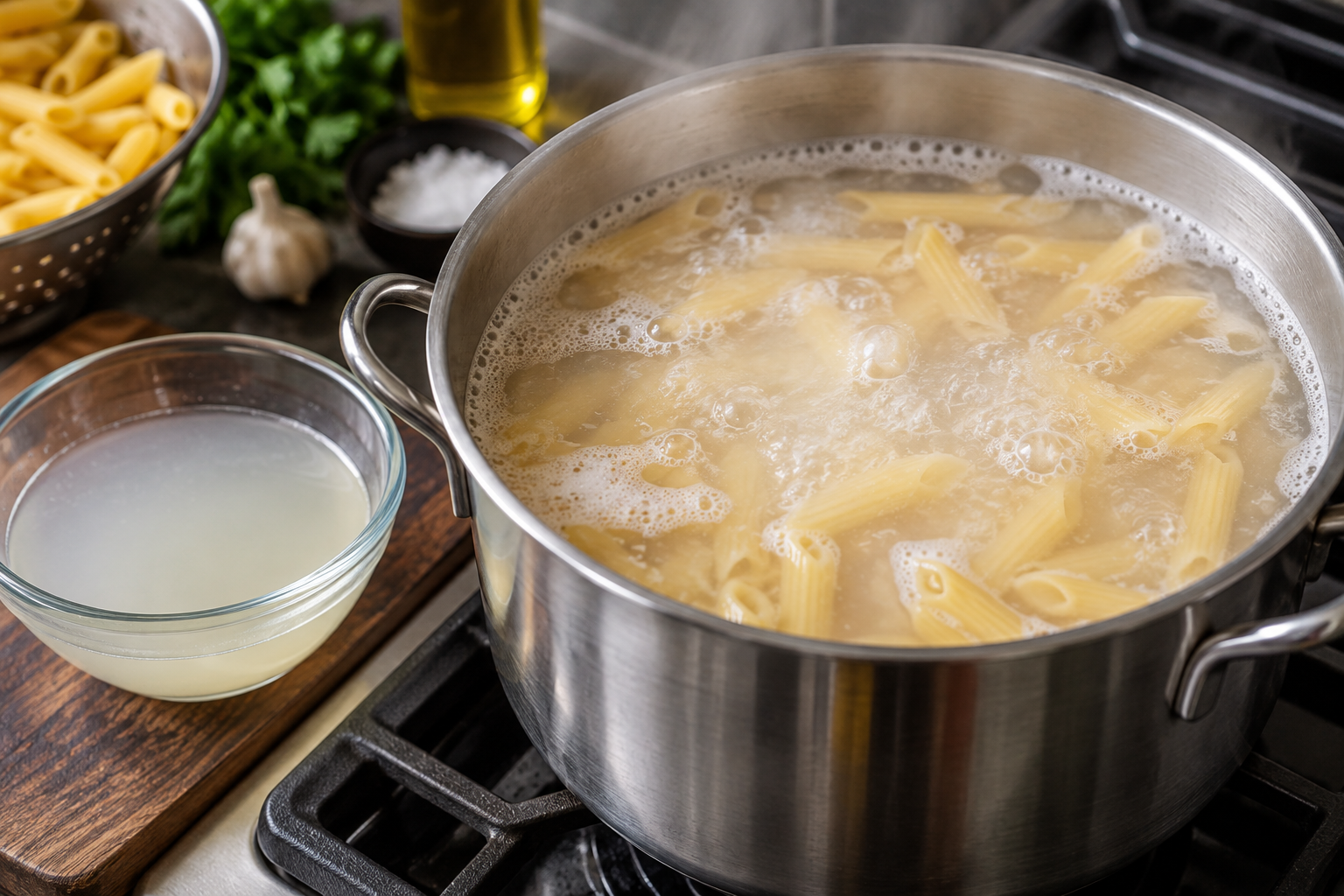
Why Does Pasta Water Turn Cloudy? The Food Science Explained
Have you ever drained a pot of pasta and noticed that the cooking water looks cloudy, almost as if something has dissolved into it?
That cloudy water is not a sign that something has gone wrong. In most cases, it is a useful clue about what is happening to the pasta while it cooks.
As a chef, I actually pay attention to pasta water because it tells me something about the cooking process. Water, heat, pasta starch, and the movement of the cooking liquid all work together, and the result is more important than just appearance.
So, why does pasta water turn cloudy? The simple answer is starch. But understanding how that starch moves from the pasta into the water can help you cook pasta more consistently and even make better sauces.
What Is Actually Making Pasta Water Cloudy?
The main reason pasta water becomes cloudy is that starch from the pasta moves into the surrounding water during cooking. Pasta is made primarily from wheat flour and water, and wheat flour contains starch. When dry pasta enters hot water, that starch begins to interact with water and heat.
As the pasta hydrates and softens, some starch is released from its surface into the cooking water. The tiny starch particles remain suspended in the liquid, scattering light and making the water look white or cloudy.
The amount of cloudiness can vary. Pasta shape, surface texture, how much water you use, how vigorously the pasta moves, and how long it cooks can all influence how much starch ends up in the water.
So cloudy pasta water is usually not something to throw away without thinking. From a chef’s perspective, that starchy liquid can actually become a useful ingredient, particularly when you’re finishing pasta with a sauce.
What Happens to Pasta Starch During Cooking?
When dried pasta enters hot water, it begins to absorb moisture. As the temperature rises, the starch inside the pasta absorbs water, swells, and undergoes changes that help soften the pasta during cooking. This process is part of starch gelatinization.
Some starch also moves from the pasta’s surface into the surrounding water. The amount released depends on factors such as the pasta’s formulation, surface condition, and cooking method.
As this starch disperses through the water, it contributes to the cloudy appearance. It also increases the water’s ability to thicken a sauce when you add it during the final stage of cooking.
Chef’s tip: Save a little cooking water before draining. Its starch can help give a sauce more body, but add it gradually and toss well to achieve a smooth coating without making the dish watery.
Why Some Pasta Water Gets Much Cloudier Than Others
Not every pot of pasta produces the same cloudy cooking water. Several factors affect how much starch enters the water and how concentrated that starch becomes.
The type of pasta matters. Different pasta products vary in their ingredients, surface texture, and manufacturing methods. These differences can affect how starch is released during cooking.
The amount of water matters. When you cook pasta in less water, the starch released into the liquid is generally less diluted. This can make the water appear cloudier. Using more water may dilute the starch, making the liquid look less cloudy even when starch has been released.
Stirring and movement matter too. Gentle stirring helps prevent pasta from sticking together. Movement can also disperse starch through the cooking water, making its cloudy appearance more noticeable.
Cooking time can influence the result. As pasta absorbs water and softens, the amount of starch entering the cooking liquid can change. However, cloudiness alone cannot tell you whether pasta is perfectly cooked.
So, if your pasta water looks very cloudy, don’t automatically assume the pasta is better or that you have made a mistake. The appearance depends on several factors, and the best way to judge the pasta is by its texture and how it performs in the finished dish.
Why Chefs Save Pasta Water for the Sauce
Pasta water is more than leftover cooking liquid. Its starch can help give a sauce body and help it coat the pasta more evenly.
When you add a little pasta water to a sauce and toss everything together, the starch helps thicken the liquid and contributes to a more cohesive texture. If the sauce contains butter, olive oil, or other fat, tossing helps distribute the water, fat, and sauce ingredients more evenly.
This technique is useful when a sauce becomes too thick or when the pasta needs a little extra moisture to finish cooking in the pan. Instead of adding plain water immediately, pasta water can contribute both moisture and starch.
The technique matters as much as the ingredient. Start with a small splash of pasta water, toss the pasta with the sauce over gentle heat, and check the consistency. Add more only when needed. Too much can dilute the flavor and leave the sauce watery.
From a chef’s perspective, the final tossing stage is where you bring the pasta and sauce together. The goal is a balanced coating that clings to the pasta, rather than a pool of sauce sitting at the bottom of the plate.
Does More Cloudy Pasta Water Mean Better Pasta?
No. Cloudier pasta water does not automatically mean better pasta or a better sauce. Its appearance depends on the type of pasta, the amount of cooking water, and how much starch enters the liquid.
What matters most is how you use the cooking water. When a sauce needs extra moisture and body, a small amount of starchy pasta water can help it coat the pasta more evenly. However, adding too much may dilute the flavor or make the sauce too loose.
Chef’s tip: Judge the sauce by its consistency, not by how cloudy the pasta water looks. Add the reserved water a little at a time while tossing the pasta with the sauce. Stop when the pasta is evenly coated, and the sauce has the texture you want.
Cloudiness can tell you that starch is present, but it is not a reliable measure of pasta quality or cooking success. Good results come from controlling the cooking process and adjusting the sauce to suit the dish.
Does the Type of Pasta Change the Cooking Water?
Yes. Different types of pasta can produce cooking water with different levels of cloudiness because their ingredients, surface characteristics, and manufacturing methods vary.
Dried pasta and fresh pasta behave differently. Dried pasta starts with less moisture and absorbs water during cooking. Fresh pasta generally contains more moisture before it enters the pot, so its cooking process and timing can differ.
The surface also matters. Some pasta has a smooth exterior, while other varieties have a rougher texture. These differences can influence how starch moves into the cooking water and how well sauce clings to the pasta.
Pasta shape, thickness, and cooking time also affect how the pasta hydrates. However, you cannot reliably identify the type or quality of pasta from cloudiness alone.
Chef’s tip: Adjust your cooking technique to the pasta you are using. Check its texture as it cooks, reserve some cooking water before draining, and finish the pasta in the sauce when the recipe calls for it.
The aim is not to achieve a particular level of cloudiness. It is to understand how the pasta behaves so you can achieve the texture and sauce consistency you want.
Why Pasta Water Can Help a Sauce Become Creamy
A pasta sauce does not always need cream to develop a smooth, rich texture. The result often depends on how the cooking liquid, fat, and other sauce ingredients are combined.
Starchy pasta water adds moisture and helps thicken the sauce. When you toss it with ingredients such as butter, olive oil, or cheese, the starch can help the mixture form a more cohesive coating on the pasta. The result depends on the ingredients and the technique used.
Tossing is an important part of the process. Adding pasta water without mixing it properly may simply dilute the sauce. Tossing or stirring helps distribute the liquid and fat throughout the dish.
For cheese-based sauces, temperature matters too. Excessive heat can cause some cheeses to clump or become stringy, so it helps to control the heat and follow the technique suited to the recipe.
From a chef’s perspective, the finishing stage brings everything together. The goal is a smooth sauce that coats the pasta evenly, rather than a watery mixture or a pool of separated fat.
Remember, pasta water can help create a creamy texture, but it does not guarantee one. The right balance of liquid, fat, cheese, and movement makes the difference.
Chef’s troubleshooting tip: If your pasta sauce looks watery, let it simmer briefly while tossing the pasta. Add reserved pasta water a little at a time rather than pouring it all in at once. If the sauce becomes too thick, add a small splash of water to loosen it. The goal is a smooth sauce that coats the pasta, not a pool of liquid at the bottom of the plate.
Does Salt Make Pasta Water Cloudy?
Salt is important for seasoning pasta, but it is not the main reason cooking water becomes cloudy. The cloudy appearance primarily comes from starch released by the pasta during cooking.
Salt dissolves in water and does not normally make it visibly cloudy at typical pasta-cooking concentrations. Its main purpose is to season the pasta as it absorbs water during cooking.
From a chef’s perspective, seasoning the cooking water helps build flavor from the beginning. However, remember that the reserved water also contains salt, so adding too much to the sauce can make the finished dish overly salty.
Chef’s tip: Taste the sauce before adding extra salt if you have used pasta water to adjust its consistency. This simple check helps you control both flavor and texture.
A Simple Pasta Water Experiment You Can Try at Home
You can observe how the amount of cooking water affects its cloudiness with a simple kitchen experiment.
What you need
- The same type and quantity of dried pasta for each pot
- Two pots
- Different measured amounts of water
- A timer and two clear heat-safe containers
How to do it
- Add a measured amount of water to each pot. Use less water in one pot and more in the other.
- Bring both pots to a boil and cook equal quantities of the same pasta, following the package instructions as closely as possible.
- Keep the cooking time and heat conditions as similar as practical. Stir both pots in a similar way.
- Before draining, collect a small sample of cooking water from each pot in separate containers.
- Let the samples cool enough to handle safely, then compare their appearance.
What should you notice?
The sample from the pot with less water may look cloudier because the released starch is less diluted. The exact result can vary, so cloudiness alone does not tell you precisely how much starch the pasta released.
For another comparison, use a little of each sample to adjust the same simple sauce. Add the water gradually and observe how it affects the sauce’s thickness and how evenly it coats the pasta.
This experiment demonstrates an important cooking principle: the amount of water affects the concentration of starch in the cooking liquid, which can influence how that liquid performs in a sauce.
How Much Pasta Water Should You Reserve?
I recommend reserving about one cup of pasta water before draining. You may not need all of it, but keeping some extra nearby gives you more control when finishing the sauce.
Chef’s tip: Add pasta water gradually
Start with one to two tablespoons of reserved pasta water per portion, then toss the pasta with the sauce over low heat. Check the consistency before adding more. Continue in small additions until the sauce coats the pasta evenly.
If you are preparing a cheese-based sauce, allow the cooking water to cool slightly before adding it, and follow the recipe’s temperature instructions. This can help reduce the risk of cheese clumping when the sauce is combined.
The amount you need depends on the dish. For a practical pasta dish to try, explore this creamy pink sauce spaghetti recipe. A thick sauce may require more liquid, while a light olive oil-based sauce may need only a small splash. Remember that pasta water contains salt, so taste the sauce before adding extra seasoning.
One common mistake is adding too much water at once. This can dilute the sauce and make it harder to get the right consistency. Small additions give better control over both texture and flavour.
Reserve the water before draining because once it goes down the sink, you can not use that same starchy liquid to finish the dish.
The Chef’s Rule: Taste the Pasta Water Before You Drain It
Before draining pasta, check both its seasoning and texture. These simple checks help you decide whether it is ready for the next stage of cooking.
Check the texture first. Taste a piece of pasta carefully. If you want it slightly firm because it will finish cooking in a hot sauce, drain it before it becomes softer than you want. The exact timing depends on the pasta and recipe.
Check the seasoning. A small taste of the cooking water can give you an idea of its saltiness. Remember that pasta water is not a finished sauce, and its taste does not tell you precisely how much starch it contains.
Reserve some cooking water. Before draining, keep a cup nearby. You may need only a few tablespoons when finishing the pasta, but having extra gives you flexibility.
In a professional kitchen, it is important to think about what happens after draining. Pasta can continue to soften when tossed with a hot sauce, so the cooking time in the pot should account for that final stage.
The chef’s rule is simple: check the texture, control the seasoning, and plan the finishing stage before draining.
Frequently Asked Questions
Why does pasta water turn cloudy?
Pasta releases starch into the cooking water as it absorbs moisture and softens. The suspended starch scatters light, making the water look cloudy or milky.
Is cloudy pasta water good for cooking?
Yes. It can be useful when finishing pasta in a sauce because the starch adds body and helps the sauce coat the pasta more evenly.
Why do chefs save pasta water?
Chefs reserve pasta water to adjust sauce consistency and help bring the pasta and sauce together. Adding it gradually while tossing gives better control over the final texture.
Does salt make pasta water cloudy?
Salt is not the main cause of cloudiness. The appearance primarily comes from starch released by the pasta during cooking.
Does using less water make pasta water cloudier?
Often, yes. With less water, the released starch is less diluted and may appear more concentrated. The result also depends on the pasta and cooking method.
How much pasta water should I reserve?
About one cup is a useful starting amount to keep nearby. You may only need a few tablespoons, depending on the sauce and the number of portions.
Can pasta water make a sauce creamy without cream?
It can help create a smooth, cohesive coating when combined with ingredients such as butter, olive oil, or cheese. The result depends on the recipe, temperature, and mixing technique.

One Comment