What Is Hojicha? Japanese Roasted Green Tea + Easy Hojicha Latte
If you’ve been seeing hojicha everywhere lately, you’re not alone. This Japanese roasted green tea has a completely different character from the fresh, grassy flavor many people associate with green tea.
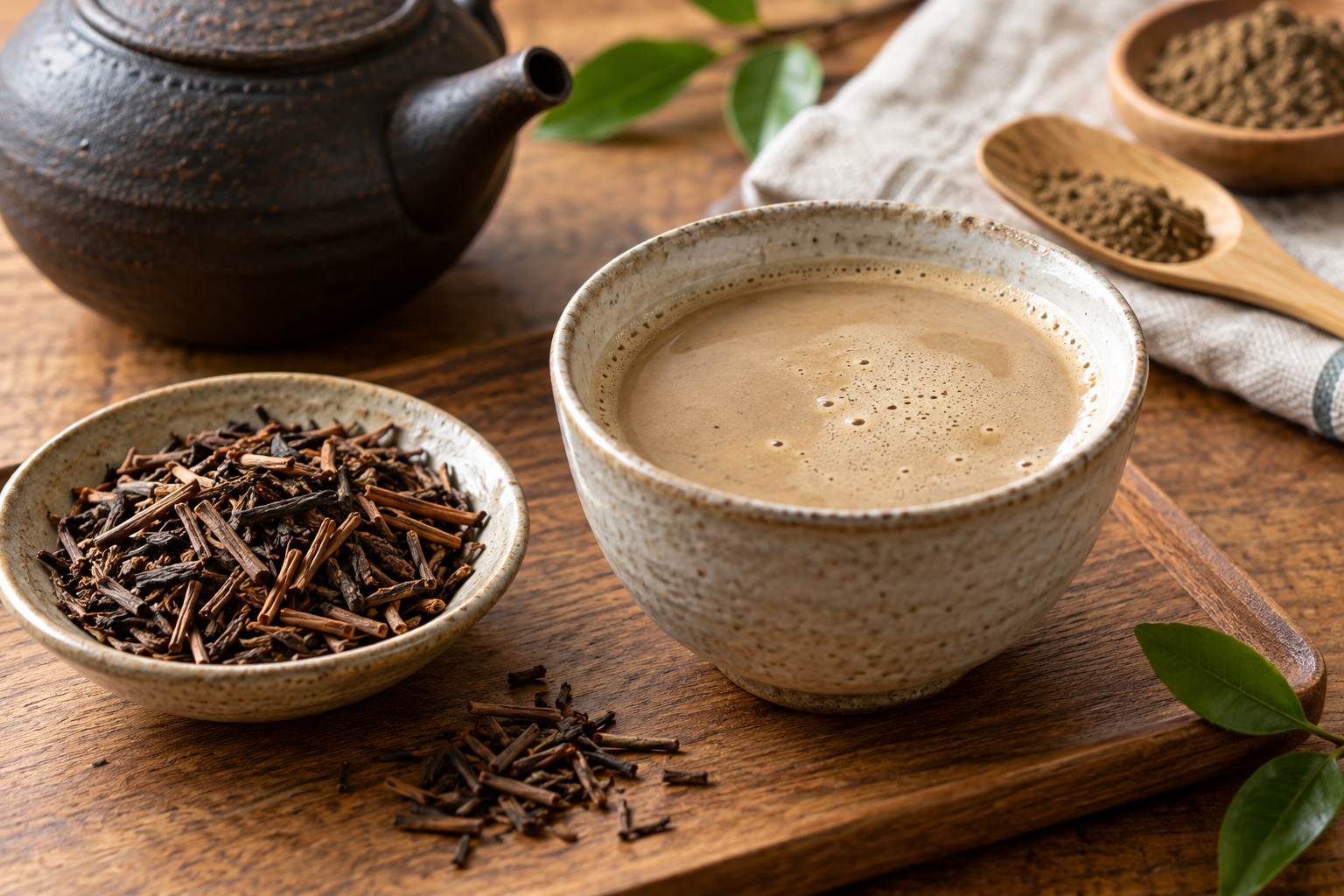
Hojicha is made by roasting green tea leaves, which gives it a warm brown color and a distinctive toasted, nutty flavor with gentle caramel-like notes. That roasted character also makes it especially interesting in drinks and desserts.
As a chef, I find hojicha more interesting than simply calling it another trendy tea. The roasting process changes the flavor profile of the tea and opens up many culinary possibilities, from a simple cup of hojicha to a creamy hojicha latte.
In this guide, I’ll explain what hojicha is, how it tastes, how it differs from matcha, what hojicha powder is, and how to make a simple hojicha latte at home.
Chef RBS Tip: If you normally find green tea too grassy or bitter, try hojicha. Its roasted character gives it a much warmer and more mellow personality.
What Is Hojicha?
Hojicha is a Japanese roasted green tea made by roasting tea leaves at high temperatures. Unlike many green teas, which are known for fresh, grassy and vegetal flavors, hojicha has a warm roasted character with notes that can remind you of toasted nuts, caramel and lightly roasted grains.
The roasting process also gives hojicha its distinctive reddish-brown to deep brown color and changes the aroma and flavor of the tea.
Hojicha can be made from different Japanese green tea leaves and stems, so its flavor can vary depending on the tea used and how it is roasted. It is available as loose tea, tea bags, and finely ground hojicha powder, which is especially useful for lattes, desserts, and other recipes.
Chef RBS Tip: Don’t judge hojicha by its darker color. The roasted aroma is the main attraction. Brew it properly and you’ll get a smooth, comforting cup with much less of the fresh grassy character associated with many green teas.
How Does Hojicha Taste?
Hojicha has a flavor profile that is very different from most green teas. The roasting process gives it a toasty, nutty, and slightly smoky character, with gentle caramel-like notes.
It is usually less grassy and vegetal than unroasted Japanese green tea. Depending on the tea and roasting level, you may notice flavors similar to roasted grains, nuts, or lightly toasted wood.
The flavor can also change depending on how you brew it. Using very hot water or steeping for too long can make the tea stronger and more bitter, while a balanced brew allows the roasted aroma to come through more clearly.
Chef RBS Tip: When tasting hojicha for the first time, take a small sip before adding milk or sweetener. Understanding its natural roasted flavor makes it much easier to balance in a latte or dessert.
Hojicha vs. Matcha: What’s the Difference?
| Hojicha | Matcha | |
|---|---|---|
| Processing | Roasted | Shade-grown and stone-ground |
| Appearance | Brown to reddish-brown | Bright green |
| Flavor | Toasty, nutty, mellow | Grassy, vegetal, umami-rich |
| Form | Loose leaves, tea bags, or powder | Fine green powder |
| Common uses | Tea, lattes, desserts | Tea, lattes, desserts, and baking |
The biggest difference is roasting. Hojicha’s roasted character gives it a warmer and more mellow flavor, while matcha retains the fresh green and umami notes associated with Japanese powdered green tea.
That makes hojicha particularly interesting for people who want to explore Japanese tea but prefer roasted flavors over strongly vegetal ones.
Chef RBS Tip: Think of matcha as fresh and green, while hojicha is roasted and warm. Neither needs to replace the other; they simply bring different flavors to the kitchen.
How Is Hojicha Made?
Hojicha starts with Japanese green tea leaves and stems that are roasted at high temperatures. This roasting step is what gives the tea its characteristic brown color, toasted aroma, and mellow flavor.
The tea may be made from different types of Japanese green tea, and producers can use different roasting levels. Because of this, two hojicha teas can have noticeably different aromas and flavors.
Unlike matcha, hojicha is not traditionally consumed by whisking the whole leaf into water. Loose-leaf hojicha is generally brewed and then strained, while hojicha powder can be whisked or blended directly into drinks and recipes.
The roasting process is also important from a food-science perspective because heating changes the tea’s aroma compounds and flavor profile.
Chef RBS Tip: When buying hojicha for cooking, choose a powder specifically intended for culinary use. It blends much more easily into lattes, creams, and desserts than coarse tea leaves.
Does Hojicha Have Caffeine?
Hojicha does contain caffeine because it is made from tea leaves. However, the amount can vary depending on the type of tea used, the proportion of leaves and stems, the roasting process, and how the tea is brewed.
It is therefore better not to assume that every cup of hojicha has the same caffeine content.
If you are sensitive to caffeine, check the product information and consider your serving size and brewing method.
Chef RBS Tip: Don’t choose hojicha solely because you expect it to be caffeine-free. Think of it primarily as a roasted green tea with a distinctive flavor, and check the specific product if caffeine intake matters to you.
How to Make a Hojicha Latte
A hojicha latte is one of the easiest ways to enjoy the roasted flavor of hojicha. The key is to make a concentrated tea or dissolve the powder properly before adding milk.
Ingredients
- 1½ teaspoons hojicha powder
- 2 tablespoons hot water
- 1 cup (240 ml) milk
- 1 to 2 teaspoons maple syrup or honey, optional
- A small pinch of cinnamon, optional
Method
- Add the hojicha powder to a cup or small bowl.
- Pour in the hot water and whisk until smooth with no visible lumps.
- Warm the milk gently until hot but not boiling.
- Pour the warm milk into the hojicha mixture and stir well.
- Add maple syrup or honey if you prefer a sweeter latte.
- Serve immediately.
For an iced hojicha latte, let the concentrated hojicha mixture cool slightly, then pour it over ice and add cold milk.
Chef RBS Tip: Don’t add all the water at once when working with hojicha powder. Making a smooth paste first helps prevent lumps and gives you a more even flavor throughout the latte.
How to Brew Hojicha Tea
For loose-leaf hojicha, a simple brew is often all you need to bring out its roasted aroma.
Method:
- Use about 1 teaspoon of hojicha leaves per cup (240 ml) of water.
- Heat the water to around 175–195°F (80–90°C).
- Pour the hot water over the leaves.
- Steep for approximately 30–60 seconds.
- Strain and taste.
- Adjust the steeping time slightly if you want a stronger cup.
Hojicha can usually be brewed more than once, although the flavor will become lighter with subsequent infusions.
Chef RBS Tip: Start with a shorter steep rather than making the tea overly strong. You can always brew it again or extend the steeping time, but an over-extracted cup can lose the smooth roasted character that makes hojicha special.
What Is Hojicha Powder?
Hojicha powder is finely ground roasted Japanese green tea. Because the tea is already ground, it can be mixed directly into drinks and used as an ingredient in desserts and other recipes.
It is particularly convenient for hojicha lattes, because you can whisk the powder with a small amount of hot water before adding milk. It can also be incorporated into foods such as ice cream, cakes, cookies, and creams when you want that distinctive roasted tea flavor.
When buying hojicha powder, look for a product that clearly identifies hojicha as the main ingredient and check the ingredient label for added sugars or other ingredients if you want a more versatile powder.
Chef RBS Tip: Keep hojicha powder tightly sealed and protected from moisture. A dry, airtight container helps preserve its roasted aroma and makes it easier to use consistently.
How to Use Hojicha in the Kitchen
Hojicha isn’t limited to a cup of tea. Its roasted flavor works particularly well in recipes where you want a warm, slightly nutty note.
You can use hojicha powder in:
- Ice cream and frozen desserts
- Cakes and cookies
- Custards and pastry creams
- Chocolate desserts
- Whipped cream and dessert sauces
- Smoothies and milk-based drinks
Because hojicha has a roasted flavor, it pairs especially well with ingredients such as milk, chocolate, vanilla, caramel, sesame, and nuts.
Start with a small amount when adding it to a recipe. Too much hojicha can make the roasted flavor dominate the other ingredients.
Chef RBS Tip: Treat hojicha powder like a strong flavoring ingredient. Add a little, taste the mixture, and increase it gradually rather than adding a large amount at once.
Is Hojicha Bitter?
Hojicha can have a mild bitterness, but it is generally known for its smooth roasted flavor rather than the strong grassy bitterness that some people associate with green tea.
If your cup tastes overly bitter or harsh, the brewing method may be the problem. Water that is too hot, an overly long steep, or using too much tea can produce a stronger and less balanced cup.
For hojicha powder, using too much powder can also make a latte taste heavy or overly roasted.
Chef RBS Tip: Start with less tea or powder and adjust gradually. With hojicha, you want the roasted aroma to be noticeable without overpowering the drink.
How to Choose Good Hojicha
When buying hojicha, look beyond the color of the tea and consider how you plan to use it.
For drinking, loose-leaf hojicha or tea bags are convenient choices. If you want to make lattes or desserts, hojicha powder is more practical because it can be mixed directly into recipes.
Look for:
- A clear ingredient label
- A pleasant roasted aroma
- Packaging that protects the tea from moisture and light
- A product with a roasting style or origin clearly stated when available
- For powder, a fine texture that blends easily
If the package smells stale or the tea has lost its roasted aroma, it may not give you the flavor you’re looking for.
Chef RBS Tip: Buy a small quantity first if you’re trying hojicha for the first time. The flavor can vary considerably between products, and your preference may depend on how deeply the tea has been roasted.
Is Hojicha a Green Tea?
Yes. Hojicha is a type of Japanese green tea, but its roasting process makes it very different from many other green teas.
Traditional green tea is generally processed to preserve its fresh, green character. Hojicha is roasted after processing, creating its characteristic brown color and toasted aroma.
This is why hojicha can taste surprisingly different even though it comes from the same broad tea family.
Chef RBS Tip: If someone says they don’t enjoy green tea because it tastes too grassy, hojicha is worth trying. The roasting gives it a completely different sensory profile.
Frequently Asked Questions
What is hojicha?
Hojicha is a Japanese green tea that is roasted to develop a warm brown color and a distinctive toasted, nutty flavor.
Does hojicha taste like matcha?
No. Matcha is generally grassy, vegetal and umami-rich, while hojicha has a roasted, mellow flavor.
Is hojicha caffeinated?
Yes. Hojicha contains caffeine, although the amount varies depending on the tea and preparation.
Can you make a hojicha latte with regular hojicha tea?
Yes. You can make a concentrated brew and combine it with warm milk. Hojicha powder is more convenient because it blends directly into the drink.
Can you eat hojicha powder?
Hojicha powder can be used as an ingredient in recipes such as ice cream, cakes, cookies, creams and other desserts.
Is hojicha the same as Japanese green tea?
Hojicha is a type of Japanese green tea. Its roasting process gives it a flavor and appearance that are quite different from many unroasted green teas.
Chef RBS Takeaway
Hojicha is more than a trending Japanese tea. Its roasting process gives it a completely different personality from the fresh, grassy character of many green teas.
If you’re new to hojicha, start with a simple brewed cup before moving to a latte or dessert. Once you understand its toasted, nutty flavor, you’ll know how much to use and which ingredients pair naturally with it.
Chef RBS Tip: Think of hojicha as a roasted flavor ingredient, not just a tea. Milk, chocolate, vanilla, caramel, sesame and nuts can all work beautifully with its warm character.