Ceylon Cinnamon vs. Cassia: Can You Tell Which One Is in Your Kitchen?
Cinnamon is one of those spices that can make a kitchen smell like freshly baked cookies, warm apple pie, or a pot of spiced tea. But here is something many home cooks do not realize: the cinnamon in your spice cabinet may not be the same type of cinnamon used in another kitchen.
Ceylon cinnamon and cassia cinnamon come from different plants, and they differ in flavor, appearance, and coumarin content. Both have a place in cooking, but knowing which one you are using can help you make better choices, especially if cinnamon is part of your daily routine.
As a chef, I look at ingredients through three practical questions: What does it taste like? How does it behave in a recipe? And what should we know before using it regularly?
Let’s compare the two.
What Is Ceylon Cinnamon?
Ceylon cinnamon, scientifically known as Cinnamomum verum, is often called true cinnamon. It is traditionally associated with Sri Lanka and is valued for its delicate aroma and relatively mild, sweet flavor.
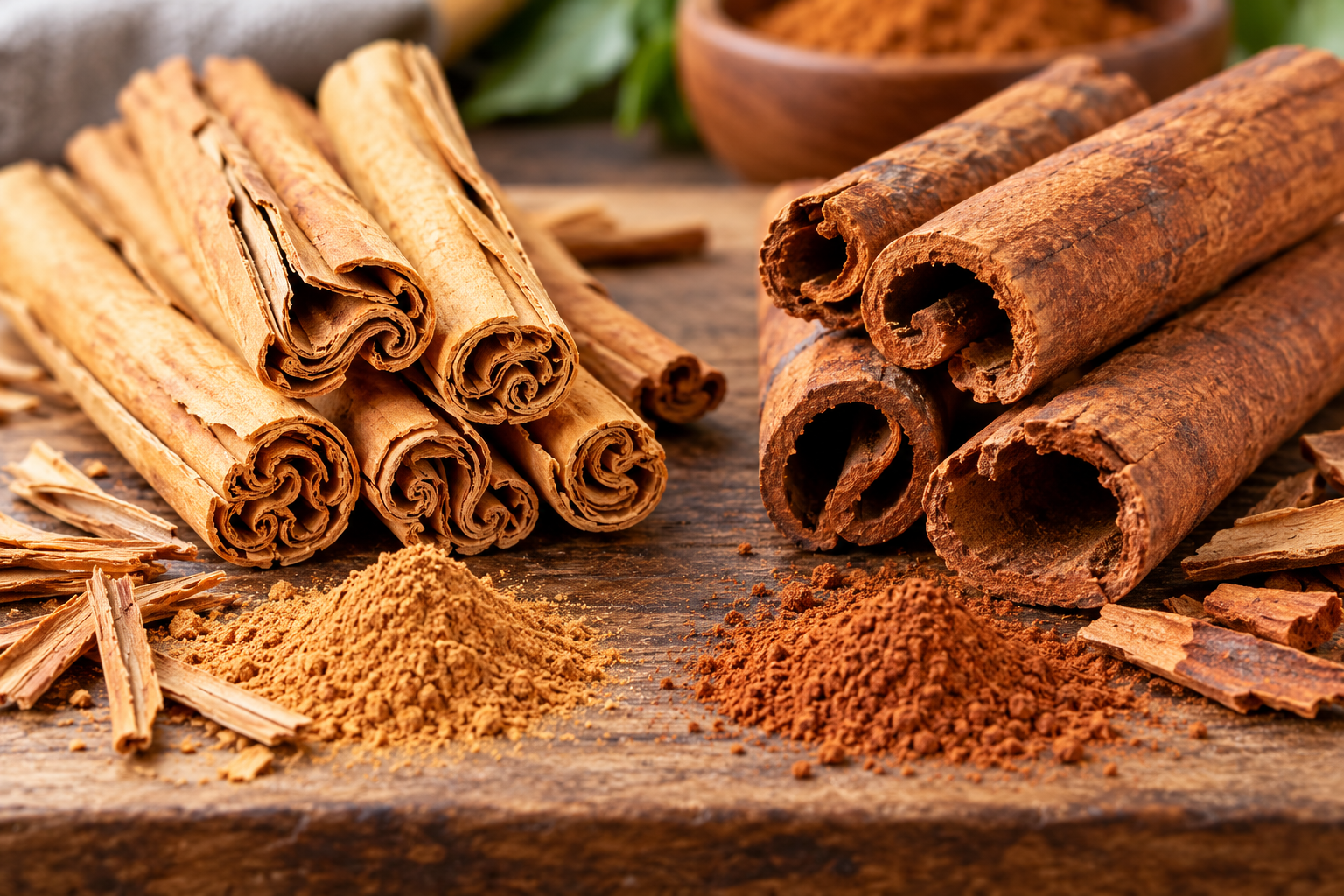
Its dried bark is thin and papery. Several delicate layers roll together to form a cinnamon stick, giving it a layered appearance when cut across.
Ceylon cinnamon works well when you want a gentle cinnamon aroma without letting the spice dominate the dish. Think rice pudding, custards, delicate pastries, warm milk, and lightly spiced desserts.
What Is Cassia Cinnamon?
Cassia cinnamon comes from related but different cinnamon species, including Cinnamomum cassia. Indonesian and Vietnamese cinnamon are also cassia-type varieties, although their exact flavor and chemical composition can differ.
Cassia is commonly sold as cinnamon in many markets. Its bark is generally thicker, harder, and darker than Ceylon cinnamon, often forming a single thick curl.
Its flavor is usually stronger, warmer, and more pungent. That makes it useful in cinnamon rolls, spice cakes, oatmeal, and chai-style drinks and recipes where a bold cinnamon flavor is welcome.
Cassia is not automatically an inferior ingredient. It is a different ingredient with its own culinary strengths.
Ceylon Cinnamon vs. Cassia: The Main Differences
| Feature | Ceylon cinnamon | Cassia cinnamon |
|---|---|---|
| Botanical identity | Cinnamomum verum | Cinnamomum cassia and related species |
| Common origin | Sri Lanka | China, Indonesia, Vietnam, and other growing regions |
| Flavor | Delicate, mildly sweet, and subtle | Stronger, warmer, and more pungent |
| Stick appearance | Thin bark with multiple fine layers | Thicker, harder bark, often a single curled layer |
| Coumarin | Generally very low | Often considerably higher, depending on species and sample |
| Price | Often more expensive | Often more affordable |
| Best culinary role | Delicate desserts and gentle spice notes | Bold baked goods, spice blends, and everyday cooking |
These are general differences, not absolute rules. Growing conditions, processing, storage, and the specific cinnamon species can affect the final product.
How to Identify Ceylon Cinnamon vs. Cassia
This is usually the easiest visual clue.
Ceylon cinnamon sticks tend to have many thin, tightly rolled layers, creating a cross-section that resembles a rolled cigar. The bark is comparatively delicate and can break or crumble more easily.
Cassia sticks generally have a thicker, harder outer layer and a simpler curl, with a more solid-looking cross-section.
2. Notice the flavor and aroma.
Ceylon cinnamon is often softer and more delicate, while cassia tends to deliver a stronger, more assertive cinnamon aroma.
However, aroma alone cannot reliably confirm the species. Different cassia varieties can smell and taste different, and both types can lose aroma as they age.
3. Read the packaging.
Look for the words Ceylon cinnamon or the botanical name Cinnamomum verum. For cassia, the package may specify the species or use a name associated with its origin.
If the label simply says “cinnamon,” you cannot be certain which type it contains.
4. What about ground cinnamon?
Ground cinnamon is much harder to identify visually. Once the bark has been powdered, the distinctive stick structure disappears.
Color and smell are not reliable enough to establish its identity. If the type matters to you, choose a clearly labeled product from a reputable supplier rather than trying to identify it from the powder alone.
The German Federal Institute for Risk Assessment explains the practical differences between cinnamon sticks and ground cinnamon in its guidance on coumarin in cinnamon and other foods.
Why Does Coumarin Matter?
Coumarin is a naturally occurring compound found in several plants and foods. It is particularly relevant when comparing cinnamon because many cassia-type cinnamon samples contain substantially more coumarin than Ceylon cinnamon.
High coumarin exposure can affect the liver in susceptible people. The amount present in cinnamon varies with the species, origin, processing, and individual product, so it is not accurate to assume that every cassia product contains the same amount.
The U.S. National Center for Complementary and Integrative Health notes that ordinary culinary use does not usually provide enough coumarin to cause significant problems for most people. However, prolonged use of high-coumarin cinnamon products may be a concern for people with liver disease or other relevant risk factors.
Read its evidence-based overview, Cinnamon: Usefulness and Safety.
Should you switch to Ceylon cinnamon for everyday use?
If you use cinnamon frequently or in relatively large quantities, Ceylon cinnamon is a reasonable option to consider because it generally contains much less coumarin.
That does not mean cassia is dangerous whenever you use it in a recipe. The amount consumed, frequency of use, and coumarin concentration all matter.
Be especially cautious with cinnamon supplements, concentrated extracts, or products promoted for daily medicinal use. Their composition and exposure can differ from the small amounts used to season food. If you have liver disease or take medicines that may interact with supplements, ask a qualified healthcare professional before using concentrated cinnamon products regularly.
Does Ceylon Cinnamon Taste Better Than Cassia?
There is no universal winner. The better choice depends on the dish and the flavor you want.
Ceylon cinnamon has a more delicate profile that can suit desserts where you want the other ingredients to remain noticeable. Cassia gives a stronger cinnamon character and can stand up well to rich doughs, sugar, coffee, and robust spice mixtures.
Flavor is also influenced by how ingredients work together. As explained in our guide to how salt changes the way we taste food, the balance of ingredients can affect how we perceive a dish. The same principle applies when deciding how much cinnamon a recipe needs.
Which cinnamon should you use for baking?
For cinnamon rolls, spice cakes, oatmeal cookies, and recipes with a bold cinnamon profile, cassia is often a practical choice.
For custards, delicate puddings, lightly spiced fruit preparations, and dishes where a subtle aroma is preferred, Ceylon cinnamon may be a better fit.
Neither type is automatically correct for every recipe. If you substitute one for the other, start with the recipe’s stated amount and adjust to taste, keeping in mind that the strength can vary between products.
Is Ceylon Cinnamon Healthier Than Cassia?
The most meaningful established difference for everyday decision-making is their coumarin content, not a simple ranking of one cinnamon as healthy and the other unhealthy.
Cinnamon has been studied for possible effects on blood glucose and other health outcomes. However, studies vary in the cinnamon species used, preparation, amount, and study design. Findings from one product cannot automatically be applied to another.
A comparative review of clinical evidence found important differences between Cinnamomum verum and Cinnamomum cassia and concluded that more research is needed to establish their respective effects and safety. Read the research review, A Tale of Two Cinnamons.
Cinnamon should not replace prescribed treatment for diabetes or any other medical condition. For cooking, choose the type that suits your recipe, and consider coumarin exposure if you consume large amounts regularly.
How to Store Cinnamon for Better Flavor
Whichever type you choose, proper storage helps preserve its aroma.
- Keep cinnamon in an airtight container.
- Store it in a cool, dry place away from direct sunlight and heat.
- Avoid storing it beside a steaming kettle or stove, where moisture and heat can affect quality.
- Buy quantities you can use while the spice still has a pleasant aroma.
- Keep sticks whole for longer storage when practical, and grind them when needed for a fresher flavor.
If cinnamon smells flat or dusty rather than aromatic, it may have lost much of its flavor. That does not tell you which species it is, but it can help you decide whether it is time to replace it.
Frequently Asked Questions
Is Ceylon cinnamon the same as regular cinnamon?
Not necessarily. ” Regular cinnamon” is a general market term and may refer to cassia or another cinnamon species. Check the product label if you need to know which type you are buying.
Can you tell Ceylon cinnamon from cassia by looking at the powder?
Usually not reliably. Ground cinnamon loses the distinctive structure visible in whole sticks. Look for a clear species label from a reputable supplier.
Does Ceylon cinnamon contain coumarin?
Yes, it may contain trace amounts. It generally has much less coumarin than cassia, but the amount can vary among samples.
Is cassia cinnamon safe to use in cooking?
For most people, using ordinary culinary amounts is not usually a significant concern. Frequent high intake, concentrated supplements, and individual health factors can change the risk, particularly for people with liver disease.
Which cinnamon is best for tea or coffee?
Both can work. Cassia gives a stronger, warmer cinnamon note, while Ceylon cinnamon offers a more delicate flavor. Choose according to your preference and how prominent you want the spice to be.
The Chef’s Takeaway
Ceylon cinnamon and cassia may look similar on a supermarket shelf, but they are not identical ingredients. Ceylon is generally milder and has much lower coumarin content, while cassia offers a stronger flavor and is often more affordable.
For the kitchen, choose based on the recipe and the flavor you want. If you use cinnamon frequently, pay attention to the species and product label rather than assuming every cinnamon powder is the same.
Understanding an ingredient is one of the simplest ways to make better food choices, both for flavor and for informed everyday use.