Can One Base Ingredient Become Five Different Products? A Chef’s Product-Design Experiment
Developing multiple products from one base ingredient is a practical way for chefs and food businesses to explore menu variety while managing ingredient costs, preparation time, and kitchen efficiency. The key is to understand how texture, moisture, binding, and cooking methods can transform a shared ingredient into genuinely different products.
As a chef, I look beyond the recipe itself. I consider texture, structure, flavor, cooking method, ingredient cost,
and how easily a product can be prepared consistently during a busy service. A well-chosen base ingredient can offer multiple product possibilities without requiring an entirely different set of ingredients for every item.
But there is an important distinction: changing a product’s shape or seasoning does not automatically make it a genuinely different product. The real challenge is creating meaningful differences in eating experience while maintaining quality, controlling waste, and keeping production practical.
In this article, we’ll explore how chefs and food product developers can approach this idea systematically, using five product variations to understand the relationship between ingredient selection, formulation, texture, and commercial kitchen efficiency.
I. What Makes a Base Ingredient Suitable for Multiple Products?
Not every ingredient works equally well across different product formats. The best starting point is an ingredient with useful functional properties, a manageable cost, and the ability to produce different textures without complicated processing.
As a chef, I would evaluate five factors before developing multiple products from one base.
1. Texture and structure
The ingredient should provide enough body to hold its shape or allow its structure to be adjusted through cooking, grinding, mashing, or binding. This is particularly important when developing patties, bites, fillings, or formed snacks.
2. Flavor flexibility
A neutral or adaptable flavor makes it easier to develop different seasoning profiles. Herbs, spices, cheese, sauces, and other additions can create distinct flavor directions without changing the entire base formulation.
3. Moisture control
Moisture affects binding, crispness, softness, and product stability. Too much moisture may cause a mixture to become difficult to shape or produce a soggy coating, while excessive dryness can create a crumbly texture.
4. Cost and ingredient availability
A commercially useful base should be reasonably consistent in price, easy to source, and available in quantities that match production needs. Ingredient cost alone is not enough; preparation time, processing losses, and storage requirements also affect the final product cost.
5. Processing and cooking flexibility
Consider whether the base can be shaped, coated, baked, grilled, or fried while maintaining acceptable quality. Not every ingredient will suit every method, so each proposed variation needs to be evaluated separately.
The aim is not to force one ingredient into as many products as possible. It is to identify a base that can produce several genuinely different, reliable products with a manageable amount of additional preparation and inventory.
II. How to Develop 5 Products from One Base Ingredient
The real test of a versatile base ingredient is whether it can produce different eating experiences, not simply different shapes. To explore this, a chef can develop five product formats from a single adaptable base mixture, adjusting the formulation and processing method for each one.
For this framework, consider a cooked chickpea base. Chickpeas offer body, a mild flavor, and flexibility for savory product development. The following concepts are development directions, not claims of a completed kitchen experiment.
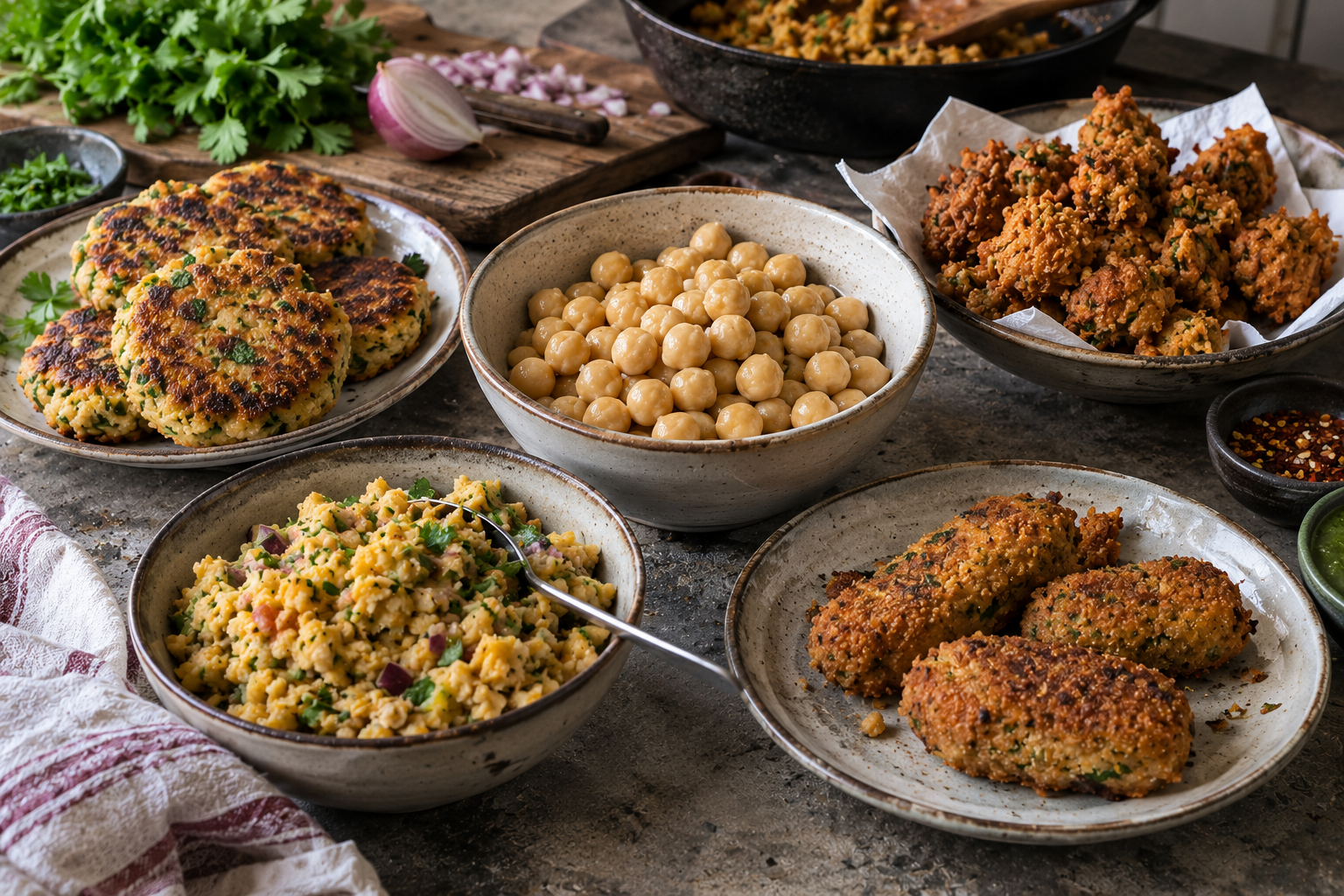
1. Chickpea Patties
A patty needs enough structure to hold together during shaping and cooking. The base may require controlled moisture, suitable binding ingredients, and seasoning. The target is a cohesive center with a well-browned exterior.
2. Crispy Chickpea Bites
Small bites can use a firmer mixture and a coating system to create a crisp outer layer. Portion size, coating adhesion, and moisture control become important because small products cook differently from larger patties.
3. Chickpea Stuffed Filling
A softer, well-seasoned version can be developed as a filling for wraps, rolls, or stuffed breads. Here, the mixture should remain moist enough to eat comfortably but firm enough to handle without leaking or making the surrounding bread soggy.
4. Chickpea Croquettes
A croquette-style product needs a stable center and a coating that remains attached during cooking. The formulation, chilling, and shaping process may need adjustment to prevent cracking or excessive oil absorption.
5. Chickpea Crumbles
A looser version can be designed for use in bowls, salads, wraps, or savory toppings. Instead of holding one solid shape, the mixture should separate into useful pieces while retaining a pleasant bite and sufficient seasoning.
What Makes These Products Different?
The base ingredient remains similar, but the required texture, moisture level, particle size, binding, coating, and cooking method change with the intended use. Each variation therefore needs its own formulation and process checks.
A chef should not assume that one mixture will work perfectly in all five formats. The purpose of starting with a shared base is to reduce unnecessary complexity while allowing controlled adjustments where the product requires them.
III. How Texture, Moisture, and Cooking Method Shape the Final Product
A shared base ingredient does not guarantee a consistent result across different products. Small changes in moisture, particle size, binding, and heat application can make the difference between a product that holds together and one that becomes dry, soggy, or crumbly.
1. Moisture Determines Structure
Moisture affects how easily a mixture can be shaped and how it behaves during cooking. A chickpea mixture that is too wet may become difficult to form into patties or croquettes. Excess moisture can also weaken a coating and reduce crispness.
A mixture that is too dry may crack during shaping or produce a dense, crumbly centre. The objective is to control moisture according to the intended product rather than trying to achieve one consistency for every application.
2. Binding Ingredients Help Hold the Product Together
Binding ingredients help particles remain connected during shaping and cooking. Depending on the formulation, options may include starches, breadcrumbs, flour, or other suitable binders.
However, adding more binder is not always the solution. Excessive quantities can make a product heavy, pasty, or unnecessarily dense. The type and amount should be adjusted to the base ingredient and the desired texture.
3. Particle Size Changes the Eating Experience
A finely processed base generally produces a more uniform, compact texture. A coarser mixture retains more noticeable pieces and may provide a more varied bite.
For example, a smooth chickpea mixture may suit a cohesive patty, while a coarser mixture may work better for crumbles or certain bite-sized products. Particle size should support the intended texture, not simply follow the same preparation method for every variation.
4. Heat Transfer Influences Texture and Browning
Different product sizes and shapes respond differently to heat. Smaller pieces generally heat through more quickly than larger, thicker products, while a coated product needs sufficient surface heating to develop its crust.
For fried products, excessive surface moisture can delay crisping. For baked or grilled products, the surface may dry before the center reaches the desired texture if the formulation or cooking conditions are unsuitable.
Cooking time and temperature must therefore be validated for each product format. Do not assume that five products made from a similar base can share one cooking schedule.
5. Test Each Variation Against a Clear Standard
Before moving to larger production, define what success looks like for each product. Assess shape retention, surface color, internal texture, flavor, coating adhesion, and cooking loss where relevant.
Use the same portion size and cooking conditions when comparing prototypes intended for the same application. Record changes to the formulation and process so that successful results can be reproduced.
The key principle is simple: the base ingredient provides a starting point, but formulation and processing determine the final product.
IV. How One Base Ingredient Can Improve Cost Control and Production Efficiency
Using one base ingredient across multiple products can help a food business simplify purchasing, reduce ingredient duplication, and improve kitchen organization. However, the savings depend on how well the products are planned and managed.
1. Reduce Ingredient Duplication
When several menu items share a common base, the kitchen may need fewer separate ingredients and preparation processes. This can simplify purchasing and make stock management easier.
2. Plan Batch Production Carefully
Preparing a base in planned batches can reduce repetitive preparation during service. Batch sizes should reflect expected demand, available storage capacity, and the validated holding conditions of the product.
3. Track the Cost of Each Finished Product
A shared base does not mean every product has the same cost. Additional binders, coatings, seasonings, fillings, labor, and cooking losses can change the final cost significantly.
Calculate the cost of each finished product separately, including its portion weight and processing requirements, before setting a selling price.
4. Use Ingredient Cross-Utilization to Reduce Waste
Ingredients used across several products may be easier to manage when purchasing and production are planned together. However, cross-utilization should not lead to unnecessary overproduction or extended storage of prepared mixtures.
5. Measure Performance Before Expanding the Menu
Track ingredient usage, preparation time, product yield, wastage and customer response. These figures help determine whether the shared-base approach is genuinely improving efficiency.
The goal is not simply to use fewer ingredients. It is to create a manageable product range that delivers consistent quality, sensible food costs and reliable service.
V. How to Maintain Product Quality During Scale-Up
Developing several products from one base ingredient can simplify production, but scaling up introduces new challenges. A mixture that works well in a small kitchen trial may behave differently when prepared in larger batches.
As a chef, I would focus on three areas before increasing production.
1. Standardise the Base Formulation
Record ingredient weights, preparation methods, cooking conditions and the final consistency of the base mixture. Measuring ingredients by weight rather than estimation helps reduce variation between batches.
Any adjustment to moisture, seasoning or binding should be documented so the team can reproduce the desired result.
2. Create Product-Specific Specifications
Each variation needs its own standards for portion weight, dimensions, texture, appearance and cooking method. A chickpea patty and a crispy chickpea bite may share a base, but they should not automatically share the same specifications.
Clear standards make training easier and help identify quality problems before products reach customers.
3. Establish Safe Storage and Handling Procedures
Food safety must remain a priority when preparing a shared base for multiple products. Cooked chickpeas and prepared mixtures require appropriate temperature control, hygienic handling and clearly defined storage limits.
Cooling, refrigeration, freezing and reheating procedures should be validated for the actual product and production process. Shelf life should never be assumed simply because the ingredients are familiar.
The objective is to make production more efficient without sacrificing consistency, food safety or the eating experience. A successful product-development system should work reliably on a busy production day, not just during the first trial.
VI. When Does a Shared-Base Product Strategy Make Business Sense?
A shared-base strategy can be useful for restaurants, quick-service restaurants (QSRs), catering operations and small food manufacturers. However, it works best when the products have compatible ingredients, preparation requirements and storage needs.
1. When the Menu Needs Variety Without Excessive Complexity
A common base can support several menu options while reducing the need to prepare every product from scratch. This can be particularly useful for businesses that want variety without maintaining a large inventory.
2. When Production Can Be Standardised
The approach is most effective when staff can follow repeatable recipes, portioning standards and preparation procedures. Standardisation becomes increasingly important as production volumes grow or multiple outlets are introduced.
3. When Products Serve Different Customer Needs
A single base may be adapted into snacks, fillings, patties or meal components. These formats can offer different eating experiences and uses, provided each variation delivers genuine value to the customer.
4. When the Numbers Support the Strategy
A shared base is not automatically cheaper or more profitable. Extra processing, specialist ingredients, storage requirements and unsold stock can offset potential savings.
Compare the total production cost, expected sales, preparation time and waste for each proposed product before adding it to the menu.
5. When Food Safety Requirements Remain Manageable
Products sharing a base may also share certain handling and storage requirements, but every finished product must still meet its own food safety needs. Allergens, cross-contact risks, cooling procedures and cooking requirements must be considered during development.
The business objective is to create a product range that is practical to produce, consistent in quality and commercially worthwhile. A shared base is a useful development tool, not a guarantee of success.
VII. A Practical Framework for Developing Products from One Base
Turning one ingredient into multiple products works best when development follows a clear process. Instead of creating variations randomly, chefs can evaluate each idea against consistent technical and commercial criteria.
Step 1: Select the Base Ingredient
Choose an ingredient that offers suitable texture, flavour flexibility, availability and cost for the intended product range.
Step 2: Define the Intended Products
Decide what each finished product should deliver. A patty may need a firm structure, while a filling may require a softer consistency. Define these differences before adjusting the formulation.
Step 3: Develop Each Formulation
Adjust moisture, particle size, binding ingredients, seasoning and coating according to the product’s purpose. Record every change so the formulation can be reproduced.
Step 4: Test and Evaluate
Assess appearance, texture, flavour, portion consistency and cooking performance. Record the results and refine products that do not meet the intended standard.
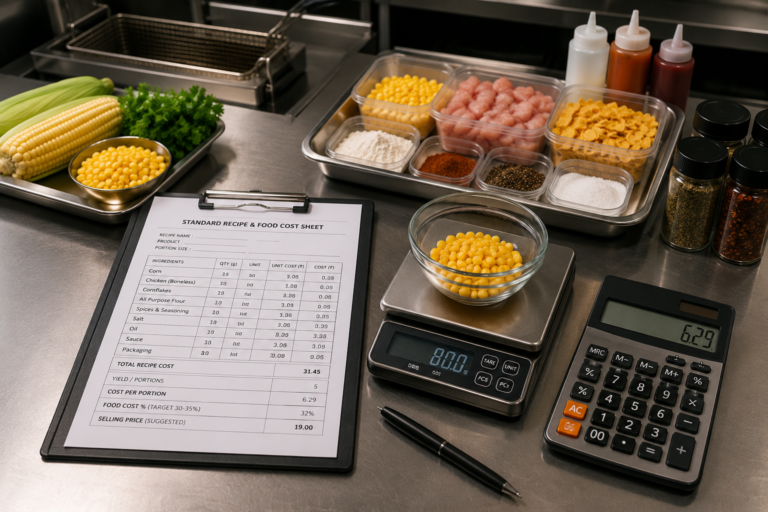
Step 5: Calculate the True Production Cost
Include the base ingredients, additional ingredients, processing losses, labour, packaging and other relevant production expenses. Evaluate each product individually.
Step 6: Standardise and Scale
Once a product meets its quality and safety requirements, document the preparation procedure, portion size, cooking instructions and storage controls before increasing production.
Step 7: Review Commercial Performance
Monitor sales, waste, customer feedback and production efficiency. Retain products that provide a clear customer benefit and make operational sense.
This framework helps chefs move from an interesting ingredient idea to a structured product-development process. The aim is to balance creativity with consistency, food safety and commercial practicality.
VIII. Final Thoughts: Build Smarter Products, Not Just More Products
Developing multiple products from one base ingredient can help chefs and food businesses simplify preparation, organise inventory and explore new menu opportunities. But the real value comes from creating products that offer distinct textures, uses and eating experiences.
A shared base is only the starting point. Each variation still needs careful formulation, product-specific testing, food safety controls and an honest assessment of its production cost.
From a chef’s perspective, successful product development is about balancing creativity with practical kitchen management. The best approach is not to create the largest possible menu, but to develop a focused range of products that customers enjoy and the business can produce consistently.
At Chef RBS Kitchen, the principle is simple: understand your ingredients, control your process and let product quality guide every decision.