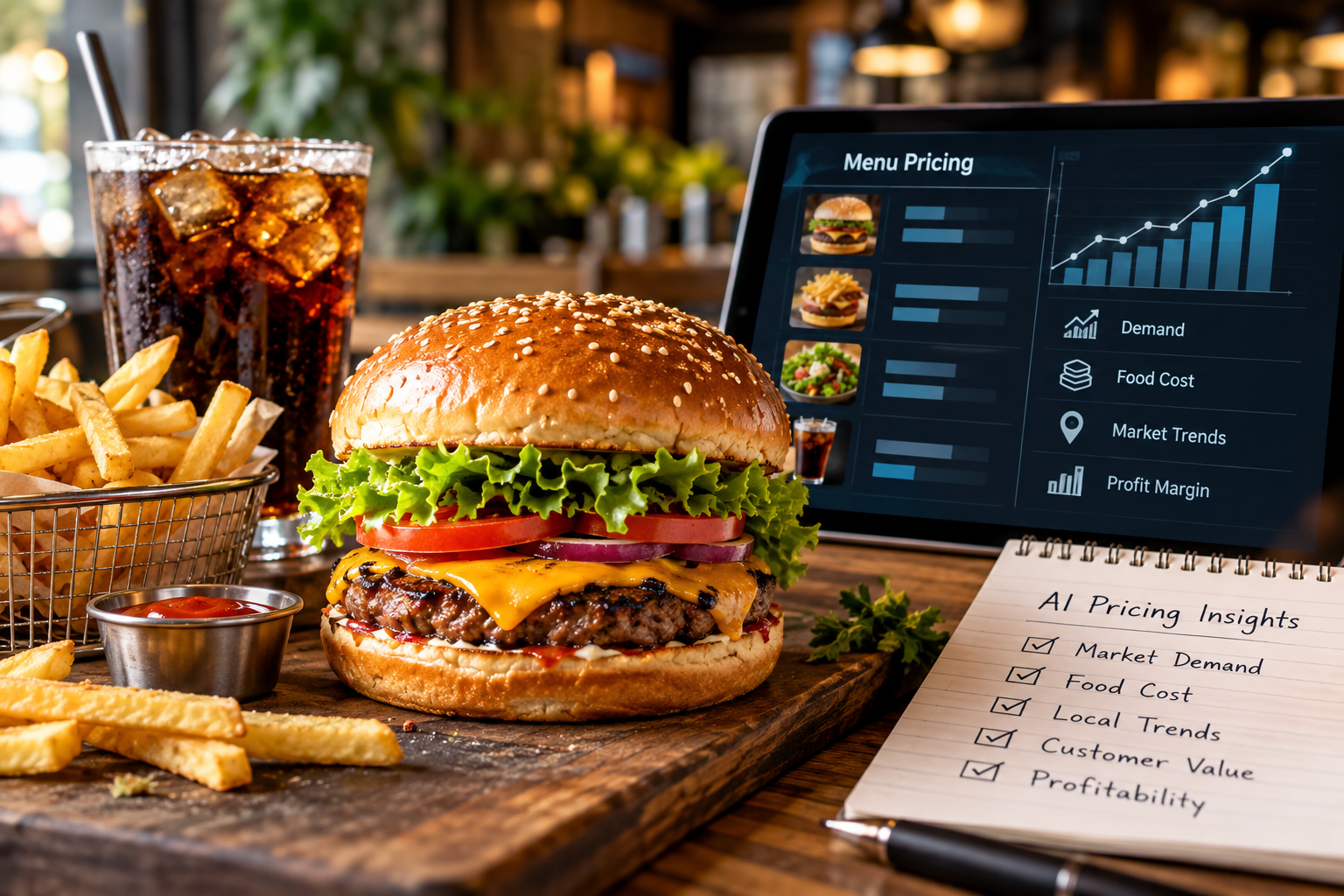
McDonald’s AI Pricing: Can Artificial Intelligence Decide What Your Burger Should Cost?
What if the price of your burger was influenced by an algorithm?
That question suddenly feels much less futuristic after McDonald’s came under the spotlight for its use of AI-powered pricing technology in the United States.
The technology analyzes large amounts of restaurant data and can recommend menu prices based on factors such as local market conditions and customer demand. Reuters reported that McDonald’s pricing system is being used across its U.S. restaurants and some international markets, while the company says franchisees retain the final say over prices.
As a chef who has worked in professional kitchens and restaurant operations, I find this more interesting than just another AI story.
Restaurant pricing has always been a balancing act.
Food cost matters. Labor matters. Rent matters. But so does the customer’s feeling that the meal is worth the price.
Now AI is adding another layer to that decision.
So how does AI pricing actually work in restaurants, and could it change the way restaurants decide what a burger, pizza, or meal should cost?
1. What Does AI Pricing Mean for Restaurants?
When people hear AI pricing, they may imagine a computer automatically changing the price of a burger whenever demand changes.
The reality is more practical.
Restaurant pricing systems can analyze large amounts of information, such as sales patterns, local market conditions, and customer demand, and then help recommend a price. The restaurant operator can use those recommendations alongside food costs and other business factors.
For a chef or restaurant operator, this can be useful because pricing decisions are rarely based on one number.
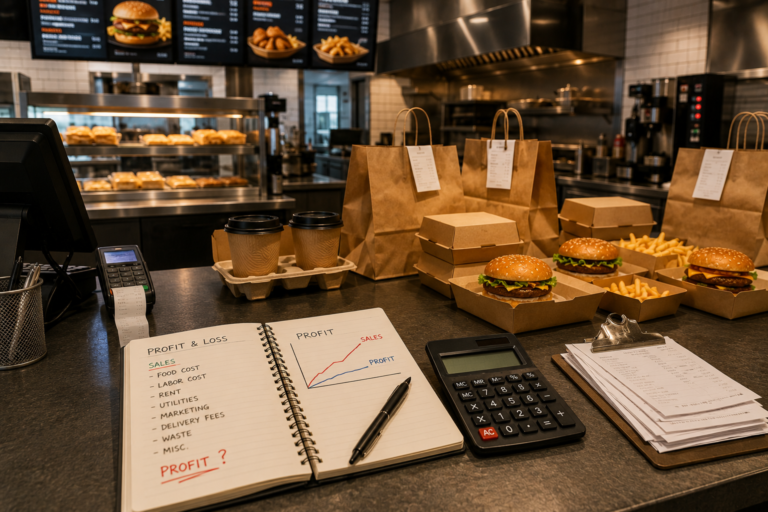
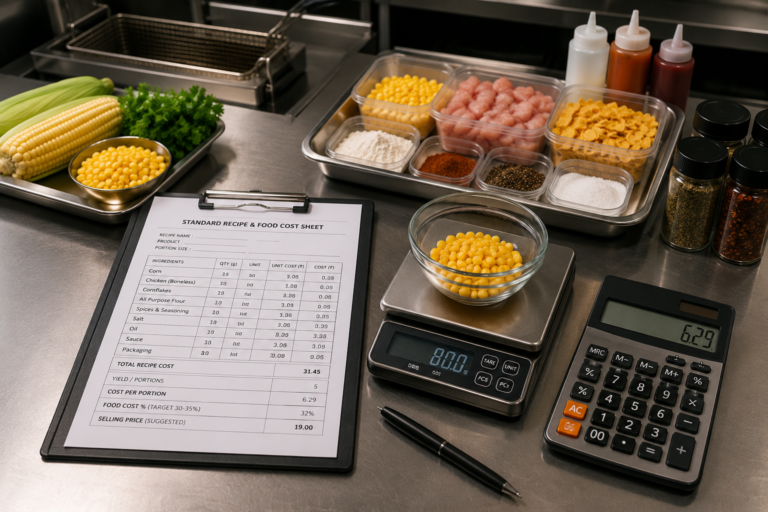
A dish may have a good food cost but still be unprofitable after labor, rent, packaging, wastage, and other operating expenses are considered.
AI can find patterns in the numbers. But someone still needs to understand the food, the customer, and the business behind those numbers.
That is where human judgment remains important.
2. Why Are Restaurants Interested in AI Pricing?
Restaurant prices change for many reasons.
Ingredient costs can rise. Labor costs can change. A new competitor can open nearby. Customer traffic can shift from weekdays to weekends. Even the same menu item can perform differently in two locations.
For a large restaurant chain, keeping track of all these changes across hundreds or thousands of locations is difficult.
This is where AI restaurant pricing becomes interesting.
Instead of relying only on a manager looking at a sales report, an AI system can process much larger amounts of data and identify patterns that may otherwise be easy to miss.
But there is an important difference between AI recommending a price and AI deciding the price.
In McDonald’s case, the company says its technology provides recommendations while franchisees retain control over final pricing decisions.
From a chef’s perspective, I think that is the more sensible approach. Use the technology to improve the information, but keep the final decision with people who understand the restaurant and its customers.
3. What AI Cannot See From a Spreadsheet
After years in professional kitchens, I have learned that a restaurant can have a dish that looks profitable on paper and still create problems during service.
Maybe the portion is too generous. Maybe the preparation takes too long. Maybe the ingredient has too much wastage. Or perhaps customers simply don’t feel the dish is worth the price.
These are details that can be difficult to understand from sales data alone.
An AI pricing system can tell a restaurant what is happening in the numbers. It cannot replace the chef’s understanding of the food, the kitchen team’s experience, or the customer’s reaction when the plate reaches the table.
That is why I see AI restaurant pricing as a decision-support tool, not a replacement for restaurant judgment.
The strongest approach is simple: let technology find patterns, then let experienced people decide what those patterns actually mean.
4. Can AI Pricing Actually Increase Restaurant Profits?
Potentially, yes, but AI cannot create profit by itself.
Better pricing decisions can help a restaurant protect its margins, especially when ingredient costs, labor, and local competition keep changing.
Imagine a popular chicken burger. Its ingredient cost increases, but the restaurant continues selling it at the same price. Over time, that small difference can reduce the margin on every sale.
A pricing system could help identify these changes earlier by analyzing sales and cost patterns.
But there is a limit.
If the recommended price becomes too high, customers may simply choose something else. A restaurant can improve its margin on paper and still lose sales.
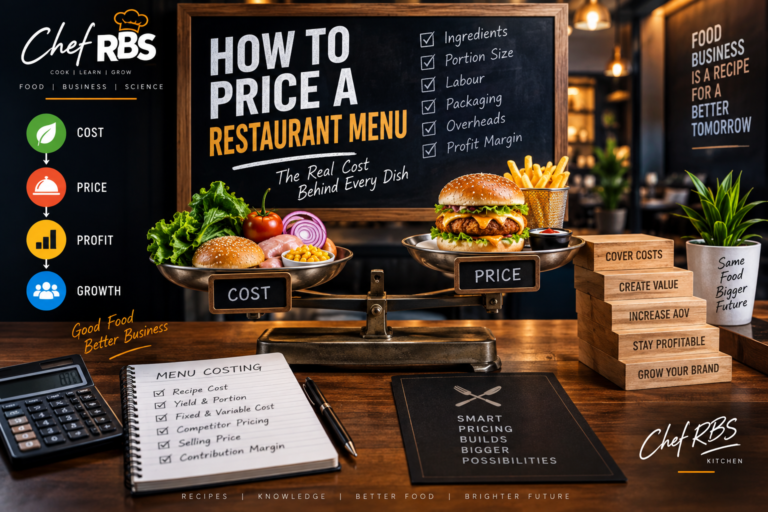
This is why I believe good restaurant menu pricing needs a balance between food cost, profit margin, and perceived value.
The best price is not necessarily the highest price a customer will tolerate. It is the price that keeps the business healthy while still making the customer feel that the meal is worth buying.
5. What Does AI Pricing Mean for Customers?
For customers, the biggest question is simple:
Will I know why the price changed?
There is a big difference between a restaurant adjusting prices because its costs or local market conditions have changed and an algorithm quietly changing prices based on an individual’s behavior.
The second approach could make customers uncomfortable.
Restaurant pricing depends heavily on trust. If a customer feels that two people are being charged differently for the same meal without a clear reason, the restaurant may face a bigger problem than losing a few cents of margin.
As a chef, I would rather see AI used to help a restaurant understand costs, demand, and menu performance than to make customers feel they are being personally targeted.
Technology can make pricing smarter. But transparency is still part of good hospitality.
6. What Is McDonald’s Actually Doing With AI Pricing?
McDonald’s has become the most talked-about example because of its use of an AI-powered pricing recommendation system.
The system can analyze restaurant data and help recommend menu prices based on factors such as local market conditions, transaction information, and estimated price sensitivity. Reuters reported that McDonald’s has been expanding this technology across its restaurants.
But there is an important clarification.
McDonald’s has said that AI does not set Big Mac prices, does not change prices in real time, and does not determine an individual customer’s price. Franchisees remain responsible for the final pricing decisions.
That distinction matters.
The interesting story is not that a computer has taken over restaurant pricing. It is that a major restaurant company is using technology to give operators more information before they decide what a menu item should cost.
For the wider restaurant industry, that could be the more important development.
7. What Should Restaurant Owners Do With AI Pricing?
I would not recommend putting pricing decisions entirely in the hands of an algorithm.
Instead, use AI to answer questions that are difficult to answer manually:
- Which menu items are losing margin?
- Where are customers becoming more price-sensitive?
- Which products sell better at different price points?
- How are ingredient costs affecting profitability?
- Are promotions actually increasing profitable sales?
Then combine those insights with what your kitchen and customers are telling you.
A chef sees things that a spreadsheet may miss. A restaurant manager sees operational problems that may not appear clearly in a sales report. And the customer ultimately decides whether the price feels worth paying.
My view is simple: AI should make restaurant pricing smarter, not less human.
The technology can provide the data. The final menu price should still make sense for the food, the business, and the customer.
8. Final Thoughts
AI is not replacing restaurant operators. It is giving them another way to understand a business that has always depended on changing numbers.
The McDonald’s example shows where the industry may be heading: more data, better pricing recommendations, and more technology behind everyday menu decisions.
But restaurants are still built around people.
Food quality, portion size, hospitality, and perceived value cannot be reduced to a single algorithm.
As a chef, I believe the best use of AI is simple: let the technology help you see the numbers more clearly, then use experience and judgment to make the final decision.
The smartest restaurant price is not the one an algorithm chooses. It is the one that works for the food, the business, and the customer.
9. Frequently Asked Questions
Does McDonald’s use AI to set food prices?
McDonald’s uses AI-powered technology to provide pricing recommendations, but the company says franchisees make the final pricing decisions.
What is AI pricing?
AI pricing uses data and algorithms to help businesses understand demand, costs, market conditions, and possible price points.
Can AI increase restaurant profits?
It can help restaurants make better-informed pricing decisions, but profit still depends on food cost, labor, operations, customer demand, and overall restaurant management.
Is AI pricing the same as dynamic pricing?
Not necessarily. Dynamic pricing generally means prices can change based on changing conditions. AI can be used to support dynamic or other pricing strategies, but the two terms are not identical.
Will AI replace restaurant managers?
AI can automate analysis and provide recommendations, but restaurant decisions still require human judgment, operational experience, and an understanding of customers.