Ube Is Going Global: Why the World Wants More Purple Yam
Ube Is Going Global
I first noticed ube because of its color.
That deep purple immediately catches your eye, especially when it appears in a latte, ice cream, cake, or pastry. But the more I looked into Ube, the more interesting the story became.
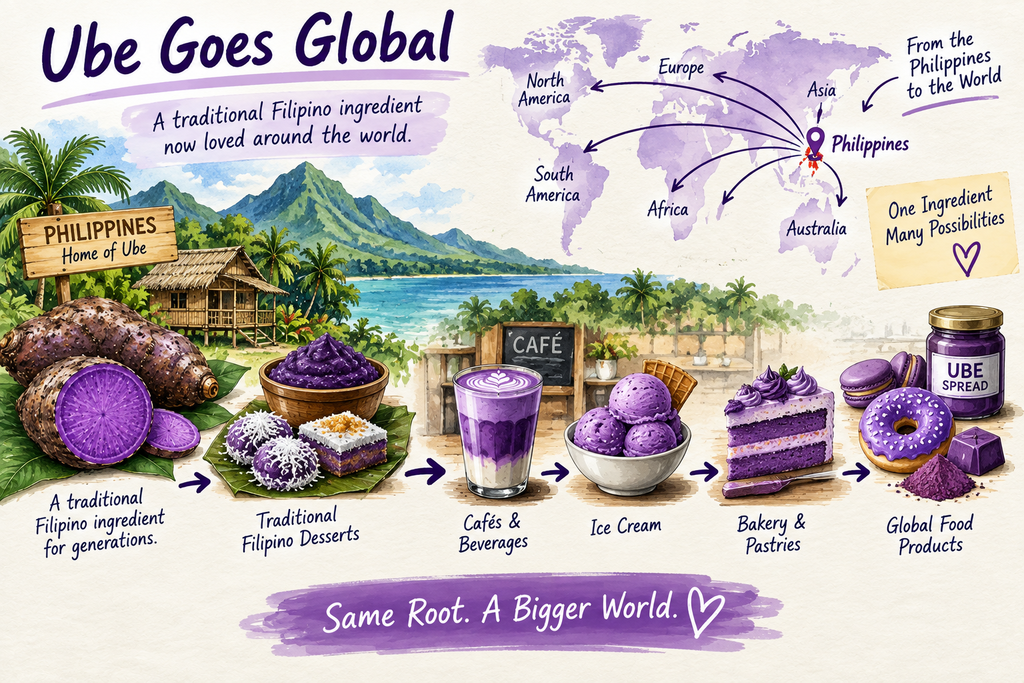
Ube is not a new food trend. It is a traditional purple yam from the Philippines that has been used in Filipino cooking and desserts for generations. What is new is how quickly the ingredient has moved into cafés, bakeries, and food products around the world.
And now there is an unexpected problem behind the purple food boom.
On September 14, 2026, the Philippine Department of Agriculture announced an indefinite suspension of fresh ube exports because the country needs more planting material to expand domestic production. The restriction does not cover processed forms such as ube powder, paste and other processed products.
For me, this makes ube much more than another viral food trend.
It is a story about flavor, color, culture, farming, food innovation, and what happens when global demand grows faster than agriculture can respond.
Let’s look at why the world suddenly wants more purple yam.
What Exactly Is Ube?
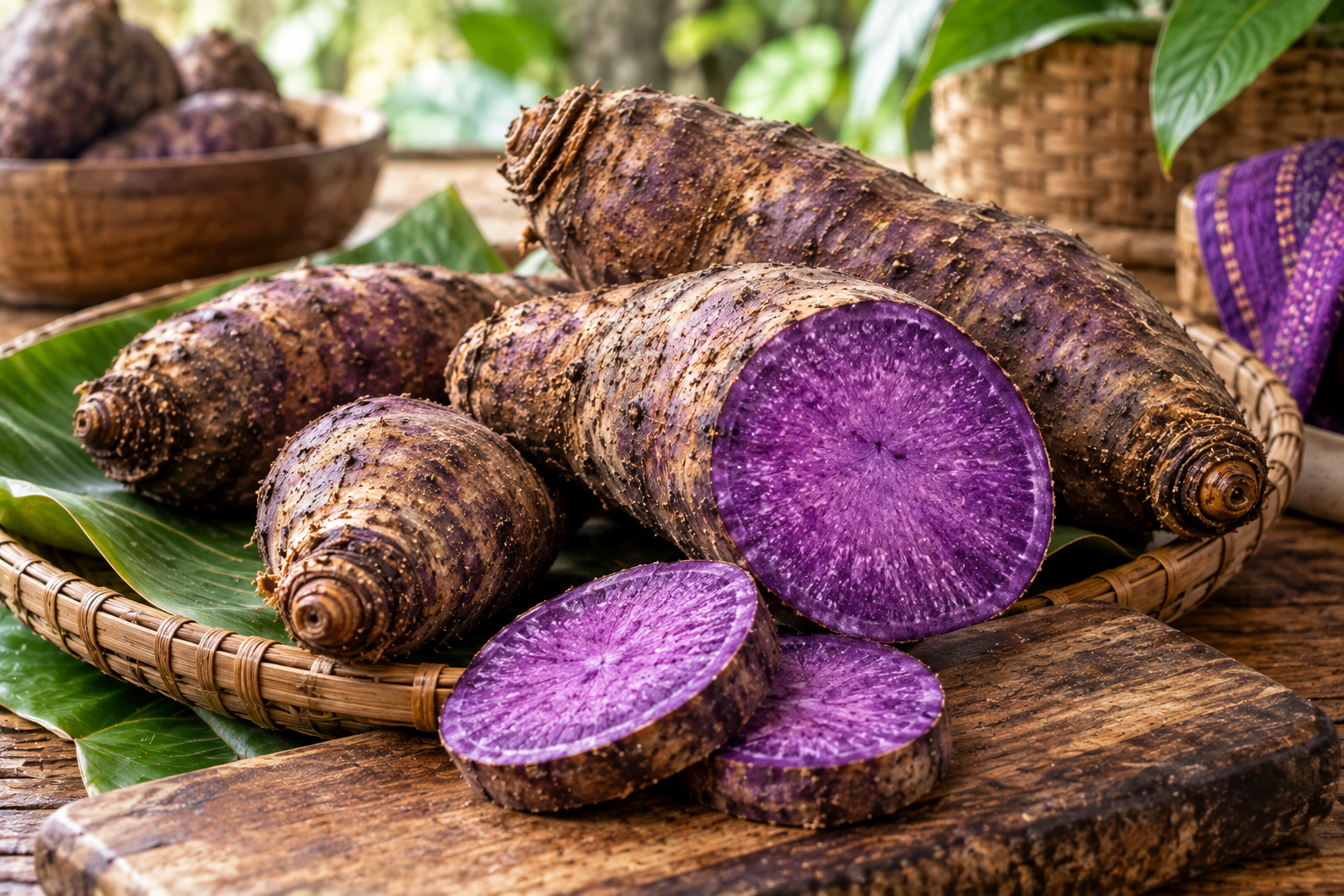
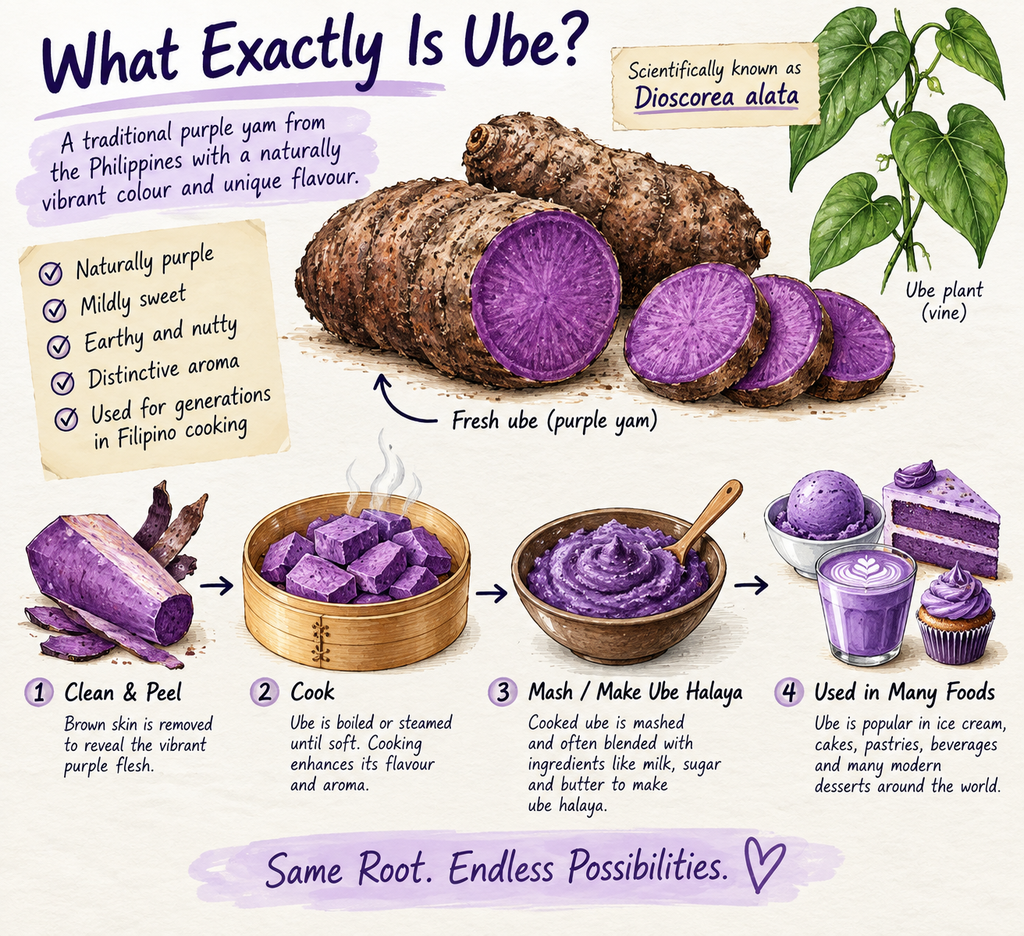
Ube is a purple yam, scientifically known as Dioscorea alata, that has been part of Filipino food culture for generations.
It is naturally purple, although the color can vary from pale lavender to a much deeper violet depending on the variety and growing conditions. Its flavor is also distinctive. I would describe it as mildly sweet, earthy, and nutty, with an aroma that becomes especially noticeable when it is cooked.
Traditionally, ube is used in Filipino desserts such as ube halaya, cakes, ice cream, and other sweet preparations.
What has changed is not the ingredient itself, but where we are seeing it.
Ube has moved from a traditional ingredient into modern ice creams, pastries, beverages, confectionery, and other processed foods. Philippine agricultural officials now describe growing international demand for both fresh and processed ube.
For a chef, that makes ube particularly interesting.
It brings color, flavor, and identity to a dish at the same time.
And unlike an artificial purple color added to food, the purple is naturally present in the ingredient.
Why Is Ube Naturally Purple?
The first thing most people notice about ube is its color.
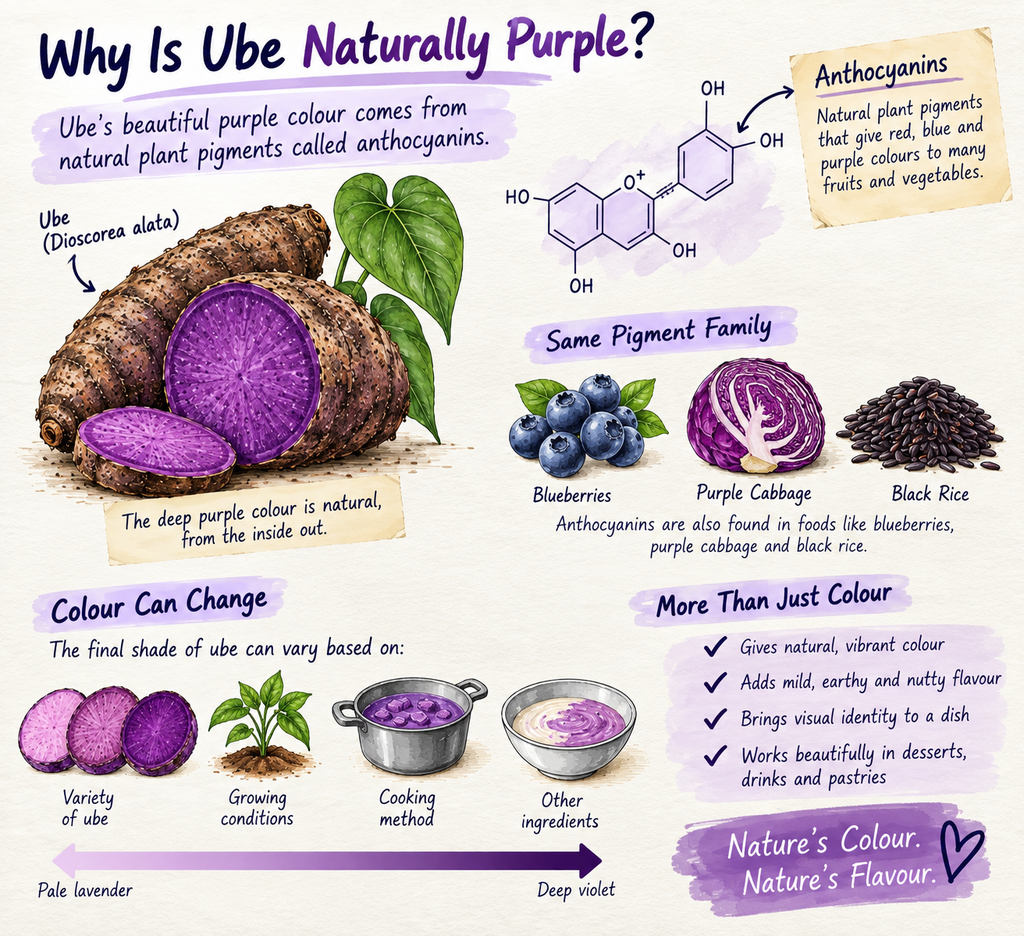
That purple comes mainly from anthocyanins, a group of natural plant pigments also responsible for the red, blue, and purple colors found in foods such as berries, purple cabbage, and black rice.
But ube is interesting because the color is not simply decoration.
As a chef, I find naturally colored ingredients useful because they can bring visual identity and flavor at the same time. Ube gives a dish a strong purple appearance while also contributing its own mild, earthy, and slightly nutty character.
Cooking and processing can change how that color looks. The final shade can depend on the variety of ube, growing conditions, cooking method, and what other ingredients are mixed with it.
This is one reason ube works so well in modern food.
You can recognize it immediately.
A purple ice cream, cake, pastry, or drink can communicate “ube” before you even taste it.
That natural visual identity has become one of the ingredient’s biggest attractions as it moves into new food formats.
Why Has Ube Become So Popular Around the World?
I think ube has something that many food trends struggle to find: it is distinctive without needing much explanation.
The color gets your attention first. Then the flavor gives people a reason to come back.
That combination works particularly well in modern desserts and drinks. Ube can be turned into ice cream, cake, pastry fillings, whipped toppings, beverages, and spreads while keeping its recognizable purple identity.
There is also another reason I find it interesting as a chef.
Ube can make a familiar product feel completely different.
Take ice cream. The basic format is familiar, but change the flavor to ube, and suddenly the product has a different color, aroma, and cultural story.
The same thing happens with cakes, doughnuts, cookies, and drinks.
This is one reason traditional ingredients can become powerful modern food ingredients. The ingredient does not have to change. The format around it can change.
And ube is a good example of that transition from traditional food to global food innovation.
Why Does Ube Have Such a Distinctive Flavor?
Ube is not just about the purple color.
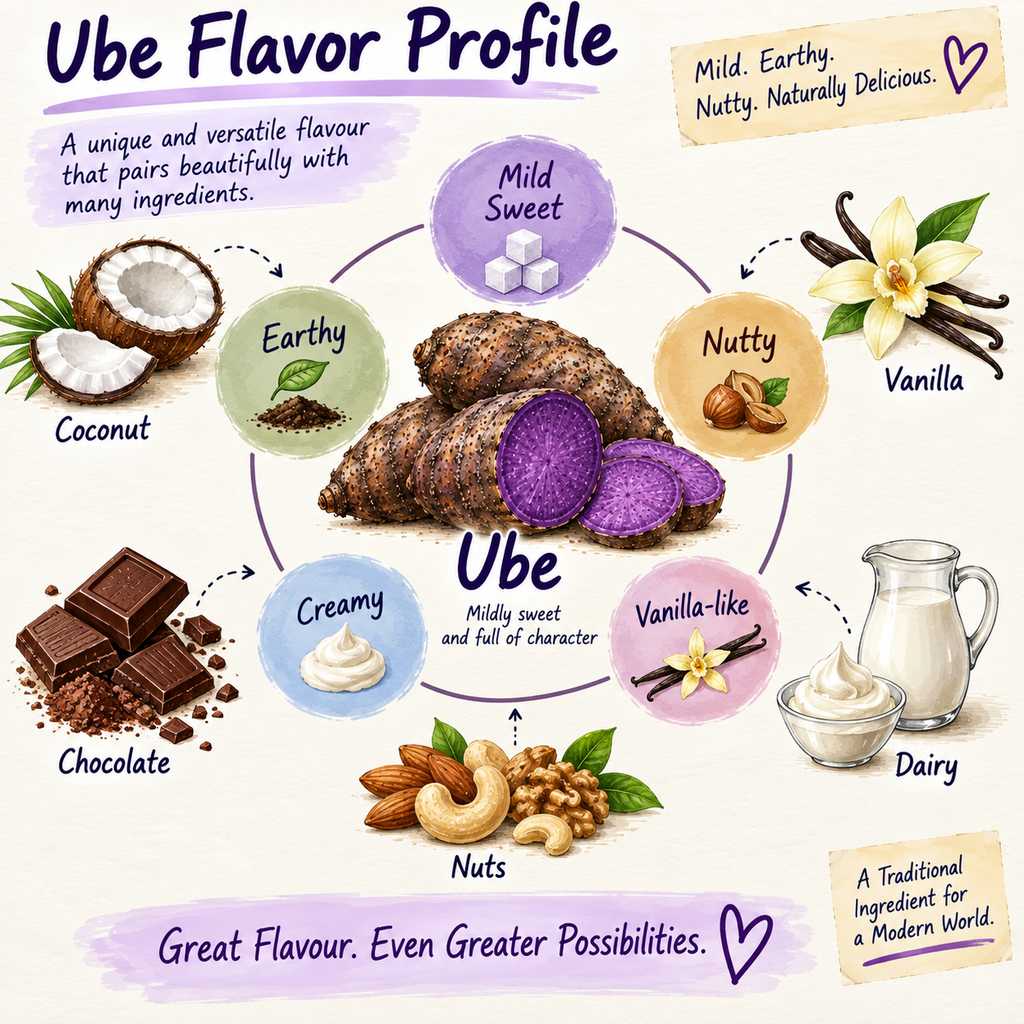
Its flavor is part of what makes the ingredient interesting. When cooked, ube has a mild sweetness with earthy, nutty, and slightly vanilla-like notes, although the exact flavor can vary with the variety and preparation.
For me, this is where ube becomes more useful in the kitchen.
It is distinctive enough to be recognizable but gentle enough to work with other flavors.
You can pair it with coconut, vanilla, dairy, chocolate, nuts, and caramel-style flavors without completely losing the character of the ube.
Its natural sweetness also means it can fit comfortably into desserts without needing an extremely strong flavor profile.
There is another important point.
Ube does not have to taste intensely “purple.”
That color creates an expectation, but the flavor itself is much more subtle. Good ube food should still taste balanced rather than relying only on color to create excitement.
That balance is one reason chefs and food developers can use ube across so many different products.
Why Is Ube So Useful in Modern Food?
One thing I like about ube is its versatility.
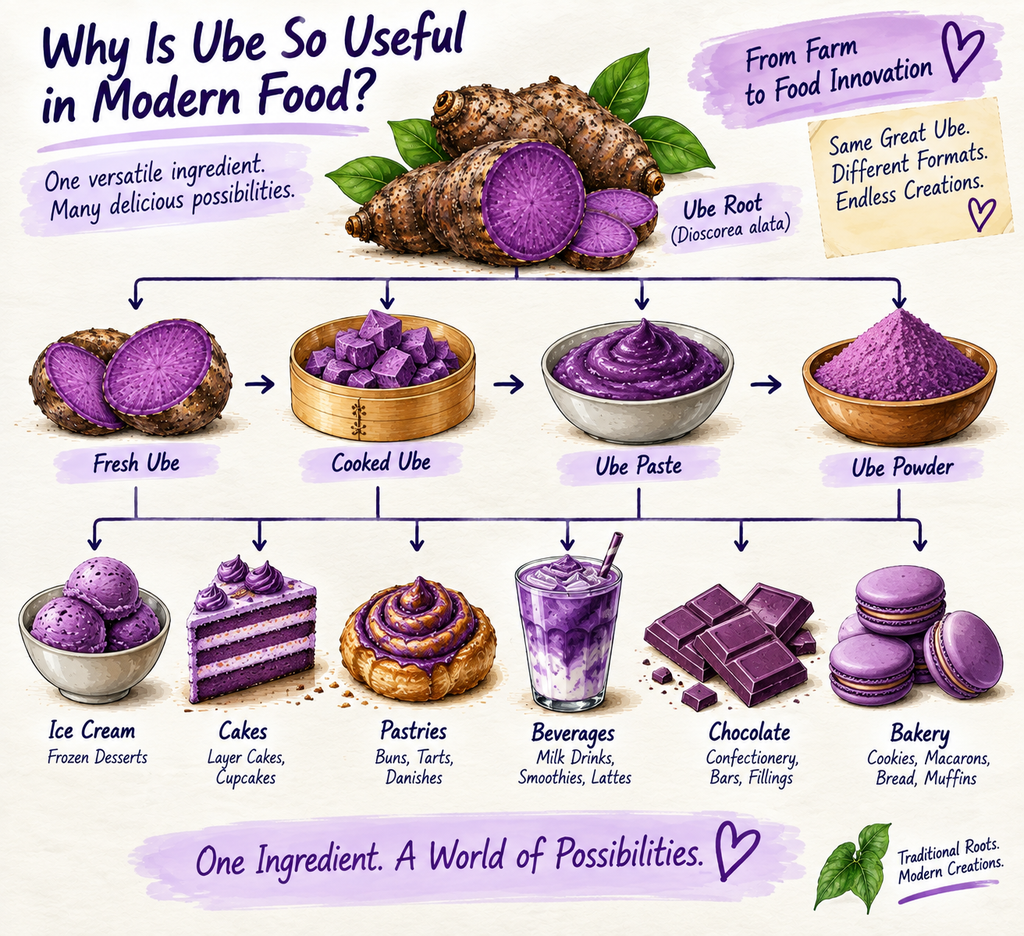
It can be used as a main flavor, a filling, a swirl, a sauce, or simply a visual signature.
In a bakery, it can become a cake filling or pastry cream. In frozen desserts, it works naturally with ice cream and soft serve. In beverages, it can be combined with milk, coconut, or coffee-style flavors.
It can also be processed into forms that are easier for food businesses to handle, such as paste and powder.
That matters because fresh agricultural ingredients can be difficult to store, transport, and use consistently.
For a food developer, processing ube into a stable ingredient can make it easier to create the same flavor and color across different products.
This is where a traditional crop becomes interesting from a modern food-business perspective.
The trend is not only about selling purple food. It is about turning one distinctive ingredient into many formats.
Why Is Ube Facing a Supply Challenge?
This is where the ube story becomes much more interesting.
The world may want more ube, but growing a crop at the speed of a food trend is not simple.
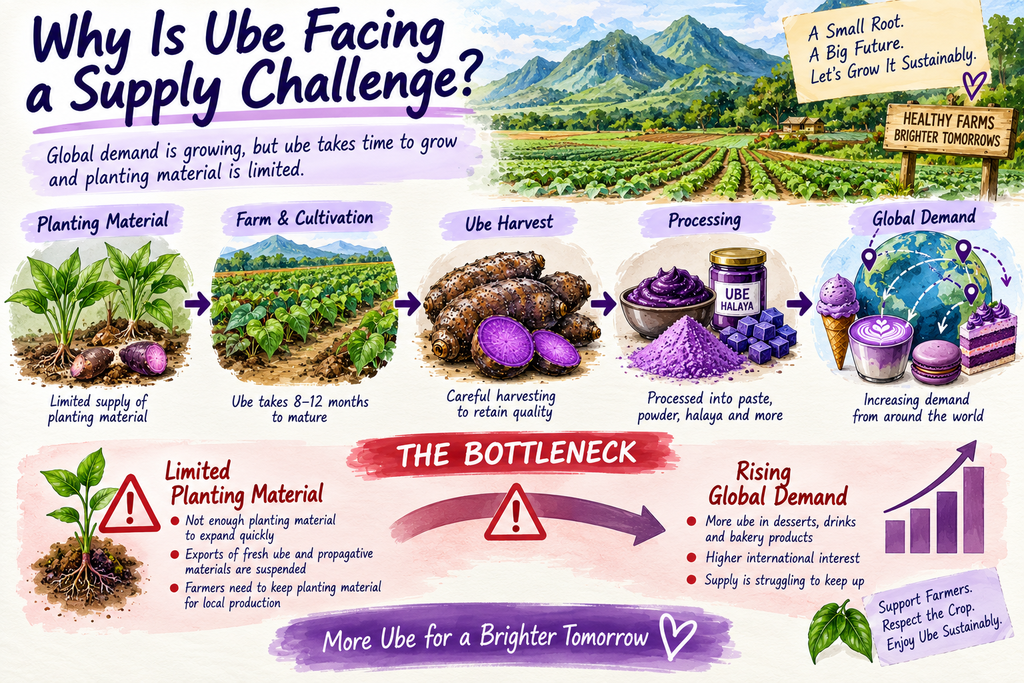
In September 2026, the Philippine Department of Agriculture announced an indefinite suspension of fresh ube exports to protect scarce planting material while domestic production is expanded. The restriction also covers propagative planting materials.
The reason is quite practical.
Farmers need enough healthy planting material to grow more ube. If too much planting material leaves the country, expanding domestic production becomes more difficult.
At the same time, demand is growing for both fresh ube and processed forms such as powder, paste, halaya, and jam. The Philippine government has been working on nurseries, tissue culture, and other propagation methods to increase the supply of quality planting material.
This is a good reminder that food trends don’t happen only in cafés and restaurants.
Behind every trending ingredient there is a farmer, a crop, a supply chain, and a production system.
And when global demand suddenly increases, agriculture has to catch up.
What Does the Ube Boom Mean for Food Businesses?
For me, this is where the ube story becomes especially relevant to chefs and food businesses.
A successful food trend does not always require creating a completely new product.
Sometimes, it means taking one distinctive ingredient and finding several smart ways to use it.
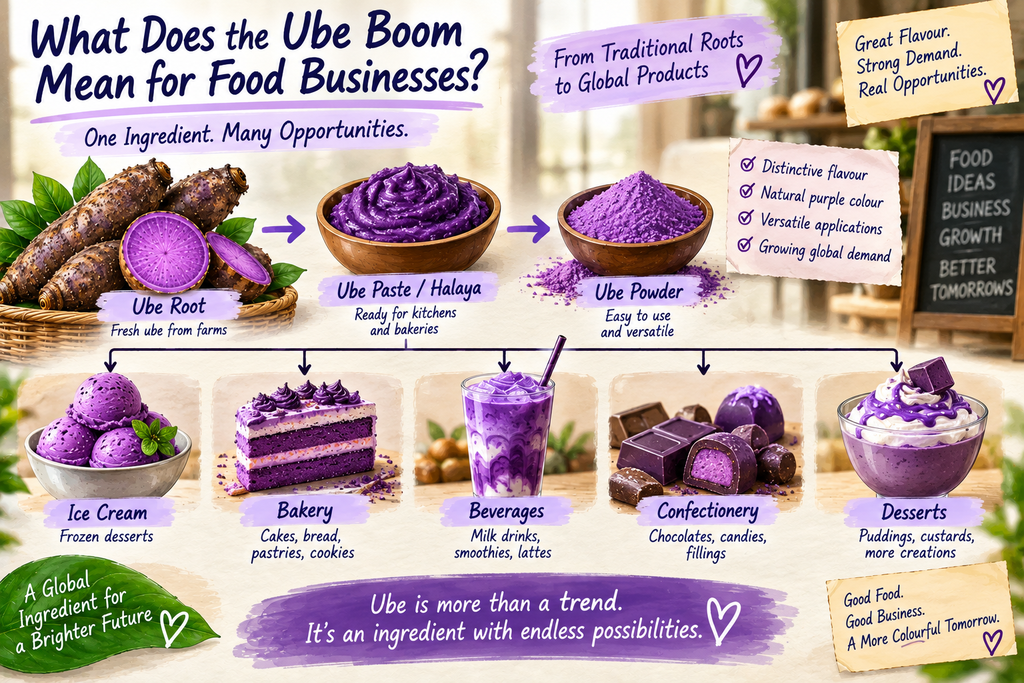
Ube is already appearing in products such as ice cream, baked goods, confectionery, specialty beverages, and other desserts. Philippine agriculture officials say overseas demand is expanding, while the industry is working on better supply, standards, and processing systems.
That creates opportunities at several levels:
Fresh ube for chefs and restaurants
Ube paste and halaya for bakeries and dessert kitchens
Ube powder for beverages and dry mixes
Ube-based products for packaged food companies
But there is an important lesson here.
When an ingredient becomes fashionable, businesses can easily focus on the color and forget the ingredient itself.
I would rather see ube treated as a real culinary ingredient with its own flavor, history, and agricultural story.
That gives the product more identity than simply calling something “purple.”
Why Is Ube More Than Just a Purple Food Trend?
There is a difference between an ingredient becoming popular and an ingredient becoming useful.
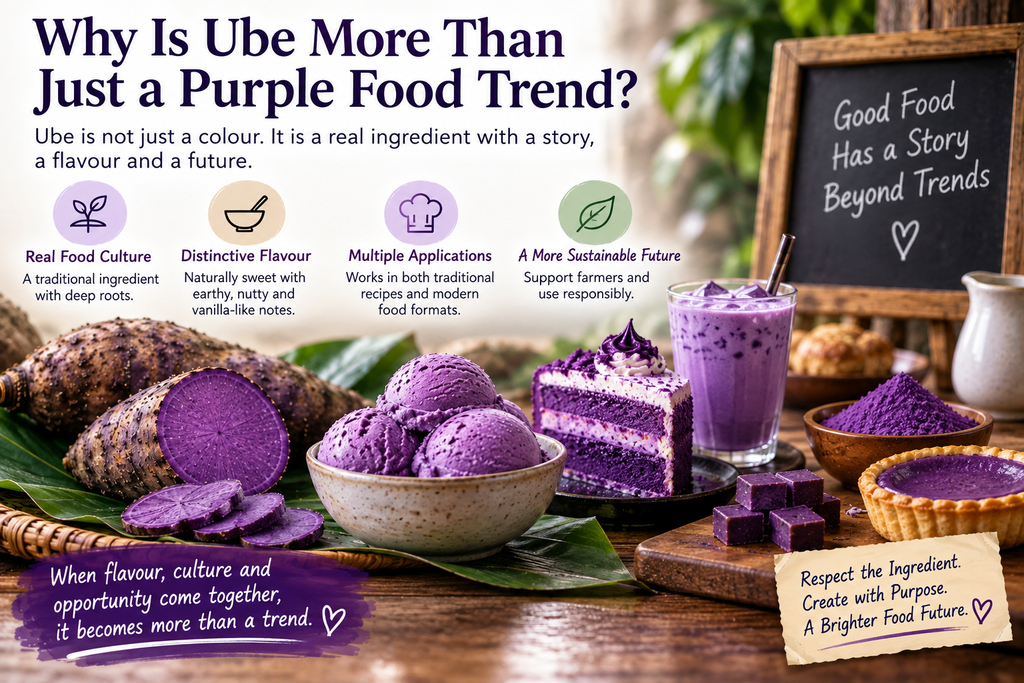
A viral food might attract attention for a few months because it looks unusual. But an ingredient with a distinctive flavor, natural color, and multiple applications has a better chance of becoming part of the wider food market.
That is what makes ube interesting to me.
It has a story behind it. It comes from a real food culture, it has its own flavor, and it can move between traditional recipes and modern formats without losing its identity.
The important thing is not to turn every ube product into something artificially extreme.
A good ube dessert should still taste like ube.
A good beverage should allow the ingredient to contribute flavor rather than using it only for purple color.
And a good food business should respect where the ingredient comes from while finding ways to use it responsibly.
That is when a food trend becomes more than a trend.
It becomes an ingredient people can actually build around.
What Can the Future of Ube Look Like?
I think the future of ube will depend on something simple: whether the food industry can grow the ingredient without losing what makes it special.
There is plenty of room for innovation.
Ube can move further into frozen desserts, bakery products, beverages, confectionery, and convenient food ingredients. At the same time, better cultivation, propagation, and processing can help the supply chain respond to growing demand.
But the most interesting part is that Ube does not need to become something else to succeed.
It already has:
Color.
Flavor.
Culture.
Versatility.
For chefs, that gives us an ingredient with a real story to work with.
For food businesses, it offers multiple product possibilities.
And for consumers, it is a reminder that some of the most exciting food trends are not actually new. Sometimes the world simply discovers an ingredient that another culture has understood for generations.
Final Thoughts
Ube may look like the latest purple food trend, but the ingredient itself is much older than the trend.
What is changing is its reach.
From traditional Filipino kitchens to modern cafés, bakeries, dessert counters, and packaged foods, ube is showing how a local ingredient can become part of a global food conversation.
As a chef, I would rather see that conversation go beyond color.
Understand the ingredient. Respect its culture. Work with its flavor. And give the crop a future alongside the trend.
Because trends change.
Good ingredients stay.