Pickle-Flavored Foods: Why Is Pickle Flavor So Popular?
Pickle flavor has moved far beyond the pickle jar.
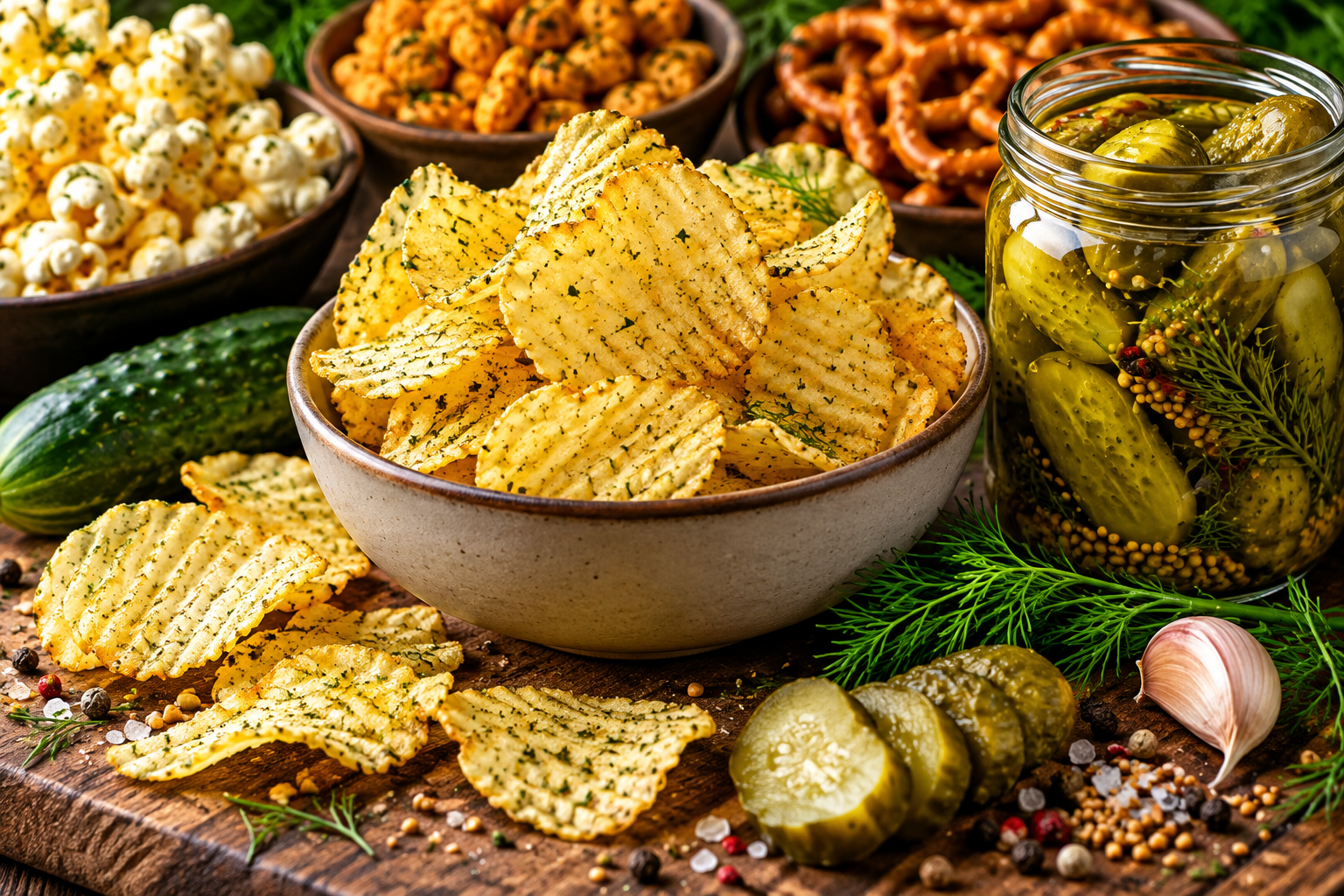
You can now find that familiar combination of tangy acidity, salt, herbs, and savory flavor in chips, popcorn, crackers, sauces, sandwiches, and other snack foods.
As Chef RBS, I find this trend interesting because pickle flavor is not simply about eating pickles. It is about how a few basic sensory elements can make food taste brighter, sharper, and more exciting.
But why does pickle flavor work so well across so many different foods?
The answer involves more than nostalgia or a passing food trend. Acidity, salt, aroma, texture, and flavor balance all play a role.
Let’s look at the food science behind pickle flavor, why consumers enjoy it so much, and why food manufacturers keep finding new ways to put that tangy taste into everyday foods.
Quick Answer: Why Is Pickle Flavor So Popular?
Pickle flavor works because it brings several strong sensory elements together in one bite: acidity, salt, herbs, spice, and savory depth.
That combination can make food taste brighter and more intense without requiring a complicated recipe. A tangy pickle note can also cut through rich or fatty foods, which is one reason it pairs naturally with fried snacks, burgers, sandwiches, and creamy sauces.
There is another reason the flavor has become so versatile. Food manufacturers don’t always need actual pickle pieces to create the experience. They can build pickle-style flavor using combinations of acids, salt, herbs, spices, and other flavoring ingredients.
As Chef RBS, I think that’s the real reason pickle flavor has moved beyond the jar. It is a flavor system, not just a single ingredient.
Why Does Pickle Flavor Taste So Addictive?
There is something unusual about pickle flavor: a little acidity can make an ordinary snack suddenly feel much more exciting.
The sharp sourness comes mainly from acids, while salt, herbs, garlic, dill, chili, and other seasonings add complexity. When these elements are balanced properly, the result is a flavor that feels bright rather than simply salty.
Acidity also changes how we perceive richer foods. Think about a fried snack without any acidic element. It can feel heavy after a few bites. Add a tangy pickle note, and the contrast can make the food seem lighter and more refreshing.
This is one reason pickle flavor works so well in foods such as chips, fried chicken, burgers, popcorn, and creamy dips.
From a chef’s perspective, contrast is one of the easiest ways to make food more interesting. Pickle flavor delivers that contrast in a very recognizable way: salty, sour, aromatic, savory, and sometimes spicy all at once.
What Gives Pickle Flavor Its Signature Taste?
Pickle flavor is not one single taste. It is a combination of sourness, saltiness, aroma, herbs, spices, and sometimes sweetness or heat.
The sour component is particularly important. Acids create the sharp sensation that makes pickle flavor immediately recognizable, while salt helps enhance other flavors and balance the overall profile.
Then come the aromatics. Dill, garlic, mustard seed, coriander, chili, black pepper, and other spices can give a pickle-style flavor much more depth than acidity alone.
This is why two foods can both be described as “pickle flavored” but taste completely different. One might be bright and herbal, while another is hot, garlicky, salty, or slightly sweet.
The chef’s lesson is simple: pickle flavor is about balance. Too much acid can taste harsh, too much salt can overwhelm the palate, and too little seasoning can make the flavor feel flat.
Is Pickle Flavor the Same as Eating Pickles?
Understanding the difference between fermentation and pickling is important because the two processes can produce acidity in different ways.
A real pickle is a food that has been preserved or flavored using ingredients such as vinegar, salt, spices, and sometimes fermentation. It also brings its own moisture, texture, and nutritional characteristics.
A pickle-flavored chip or snack may contain little or no actual pickle. Instead, manufacturers can use acids, salt, herbs, spices, and flavoring ingredients to recreate that familiar profile.
This distinction matters when reading a food label. “Pickle flavored” tells you about the taste, not necessarily how much pickle is actually in the product.
As Chef RBS, I find this an important difference between flavor inspiration and ingredient identity. A product can taste convincingly like a pickle while being formulated almost entirely around other ingredients.
Why Does Pickle Flavor Work So Well With Rich Foods?
One of the biggest strengths of pickle flavor is its ability to cut through richness.
Think about fried chicken, burgers, cheese, creamy sauces, or potato chips. These foods can have rich, fatty flavors that become heavier as you continue eating. A sharp acidic note creates contrast and refreshes the palate.
This is why chefs often use acidic ingredients such as pickles, vinegar, citrus, or fermented vegetables alongside rich foods. The acidity doesn’t simply add sourness. It can make the overall dish feel more balanced.
Pickle flavor also adds another layer of complexity without requiring a large amount of sauce or seasoning.
From a professional kitchen perspective, richness needs contrast. That is one reason pickle flavor has found such a natural home in modern snacks and comfort foods.
Pickle Flavor and the Science of Flavor Balance
The popularity of pickle flavor comes down to something chefs have used for generations: contrast creates interest.
Acidity provides sharpness, salt enhances flavor, and herbs and spices add aroma and complexity. When these elements are balanced, they can transform a simple snack into something that feels much more flavorful.
That balance is especially useful in modern snack development. A pickle-inspired seasoning can bring brightness to foods that might otherwise taste flat, heavy, or overly rich.
As Chef RBS, this is what I find most interesting about the trend. Pickle flavor isn’t powerful because one ingredient does all the work. It works because several sensory elements are carefully balanced.
That principle goes well beyond pickles. It is one of the foundations of good food formulation and professional cooking.
Why Is Pickle Flavor So Popular in Snacks?
Pickle flavor has a natural advantage in snack foods because it delivers strong flavor without needing a complicated ingredient story.
A simple combination of acidity, salt, herbs, garlic, and spices can turn a plain base such as potato, corn, or a fried coating into something much more distinctive.
There is also a sensory reason it works so well. Crunch + salt + acidity + aroma creates several sensations at the same time, which can make a snack feel more exciting than a plain salty product.
This is particularly useful for food manufacturers. A familiar pickle profile can be adapted to different snack formats while keeping the recognizable flavor consumers already understand.
From a chef’s perspective, that versatility is the real strength of pickle flavor. It doesn’t need to be the main ingredient to become the main character of the snack.
What Should You Look for in Pickle-Flavored Foods?
If you’re buying a pickle-flavored snack, don’t assume the word “pickle” means healthier. It describes the flavor profile, not the overall nutritional quality of the product.
Start with the Nutrition Facts label. Check sodium, calories, added fats, and serving size, especially because many savory snacks are easy to eat in larger portions than intended.
Then look at the ingredient list. If you’re specifically looking for a product made with real pickle ingredients, see whether things such as cucumber, vinegar, fermented vegetables, herbs, or spices actually appear.
There is nothing wrong with a product that simply uses pickle-style seasoning. Just understand what you’re buying.
As Chef RBS, my approach is simple: judge the food for what it actually contains, not what the flavor name makes you imagine.
Are Pickle-Flavored Foods Healthy?
Pickle-flavored foods can fit into a balanced diet, but the pickle flavor itself doesn’t make a product healthy.
A roasted snack seasoned with pickle spices can have a very different nutritional profile from a heavily fried snack covered in salty pickle seasoning. The base food, cooking method, portion size, and overall ingredient list still matter.
There is also an important distinction between real pickled foods and pickle-flavored processed snacks. Traditional pickled vegetables can contribute vegetables to a meal, while a pickle-flavored chip may provide mainly the sensory experience of sourness, salt, herbs, and spices.
So enjoy the flavor, but judge the product on its complete nutrition profile.
As Chef RBS, I like to separate flavor enjoyment from nutrition claims. A food can be delicious without needing to be marketed as a health food.
Chef RBS Verdict: Is the Pickle Flavor Trend Here to Stay?
I think pickle flavor has earned its place beyond the pickle jar.
Its appeal isn’t difficult to understand. Sourness brings brightness, salt enhances flavor, and herbs and spices add aroma, and that combination works particularly well with rich, crispy, and savory foods.
But the strongest lesson from this trend is bigger than pickles. It shows how simple sensory contrasts can make familiar foods feel new again.
As Chef RBS, I would enjoy pickle-flavored foods for what they are: bold, tangy, satisfying food experiences. Just don’t confuse a pickle flavor claim with a nutrition claim.
Good flavor doesn’t need a health halo. It needs balance.
FAQ: Pickle-Flavored Foods
What are pickle-flavored foods?
Pickle-flavored foods are products designed to reproduce the familiar taste of pickles using a combination of acidic, salty, herbal, spicy, and savory flavor components. They can include snacks, sauces, chips, popcorn, crackers, and other foods.
Why is pickle flavor so popular?
Pickle flavor combines several strong sensory elements, particularly acidity and salt, with herbs and spices. This creates a bright, intense flavor that works especially well with crunchy and rich foods.
Does pickle-flavored mean the food contains real pickles?
Not necessarily. A product can use pickle-style seasoning or flavoring without containing significant amounts of actual pickled vegetables. The ingredient list is the best way to find out what is really in the product.
Is pickle-flavored food healthy?
Not automatically. Pickle flavor describes taste, not nutritional quality. Check the product’s sodium, calories, added fats, serving size, and ingredient list before deciding how often to eat it.
Why does pickle flavor work so well with fried foods?
The acidity provides contrast to richness and can make fried or fatty foods taste brighter and more balanced. This is one reason pickles and pickle-inspired flavors pair naturally with foods such as fried chicken, burgers, and crispy snacks.
What gives pickle flavor its sour taste?
Acids are responsible for much of the characteristic sour sensation. Depending on the product, the flavor can be supported by vinegar, fermented ingredients, or food acids combined with salt, herbs, and spices.
Final Takeaway
Pickle flavor has become popular because it delivers something chefs have always valued: contrast.
Sourness, salt, herbs, spices, aroma, and crunch can turn a familiar food into a much more exciting eating experience.
The trend may change shape, but the underlying food-science principle will remain:
Balance creates flavor. Flavor creates interest. And great food doesn’t need to be complicated to be memorable.