Why Does Garlic Taste Bitter? 7 Reasons Your Garlic Turns Bitter
Garlic can transform the flavor of a dish, but if it suddenly tastes bitter, the problem is usually in how it was stored or cooked. Burning garlic is one of the most common causes, but age, sprouting, cooking temperature and even the way garlic is cut can also affect its flavor.
In this guide, Chef RBS explains 7 reasons garlic can taste bitter and the simple cooking techniques you can use to get a sweeter, more balanced garlic flavor.
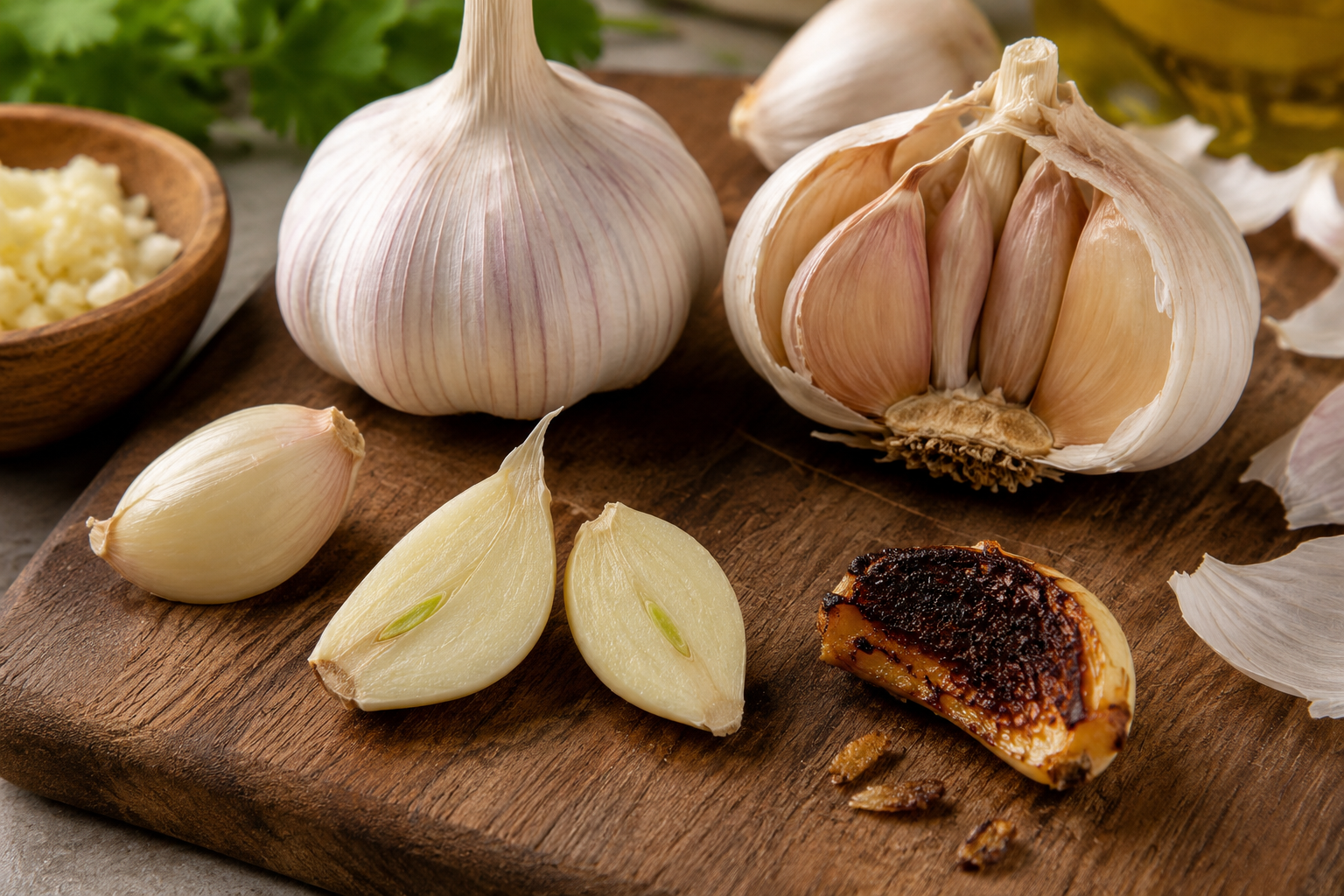
You Burned the Garlic
Burning is the most common reason garlic becomes bitter.
Garlic contains sulfur compounds that create its strong aroma and flavor. When garlic is exposed to very high heat for too long, these compounds change and the garlic can develop a sharp, unpleasant bitterness.
This happens especially quickly with minced or finely chopped garlic because more of its surface is exposed to the hot pan.
Chef RBS Tip: Add garlic after your oil has heated, but don’t let it sit in a very hot pan for too long. Cook it until fragrant and lightly golden—not dark brown.
Your Garlic Is Too Old
Fresh garlic usually has a stronger but cleaner flavor. As garlic ages, its flavor can become sharper, harsher and less pleasant.
Older garlic may also become dry, develop soft spots or show signs of sprouting. While sprouted garlic is not automatically unsafe, the green shoot can have a more bitter or sharp taste.
Chef RBS Tip: For the best flavor, choose garlic bulbs that feel firm and heavy for their size, with dry, intact skin. Avoid bulbs that are soft, moldy or damaged.
You’re Cooking Garlic at the Wrong Temperature
Garlic cooks much faster than ingredients like onions or meat. If the pan is extremely hot, garlic can go from fragrant to burnt in just a few seconds.
A common mistake is adding garlic to a smoking-hot pan and then continuing to cook it while preparing the rest of the dish. The result can be a bitter flavor that spreads throughout the sauce or gravy.
Chef RBS Tip: Keep the heat under control when cooking garlic. If the garlic starts turning dark brown very quickly, reduce the heat or add your next ingredient to cool the pan.
You’re Using Too Much Garlic
More garlic doesn’t always mean more flavor. When a large amount of garlic is added to a dish, especially finely minced garlic, its strong sulfur compounds can become overpowering.
If that garlic is also cooked too aggressively, the combination can create a harsh, bitter taste.
Chef RBS Tip: Start with the amount of garlic the recipe calls for. If you want a stronger garlic flavor, add some fresh garlic toward the end of cooking rather than simply increasing the amount at the beginning.
You Chopped or Crushed the Garlic Too Early
Cutting, crushing or mincing garlic changes its chemistry. When garlic cells are damaged, enzymes help form sulfur compounds responsible for its characteristic aroma and flavor.
If you chop garlic and leave it sitting for a long time before cooking, its flavor can become stronger and more pungent. This isn’t necessarily bad, but it can make the garlic taste harsher in some dishes.
Chef RBS Tip: For a fresher garlic flavor, prepare garlic close to the time you plan to cook it. For a milder flavor, use larger pieces instead of finely minced garlic.
The Garlic Is Sprouting
If you cut open garlic and see a green shoot growing through the center, the garlic has started to sprout. Sprouted garlic is generally still usable if the cloves are firm and free from mold or spoilage, but the green shoot can have a sharper, more bitter flavor.
This is why some cooks remove the green center before using older garlic, especially when making dishes where garlic is a major flavor.
Chef RBS Tip: If you notice a green shoot and want a milder garlic flavor, split the clove and remove the green center before chopping or crushing.
You’re Using the Wrong Cooking Method
The way you cook garlic can dramatically change its flavor. Sautéing minced garlic over high heat can make it bitter quickly, while slower cooking allows its flavor to develop more gently.
Garlic also behaves differently depending on whether it is raw, sautéed, roasted, or simmered. Roasting, for example, can bring out a sweeter and more mellow flavor because the garlic cooks slowly.
Chef RBS Tip: Match the cooking method to the flavor you want. For a sweet, mellow garlic flavor, try roasting. For a fresh and punchy flavor, add some garlic near the end of cooking.
How to Prevent Garlic From Tasting Bitter
Garlic doesn’t have to taste bitter. In most cases, the key is controlling heat, cooking time and freshness.
For better garlic flavor:
- Don’t cook minced garlic over very high heat.
- Avoid letting garlic become dark brown or burnt.
- Use fresh, firm garlic whenever possible.
- Remove the green sprout if it tastes too sharp.
- Prepare garlic close to cooking time.
- Choose the cooking method based on the flavor you want.
Chef RBS Tip: The next time your garlic tastes bitter, don’t immediately blame the garlic. Check the heat and cooking time first. A few extra seconds in a hot pan can make a big difference.