Restaurant Food Cost Calculator
Restaurant Food Cost Calculator
Knowing your food cost is one of the first steps toward running a profitable restaurant.
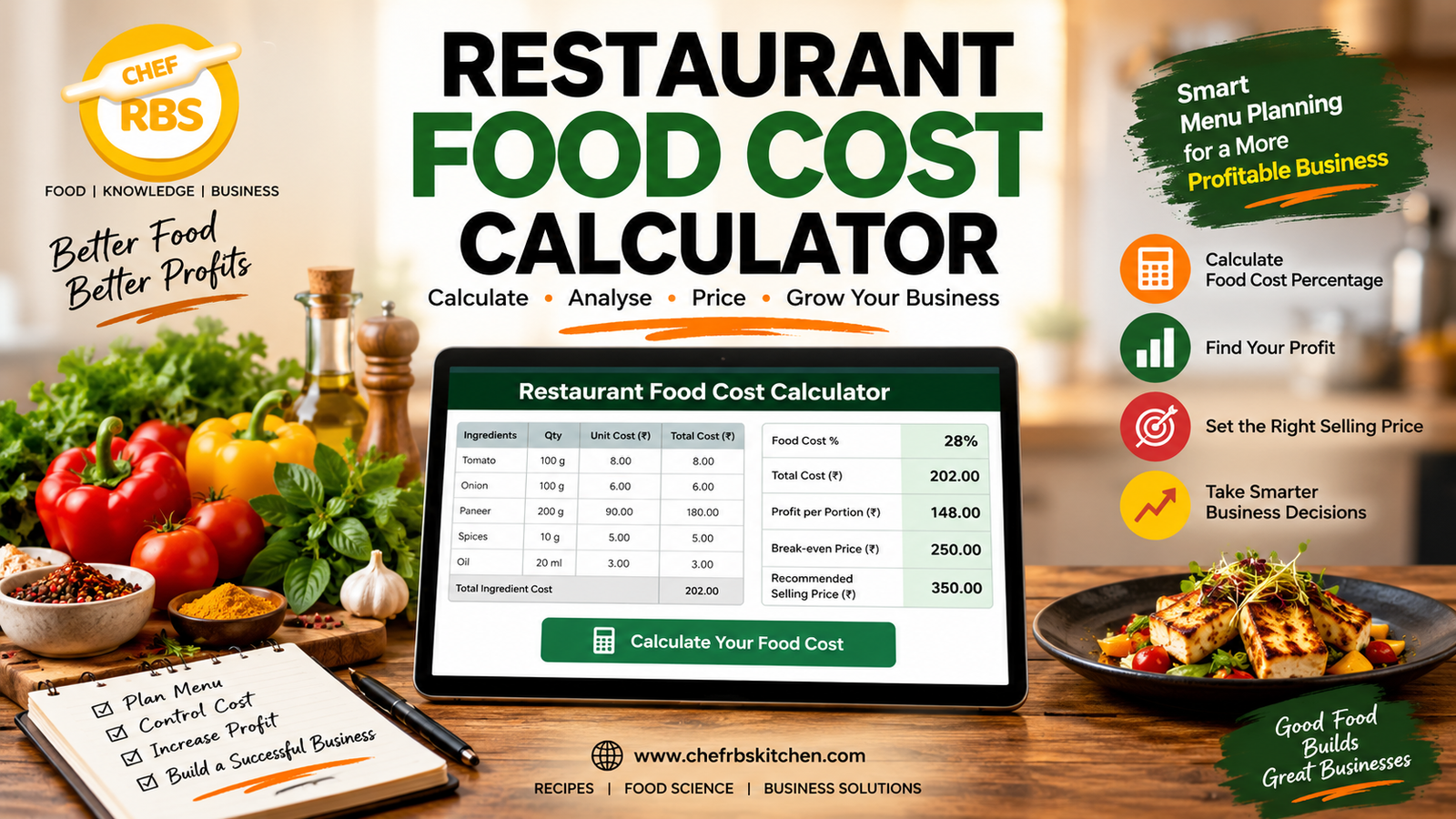
Use this simple Chef RBS calculator to estimate the cost of a recipe or individual menu item, calculate your food cost percentage and understand how your selling price affects your margin.
Whether you operate a restaurant, café, cloud kitchen, food truck or QSR, accurate recipe costing can help you make better decisions about portion sizes, menu pricing and profitability.
Enter your numbers, check the result and use the information to make smarter menu decisions.
Note: This calculator provides an estimate for planning purposes. Your actual profitability will depend on labour, rent, utilities, packaging, waste, taxes, commissions and other operating costs.
Calculate Your Food Cost
Ingredient Cost ($)
How to Use the Restaurant Food Cost Calculator
Enter the total ingredient cost for the recipe, the number of portions it produces, and your selling price per portion. The calculator will estimate your cost per portion and food cost percentage.
You can also add packaging, labour and overhead costs to get a more realistic view of your total cost and profit per portion. For delivery or takeaway businesses, enter your app commission percentage to see how commissions affect your profitability.
Use the target food cost percentage to estimate a recommended selling price for your menu item.
Understanding Your Results
Cost Per Portion: Shows how much it costs to produce one portion based on your ingredient cost and number of portions.
Food Cost %: Shows what percentage of your selling price is represented by the ingredient cost.
Total Cost Per Portion: Includes ingredient cost plus packaging, labour and overhead costs entered into the calculator.
Profit Margin %: Shows the estimated profit margin after the costs and delivery/app commission you enter.
Recommended Selling Price: Estimates a selling price based on your target food cost percentage.
Break-Even Selling Price: Shows the approximate selling price needed to cover your total cost after the delivery/app commission is entered.
Why Food Cost Matters for Restaurant Profit
Food cost is one of the most important numbers in a restaurant because even a small increase in ingredient cost can reduce your profit significantly.
A dish that looks profitable on paper may become much less profitable when portion sizes, food waste, packaging, labour, overheads and delivery commissions are included.
That is why professional kitchens use standardized recipes, accurate portion control and regular food-cost reviews. Knowing your numbers helps you price dishes correctly, identify low-profit items and make better menu decisions.
Restaurant Food Cost Formula
Food Cost % = (Ingredient Cost Per Portion ÷ Selling Price Per Portion) × 100
For example, if a portion costs $3 to produce and sells for $10, the food cost is 30%.
Remember that food cost alone does not represent your complete restaurant cost. Labour, packaging, rent, utilities, waste, taxes and delivery commissions can all affect your actual profit.
Example: How Food Cost Affects Your Selling Price
Suppose a restaurant prepares a dish at an ingredient cost of $3 per portion and sells it for $10.
The food cost percentage is 30%. If packaging, labour and overheads add another $1.50 per portion, the total operating cost entered into the calculator becomes $4.50.
If a delivery platform charges a 30% commission, another $3 is deducted from the $10 selling price. The estimated profit remaining is therefore $2.50 per portion.
This example shows why restaurant owners should look beyond ingredient cost when setting menu prices.
Tips to Improve Restaurant Food Cost
1. Standardize every recipe: Use fixed ingredient quantities and portion sizes so your food cost stays consistent.
2. Control portion sizes: Even a small increase in portion size can significantly increase your monthly food cost.
3. Reduce food waste: Track preparation waste, spoilage, overproduction and returned food.
4. Review supplier prices: Ingredient prices change regularly, so update your recipe costing when major prices change.
5. Monitor delivery commissions: A high commission can reduce your profit even when your food cost looks healthy.
6. Review your menu regularly: Identify products with strong sales and good margins, and reconsider items that consume resources without generating enough profit.
Frequently Asked Questions
What is a good food cost percentage for a restaurant?
There is no single ideal percentage for every restaurant. It depends on the concept, menu, location, pricing and operating model. Many restaurants use a target range and monitor it regularly rather than relying on one fixed number.
Does food cost include labour and rent?
No. Food cost normally refers to the cost of ingredients used to produce the food. Labour, rent, utilities, packaging and other operating expenses should be considered separately when calculating total cost and profitability.
Why is my food cost percentage increasing?
Common reasons include higher ingredient prices, larger portions, food waste, inaccurate recipes, theft, poor inventory control or selling prices that have not been updated.
Can I use this calculator for a QSR or cloud kitchen?
Yes. You can use it for restaurants, cafés, cloud kitchens, food trucks and QSR operations to estimate recipe cost, food cost percentage, total cost and profitability.
Should delivery commission be included when pricing food?
If you sell through delivery platforms, commission can have a significant effect on your actual profit. Include the commission in the calculator to understand how it affects your selling price and profit per portion.
Final Thoughts
Understanding food cost is not just about calculating a percentage — it is about understanding how every cost affects your restaurant’s profitability.
Use this calculator when developing new dishes, reviewing existing menu items or checking whether your current selling prices are still profitable.
For more practical restaurant costing, menu pricing and food business strategies, explore the Food Business section of Chef RBS Kitchen.