Easy High-Protein Dinner Ideas: Simple Meals That Actually Satisfy
A good dinner does not have to mean eating the same grilled chicken and vegetables every night.
As a chef, I think a good dinner should do three things: taste good, feel satisfying, and be practical enough to make on a busy day. Protein can come from much more than chicken. Eggs, fish, yogurt, cottage cheese, beans, lentils, paneer, and other plant foods can all become part of a simple dinner.
The challenge is not finding protein. The challenge is building a meal around it without making dinner complicated.
In this guide, I’ll share easy, high-protein dinner ideas based on simple cooking methods and familiar ingredients and combinations that actually work in a home kitchen. I’ll also share a few chef tips for making these meals more flavorful without turning dinner into a long cooking project.
1. What Makes a Dinner High in Protein?
A high-protein dinner is not simply a meal with one large piece of meat. The better approach is to build the plate around a clear protein source and then add vegetables, grains or other carbohydrates, healthy fats and flavour.
For example, grilled chicken with roasted vegetables and rice can make a balanced dinner. So can baked fish with potatoes and salad, eggs with beans and vegetables, or paneer with vegetables and a small portion of rice or roti.
The protein source can change depending on your preference:
- Chicken: grilled, roasted, stir-fried, or cooked in a curry
- Fish and seafood: baked, pan-seared, grilled, or added to soups
- Eggs: omelets, scrambled eggs, shakshuka, or egg-based rice dishes
- Dairy: Greek yogurt, cottage cheese, or paneer
- Plant proteins: lentils, beans, chickpeas, tofu, and other soy foods
Chef RBS Tip
Start by choosing the protein first. Then decide how you want to cook it.
This simple habit makes dinner planning much easier. Instead of asking, “What should I cook tonight?” you can ask, “What protein do I have, and what can I build around it?”
That is often the easiest way to turn everyday ingredients into a satisfying high-protein dinner.
2. Easy High-Protein Dinner Ideas That Do Not Feel Like “Diet Food”
The best high-protein dinner is one you actually want to eat.
A common mistake is making protein the only focus and forgetting about flavor, texture, and variety. A plate of plain chicken and steamed vegetables may be high in protein, but most people will not enjoy eating the same combination every night.
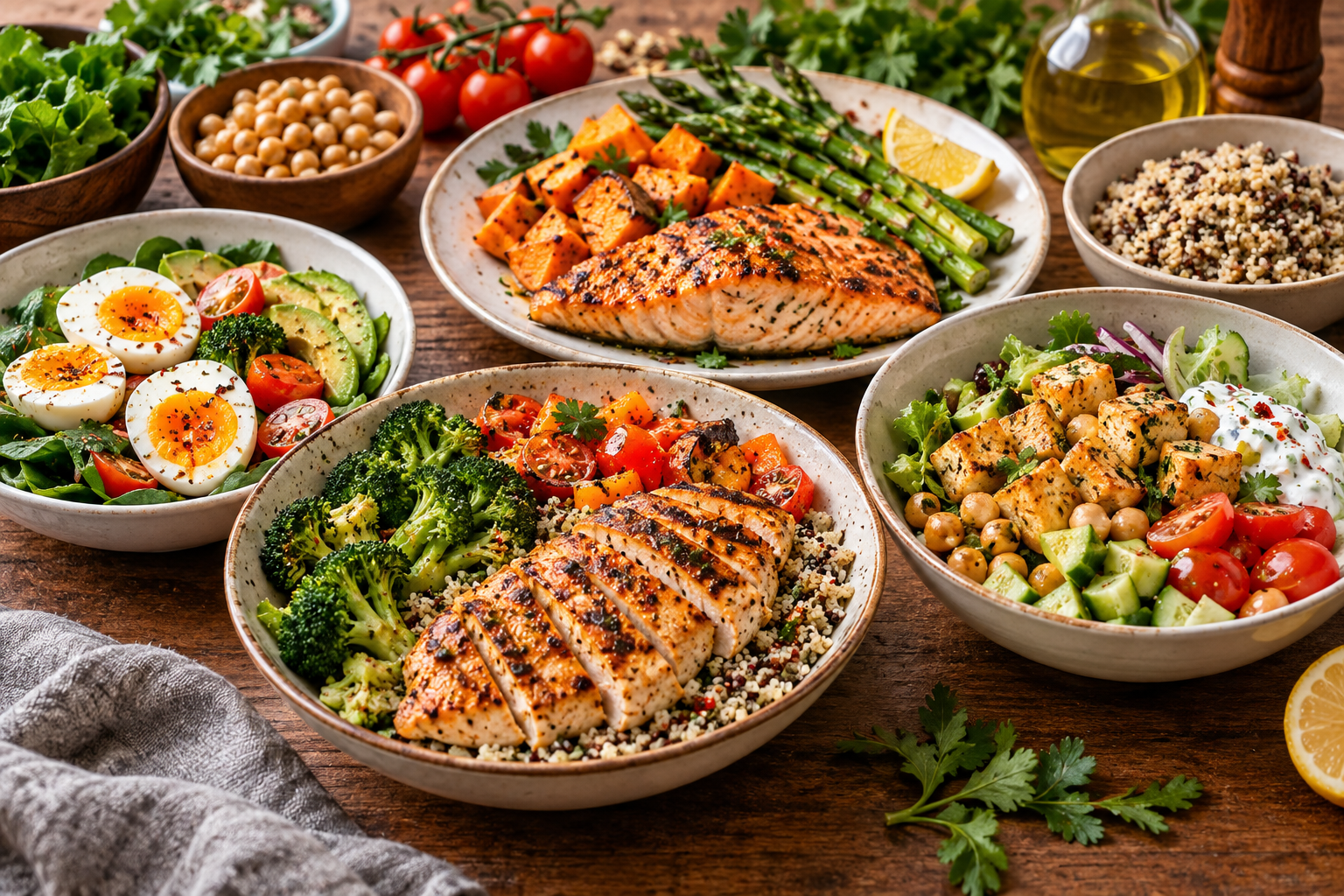
Instead, think like a chef: protein + vegetables + a satisfying carbohydrate + flavor.
Here are some simple combinations that work across different cuisines:
1. Chicken Rice Bowl
Use grilled or pan-seared chicken with cooked rice, roasted or sautéed vegetables, and a simple yogurt or herb sauce.
2. Salmon or Other Fish with Potatoes
Bake or pan-sear fish and serve it with roasted potatoes and a fresh salad. Other firm fish can be used when salmon is not available.
3. Egg and Bean Bowl
Combine eggs with beans, sautéed vegetables, and whole-grain toast or another grain. It is inexpensive, flexible, and quick to prepare.
4. Paneer or Tofu Stir-Fry
For a vegetarian option, cook paneer or tofu with colorful vegetables and a simple soy, garlic, and ginger sauce. Serve with rice or noodles.
5. Lentil and Yogurt Bowl
Cook lentils with herbs and spices, then serve them with plain Greek yogurt, vegetables, and a small portion of rice or flatbread.
The important point is that high-protein meals do not need to belong to one particular cuisine. You can use the same basic structure with Indian, Mediterranean, Mexican, Asian, or Western ingredients.
Chef RBS Tip
Don’t try to make every ingredient high in protein.
Choose one or two strong protein sources, then build the rest of the meal around flavor, color, and texture. This makes dinner easier to prepare and much more enjoyable to eat.
3. High-Protein Chicken Dinner Ideas
Chicken is one of the easiest proteins to build a quick dinner around because it works with almost any cooking style.
You do not need complicated marinades or special ingredients. A few basic seasonings, a hot pan or oven, and the right cooking technique can turn chicken into a completely different meal each time.
Lemon Herb Chicken with Vegetables
Season chicken breast or boneless chicken thighs with salt, black pepper, garlic, lemon juice, and dried or fresh herbs. Pan-sear until properly cooked, then serve with roasted vegetables and rice, potatoes, or another grain.
Chef tip: Chicken breast can become dry when overcooked. Cook it until just done and allow it to rest for a few minutes before slicing.
Chicken Stir-Fry
Slice chicken into thin pieces and cook quickly over high heat with vegetables such as bell peppers, broccoli, carrots, and snap peas. Add a simple sauce made with soy sauce, garlic, ginger, and a little acidity.
Serve it with rice or noodles.
This is also a useful leftover dinner because cooked chicken and vegetables can be turned into a stir-fry in minutes.
Chicken and Bean Bowl
Combine seasoned chicken with black beans or another type of bean, cooked rice, lettuce, tomatoes, corn, and a spoonful of plain Greek yogurt.
You can change the seasonings to suit your taste. Use chili and cumin for a Mexican-inspired bowl, or garlic, lemon, and herbs for a Mediterranean-style version.
Chicken Curry with Rice
A simple chicken curry can also become a satisfying high-protein dinner. Build the sauce with onion, garlic, ginger, tomatoes, and spices, then add chicken and simmer until tender.
Serve with a moderate portion of rice or whole-grain flatbread and some vegetables.
The same basic method can be adapted to different regional flavors without changing the overall meal structure.
Chef RBS Tip
Don’t confuse “high protein” with “more chicken.”
A well-planned dinner can use a reasonable portion of chicken and still feel satisfying when you add beans, vegetables, yogurt, or another protein-rich ingredient.
That gives you more variety, better texture, and a meal that feels like real food rather than a restricted diet.
4. High-Protein Fish and Seafood Dinner Ideas
Fish and seafood can make an excellent high-protein dinner because they cook quickly and work with many different flavors.
You also do not have to use one specific type of fish. Salmon, cod, tilapia, tuna, shrimp, and other locally available seafood can be used depending on what is fresh and affordable in your area.
Lemon Garlic Fish with Vegetables
Season a fish fillet with lemon juice, garlic, black pepper, salt, and herbs. Pan-sear or bake until the fish is cooked through.
Serve it with roasted vegetables and potatoes, rice, or another grain.
The lemon adds acidity, while the herbs and garlic give the fish plenty of flavor without requiring a heavy sauce.
Shrimp and Vegetable Stir-Fry
Shrimp cooks very quickly, making it useful for a busy weeknight.
Cook shrimp with garlic, ginger, and vegetables such as broccoli, bell peppers, carrots, or snow peas. Add a light soy-based sauce and serve with rice.
Chef tip: Do not overcook shrimp. Once it turns opaque and reaches the right texture, remove it from the heat. Overcooked shrimp can quickly become rubbery.
Tuna and Bean Bowl
Canned tuna can be a convenient option when you do not have time to cook fresh fish.
Mix tuna with beans, tomatoes, cucumber, and leafy greens and a simple dressing made with olive oil and lemon juice. Add whole-grain bread, rice, or another carbohydrate if you want a more substantial dinner.
This is particularly useful when you want a high-protein dinner without much cooking.
Baked Fish with Yogurt Herb Sauce
Bake a mild white fish and serve it with a sauce made from plain Greek yogurt, lemon juice, garlic, and fresh herbs.
Add roasted vegetables and potatoes or rice on the side.
This combination gives you a useful contrast of tender fish, creamy sauce, and crisp roasted vegetables.
Chef RBS Tip
When cooking fish, focus on heat and timing rather than heavy seasoning.
Fresh fish usually needs less treatment than many people think. A little salt, acidity, herbs, and a good cooking technique can be enough to create a flavorful dinner.
5. High Protein Vegetarian Dinner Ideas
You do not need meat or seafood to make a satisfying high-protein dinner.
Vegetarian meals can provide plenty of protein when you combine ingredients thoughtfully. The easiest approach is to use foods such as lentils, beans, tofu, paneer, cottage cheese, Greek yogurt, and eggs, depending on your diet.
Paneer or Tofu Stir-Fry
Cut paneer (Indian cottage cheese) or firm tofu into cubes and cook with bell peppers, broccoli, onions, and other vegetables.
Add garlic, ginger, and a simple soy-based sauce. Serve with rice or whole-grain noodles.
The same recipe works with either protein, making it easy to adapt to different diets and ingredients available locally.
Lentil and Rice Bowl
Cook lentils with onions, tomatoes, garlic, and spices. Serve them with rice, vegetables, and plain yogurt.
This combination is common in many parts of the world because it is affordable, filling, and easy to prepare in larger batches.
Bean and Egg Dinner
Combine cooked beans with scrambled or boiled eggs, sautéed vegetables, and whole-grain toast.
You can add avocado, salsa, herbs, or a simple yogurt sauce for more flavor.
Chickpea and Yogurt Bowl
Combine cooked chickpeas with cucumber, tomatoes, herbs, and a spoonful of Greek yogurt. Add lemon juice and a little olive oil.
Serve with whole-grain bread, flatbread, or a small portion of rice.
It takes very little cooking and can be prepared ahead of time.
Chef RBS Tip
For vegetarian dinners, combine different protein sources rather than depending on one ingredient.
For example, lentils with yogurt, beans with eggs, or tofu with edamame can give the meal more variety in flavor and texture.
You can also change the seasonings completely. The same basic ingredients can become an Indian-style bowl, a Mediterranean-style plate, or an Asian-inspired stir-fry simply by changing the sauce and herbs.
6. High Protein Dinner Ideas for Busy Weeknights
A high-protein dinner does not have to take an hour to prepare. Recent Instacart data also shows growing interest in protein foods.
For many people, the biggest challenge is not knowing what to eat. It is finding the time and energy to cook after a busy day. That is why simple meals with a few reliable ingredients can be more useful than complicated recipes.
Here are some practical combinations that can come together quickly.
Chicken and Vegetable Wrap
Cook sliced chicken with garlic, black pepper, and your favorite herbs or spices. Place it in a whole-grain wrap with lettuce, tomato, cucumber, and Greek yogurt sauce.
You can also use leftover roasted chicken to make this even faster.
Egg Fried Rice
Use cooked rice, eggs, and vegetables such as carrots, peas, corn, and scallions (green onions).
Cook the vegetables quickly, add the eggs, then add the rice and a small amount of soy sauce.
It is a great way to turn leftover rice into a complete dinner.
Tuna Toast or Sandwich
Mix canned tuna with Greek yogurt or a small amount of mayonnaise, lemon juice, black pepper, and chopped vegetables.
Serve it on whole-grain bread with a side salad.
Cottage Cheese Bowl
Combine cottage cheese with chopped vegetables, herbs, black pepper, and a simple dressing. Add eggs, beans, or whole-grain toast if you want a more substantial meal.
Cottage cheese works well because it requires almost no cooking.
Quick Tofu Bowl
Pan-sear firm tofu until lightly crisp. Add cooked vegetables and a simple sauce made with soy sauce, ginger, garlic, and lemon or lime juice.
Serve with rice or another grain.
Chef RBS Tip
Keep a few protein ingredients ready in your refrigerator.
Cooked chicken, boiled eggs, cooked beans, lentils, tofu, or cottage cheese can make dinner much easier when you are short on time.
Good meal planning is not always about preparing an entire recipe in advance. Sometimes it is simply about having the right ingredients ready to combine.
7. How to Build a High-Protein Dinner Without a Complicated Recipe
You do not always need a recipe to make a good high-protein dinner.
A simple formula can help you build dinner from whatever you already have at home:
Protein + vegetables + carbohydrate + flavor
Step 1: Choose Your Protein
Start with one main protein source:
- Chicken
- Fish or seafood
- Eggs
- Greek yogurt
- Cottage cheese
- Paneer
- Tofu
- Lentils
- Beans
- Chickpeas
Step 2: Add Vegetables
Use whatever is available. Broccoli, spinach, carrots, tomatoes, bell peppers, cabbage, zucchini and leafy greens can all work.
Fresh, frozen, or leftover vegetables are fine.
Step 3: Add a Carbohydrate
Rice, potatoes, oats, whole-grain bread, pasta, noodles, or flatbreads can all fit into the meal.
The amount can depend on your appetite, activity level, and the rest of your diet.
Step 4: Add Flavor
This is where a chef can make a simple meal much more interesting.
Try combinations such as:
- Lemon + garlic + herbs
- Soy sauce + ginger + garlic
- Tomato + chili + cumin
- Yogurt + herbs + lemon
- Olive oil + garlic + black pepper
You can change the flavor profile without changing the basic ingredients.
A Simple Example
Suppose you have chicken, leftover rice, and a few vegetables.
Instead of searching for another recipe, you could make a quick chicken and vegetable rice bowl.
Have eggs instead of chicken? Make egg fried rice.
Have tofu? Make a tofu rice bowl.
Have beans and yogurt? Make a warm bean bowl with vegetables and yogurt sauce.
The ingredients change, but the cooking principle stays the same.
Chef RBS Tip
Think of protein as the starting point, not the entire meal.
When you balance protein with vegetables, carbohydrates, texture, and a good sauce, even a simple dinner can feel complete and satisfying.
8. Meal Prep Makes High-Protein Dinners Easier
One of the simplest ways to eat more protein during a busy week is to prepare a few basic ingredients in advance.
You do not need to cook seven complete dinners on Sunday. That can become repetitive and time-consuming.
Instead, prepare building blocks that can be mixed and matched.
Prepare One or Two Protein Sources
Cook a batch of chicken, fish, eggs, lentils, beans, or tofu.
Store them properly in the refrigerator and use them in different meals throughout the week.
For example, cooked chicken can become:
- A rice bowl
- A wrap
- A salad
- A stir-fry
- A soup
The protein stays the same, but the meal feels completely different.
Prepare Vegetables Separately
Roast a tray of mixed vegetables or keep washed and chopped vegetables ready.
Frozen vegetables are also a practical option. They can go directly into stir-fries, soups, and rice dishes without much preparation.
Keep Quick Protein Foods Available
Some useful ingredients to keep on hand include:
- Eggs
- Greek yogurt
- Cottage cheese
- Canned tuna or other fish
- Beans
- Chickpeas
- Lentils
- Tofu
These foods can turn a basic meal into a more substantial dinner without much extra cooking.
Don’t Forget Flavor
Meal-prepped food can become boring when everything tastes the same.
My chef approach is to change the sauce, herbs, and seasoning rather than cooking a completely different meal every day.
The same chicken can taste completely different with a lemon-herb dressing on Monday, a yogurt-garlic sauce on Tuesday, and a ginger-soy sauce on Wednesday.
Chef RBS Tip
Prepare ingredients, not necessarily finished meals.
This gives you flexibility and makes it easier to cook according to your appetite that day.
A little preparation can turn a 30-minute dinner into a 10-minute assembly job.
9. How to Keep High-Protein Dinners Interesting
Eating more protein does not mean eating the same chicken breast, eggs, or yogurt every day.
Variety comes from changing cooking methods, textures, sauces, and cuisines.
The same basic ingredients can become completely different dinners.
Change the Cooking Method
Chicken can be grilled, roasted, stir-fried, baked, or simmered in a curry.
Tofu can be pan-seared, baked, or added to a soup.
Eggs can become an omelet, scrambled eggs, shakshuka, or fried rice.
Changing the cooking method can make familiar ingredients feel new.
Change the Flavor Profile
Try taking the same protein in different directions:
Mediterranean-style: lemon, garlic, herbs, and olive oil
Asian-inspired: ginger, garlic, soy sauce, and sesame
Indian-style: tomato, cumin, coriander, and warming spices
Mexican-inspired: beans, chili, lime, tomato, and fresh herbs
You do not need to buy completely different ingredients for every meal.
Add Different Textures
Texture is one of the easiest ways to make a simple dinner more interesting.
Combine something tender with something crisp, creamy, or fresh.
For example, a chicken bowl can have tender chicken, crunchy vegetables, creamy yogurt sauce, and fluffy rice.
That contrast makes the meal more enjoyable.
Use Leftovers Creatively
Leftover protein does not have to look like yesterday’s dinner.
Roasted chicken can become a wrap. Cooked fish can become a grain bowl. Lentils can become a soup. Beans can become a salad or filling for tacos.
This approach also helps reduce food waste.
Chef RBS Tip
Think like a chef, not like someone following a fixed diet plan.
Good food is about balance and variety. When you understand how ingredients, cooking methods, and flavors work together, creating a satisfying high-protein dinner becomes much easier.
10. High-Protein Dinner Does Not Have to Mean More Meat
There is a common idea that a high-protein dinner must contain a large portion of meat.
That is not necessarily the case.
Protein can come from many different foods, and combining a few of them can make dinner more interesting and practical.
For example, a vegetarian dinner could combine lentils, Greek yogurt, and whole grains. Another meal could use tofu, beans, and vegetables. Eggs can also be paired with beans, vegetables, and whole-grain toast.
This gives you more choices if you eat less meat, follow a vegetarian diet, or simply want more variety.
Think Beyond the Main Protein
Instead of asking:
“How much meat should I eat?”
Try asking:
“Where is the protein in this meal?”
It might come from the main ingredient, but it can also come from supporting ingredients.
A lentil soup with yogurt on the side is different from a chicken dinner, but both can be built around protein.
A Few Simple Combinations
- Eggs + beans + vegetables
- Lentils + yogurt + rice
- Tofu + edamame + vegetables
- Paneer + lentils + vegetables
- Chickpeas + Greek yogurt + whole-grain bread
The exact ingredients can change depending on your country and what is available locally.
Chef RBS Tip
Don’t limit yourself to one food category.
A varied diet gives you more ways to enjoy protein while keeping dinner interesting. The goal is to create meals that are flavorful, practical, and satisfying, rather than simply trying to add as much protein as possible.
11. Simple High Protein Dinner Ideas for Different Eating Styles
There is no single way to build a high-protein dinner.
Your choice can depend on your food preferences, culture, budget, cooking time, and the ingredients available where you live.
The basic idea stays the same: choose a good protein source and build the rest of the meal around it.
If You Eat Meat
Chicken, turkey, lean beef, and other meats can be used in stir-fries, soups, curries, rice bowls, and roasted dinners.
Try changing the seasoning and cooking method rather than preparing the same meal repeatedly.
If You Eat Fish and Seafood
Fish, shrimp, tuna, and other seafood can be used for quick dinners because many varieties cook in a short time.
Pair them with vegetables and rice, potatoes, grains, or whole-grain bread.
If You Eat Vegetarian Foods
Eggs, dairy foods, lentils, beans, chickpeas, tofu, and paneer can give you plenty of options.
A lentil curry with yogurt, tofu stir-fry, or paneer and vegetable bowl can all become satisfying dinners.
If You Want Quick Meals
Keep convenient ingredients available, such as eggs, canned fish, cooked beans, Greek yogurt, cottage cheese, tofu, and frozen vegetables.
These can help you prepare dinner without starting completely from scratch.
If You Cook for a Family
You do not necessarily need to prepare separate meals.
Make one main protein, one vegetable dish, and one carbohydrate, then allow everyone to combine them according to their preferences.
This works particularly well for rice bowls, wraps, tacos, stir-fries, and family-style dinners.
Chef RBS Tip
Build around flexibility.
A good dinner idea should work even when you cannot find the exact ingredient shown in a recipe.
If a recipe calls for salmon but your local market has another fresh fish, use that. If you do not eat chicken, use tofu, beans, or another protein you enjoy.
That is how cooking becomes practical rather than restrictive.
12. The Chef’s Formula for a Better High-Protein Dinner
After cooking professionally for years, I have found that a satisfying dinner is rarely about using expensive ingredients.
It is usually about how you combine simple ingredients.
My basic formula is:
Protein + vegetables + carbohydrate + flavor + texture
Start with your protein. Then add vegetables for freshness and color. Choose a carbohydrate that makes the meal feel complete, such as rice, potatoes, pasta, bread, or another grain.
Then bring everything together with seasoning, herbs, spices, or a sauce.
Finally, think about texture.
A soft protein with tender vegetables can become much more interesting when you add something crisp, fresh, or creamy.
A Simple Example
Take grilled chicken.
On its own, it is just grilled chicken.
Add roasted vegetables, rice, a lemon-herb yogurt sauce, and some toasted seeds, and you have a completely different eating experience.
The same principle works with fish, eggs, tofu, beans, lentils, or paneer.
What I Look For as a Chef
When creating a dinner, I usually ask:
- Is the main protein cooked properly?
- Does the meal have enough variety in texture?
- Is there acidity to balance the richness?
- Are the seasonings supporting the main ingredient?
- Can I prepare it easily and consistently?
These questions are useful whether you are cooking for yourself, your family, or a restaurant.
Chef RBS Tip
Don’t make a high-protein dinner complicated just because the goal is protein.
Good cooking is still about balance.
When protein, vegetables, carbohydrates, flavor, and texture work together, a simple meal can be satisfying without needing expensive ingredients or complicated techniques.
13. Final Thoughts: Make Protein Part of Dinner, Not the Whole Dinner
A good high-protein dinner does not need to be complicated, expensive, or repetitive.
Start with a protein you enjoy. Add vegetables, a suitable carbohydrate, and flavors that make the meal enjoyable. Then change the cooking method, seasoning, or sauce when you want something different.
Chicken, fish, eggs, dairy, beans, lentils, tofu, and paneer can all fit into different styles of cooking.
The most useful habit is to keep a few protein-rich ingredients available and learn how to combine them in different ways. This gives you more flexibility when time is limited and helps turn everyday ingredients into satisfying meals.
As a chef, I believe healthy eating should still feel like good cooking.
You should look forward to dinner.
Chef RBS