Why Mango Sticky Rice Became a Global Dessert
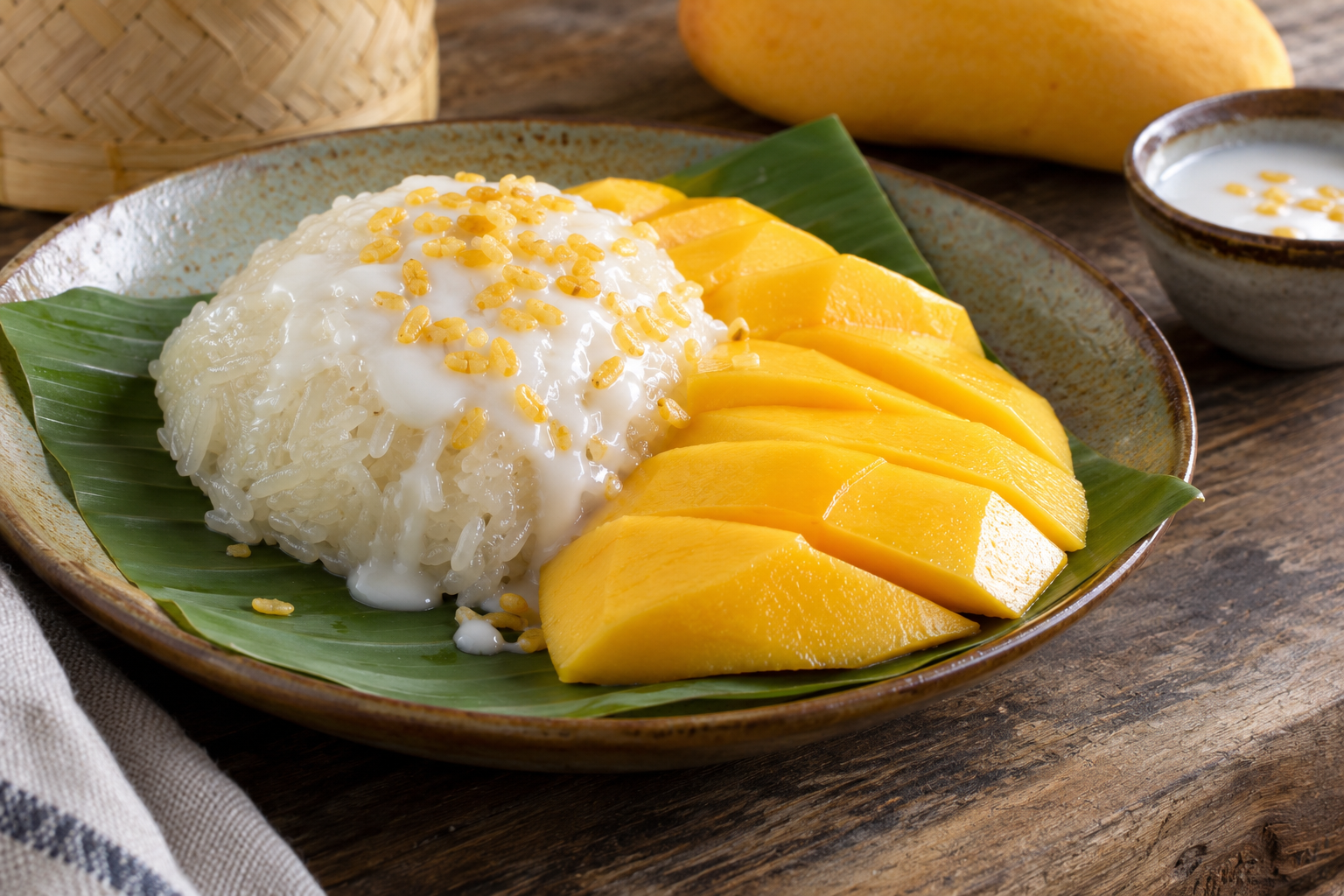
The first thing I notice about good mango sticky rice is not the mango.
It is the texture of the rice.
It should feel soft and creamy from the coconut but still have that gentle chew when you bite into it. Then comes the ripe mango, bringing freshness and acidity, while the coconut adds richness.
Simple ingredients. Very little decoration.
Yet somehow, this dessert has travelled far beyond Thailand and become familiar around the world.
As a chef, that makes me curious.
Why does this combination work so well? And how did such a simple Thai dessert become a global favorite?
Let’s look at it the way I would look at it in a professional kitchen: not just as a dessert, but through texture, flavor balance, ingredients, technique, and food culture.
2. What Makes Mango Sticky Rice Work
There are only a few main ingredients here, but each one has a job.
Sticky rice gives the dessert its soft, chewy body.
Coconut milk brings richness and a creamy mouthfeel.
Mango adds freshness, juiciness, and a gentle acidity that stops the dessert from feeling too heavy.
Then there is salt.
This is the small detail people sometimes miss. A little salt doesn’t make the dessert salty. It helps control the sweetness and makes the coconut and mango taste more distinct.
That is what I like about this dessert as a chef.
Nothing is there just for decoration.
When the balance is right, you can taste every ingredient, but they still feel like one dish.
That is good food design: simple ingredients doing different jobs.
3. Why Sticky Rice Has That Unique Chewy Texture
The rice is what gives mango sticky rice its identity.
Traditional mango sticky rice uses glutinous rice, also called sticky rice. Despite the name, it doesn’t contain gluten.
What makes it different is its starch.
When the rice is cooked, its starch absorbs water and changes the texture of the grains. Instead of becoming fluffy and separate like many everyday rice varieties, glutinous rice develops that characteristic soft, cohesive, and chewy texture.
As a chef, this is the part I pay close attention to.
Too little cooking, and the rice feels hard.
Too much water or overcooking, and you lose that pleasant chew and end up with something closer to a paste.
The goal is not simply to make the rice sticky.
The goal is to make it sticky while keeping its structure.
That’s a small difference, but you can feel it immediately when you take the first bite.
4. Why Coconut Milk Makes the Rice Taste So Rich
Once the rice has the right texture, coconut milk does something very important.
It changes the mouthfeel.
Good coconut milk gives the rice a smooth, creamy richness without turning it into a heavy pudding. The natural fat carries the coconut aroma, while sugar adds sweetness, and a little salt keeps that sweetness in check.
This is where I see a common mistake.
More sugar does not automatically make better mango sticky rice.
For me, the coconut mixture should support the rice, not cover it.
I want to taste the coconut first, then the gentle sweetness, and finally that small touch of salt that makes the whole bite feel more complete.
The best balance is when you notice the coconut but don’t feel overwhelmed by it.
5. The Mango Is More Than a Topping
This is where I become a little picky as a chef.
Not every mango is going to give you the same result.
For mango sticky rice, I want a mango that is ripe, fragrant, juicy, and naturally sweet, with enough freshness to cut through the richness of the coconut.
I don’t choose it only by color.
I look at the aroma, feel the fruit gently, and think about how it will taste with the rice.
Because the mango has an important job.
The rice is rich and chewy.
The coconut is creamy.
The mango brings the freshness.
That contrast is what keeps you going back for another bite.
If the mango is bland, the dessert can feel flat.
If it is perfectly ripe, you suddenly understand why these three ingredients became such a classic combination.
For me, the mango isn’t a garnish placed beside the rice. It is half of the experience.
6. Where Mango Sticky Rice Comes From
Mango sticky rice is closely associated with Thailand, where it is known as khao niao mamuang.
What I find interesting is how uncomplicated the idea is.
Sticky rice and coconut milk were already part of Thai food traditions. Pairing the creamy rice with ripe seasonal mango created a combination that made sense almost immediately.
There is no complicated sauce.
No long list of ingredients.
Just a few things prepared properly.
And that is often how traditional food works.
A dish doesn’t become important because somebody decides it should be famous.
It becomes important because people keep making it, keep eating it, and keep passing it on.
Mango sticky rice eventually became one of the Thai desserts that visitors remembered long after leaving Thailand.
And that was the beginning of a much bigger journey.
7. How Mango Sticky Rice Became a Global Dessert
Food travels when people remember it.
Travellers taste something in one country, talk about it when they return home, and eventually look for it again. Restaurants then introduce that food to people who may never have visited its place of origin.
Mango sticky rice had exactly the qualities needed to travel.
You don’t need a long explanation to understand the combination.
Chewy rice. Creamy coconut. Ripe mango.
The ingredients are familiar, but the combination feels different.
Thai restaurants helped introduce the dessert to new audiences, while tourism and social media gave it an even wider reach.
Then came moments that put it in front of enormous audiences.
In 2022, Thai rapper Milli famously ate mango sticky rice during her Coachella performance, creating a fresh wave of international attention around the dessert.
The recipe didn’t suddenly change.
People simply started looking at it differently.
And that’s one of the fascinating things about food.
Sometimes a traditional dish becomes global not because it is reinvented, but because more people finally get the chance to discover what was already there.
8. What I Look For as a Chef
When I taste mango sticky rice, I don’t judge it by how beautiful the plate looks first.
I look for balance.
The rice should be soft and chewy, not wet or mushy.
The coconut should be creamy and aromatic, but not so sweet that it hides everything else.
The mango should be ripe enough to give you natural sweetness and freshness.
Then I taste all three together.
That’s when I know whether the dessert is working.
I’ve learned in professional kitchens that balance is often more important than adding more ingredients.
You can have excellent rice, excellent coconut, and an excellent mango, but if one of them dominates the plate, the experience changes.
For me, the best mango sticky rice is almost quiet.
Nothing is fighting for attention.
Every ingredient has its place, and the whole bite simply makes sense.
9. A Simple Chef RBS Kitchen Test
Here’s a simple way I like to understand a dish: change one thing and taste the difference.
With mango sticky rice, try the coconut mixture at three levels of sweetness.
Keep the rice and mango exactly the same.
Taste the first with less sugar, the second with a balanced amount, and the third noticeably sweeter.
You will quickly notice something interesting.
The sweetest version isn’t necessarily the most enjoyable.
Too much sweetness can make the coconut feel heavy and reduce the freshness of the mango. With a little less sweetness, the mango becomes more noticeable, and the rice feels lighter.
Then add a small amount of salt.
Taste it again.
The dessert hasn’t suddenly become salty, but the sweetness feels more controlled, and the coconut flavor becomes clearer.
This is one of the simplest lessons I have learned in professional kitchens:
Sometimes improving a dish isn’t about adding something new. It’s about finding the right balance between what is already there.
10. Why This Simple Dessert Still Matters
The more I look at mango sticky rice, the more I appreciate how little it needs.
A few ingredients.
Good technique.
And the right balance.
That is also what I have learned from years in professional kitchens. A dish doesn’t become memorable because it contains the most ingredients. It becomes memorable when every ingredient has a reason to be there.
Mango sticky rice does that beautifully.
The sticky rice gives you texture.
The coconut gives you richness.
The mango brings freshness.
And a little salt quietly brings everything together.
Maybe that’s why this dessert travelled so far from Thailand.
It is simple enough to understand immediately but interesting enough to keep you coming back.
Sometimes the best food doesn’t need to be complicated. It just needs to be right.
11. Mango Sticky Rice FAQ
What is mango sticky rice?
Mango sticky rice is a Thai dessert made with glutinous sticky rice, coconut milk, sugar, salt and ripe mango. Its appeal comes from the contrast between chewy rice, creamy coconut and fresh mango.
Why is mango sticky rice so popular?
The combination is simple but balanced. The rice provides texture, coconut adds richness, and mango brings freshness. You get several different sensations in one bite without needing many ingredients.
Is mango sticky rice a traditional Thai dessert?
Yes. Known in Thailand as khao niao mamuang, it is closely associated with Thai cuisine and has become one of the country’s best-known desserts internationally.
What type of rice is used for mango sticky rice?
Traditional mango sticky rice uses glutinous rice, also called sticky rice. Its starch structure gives the cooked rice its characteristic soft and chewy texture.
Does sticky rice contain gluten?
No. Despite the name “glutinous rice,” it does not contain gluten. The word glutinous refers to its naturally sticky texture when cooked.
What makes good mango sticky rice?
For me, it comes down to three things: properly cooked sticky rice, balanced coconut milk and a ripe, fragrant mango. When those are right, the dessert doesn’t need much else.