BHT in Food: The Preservative Behind Shelf-Stable Fats and Oils
One of the quiet battles in food manufacturing happens long before a packaged food reaches the shelf: how do you keep fats and oils from oxidizing?
Once oxidation starts, fats can develop stale or rancid flavors, which can shorten the useful life of a product. Food manufacturers therefore use antioxidants and other preservation methods to slow these changes.
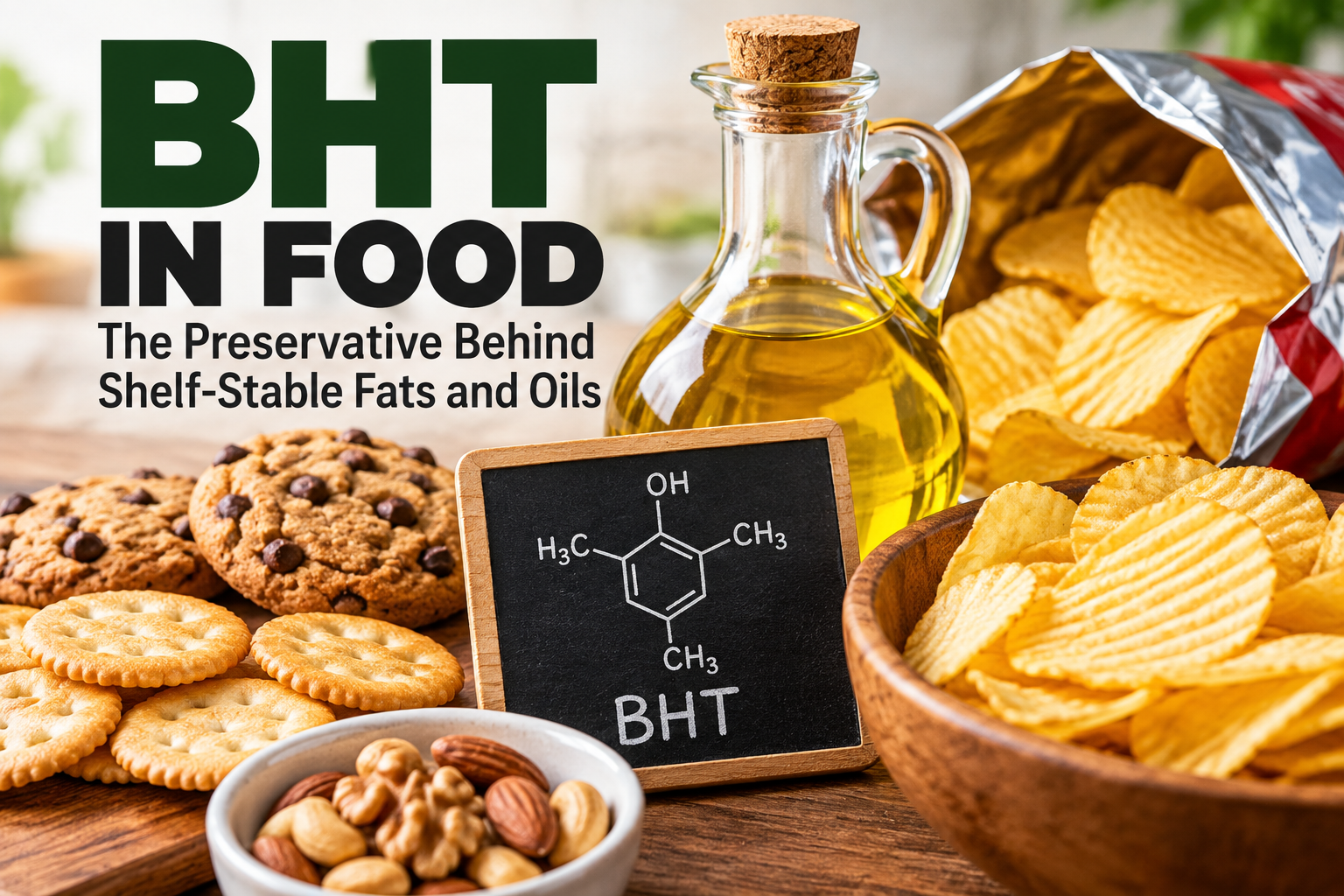
One ingredient that has played this role for decades is BHT, or butylated hydroxytoluene.
Now BHT is back in the spotlight. In 2026, the U.S. Food and Drug Administration began a post-market assessment of BHT, looking at its current uses, dietary exposure, and available safety information. The FDA says this is part of a broader system for reassessing chemicals already present in the food supply as new scientific information becomes available.
As a chef, I find this story interesting because BHT is not there simply to make a food look better on a label. It has a specific technological job: helping protect fats and oils from oxidation.
But an FDA review can easily be misunderstood as a safety warning. It is important to make that distinction clear: being under FDA review does not mean a chemical has been declared unsafe. The agency says the purpose is to examine the latest information and determine whether any regulatory action is warranted.
So let’s look at BHT from the perspective that matters in the kitchen and food industry: what it does, where it is used, why manufacturers rely on it, and what the FDA is actually reviewing.
1. What Does BHT Actually Do to Food?
Think of BHT as a small piece of insurance against oxidation.
Fats and oils react with oxygen over time. That reaction can gradually produce off-flavors and odors, especially when the food is exposed to heat, light, or air during processing and storage.
BHT is an antioxidant, which means its job is to slow certain oxidation reactions. It does not make an old oil fresh again, and it does not replace good storage or manufacturing practices.
From a chef’s perspective, this is an important distinction.
When I manage ingredients in a professional kitchen, controlling oxygen, heat, light, moisture, and storage time is already part of protecting food quality. Food manufacturers face the same basic chemistry, but on a much larger scale and over much longer shelf lives.
That is where an antioxidant such as BHT can become useful.
Its purpose is not to preserve every part of a food. Its main technological role is to help protect susceptible fats and oils from oxidative deterioration.
2. Where Might You Find BHT in Food?
BHT is not an ingredient you add to a recipe for flavor. Its value comes from protecting certain fats and oils during processing and storage.
It has been used in some packaged foods containing fats and oils, including certain cereals, snack foods, baked products, and other shelf-stable foods. The exact use and permitted level depend on the food and applicable regulations.
For consumers, the simplest way to check is the ingredient label. You may see it written as BHT or butylated hydroxytoluene.
One thing I always recommend when teaching cooks about food labels is to look at the function of an ingredient before judging it.
An unfamiliar chemical name does not automatically tell you whether an ingredient is beneficial, harmful, or unnecessary. In BHT’s case, its technological purpose is relatively straightforward: helping slow oxidation in susceptible fats and oils.
The more interesting question is whether its use remains appropriate under today’s scientific evidence and exposure levels. That is precisely where the FDA’s current review becomes relevant.
3. What Is the FDA Actually Reviewing?
The FDA’s current action is a reassessment, not a declaration that BHT is unsafe.
In 2026, the agency added BHT to its post-market assessment work, which is designed to review chemicals already used in the food supply as new information becomes available. The FDA says its assessment considers factors such as the chemical’s uses, dietary exposure, and relevant scientific information.
That distinction matters.
Food ingredients can remain in use for many years while scientific methods, exposure estimates, and consumer eating patterns change. A modern review gives regulators an opportunity to look at the available evidence again rather than relying only on older assessments.
The FDA’s review does not automatically mean BHT will be removed from food. The agency says the purpose of its post-market assessment program is to determine whether further regulatory action is appropriate based on the evidence.
From a food professional’s perspective, this is the part worth watching: what does the updated evidence show about exposure and safety, and what conclusion will regulators reach?
For now, the responsible approach is to understand what BHT does and follow the FDA’s review rather than turning a regulatory reassessment into a headline about danger.
4. BHT Is Not the Only Antioxidant Used in Food
BHT is one of several ingredients and technologies used to slow oxidation in foods containing fats and oils.
Other antioxidants used in food systems can include BHA, tocopherols (vitamin E), ascorbyl compounds, and certain plant-derived antioxidants. Their effectiveness depends on the food, the type of fat, processing conditions, and storage environment.
In professional cooking, we normally control oxidation without thinking about it as “antioxidant chemistry.” We keep oils away from excessive heat, protect ingredients from unnecessary exposure to air and light, rotate stock, and avoid holding fats longer than necessary.
Food manufacturers face the same chemistry under very different conditions. A packaged product may need to remain stable for months rather than days.
That is why it is useful to judge an antioxidant by what it is being used for, how much is present, and what the current safety evidence says, rather than assuming that a chemical-sounding name tells the whole story.
5. What Should You Do When You See BHT on a Label?
Seeing BHT on an ingredient label does not give you enough information to judge the entire food.
As a chef, I look at the whole product first: the ingredients, how highly processed it is, how often it is eaten, and how it fits into the overall diet. One ingredient name rarely tells the complete story.
For consumers who want to limit BHT, the practical step is simple: read the ingredient list and compare similar products. Some manufacturers use different antioxidants, while others may formulate products without added BHT.
But there is no reason to turn every ingredient label into a source of fear.
With BHT currently under FDA reassessment, the most sensible approach is to follow the evidence and the regulator’s findings rather than assuming that a chemical name automatically means a food is dangerous.
Good food choices come from understanding ingredients, not fearing them.
6. What Does BHT Mean for Chefs and Food Businesses?
In a restaurant kitchen, shelf life is usually measured in days or weeks. In packaged food manufacturing, the challenge can be very different: a product may need to maintain its quality for months while moving through production, transport, storage, and retail.
That changes the preservation equation.
For food businesses working with fats and oils, controlling oxidation can affect flavor, aroma, product stability, and shelf life. Antioxidants such as BHT can therefore have a specific technological purpose when permitted for a particular food.
My approach as a chef is to separate food quality, food safety, and ingredient perception.
A preservative should not be judged simply because its name sounds chemical. At the same time, food businesses should keep up with regulatory reviews and new scientific evidence rather than assuming that an ingredient’s historical use settles the discussion forever.
For manufacturers, the lesson is practical: know why an ingredient is being used, follow the permitted conditions of use, monitor the science, and make sure the finished product still meets the quality your customer expects.
7. Final Thoughts
BHT is a good example of why food ingredients deserve a closer look than a simple “good” or “bad” label.
Its job is fairly specific: help slow oxidation in fats and oils and protect food quality during storage. At the same time, the FDA’s current reassessment shows why food regulations and scientific evaluations need to keep evolving.
For consumers, the practical lesson is to read the ingredient list without unnecessary fear. For food businesses, it is even more important to understand why an ingredient is being used, follow its permitted conditions of use, and keep up with regulatory developments.
As a chef, I believe the best food decisions come from understanding the science, the ingredients, and the application.
BHT is not a mysterious ingredient once you understand what it is actually doing in the food.
8. Frequently Asked Questions
What is BHT in food?
BHT, or butylated hydroxytoluene, is an antioxidant used in certain foods to help slow oxidation of fats and oils and maintain product quality during storage.
Why is the FDA reviewing BHT?
The FDA is reassessing BHT as part of its post-market food-chemical safety program. The review considers current uses, dietary expexposure,osure and available scientific information. An FDA review does not automatically mean that BHT has been declared unsafe.
Is BHT the same as a preservative?
BHT is an antioxidant rather than a traditional antimicrobial preservative. Its main function in food is to help slow oxidation, particularly in fats and oils.
How can I tell if a food contains BHT?
Check the ingredient list on the package. It may appear as BHT or by its full name, butylated hydroxytoluene.