What Is Pandan? Why This Southeast Asian Flavor Is Suddenly Everywhere
You may have noticed a new green ingredient appearing in desserts, drinks, cakes, and café menus: pandan.
It has been part of Southeast Asian cooking for generations, but it is now attracting attention far beyond the cuisines where it has long been used.
So what exactly is pandan? Why does it smell so distinctive? And why do people sometimes compare it with vanilla?
As a chef, I find pandan interesting because it isn’t simply about adding a green color to food. Its real character is in its aroma and the way that aroma changes the personality of a dish.
Quick Answer: What Is Pandan?
Pandan is a tropical plant widely used in Southeast Asian cooking. Its long, fragrant leaves are used to perfume rice, desserts, drinks, cakes, custards, and other foods.
The flavor is difficult to describe with one word. Pandan has a sweet, floral, grassy aroma with nutty and vanilla-like notes, but it does not actually taste like vanilla.
That distinction matters. Vanilla usually contributes a warm, creamy sweetness, while pandan brings a more aromatic, almost savory-green character.
For a chef, pandan is best understood as an aromatic ingredient. You often don’t need much of it. The right amount can give a familiar dessert or drink an entirely different identity.
What Is Pandan?
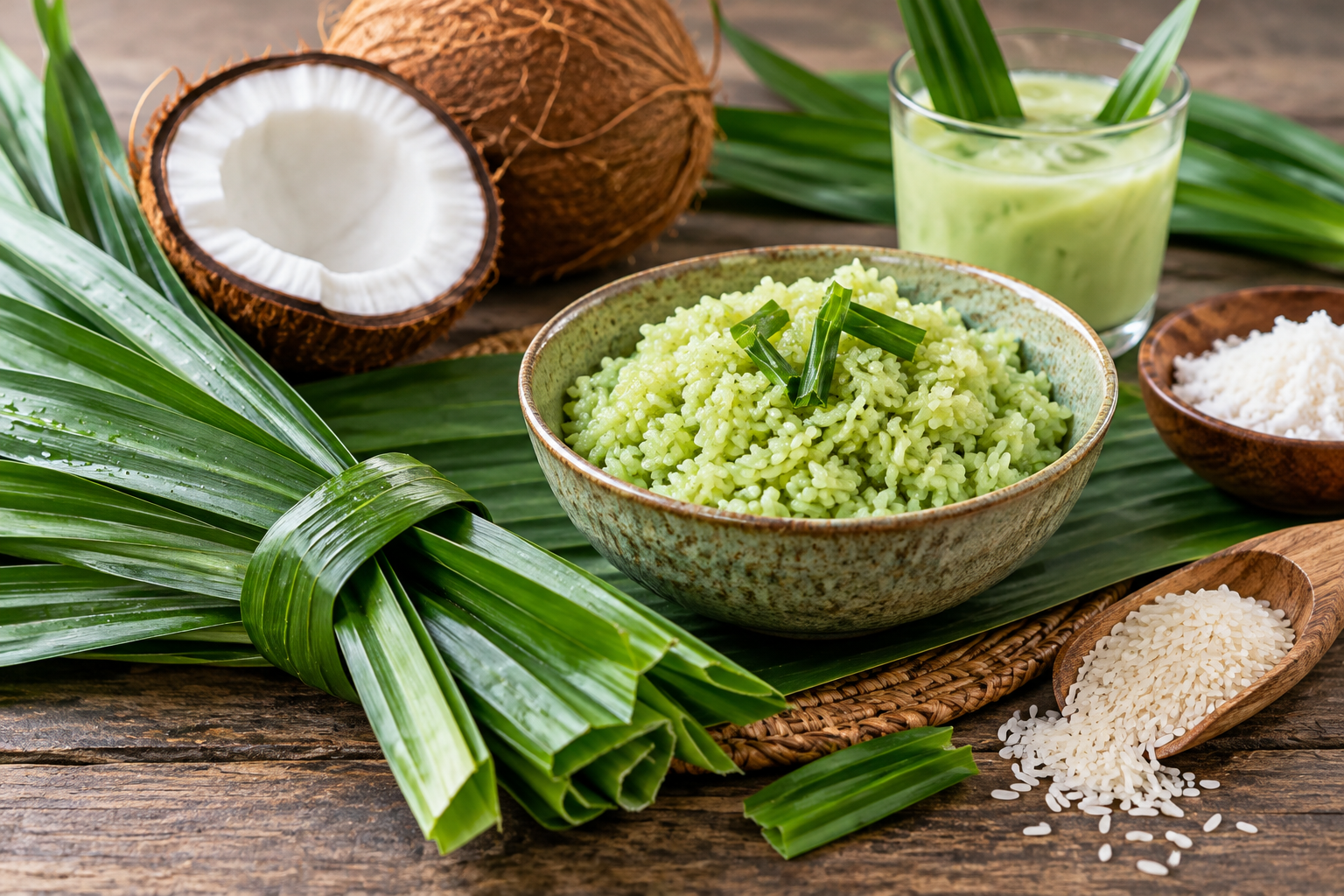
Pandan comes from the Pandanus plant, a tropical plant widely used in Southeast Asian cooking. Its long, narrow leaves are the most commonly used part, either infused into food or processed into juice, paste, extract, or powder.
You’ll find pandan in everything from rice and coconut desserts to cakes, custards, ice cream, and drinks. In many traditional kitchens, the leaves are used almost like an aromatic herb: added during cooking and removed before serving.
What makes pandan especially interesting is its aroma. It can smell sweet, floral, grassy, and slightly nutty, with a quality that reminds some people of vanilla or toasted rice.
But pandan isn’t simply “Southeast Asian vanilla.” Its aroma is much more distinctive, and that difference is exactly why chefs and modern food makers are paying attention to it.
Why Is Pandan Suddenly Becoming So Popular?
Pandan isn’t new. What is changing is where people are discovering it.
For years, pandan was familiar mainly to people cooking Southeast Asian foods. Now it is showing up in specialty cafés, modern bakeries, ice creams, cakes, cocktails, and other contemporary foods.
Part of the appeal is its unusual flavor. At a time when consumers are looking beyond familiar vanilla, chocolate, and caramel, pandan offers something that feels both new and deeply traditional.
There is also a visual advantage. Pandan can naturally give foods a soft green color, but the real reason chefs value it is its aroma. A pandan dessert can look simple while smelling completely different from a conventional vanilla dessert.
From my perspective as a chef, that’s what makes pandan more than another social media ingredient. It has a real culinary history, a distinctive flavor, and enough versatility to work across both traditional and modern menus.
Pandan in Cooking: How Chefs Actually Use It
The easiest way to understand pandan is to treat it like an aromatic ingredient rather than a conventional vegetable or herb. You usually want its fragrance to move into the food without allowing the leaf itself to dominate the dish.
One classic method is to tie pandan leaves into a knot and simmer them with rice, coconut milk, or desserts. As they heat, their aroma slowly infuses the surrounding ingredients.
Pandan can also be blended with water to make pandan juice or used as an extract or paste when a stronger, more consistent flavor is needed. Fresh leaves generally give a more subtle and natural aroma, while concentrated products are convenient for commercial kitchens and baking.
As a chef, I particularly like pandan with ingredients that already have a natural affinity for it, such as coconut, rice, palm sugar, milk, and tropical fruits. The combination works because pandan adds aroma and complexity without needing to make the dish excessively sweet.
Pandan vs. Vanilla: Are They Really Similar?
Pandan and vanilla are sometimes compared because both can give food a sweet, fragrant aroma. But from a chef’s perspective, they behave quite differently.
Vanilla is warm, creamy, and deeply sweet-smelling, while pandan has a greener, more floral, and slightly nutty character. Pandan can also bring an aroma reminiscent of freshly cooked rice, which gives it a distinctive Southeast Asian identity.
| Pandan | Vanilla |
|---|---|
| Green, floral, and slightly nutty aroma | Warm, creamy, and sweet aroma |
| Commonly used as leaves, juice, paste, or extract | Usually used as beans, paste, or extract |
| Excellent with coconut and rice | Excellent with dairy, chocolate, and baked goods |
| Strong connection to Southeast Asian cuisine | Used extensively in global baking and desserts |
I wouldn’t use pandan simply as a one-for-one replacement for vanilla. They can play a similar aromatic role, but they create very different personalities in the finished dish.
That difference is exactly what makes pandan interesting for chefs experimenting with modern desserts and drinks.
Food Science: Why Does Pandan Smell So Different?
The distinctive aroma of pandan comes from volatile aromatic compounds released from the leaves. One of the important compounds associated with pandan’s characteristic fragrance is 2-acetyl-1-pyrroline, which is also associated with the aroma of fragrant rice.
This helps explain why people sometimes describe pandan as smelling like freshly cooked rice, popcorn, roasted nuts, or warm grain, alongside its sweeter floral notes.
Heat changes how these aromas are released. When pandan leaves are gently simmered in rice, coconut milk or another liquid, their aromatic compounds move into the food, creating fragrance without necessarily making the dish taste strongly “green.”
This is one reason pandan works so well in desserts: your nose detects complexity before your palate even registers sweetness. As a chef, that aromatic effect is often more important than the color pandan can provide.
Chef RBS Perspective: Why Pandan Works So Well in Modern Food
What I find most interesting about pandan is that it doesn’t need to be the main flavor of a dish. It can work quietly in the background, adding an aroma that makes familiar ingredients feel more complex.
For example, coconut milk and pandan are a natural combination. Coconut provides richness, while pandan adds fragrance that keeps the richness from feeling one-dimensional. The same principle works with rice, palm sugar, milk-based desserts, and tropical fruits.
I also think pandan has an advantage in modern menus because it can bridge traditional and contemporary food. A pandan rice dessert can be deeply traditional, while pandan ice cream, coffee, cake, or a modern mocktail can feel completely new to someone discovering the ingredient for the first time.
That is where I see its real potential. Pandan doesn’t need to replace vanilla or become the next “superfood.” It simply deserves recognition as one of the world’s distinctive culinary aromas.
How to Use Pandan at Home
If you’re trying pandan for the first time, you don’t need a complicated recipe. Start with a familiar dish and use pandan mainly for its aroma.
- Rice: Add a knotted pandan leaf while cooking rice, then remove it before serving.
- Coconut desserts: Simmer pandan with coconut milk to create a fragrant base.
- Cakes and custards: Use pandan extract or pandan juice when you want a more pronounced flavor.
- Drinks: Pandan can work beautifully in iced drinks, milk-based beverages, and modern mocktails.
- Ice cream: Pair pandan with coconut, vanilla, or tropical fruit for a balanced dessert.
If you’re using fresh leaves, rinse them well and bruise or knot them before adding them to a dish. This helps release their aroma during cooking.
For concentrated pandan extracts or pastes, start with a small amount. The intensity varies considerably between products, so adding more gradually is usually better than trying to correct an overly strong pandan flavor later.
My chef’s approach: let pandan support the dish rather than overpower it. Its best quality is often the aroma you notice just before taking the first bite.
What Should You Look for When Buying Pandan?
If you’re buying pandan for home cooking, freshness and the form of the product matter more than the packaging claims.
For fresh pandan leaves, look for leaves that are firm, fragrant, and evenly green, without excessive browning, sliminess, or a stale smell. Fresh leaves should have a noticeable aroma when you gently crush or bend them.
If fresh leaves aren’t available, pandan paste, extract, and powder can be useful alternatives. Just remember that these products vary in concentration, so the amount needed can differ significantly from one brand to another.
For a first experiment, I’d choose fresh leaves when available. They give you a better understanding of what real pandan smells and tastes like before you move on to concentrated versions.
One important point: don’t buy pandan simply because it is being marketed as a “superfood.” Its strongest culinary value is its aroma, flavor, and versatility, which are more than enough reasons to use it.
Chef RBS Verdict: Is Pandan Worth Trying?
Absolutely. But I would approach pandan as a culinary ingredient first and trend second.
Its long history in Southeast Asian cuisine gives it credibility beyond its recent popularity. What makes it exciting today is that chefs and food brands can introduce that distinctive aroma to familiar formats such as cakes, ice cream, coffee, drinks, and modern desserts.
The key is understanding what pandan actually contributes. It isn’t simply green in color, and it isn’t a replacement for vanilla. Its strength is aroma.
If you’re curious about it, start with a simple pandan-infused rice or coconut dessert. Once you recognize its fragrance on its own, you’ll understand why this ingredient is getting so much attention.
Chef RBS takeaway: Pandan may be trending, but the ingredient itself is anything but new. Its real value is that it brings a distinctive Southeast Asian aroma into modern cooking without losing its traditional identity.
FAQ: Pandan
Is pandan the same as vanilla?
No. Pandan has a sweet, floral, grassy and slightly nutty aroma, while vanilla is warmer and more creamy. They can play similar roles in desserts, but they create very different flavors.
What does pandan taste like?
Pandan is mainly appreciated for its aroma. It can have sweet, floral and nutty notes, with an aroma that some people associate with fragrant rice or freshly cooked grain.
Can you eat pandan leaves?
The leaves are generally used to infuse aroma into food rather than eaten directly. They are commonly knotted or bruised, cooked with the dish, and removed before serving.
What foods go well with pandan?
Pandan pairs particularly well with coconut, rice, palm sugar, milk, tropical fruits and desserts. It can also be used in drinks, cakes, custards and ice cream.
Is pandan a new food trend?
No. Pandan has been used for generations in Southeast Asian cuisines. What is new is its growing visibility in modern cafés, bakeries, desserts and drinks outside those traditional food cultures.
Can pandan replace vanilla?
Not directly. Although both provide strong aromatic qualities, pandan has a much greener, floral and rice-like character. Use it because you want pandan’s flavor, not simply because you have run out of vanilla.
Final Takeaway
Pandan may be having a moment in modern food culture, but its story is much older than the trend.
Its distinctive aroma, versatility and deep connection to Southeast Asian cooking are what make it worth discovering. If you haven’t cooked with pandan before, start simple: infuse it into rice or coconut milk and let the aroma speak for itself.
That is where pandan really shines: not as the next food fad, but as an ingredient with a character of its own.