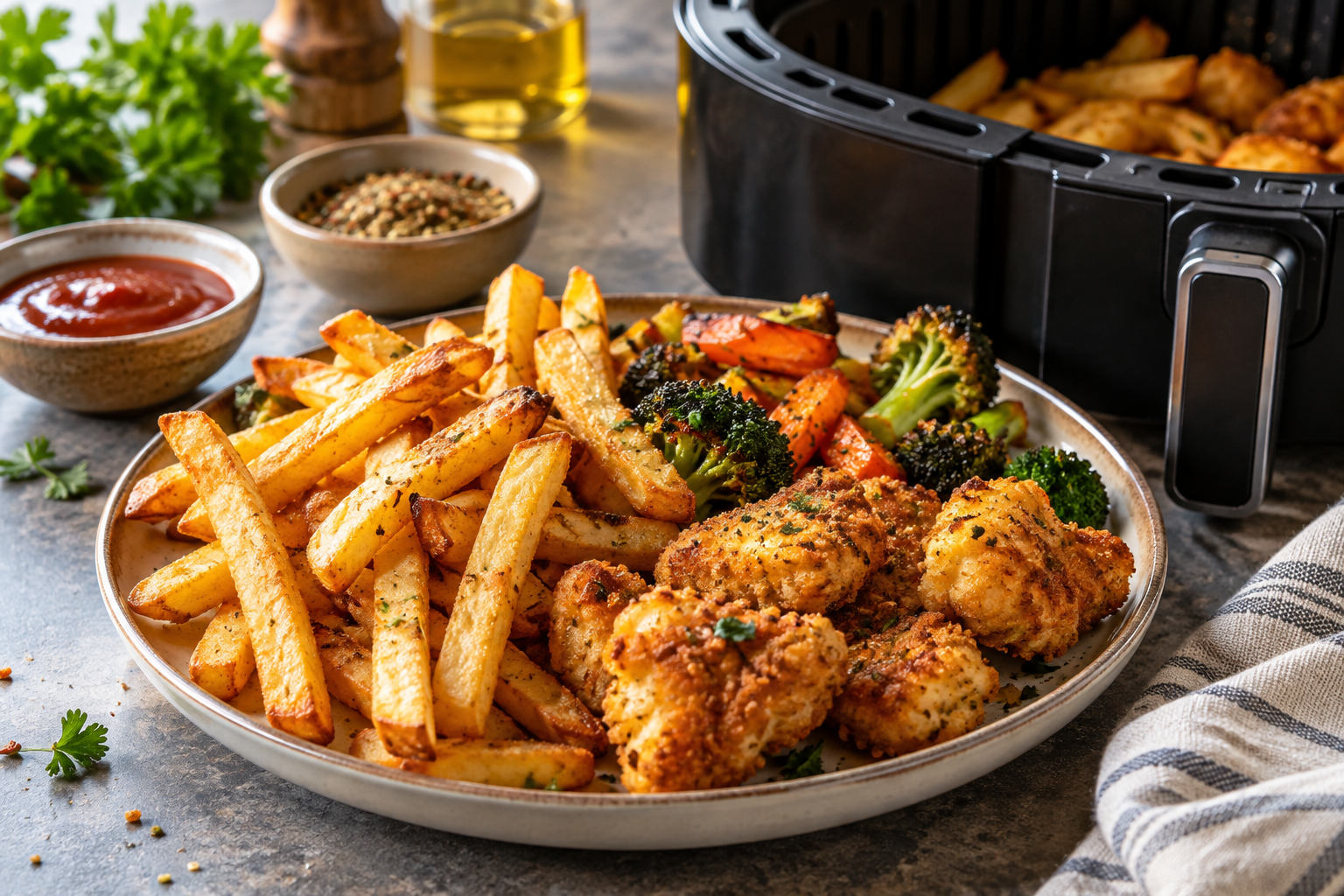
Why Air Fryer Food Gets Crispy: The Science Behind the Crunch
Why Does Air Fryer Food Get Crispy?
Have you ever wondered why food can come out of an air fryer with a crisp, golden surface even though you are using much less oil than traditional deep frying?
The answer is not simply “hot air.”
An air fryer creates a combination of high heat, rapid air movement, and moisture loss that changes the surface of food while it cooks. As water escapes from the outer layer, the surface becomes drier and hotter, allowing browning reactions to develop and create the texture we associate with crispy food.
But there is an important detail: an air fryer does not actually fry food in exactly the same way as a deep fryer.
In this article, Chef RBS explains the food science behind air fryer food being crispy, why some foods become beautifully crunchy while others stay soft, and what you can do to get a better crust at home.
The Science Behind Crispy Air Fryer Food
Crispiness begins with water.
Most foods contain a significant amount of moisture. When food enters a hot air fryer, heat moves into the food and water near the surface begins to evaporate.
As that moisture leaves, the outer surface becomes progressively drier. Once enough surface moisture has evaporated, the temperature of that surface can rise well above the boiling point of water.
That is when important browning reactions can take place.
One of the most important is the Maillard reaction, a series of chemical reactions between amino acids and reducing sugars that produces many of the browned colors and roasted flavors we associate with cooked foods.
This is why a potato, for example, can develop a golden, crunchy exterior while its inside remains soft.
The air fryer helps this process by continuously moving hot air around the food. The moving air transfers heat efficiently and helps carry away moisture from the surface.
So when you ask why air fryer food gets crispy, the simple answer is
Hot air heats the food → moisture escapes → the surface dries → browning develops → the exterior becomes crisp.
Why Does Moving Air Make Food Crispier?
An air fryer does more than simply surround food with hot air. The movement of that air is an important part of the cooking process.
As hot air moves rapidly around the food, it continuously transfers heat to the surface. At the same time, the moving air helps remove water vapor from around the food.
This matters because a humid layer of air around the food can slow down evaporation. Better airflow helps maintain conditions that allow surface moisture to escape more efficiently.
That is also why overcrowding an air fryer basket can reduce crispiness.
When too much food is packed together, airflow around individual pieces becomes restricted. Steam and moisture can accumulate, and the surfaces may cook more slowly and remain softer.
Giving the food enough space allows hot air to circulate around more of its surface.
So, if you want crispier results, remember one simple kitchen principle:
More space + better airflow = better surface drying and browning.
Why Some Air Fryer Foods Get Crispier Than Others
Not every food reacts to hot air in the same way. The final texture depends on the food’s moisture content, surface structure, starches, sugars, and the way it has been prepared.
Potatoes are a good example. Their surface can dry during cooking while the inside retains moisture, creating the contrast between a crisp exterior and soft center that people expect from fries.
Foods with a naturally wet surface can be more difficult to crisp. Excess moisture has to evaporate before strong browning can develop.
The coating also matters. A thin layer of flour, breadcrumbs, or another dry coating can provide a surface that browns and becomes crisp as moisture leaves.
However, simply adding more coating does not automatically produce better results. If the coating becomes too thick or the food is too wet underneath, the exterior can brown unevenly while the inside remains soft.
Crispiness is therefore a balance between moisture, heat, airflow, and surface structure.
Does Oil Make Air Fryer Food Crispier?
A small amount of oil can make a noticeable difference, but oil is not the main reason an air fryer creates a crispy surface.
Oil helps improve surface contact, heat transfer, and browning. A light coating can help seasonings and dry coatings adhere to the food while also promoting a more even golden finish.
But adding a large amount of oil does not necessarily mean more crispiness. If the food is already carrying a lot of surface moisture, that moisture still needs to escape before the surface can become properly dry and crisp.
This is why a light, even coating of oil is often more useful than simply adding more.
The type and condition of the food also matter. Frozen coated foods may already contain oil in their coating, while fresh vegetables or potatoes may benefit from a small amount added before cooking.
Think of oil as a helper for browning and texture, not the engine that makes an air fryer work.
7 Chef Tips for Crispier Air Fryer Food
Getting a crisp surface is not only about temperature. Small preparation choices can make a significant difference.
1. Dry the surface first.
Pat fresh potatoes, vegetables, or other foods dry before cooking. Less surface moisture gives the air fryer a better opportunity to create a dry, crisp exterior.
2. Avoid overcrowding.
Leave space between pieces so hot air can circulate around them.
3. Use a light coating of oil.
A thin, even coating can support browning without making the food unnecessarily greasy.
4. Cut pieces consistently
Similar-sized pieces cook more evenly, reducing the chance that some pieces become dark while others remain soft.
5. Turn or shake when appropriate.
Moving the food can expose different surfaces to the circulating hot air and promote more even cooking.
6. Don’t cover the food unnecessarily.
Anything that traps steam around the surface can work against the drying process that helps create crispness.
7. Don’t rely only on the highest temperature.
Higher heat can brown the outside quickly, but the best result depends on balancing temperature, cooking time, food size, and moisture.
The goal is simple: remove enough surface moisture, maintain good airflow, and give the food enough time to brown.
Why Air Fryer Fries Can Become Soggy
Air fryer fries can sometimes disappoint: they look golden on the outside but lose their crispness soon after cooking.
The biggest reason is moisture.
Potatoes contain a lot of water. During cooking, moisture from the center moves toward the surface. If the fries are crowded together or removed before the surface has dried sufficiently, steam can soften the crust.
Cut size also matters. Thick fries contain more moisture and generally need more time for the center to cook while the surface develops a crisp texture.
Another factor is what happens after cooking. When hot fries are placed in a closed container, the remaining heat produces steam. That moisture can condense on the cooler surface and soften the crisp exterior.
This is why freshly cooked fries are usually at their crispiest immediately after cooking.
For better results, give fries enough space, avoid trapping them in steam, and serve them soon after cooking.
Air Fryer vs. Deep Frying: Why the Texture Is Different
An air fryer and a deep fryer can both produce browned, crispy food, but they achieve that result in very different ways.
In deep frying, food is surrounded by hot oil. The oil transfers heat rapidly to the surface while also creating a characteristic fried texture.
In an air fryer, hot air is the main cooking medium. The circulating air heats the food and helps remove moisture from the surface, but the amount of oil surrounding the food is dramatically lower.
This difference affects the final texture.
Deep frying can produce a more pronounced, uniform crust because hot oil makes direct contact with almost the entire surface. Air frying can produce excellent crispness too, but the result depends more heavily on airflow, surface moisture, food shape and preparation.
That is why an air-fried potato and a deep-fried potato can both be crispy while still having noticeably different textures.
The air fryer is therefore not simply a smaller deep fryer. It is a different cooking system that uses hot air, airflow, and controlled moisture loss to create browning and crispness.
Why Does Reheating Make Crispy Food Soft?
There is a simple reason leftover air fryer food often loses its crunch: moisture moves back into the crust.
When food first comes out of the air fryer, its surface is hot and relatively dry. As it cools, moisture from the warmer interior can migrate toward the outer layers.
If the food is placed in a closed container while still hot, steam has nowhere to escape. That moisture can condense and soften the crisp surface.
Reheating can restore some of the texture because heat drives moisture away from the surface again. However, the result may not be exactly the same as freshly cooked food because the food’s structure has already changed during the first cooking cycle.
For the best texture, avoid trapping freshly cooked crispy food in steam. Letting excess moisture escape is just as important as creating the crisp crust in the first place.
What Makes a Good Air Fryer Coating?
A coating can dramatically change the texture of air-fried food.
Breadcrumbs, crushed cereal, flour-based coatings, and other dry ingredients create a rough surface with many small areas that can dry and brown during cooking.
The key is controlling moisture and thickness.
If a coating is too wet, the air fryer first has to remove that moisture before the coating can become crisp. If the coating is excessively thick, the outside may brown before the food underneath has cooked properly.
A thin, evenly distributed coating usually gives better control.
For example, when preparing chicken, vegetables, or other coated foods, excess wet batter should not be allowed to pool around the food. A more even coating exposes more surface area to the circulating hot air.
The result is a better balance between a crisp exterior and properly cooked interior.
This is one reason professional chefs pay attention not only to the cooking temperature but also to the preparation of the food before it enters the fryer.
The Biggest Mistake: Thinking Crispy Means Dry
A crispy exterior does not mean the entire food should be dry.
The best crispy foods usually have a contrast in texture: a dry, browned, and crisp outside with a moist, tender, or soft interior.
Think about French fries. The ideal fry has a crisp surface but remains fluffy inside. The same principle applies to chicken, vegetables, and many coated foods.
The challenge for an air fryer is controlling how quickly moisture leaves the food.
If too much moisture is removed, the food can become hard or dry. If too little moisture escapes, the surface can remain soft.
This is where cooking time, temperature, food size, and airflow work together.
A chef is essentially trying to create the right texture contrast, rather than simply removing as much moisture as possible.
That is the real science behind satisfying crispy food.
The Simple Formula for Crispier Air Fryer Food
If you remember only a few things from the science of air frying, remember these:
Dry the surface.
Remove excess moisture before cooking whenever possible.
Give the food space.
Good airflow helps hot air reach the surface and carries away moisture.
Use a light amount of oil when appropriate.
Oil can support browning, but more oil does not automatically mean more crispiness.
Control the size.
Uniform pieces cook more evenly.
Avoid trapping steam.
Crispy food can quickly become soft when hot steam is trapped around it.
Give browning enough time.
The surface needs to become sufficiently dry and hot for the reactions responsible for golden color and roasted flavor to develop.
Once you understand these principles, an air fryer becomes more than a convenient appliance. You can start predicting why a particular food becomes crisp, why another stays soft, and what you can change to improve the result.
Final Thoughts
The reason air fryer food can become crispy comes down to a simple combination of heat, airflow, and moisture control.
As hot air moves around the food, surface moisture evaporates. The surface becomes hotter and drier, allowing browning reactions to develop and creating the crisp texture we enjoy.
But great air frying is not about simply turning up the temperature. Food size, moisture, airflow, coating, oil, and cooking time all influence the final result.
Once you understand the science, you can make better decisions in the kitchen instead of relying entirely on trial and error.
The next time your air fryer food is not crispy enough, don’t just increase the temperature. Ask yourself: Is the surface dry enough? Is there enough airflow? Is the basket overcrowded? Is moisture trapped?
That’s where the real science behind the crunch begins.