How Extreme Heat Could Change the Ingredients Used by Food Manufacturers
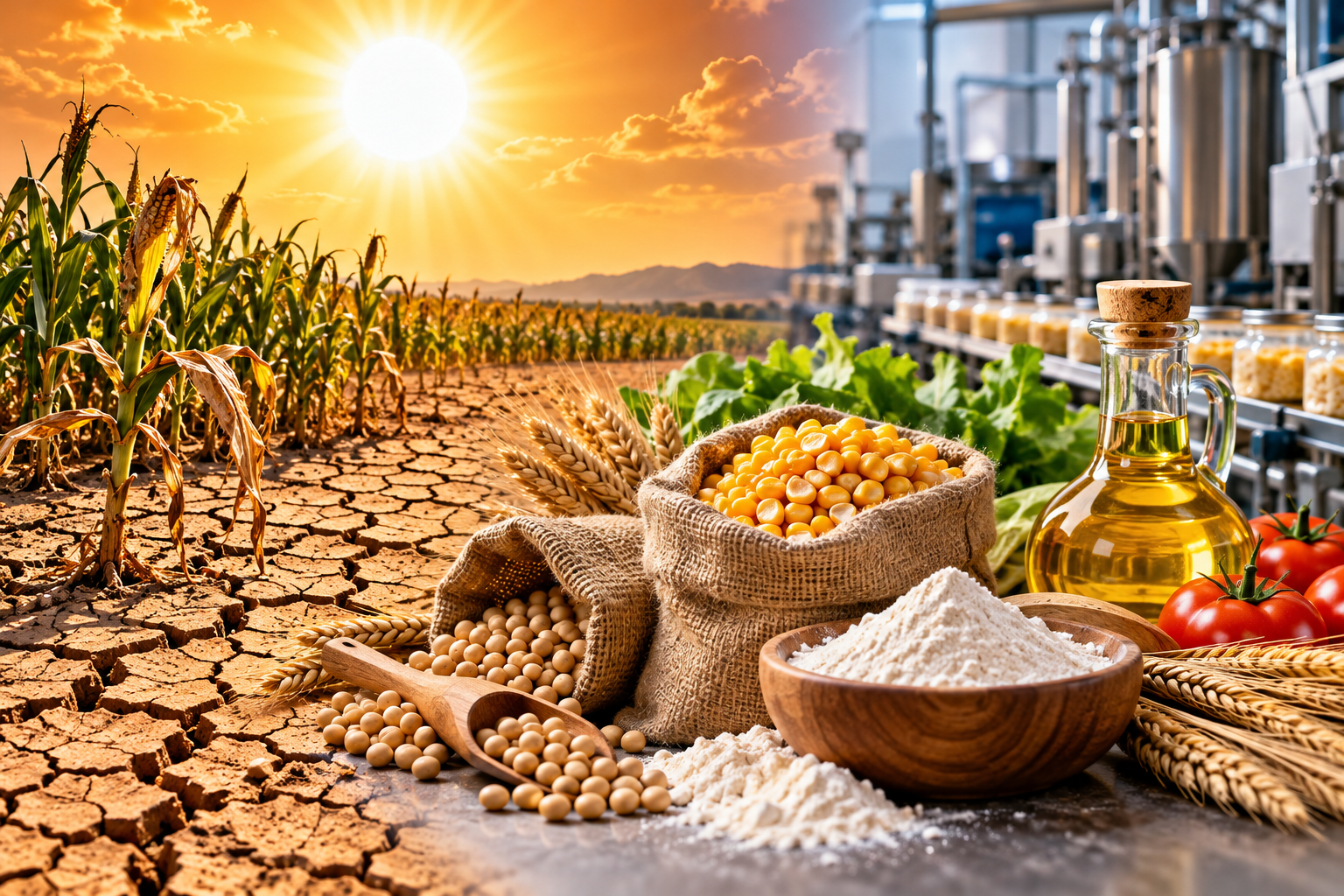
Extreme heat and food ingredients are becoming an important concern for food manufacturers as rising temperatures affect agricultural production and raw-material quality.
When temperatures rise during critical growing periods, crops may produce lower yields or become less consistent in quality. For food manufacturers, that can mean changes in ingredient availability, purchasing costs, flavor, texture, and production planning.
From a chef’s perspective, an ingredient is more than a name on a supplier’s list. Its moisture, starch content, color, and functional properties can influence how a finished product performs. If those characteristics change, a recipe that worked reliably last season may need adjustments.
In this article, we’ll explore how extreme heat could reshape the ingredients used by food manufacturers, which agricultural products may face greater pressure, and how food businesses can prepare without compromising product quality.
I. How Extreme Heat Affects Agricultural Ingredients
Food manufacturing begins long before ingredients reach a processing plant. Temperature, rainfall, soil conditions, and the timing of the growing season all influence the raw materials that farmers produce.
When extreme heat occurs during sensitive stages of crop development, plants may struggle to maintain normal growth. Heat stress can interfere with flowering, pollination, and grain filling, potentially reducing yields. The extent of the damage depends on the crop, the duration of the heat, water availability, and the stage of growth.
For manufacturers, the consequences can extend beyond the quantity of crops harvested.
Corn and rice: Heat stress can affect grain development and harvest consistency. Because these crops are used in products ranging from breakfast cereals and snacks to starches and prepared meals, changes in supply may influence ingredient purchasing and production planning.
Soybeans: High temperatures, particularly when combined with water stress, can affect crop development and yields. Soybeans supply food manufacturers with ingredients such as soybean oil, soy protein, and other protein-based materials.
Fruits and vegetables: Heat can influence crop size, appearance, ripening, and the proportion of a harvest suitable for different uses. A change in the balance between fresh-market produce and processing-grade ingredients may affect manufacturers of sauces, purees, frozen vegetables, and fruit-based products.
These effects are not identical everywhere, and one hot season does not automatically mean shortages. However, repeated or prolonged heat events can increase uncertainty for businesses that depend on predictable agricultural supplies.
From a product-development perspective, the important question is not simply whether an ingredient will remain available. It is whether its price, quality, and processing performance will remain consistent enough to deliver the same finished product.
II. How Extreme Heat and Food Ingredients Affect Manufacturing Consistency
Food manufacturers need more than a reliable supply of raw materials. They also need ingredients that behave predictably during processing.
A small change in an ingredient’s composition can affect the finished product. Ingredient selection also influences the nutritional profile of a finished product, including its fiber content. For example, differences in moisture content can influence drying time, while changes in starch properties may affect thickness, viscosity, and texture. Variations in fruit color or sweetness can also influence the appearance and flavor of sauces, beverages, and fillings.
Extreme heat does not cause every ingredient to change in the same way. However, when growing conditions affect crop quality, manufacturers may need to adjust their specifications, processing methods, or formulations.
Consider three practical examples:
1. Starches and flour-based products
Corn, wheat, and rice provide starches and flours used in snacks, sauces, bakery products, and convenience foods. If incoming ingredients vary in moisture or functional properties, manufacturers may need to review water addition, mixing conditions, or cooking parameters.
2. Fruit and vegetable processing
Manufacturers producing purees, sauces, and concentrates depend on consistent color, flavor, and solids content. Variations in raw produce may require closer quality checks and adjustments to blending or formulation.
3. Plant-based protein products
Soy and other agricultural proteins are used in meat alternatives, beverages, and prepared foods. Changes in raw-material supply or specifications can make supplier qualification and incoming quality control especially important.
For manufacturers, the lesson is straightforward: ingredient specifications should account for natural variation, and quality-control systems should identify when incoming materials fall outside acceptable limits.
From a chef’s perspective, this is familiar territory. A recipe is only as consistent as the ingredients and process behind it. Climate-related variability makes that principle even more important at an industrial scale.
III. How Food Manufacturers Can Prepare for Ingredient Supply Changes
Food manufacturers cannot control extreme weather, but they can reduce the risk it creates for sourcing, production, and product consistency. The strongest approach combines supplier planning, ingredient quality checks, and careful product development.
1. Diversify ingredient sourcing
Depending on a single supplier or growing region can leave a business exposed when extreme heat damages crops or disrupts transport. Where practical, manufacturers can qualify additional suppliers across different regions. Alternative suppliers should be evaluated against the same food safety, quality, and performance requirements.
2. Strengthen incoming quality checks
A shipment that meets a supplier’s basic description may still vary in ways that affect processing. Manufacturers should identify the critical characteristics of each ingredient, such as moisture, color, particle size, starch performance, or protein content, depending on its intended use.
Testing should be based on the ingredient’s role in the product rather than applying the same checks to every raw material.
3. Develop technically suitable alternatives
An alternative ingredient may help maintain production when the usual material becomes expensive or difficult to source. However, substitution requires testing. Different starches, proteins, oils, and fruit preparations can behave differently during mixing, heating, freezing, or storage.
Before approving a replacement, manufacturers should assess product quality, allergen implications, labeling requirements, food safety, and cost.
4. Review inventory and purchasing decisions.
Businesses can use supplier updates, seasonal forecasts, and historical purchasing data to identify ingredients that may need closer monitoring. Strategic stockholding may help where shelf life, storage capacity, cash flow, and product demand make it practical.
Buying more is not always the best answer. Perishable ingredients and materials with limited storage stability can create additional waste if demand or supply conditions change.
5. Build flexibility into product development
Where possible, recipes and production specifications should allow controlled adjustments within validated limits. This could include approved ranges for ingredient moisture or solids content, documented processing adjustments, and clearly defined acceptance criteria.
Any formulation or process change should be evaluated before implementation, including its effects on food safety, shelf life, nutrition, sensory quality, and regulatory compliance.
The objective is not to change recipes whenever the weather changes. It is to build a supply and quality system that can respond to variation without sacrificing the characteristics customers expect.
IV. A Chef’s Framework for Managing Ingredient Variability
In professional kitchens, experienced chefs learn that the same ingredient does not always deliver exactly the same result. Industrial food production faces the same challenge, but at a much larger scale.
At Chef RBS Kitchen, a useful way to approach ingredient variability is to assess four factors before changing a formulation or production process.
1. Availability: Can the ingredient be sourced reliably throughout the year? Identify alternative suppliers and regions before a disruption occurs.
2. Functionality: What does the ingredient contribute to the product? It may provide structure, binding, thickening, color, flavor, or moisture. An alternative must perform the required function, not simply have a similar name.
3. Process performance: Does the ingredient behave consistently during mixing, heating, cooling, freezing, or drying? Check whether a change affects processing time, equipment settings, yield, or finished texture.
4. Finished-product quality: Does the final product still meet its specifications for taste, appearance, texture, nutrition, safety, and shelf life?
Applying the framework: A tomato sauce example
Imagine a manufacturer experiences variation in the tomatoes used for a commercial sauce.
| What to assess | Practical action |
|---|---|
| Availability | Review supplier capacity and alternative approved sources. |
| Functionality | Check soluble solids, acidity, and consistency against specifications. |
| Process performance | Evaluate cooking time, water evaporation, and final viscosity. |
| Finished-product quality | Confirm flavor, color, texture, safety, and shelf-life requirements. |
These checks help the manufacturer determine whether the incoming tomatoes can be processed as usual or whether an adjustment is necessary.
The example is an illustrative framework, not a report of a completed experiment. Actual limits and adjustments should be established through product-specific testing.
The key principle is to identify which ingredient characteristics matter most to the finished product. Once those characteristics are understood, manufacturers can make more informed decisions about sourcing, formulation, and process control.
V. The Future of Food Manufacturing Starts With Ingredient Resilience
Extreme heat is becoming an important consideration in agricultural production, ingredient sourcing and food manufacturing. Its effects vary by crop and region, but the potential consequences include lower yields, inconsistent raw materials, changing purchasing costs and greater uncertainty in supply chains.
For manufacturers, preparation begins with understanding the ingredients behind each product. Reliable supplier relationships, meaningful quality specifications, carefully evaluated alternatives and validated production processes can help businesses manage variability more effectively.
From a chef’s perspective, product consistency does not happen by accident. It depends on understanding how ingredients behave and knowing which characteristics must remain within acceptable limits.
Food manufacturers may not be able to control the weather, but they can improve how they prepare for its effects. Building ingredient resilience today can help protect product quality, production reliability and long-term business performance.
References and Further Reading
- Food and Agriculture Organization of the United Nations (FAO). Extreme heat in an El Niño year: how agrifood systems can prepare. July 7, 2026.
- World Meteorological Organization (WMO) and FAO. Extreme heat pushes agrifood systems to the brink. April 22, 2026.
- USDA Climate Hubs. Focus on Croplands in the Southeast. Information on heat stress and agricultural yields.
These resources provide background on extreme heat, crop vulnerability and adaptation strategies. The ingredient-management framework and manufacturing examples in this article are practical applications of those broader risks.