Why Do Chefs Rest Meat Before Cutting? The Food Science Explained
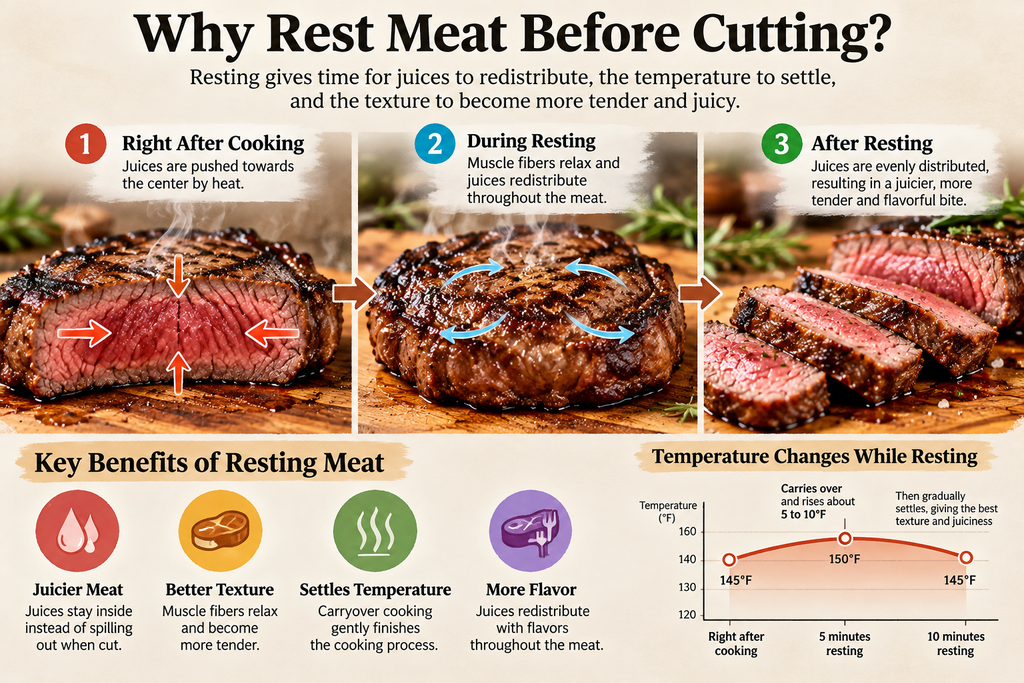
Why Rest Meat Before Cutting? Resting gives the meat time to go through this transition.
Why rest meat before cutting? It is a simple question, but the answer involves heat, muscle proteins, moisture, and carryover cooking.
You have probably noticed that chefs don’t immediately cut into a steak or roast after it comes off the heat. They usually let it sit for a few minutes first.
But why?
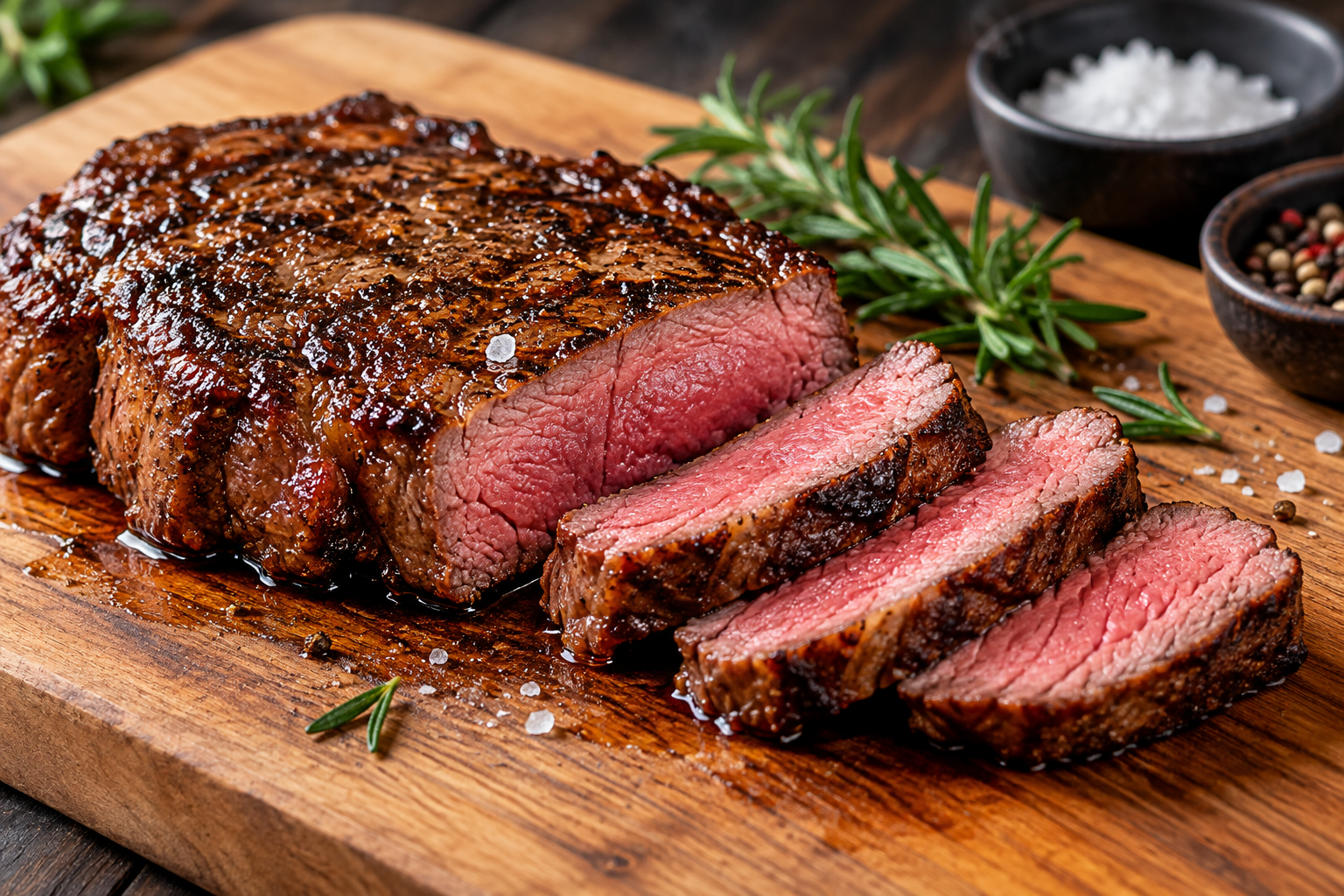
Resting meat isn’t just a restaurant habit. It is part of the cooking process. When meat rests, its temperature continues to change, and the moisture inside the meat redistributes. Cutting too early can cause more moisture to run onto the cutting board instead of staying in the meat.
As a chef, I see resting as the final step of cooking, not wasted time.
In this guide, I’ll explain why chefs rest meat, what happens inside the meat while it rests, how carryover cooking works, and how long different cuts should rest.
Why Do Chefs Rest Meat?
When meat is cooking, heat moves from the outside toward the center. The surface becomes much hotter than the middle, especially with thick steaks, roasts, and larger cuts.
When you remove the meat from the heat, the cooking process doesn’t immediately stop. The internal temperature can continue to rise for a short time as heat moves toward the cooler center.
“Why rest meat before cutting? Resting gives the meat time to go through this transition.”
It also gives the muscle fibers time to relax slightly and allows moisture to settle within the cooked meat.
Chef RBS tip: Don’t think of resting as “doing nothing.” Resting is part of the cooking process.
The simple rule
Cook → Remove from heat → Rest → Cut → Serve
That small pause can make a noticeable difference in the final texture and juiciness of the meat.
2. What Happens Inside the Meat During Cooking?
When meat is exposed to heat, the muscle proteins begin to change. As the temperature rises, these proteins tighten and the meat becomes firmer.
The outside of the meat gets hotter first, while the center remains cooler. This creates a temperature difference throughout the cut.
For a thick steak or roast, the center may still be cooking even after you remove the meat from the pan or oven.
This is why professional chefs pay attention not only to the cooking time but also to the internal temperature of the meat.
Chef RBS tip: The thicker the cut, the more important it becomes to understand what is happening inside, not just what you see on the outside.
3. What Changes When Meat Rests?
Once meat comes off the heat, the temperature inside doesn’t immediately become uniform.
The hotter outer layers begin transferring heat toward the cooler center. At the same time, the muscle fibers gradually relax from the intense heat of cooking.
This short resting period helps the meat settle before you cut it.
If you slice immediately, you can release more of the moisture onto the cutting board. If you allow the meat to rest first, you generally get a more controlled cut and a juicier eating experience.
Chef RBS tip: The goal isn’t to keep every drop of moisture inside the meat. The goal is to give the cooked meat time to stabilize before slicing.
4. Carryover Cooking: The Hidden Part of Cooking
Here is one of the most useful things to understand about resting meat: carryover cooking.
When you remove a thick piece of meat from the pan or oven, the center can continue to increase in temperature for a short period. The hotter outer layers transfer heat toward the cooler center.
This means the final internal temperature can be higher than the temperature when you first remove the meat from the heat.
That is why chefs consider the resting period when deciding when to stop cooking.
Chef RBS tip: If you want precise results, check the internal temperature with a food thermometer and remember that a thick cut may continue cooking after it leaves the heat.
5. How Long Should You Rest Meat?
The resting time depends on the size and type of the cut.
For a small steak, 5 to 10 minutes is usually enough to let the meat settle before slicing. Larger roasts need more time because their center retains heat for longer.
A practical guide:
| Cut | Approximate resting time |
|---|---|
| Small steak | 5–10 minutes |
| Thick steak | 10–15 minutes |
| Small roast | 10–15 minutes |
| Large roast | 15–30 minutes |
For food safety, resting does not replace reaching the recommended safe internal temperature. For example, USDA guidance recommends beef, pork, lamb, and veal steaks, chops, and roasts reach 145°F (63°C), followed by at least a 3-minute rest.
Chef RBS tip: Don’t cut a thick roast the moment it comes out of the oven. Give it time to settle, then slice.
6. What Happens If You Cut Meat Immediately?
Cutting meat immediately after cooking isn’t automatically wrong, but it can affect the final result.
When you slice a hot steak or roast straight away, more moisture can escape onto the cutting board. The meat may also be harder to slice cleanly, especially when the cut is very hot.
Giving the meat a few minutes to rest allows the temperature and moisture within the cut to settle before you start slicing.
For larger cuts, this becomes even more important because the center can continue cooking while the outside begins to cool.
Chef RBS tip: If you want cleaner slices and better texture, don’t rush the knife. Let the meat rest first.
7. Chef RBS Secret: Resting Is Part of Cooking
One of the easiest mistakes to make is thinking that cooking ends when you switch off the heat.
It doesn’t.
For thicker cuts, cooking continues briefly after the meat leaves the pan, while heat moves toward the center. Resting gives the meat time to settle before you cut and serve it.
In a professional kitchen, that few-minute pause can be the difference between rushing the final step and finishing the dish properly.
Chef RBS tip: Treat resting as the final stage of cooking, not waiting time.
8. Quick FAQ
Should you always rest meat before cutting?
For steaks, chops, and roasts, resting is a useful final step that allows the meat to settle before slicing.
Does resting meat make it more tender?
Resting can improve the eating experience by allowing the cooked meat to settle before cutting. However, tenderness also depends on the cut, cooking method, and final internal temperature.
Can meat continue cooking after you remove it from the heat?
Yes. This is called carryover cooking, where heat from the hotter outer layers continues moving toward the cooler center.
How long should steak rest?
A small steak generally needs around 5 to 10 minutes, while a thicker steak may benefit from 10 to 15 minutes.
Should you cover meat while it rests?
For a short rest, you can leave it uncovered. Covering a very hot steak tightly can trap steam and soften a crisp exterior.
Chef RBS tip: Resting time is not about following one exact number. Consider the size of the cut, cooking method, and final internal temperature.
9. Chef RBS Takeaway
Resting meat is a small step, but it has an important role in cooking.
When meat comes off the heat, the cooking process doesn’t instantly stop. Heat continues moving through the meat, and the internal temperature can continue to rise.
Give the meat time to rest before cutting, especially when working with thick steaks and roasts.
Remember:
Cook it → Check it → Rest it → Slice it → Serve it.
That is one simple chef habit that can make your meat more consistent every time.